


• Ships of Scale has incorportated an extra level of security when you log In. Please follow on-screen prompts to acknowledge that you are not a robot via a "Check Box" or a "Pictorial Check Box Puzzle". This is needed due to higher level of AI Activity Security.
  • SUBSCRIBE TO SHIPS IN SCALE TODAY!

    The beloved Ships in Scale Magazine is back and charting a new course for 2026!
    Discover new skills, new techniques, and new inspirations in every issue.

    NOTE THAT OUR NEXT ISSUE WILL BE July/August 2026
  • Win a Free Custom Engraved Brass Coin!!!
    As a way to introduce our brass coins to the community, we will raffle off a free coin during the month of August. Follow link ABOVE for instructions for entering.

Keel first or last

Joined
Jul 13, 2026
Messages
4
Points
3
Location
England
Hi.
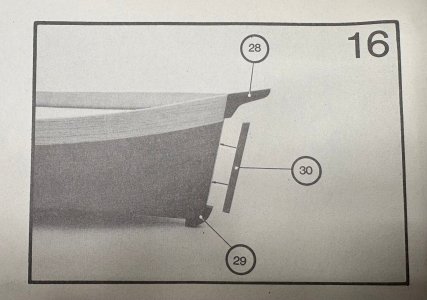
Thank you for the join just starting in this hobby wife bought me the Occre buccaneer done lots of plastic but thought it time to venture into wood I am at the moment just watching lots of videos and reading the plans over and over reallyenjoying the builds I see on here I have one question it seems to me a better idea too fit the keel after the first planking to give a better finish but the plans and vids say after the 2nd planking what’s everyone thoughts on this excuse typing and punctuation not my strong point
Thanks Del.
 
Welcome. There isno 'right' way to do this, it depends on kit maker's phantasy and your personnal preference. Mine is a integral plywood keel (no outside one glued on later, as with the older Corel-kits) and cover it with a thin, nice fineer after all the regular planking is done.
 
Hello there on the island,
Every manufacturer recommends something different.
I’ve built two boats from Occre kits, both of which were different.
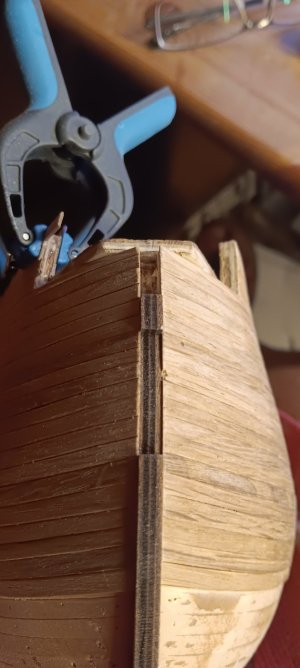
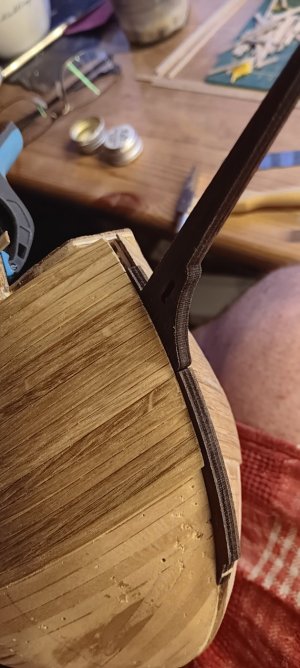
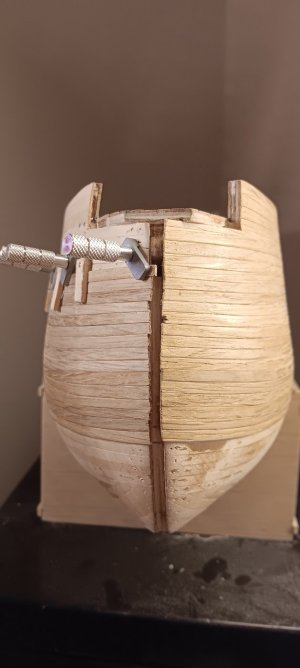
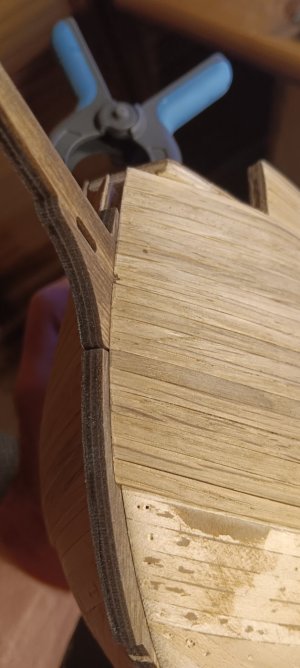
With the Esmeralda, because of its tapered bow, I fitted the keel before the first layer of planking.
On the San Martin, which is similar to the one you’re building, I didn’t fit the keel until after the second layer of planking. That was partly because I used 1mm-thick oak strips instead of Occre’s thin strips. To ensure a straight line, my wife’s nail files actually came in handy – they were the same thickness as the keel timber.
If you’re using Occre’s strips, I’d tend to fit the keel before the second layer. Because the material is so thin, there’s hardly any scope for sanding it down without the light-coloured lime wood showing through straight away.Greetings from the Palatinate


Translated with DeepL.com (free version)

20240901_055131.jpg

20240901_055106.jpg

20240830_195037.jpg

20240901_055045.jpg
 
Hi.
Thank you for the join just starting in this hobby wife bought me the Occre buccaneer done lots of plastic but thought it time to venture into wood I am at the moment just watching lots of videos and reading the plans over and over reallyenjoying the builds I see on here I have one question it seems to me a better idea too fit the keel after the first planking to give a better finish but the plans and vids say after the 2nd planking what’s everyone thoughts on this excuse typing and punctuation not my strong point
Thanks Del.

Hi bricktotoo, since you mentioned you're starting out with wooden kit building, my advice would be to follow the instruction sheets; I wish you success in your construction.
 
Greetings from a fellow Brit. SoS is a thoroughly good place to watch your back if you are new to the process. Always plenty of good advice here - sometimes diametrically opposed, so you gather both sides of an idea and make your own decision. Others have already suggested different ideas, so I'll confine myself to just one thing you need to know

Sharp
and
Accurate

well, that's 2, but counting is difficult....

Sharp - because we are working in wood. Most people don't really know what 'sharp' is. Look at some woodworking sites for how to sharpen tools. in our scales, we need to be surgically sharp, so buying your preference for equipment and knowing how to sharpen is essential.

Accurate - because if you are modelling a scale inch in 1/96 scale you have to be very, very accurate else things do not fit. Abrasives are over used nowadays, partly because there are motorised tools to use them. Abrasives are not accurate, and they leave rounded off arrises (corners) by their nature. Abrasives are very useful in the right context however, but never hand-held or casually on a bench and the work hand held and rubbed across it. Make simple jigs that hold glued down abrasives at fixed angles or for use like a file. (Learn to file too - there is a 'muscle memory' to install that helps file a surface to flat and doesn't rock the file across.
Which reminds me - the other thing is to have a means of work holding which is solid. A small engineers vice equipped with wood and leather jaw covers springs to mind. A range of jewellers work holding and watchmakers tools also come to mind, but when you find something that needs 'something else' to let you do the absolute best you can, just enquire here, and there will be a fistful of sensible suggestions by midnight.

Welcome !
and enjoy !

Jim
 
Welcome aboard, Del! I happen to be approaching a similar situation on the little Clara May English Ketch I'm building.

Artesania Latina's instructions tell me to prepare a 4mm flat area for the stem (which is 5mm wide) after the first planking but the stem isn't attached until after the veneered second planking. One school of thought is this method will give you the clean transition between planks and stem but I agree with others that if any significant sanding of the veneer is needed for a good fit of the stem, it could cause issues. I'm going to generally follow the instructions but take the time to accurately sand the 4mm flat and pre-fit the stem pieces. This should also give me a good edge to trim off excess veneer before installing the stem.

I'm sure yours will work out just fine and I wish you good luck!

IMG_1399.jpeg
 
Hi texbilly
Thank you for reply and answer I always found it amazing to correspond so easily with people all over the world Del.
 
Back
Top