
-

SUBSCRIBE TO SHIPS IN SCALE TODAY!
The beloved Ships in Scale Magazine is back and charting a new course for 2026!
Discover new skills, new techniques, and new inspirations in every issue.
NOTE THAT OUR NEXT ISSUE WILL BE MARCH/APRIL 2026 -

Win a Free Custom Engraved Brass Coin!!!
As a way to introduce our brass coins to the community, we will raffle off a free coin during the month of August. Follow link ABOVE for instructions for entering.
You are using an out of date browser. It may not display this or other websites correctly.
You should upgrade or use an alternative browser.
You should upgrade or use an alternative browser.



- Joined
- Oct 2, 2025
- Messages
- 418
- Points
- 128

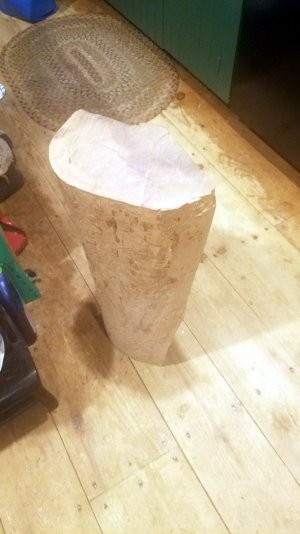
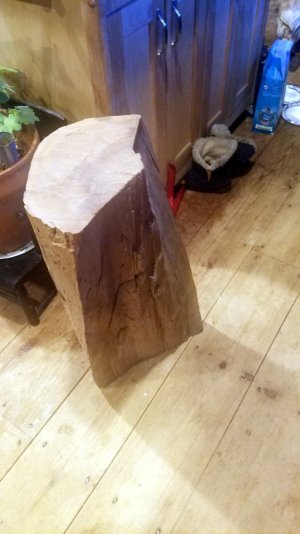
There is not as much usable wood as is probably thought. The twist of the split plane will loose much of it. The arc of the outer edge comes up on you quickly. I am guessing on the waste. I do not process wood for a living. But I have done it and been disappointed by the low yield.
I would pay maybe $5. That would be retail for a board foot, considering that is what rough kiln dried 8x4 Black Cherry would cost me. What species of Pear is it?
Better to get a whole tree from the city for free after a wind storm and that would be the ornamental Callery species. Of course there would then be the 2 year wait if you milled it still green into 2" thick billets.
I would pay maybe $5. That would be retail for a board foot, considering that is what rough kiln dried 8x4 Black Cherry would cost me. What species of Pear is it?
Better to get a whole tree from the city for free after a wind storm and that would be the ornamental Callery species. Of course there would then be the 2 year wait if you milled it still green into 2" thick billets.
Planking, beams and deck furniture - maybe. Framing stock - not nearly enough unless your scale is near miniature.Nice scratch kit


what zip code you are in might help too so people could estimate the shipping cost. 

It's crazy, but people are already selling firewood by the piece.

There is not as much usable wood as is probably thought. The twist of the split plane will lose much of it. The arc of the outer edge comes up on you quickly.
It's crazy, but people are already selling firewood by the piece.
I agree. "Well-seasoned" is a relative term. Six or eight years, minimum? Perhaps not enough, considering the grain. There's no telling what tension might be locked in that spiral and how it's going to behave when milled. Straight-grained stock should be milled into billets and stacked for faster drying time. Spiraled grain is probably put to better use by turners.
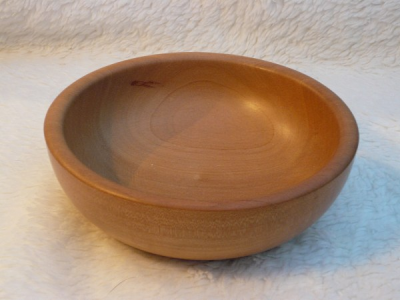
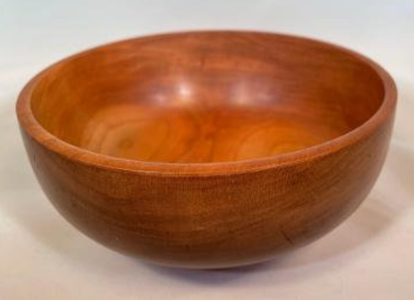
The piece pictured in the original post appears to have come from a rather large American ("Bradford?") pear tree, which commonly don't get much over a foot in diameter. Somebody apparently bucked the log and split it for firewood instead of cutting it for milling. I expect it would have been worth more as turning stock if it hadn't been split. It appears to be American pear, rather than European ("Swiss") pear, which is darker in color and less figured. (Swiss Pearwood is sometimes steamed "fumed" to darken it further.) The European pearwood is the stuff commonly seen in classic scale model ship construction. The two pictures of turned pearwood bowls above illustrate why the European pearwood is favored over the American stock for ship modeling, as well as just about every other common commercial use of pearwood. The third picture below is of a bowl turned from American Black Cherry, an American timber species distinct from the smaller cherry trees grown for their fruit. Commercially milled Black Cherrywood is widely available in North America and is available in widths substantially wider than European pearwood. Black Cherry commands relatively high prices as a premier cabinetmaking wood, as might be expected, but it is substantially less dear in its native land than pearwood. There is no rational reason why American ship modelers should favor pearwood over cherry, except where a worthy pearwood model requires an exact match for accurate restoration purposes. The characteristics of European pearwood and American Black Cherry relevant to scale ship modeling are virtually identical, save for the price of each in their natural ranges.
American pearwood turned bowl. Note repaired crack, possibly from stress release:

European pearwood turned bowl:
American Black Cherry turned bowl:
The cost of quality modeling wood is really a reflection of how "select" it is. Even a species as common as the fruit woods doesn't yield as much modeling quality stock as one would think looking at a log. Wood selected for modeling must first be selected for heartwood only, straightness of grain and clearness (the absence of knots.) Then, color matching and minimal figuring standards add two more levels of selectiveness, as well. Thus, while a species may be commonly available, when used for modeling, suitable modeling stock will often still be difficult to source commercially without paying a substantial premium. Every time a "grader" must select stock prior to sale, the price is going to go up. On the other hand, the more select the stock, the less market there is for it, so only so much "select" stock as the market demands is separated from the "supply line." The rest of the stock will be graded "select or better." It is best if the modeler can personally pick his own "select" modeling wood from "or better" stock in an otherwise less select stock at the lumber yard and then mill that down for modeling themselves. Alternately, it's sometimes possible to find a source of useable offcuts that are too small for full-size cabinet or furniture making, but "just right" for scale modeling. It's entirely possible for a local custom cabinetmaking shop to gladly keep a ship modeler in good modeling cherrywood forever at next to no cost.
There's no question about it, the relatively minimal investment in the few tools required to efficiently mill one's own modeling wood, which can be further minimized by using shared tools or those available at the "makers' clubs" now becoming popular in some places, will be fully amortized by the savings realized in modeling wood costs with surprising rapidity. There are excellent commercial sources of modeling wood, such as The Lumberyard for Model Shipwrights, and we should where we are able support such rare and valuable resources when we need to, and pay the premium for the service and products they provide, but to the extent modeling wood can be obtained independently of the "stream of commerce," the less costly by a large measure our modeling becomes.*
_______________________________________________________________
* Well, okay... okay. In the spirit of full disclosure, I have to admit that a lot of what I save on wood gets spent on tools.

Last edited:
Jokes aside, I have to admit that the pear is a great material for modeling. Before I got my hands on the pear rail, I was using the crappy wood from the Amati kit or the equally crappy wood from my 1911 Zinger sewing machine. After working with the pear, I realized why it is so highly valued in the modeling world.

Definitely. Just carve away everything that doesn't look like a ship!Nice scratch kit.



Boxwood is a 'favorite' one to sell in firewood size!It's crazy, but people are already selling firewood by the piece.


I would rather purchase milled planking material from Dave Steven’s at the lumberyard for model ship builders.