

Found this well done write up on anchors on another website and thought it would be helpful to share.
Allan
Part I: The Establishment
Chapter 1: The Craft of Making in the Eighteenth Century
The production of anchors during the eighteenth century was a complex and demanding metallurgical process, often undertaken by private forges operating under standing agreements with the Navy Board. These contracts were notoriously difficult, as the Navy Board was known to drive a hard bargain, leaving little profit margin for the ironmasters. This commercial tension is starkly illustrated by the case of Sir Ambrose Crowley, a leading ironmaster at the beginning of the century, who found himself with a surplus of large, unsellable anchors after his contract expired. These were eventually purchased by the Navy, but only on unfavourable terms. Similarly, in 1703, the ironmasters Davis, Smith, and Bradfield collectively refused Navy orders, citing better prices offered by private merchants.
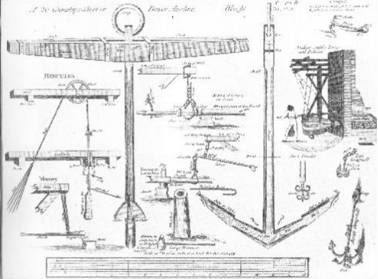
The construction of an anchor was a meticulous forging process, not a casting. The stock and arms were assembled from many small strips of metal, including scrap iron, which were cut, bent into shape, and heated in a furnace until they reached a white-hot state. A team of men, directed by a master smith, would then hammer the heated mass into a solid, gap-free unit. The scale of the work dictated the tools: ordinary sledge-hammers sufficed for smaller anchors, while larger ones required mechanical trip hammers. By the late eighteenth century, a specialized instrument known as a 'hercules' was employed, capable of lifting a 400-pound weight and dropping it onto the shank or arm to achieve the necessary consolidation.
This forging method endowed anchors with exceptional tensile strength along the grain of the metal. However, it was not without significant flaws, particularly with the largest anchors. The core of the anchor often failed to receive the same level of forging as the outer layers, a defect starkly highlighted in 1700 when a 40-hundredweight (cwt) anchor was condemned for being "so very ill wrought that the bars were whole and entire in the middle, and only cased over with a shell of iron." Once the forging was complete, the anchor was fitted with a metal ring and a wooden stock, and marked with a broad arrow, its weight, and the maker's initials for accountability.
Chapter 2: Design, Specification, and Standardization
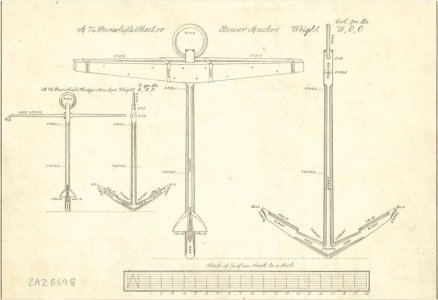
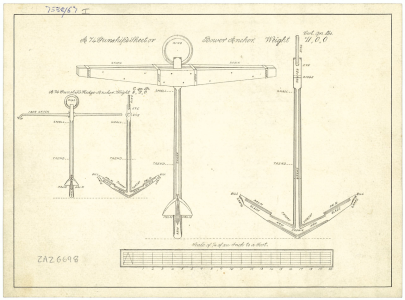
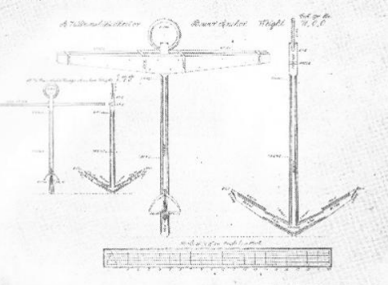
s were among the most critical items of a ship's equipment. While historical plans often depict only two, vessels from the Middle Ages onward carried at least four, a number that rose to as many as six by the 17th and 18th centuries. In the British Navy, the Admiralty strictly regulated the weight and proportions for each class of ship based on three fundamental dimensions: the length of the arm from the inside of the throat to the bill; the thickness at the trend (the point on the shank distant from the throat by the length of the arm); and the thickness at the "small" (where the shank taper meets the square, typically 1.5 to 3 inches less than the trend).
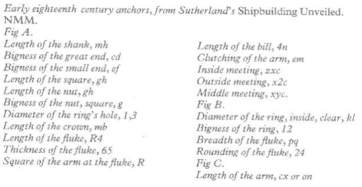
From these core measurements, a precise geometric formula was derived:
Length of shank = 3 × length of arm
Length of square = 4 × trend + ¾ small
Hole for the ring = ¾ small from the upper end
Outer diameter of ring = 4 × trend
Thickness of ring = ½ small
Width of base of palm = 4 × trend
Length of palm = base + 1 inch to 1.25 inches
Angle between arm and shank = 60°
Length of stock = shank + ½ diameter of ring
Width + depth of wooden stock at middle = number of inches that the stock is long in feet
Depth of wooden stock at ends = ½ depth at middle
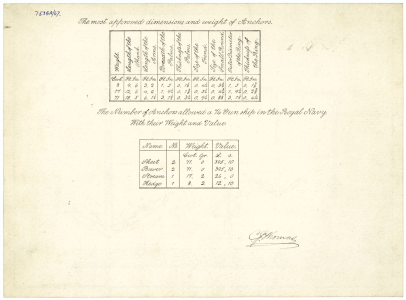
The "Establishment of Bowers" codified these weights. For example, a 100-gun ship required an 81cwt anchor with a 19-foot, 8-inch shank and a 10-inch trend, while a 24-gun ship required a 29.5cwt anchor with a 13-foot, 8-inch shank and a 6.375-inch trend.
Chapter 3: The Evolution of Stocks
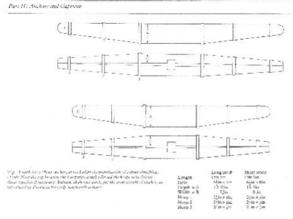
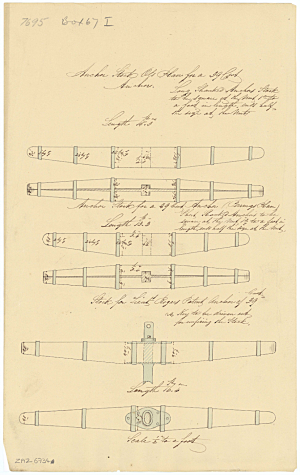
The design of the anchor stock, the cross-piece that ensures the flukes dig into the seabed, evolved in response to technological changes. A key example is the stock for a 39cwt anchor used after the introduction of copper sheathing around 1780. This design featured a distinct gap between its two parts, allowing the iron hoops to be driven closer together if necessary. In the early nineteenth century, a shorter stock was introduced by Pering for the same weight of anchor, reflecting ongoing optimization efforts.
Specifications for these stocks were precise:
Long Stock (c.1780): Length 15ft 3in; Hole 6.5in × 8in; Depth at A: 1ft 3.5in; Width at B: 7.75in; Three hoops: 2.25in × 0.625in each.
Short Stock (Pering): Length 13ft 3in; Hole 6.5in × 8in; Depth at A: 1ft 5in; Width at B: 8.5in; Three hoops: 2.25in × 0.625in each.
Chapter 4: Stowage, Rigging, and Historical Ambiguity
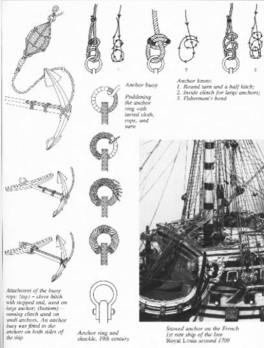
The physical stowage of these heavy anchors presented a significant challenge, dictated by seamanship and weight distribution. A typical establishment for a larger ship was highly organized:
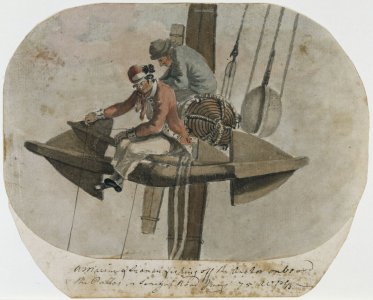
Best Bower anchor: Starboard, fixed to timber heads and the fore part of the fore channel.
Small Bower anchor: Larboard, fixed to timber heads and the fore part of the channel.
Sheet anchor: Starboard, fixed to the channel abaft the best bower.
Spare anchor: Larboard, abaft the small bower.
Stream and Kedge anchors: Stowed below decks or on the spare anchor.
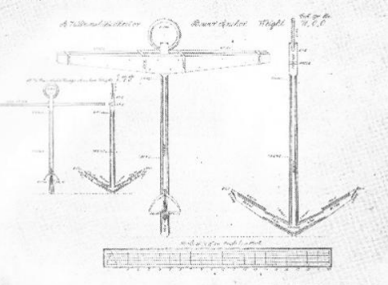
Despite their names, the best bower, small bower, sheet, and spare anchors were identical in size after the 1784 standardization. The stream and kedge anchors were significantly smaller, weighing approximately ¼ and ⅛ of the bower anchors' weight, respectively. A key design evolution occurred after the first decade of the nineteenth century when arms were formed as part of a circle and a shackle-type ring was introduced for chain cable.
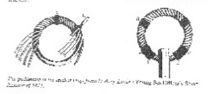
Prior to chain cable, anchor rings were "puddened"—wrapped with tarred canvas and served over with rope, secured with four snaked seizings. There were three primary methods for attaching the anchor rope:
Round turn and one or two half hitches: Used for smaller anchors and medieval hawsers.
The inside clinch: Preferred for large bower and sheet anchors, as it was easier to form in heavy cables.
The fisherman's bend: Used for four-armed grapnel anchors on galleys and Mediterranean vessels, as it was less likely to jam when wet.
buoys, made of light wood or cork covered in tarred yarn, marked the anchor's position on the seabed. Their ropes were clovehitched to the crown with the end stopped to the shank.
Allan
Part I: The
EstablishmentChapter 1: The Craft of
Making in the Eighteenth CenturyThe production of anchors during the eighteenth century was a complex and demanding metallurgical process, often undertaken by private forges operating under standing agreements with the Navy Board. These contracts were notoriously difficult, as the Navy Board was known to drive a hard bargain, leaving little profit margin for the ironmasters. This commercial tension is starkly illustrated by the case of Sir Ambrose Crowley, a leading ironmaster at the beginning of the century, who found himself with a surplus of large, unsellable anchors after his contract expired. These were eventually purchased by the Navy, but only on unfavourable terms. Similarly, in 1703, the ironmasters Davis, Smith, and Bradfield collectively refused Navy orders, citing better prices offered by private merchants.
The construction of an anchor was a meticulous forging process, not a casting. The stock and arms were assembled from many small strips of metal, including scrap iron, which were cut, bent into shape, and heated in a furnace until they reached a white-hot state. A team of men, directed by a master smith, would then hammer the heated mass into a solid, gap-free unit. The scale of the work dictated the tools: ordinary sledge-hammers sufficed for smaller anchors, while larger ones required mechanical trip hammers. By the late eighteenth century, a specialized instrument known as a 'hercules' was employed, capable of lifting a 400-pound weight and dropping it onto the shank or arm to achieve the necessary consolidation.
This forging method endowed anchors with exceptional tensile strength along the grain of the metal. However, it was not without significant flaws, particularly with the largest anchors. The core of the anchor often failed to receive the same level of forging as the outer layers, a defect starkly highlighted in 1700 when a 40-hundredweight (cwt) anchor was condemned for being "so very ill wrought that the bars were whole and entire in the middle, and only cased over with a shell of iron." Once the forging was complete, the anchor was fitted with a metal ring and a wooden stock, and marked with a broad arrow, its weight, and the maker's initials for accountability.
Chapter 2: Design, Specification, and Standardization
s were among the most critical items of a ship's equipment. While historical plans often depict only two, vessels from the Middle Ages onward carried at least four, a number that rose to as many as six by the 17th and 18th centuries. In the British Navy, the Admiralty strictly regulated the weight and proportions for each class of ship based on three fundamental dimensions: the length of the arm from the inside of the throat to the bill; the thickness at the trend (the point on the shank distant from the throat by the length of the arm); and the thickness at the "small" (where the shank taper meets the square, typically 1.5 to 3 inches less than the trend).From these core measurements, a precise geometric formula was derived:
Length of shank = 3 × length of arm
Length of square = 4 × trend + ¾ small
Hole for the ring = ¾ small from the upper end
Outer diameter of ring = 4 × trend
Thickness of ring = ½ small
Width of base of palm = 4 × trend
Length of palm = base + 1 inch to 1.25 inches
Angle between arm and shank = 60°
Length of stock = shank + ½ diameter of ring
Width + depth of wooden stock at middle = number of inches that the stock is long in feet
Depth of wooden stock at ends = ½ depth at middle
The "Establishment of Bower
s" codified these weights. For example, a 100-gun ship required an 81cwt anchor with a 19-foot, 8-inch shank and a 10-inch trend, while a 24-gun ship required a 29.5cwt anchor with a 13-foot, 8-inch shank and a 6.375-inch trend.Chapter 3: The Evolution of
StocksThe design of the anchor stock, the cross-piece that ensures the flukes dig into the seabed, evolved in response to technological changes. A key example is the stock for a 39cwt anchor used after the introduction of copper sheathing around 1780. This design featured a distinct gap between its two parts, allowing the iron hoops to be driven closer together if necessary. In the early nineteenth century, a shorter stock was introduced by Pering for the same weight of anchor, reflecting ongoing optimization efforts.
Specifications for these stocks were precise:
Long Stock (c.1780): Length 15ft 3in; Hole 6.5in × 8in; Depth at A: 1ft 3.5in; Width at B: 7.75in; Three hoops: 2.25in × 0.625in each.
Short Stock (Pering): Length 13ft 3in; Hole 6.5in × 8in; Depth at A: 1ft 5in; Width at B: 8.5in; Three hoops: 2.25in × 0.625in each.
Chapter 4: Stowage, Rigging, and Historical Ambiguity
The physical stowage of these heavy anchors presented a significant challenge, dictated by seamanship and weight distribution. A typical establishment for a larger ship was highly organized:
Best Bower anchor: Starboard, fixed to timber heads and the fore part of the fore channel.
Small Bower anchor: Larboard, fixed to timber heads and the fore part of the channel.
Sheet anchor: Starboard, fixed to the channel abaft the best bower.
Spare anchor: Larboard, abaft the small bower.
Stream and Kedge anchors: Stowed below decks or on the spare anchor.
Despite their names, the best bower, small bower, sheet, and spare anchors were identical in size after the 1784 standardization. The stream and kedge anchors were significantly smaller, weighing approximately ¼ and ⅛ of the bower anchors' weight, respectively. A key design evolution occurred after the first decade of the nineteenth century when arms were formed as part of a circle and a shackle-type ring was introduced for chain cable.
Prior to chain cable, anchor rings were "puddened"—wrapped with tarred canvas and served over with rope, secured with four snaked seizings. There were three primary methods for attaching the anchor rope:
Round turn and one or two half hitches: Used for smaller anchors and medieval hawsers.
The inside clinch: Preferred for large bower and sheet anchors, as it was easier to form in heavy cables.
The fisherman's bend: Used for four-armed grapnel anchors on galleys and Mediterranean vessels, as it was less likely to jam when wet.
buoys, made of light wood or cork covered in tarred yarn, marked the anchor's position on the seabed. Their ropes were clovehitched to the crown with the end stopped to the shank.