• Ships of Scale has incorportated an extra level of security when you log In. Please follow on-screen prompts to acknowledge that you are not a robot via a "Check Box" or a "Pictorial Check Box Puzzle". This is needed due to higher level of AI Activity Security.
  • SUBSCRIBE TO SHIPS IN SCALE TODAY!

    The beloved Ships in Scale Magazine is back and charting a new course for 2026!
    Discover new skills, new techniques, and new inspirations in every issue.

    NOTE THAT OUR NEXT ISSUE WILL BE July/August 2026
  • Win a Free Custom Engraved Brass Coin!!!
    As a way to introduce our brass coins to the community, we will raffle off a free coin during the month of August. Follow link ABOVE for instructions for entering.

Making your own Ropes

I figured, exactly as Stephan pointed out, that it would be impossible to see the LH winding on such a small rope. Anyway, it was a test which I tried as Stephan suggested. The rope came out fine, but I don't know whether it was for the LH setting, or the fact that I let it spin hanging vertically with a clamp at the bottom. Fresh out of the machine, it wanted to twist and curl up like mad...
try a little more weight. These small ropes always twist a lot. But with a little more weight it could be less. It also helps to leave the rope in the machine for a minute of 2 after turning.
 
The issue I'm having with the E121 thread is that I find it to be very elastic and fragile, and when the rope is twisted, it tends to severely curl back and shrink. Especially when twisting low diameters. I've tried the following setup with E121: 3x1 with minimum tension applied by the spring-loaded mechanism, 5% reduction of original length during the first phase of the twisting, in order to make rope I can use for seizing, output of approximately 0.21. This is the lowest I can obtain, but the rope tends to severely shrivel once I cut it free from the ropewalk. I can save perhaps a meter, as both ends curl back irreparably.
But even with different other setups tried so far (3x2, 3x4, 3x6) with tension which gets increased as the number of threads (yarns?) increase, Gutermann E121 remains an unstable and elastic rope that tends to shrivel back to various degrees. I'm not sure where I'm going wrong. Other than the setup with the variable spring-loaded mechanism, which I can't really control, I don't see where else I could be improving the process.
Your not winding tight enough. When I first started experimenting with E121 and the other E thread sizes I had the same issue and found I had to use more weight at 10 to 13%

And wind tight. I often make rope with no unwinding after I cut the ends of the ropewalk machine.
 
Your not winding tight enough. When I first started experimenting with E121 and the other E thread sizes I had the same issue and found I had to use more weight at 10 to 13%

And wind tight. I often make rope with no unwinding after I cut the ends of the ropewalk machine.
Indeed, more weight will take more windings to reach the 10%. Just experience with it till you get it right without breaking the yarns.
 
Your not winding tight enough. When I first started experimenting with E121 and the other E thread sizes I had the same issue and found I had to use more weight at 10 to 13%

And wind tight. I often make rope with no unwinding after I cut the ends of the ropewalk machine.
That might very well be the issue Phillip... but with a spring-loaded mechanism for tension, there's only su much I can do. I'm hoping to improve my system soon. Thanks for your feedback
 
Those are aftermarket hooks. I'm not sure of good sources in UK.
I see Cornwall Model Boats has a selection.. But I couldn't seem to be able to do a search to get different sizes in one place.
Drydock Models & Parts have some..
HIS Models have a large selection.

I have made hooks in the past but I don't think I can match that look, or do a good job of showing how.
I'll see what I can come up with.
Ok yes, they look delicate and not fit for my fingers to make. Any help with knowledge to find them on the planet would be a great benefit, and at 1/4 scale would be most appreciated.
 
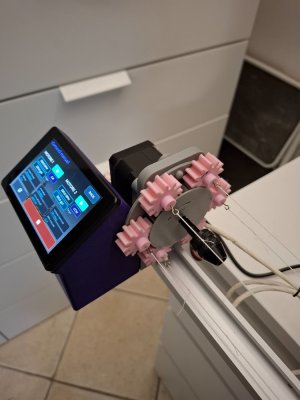
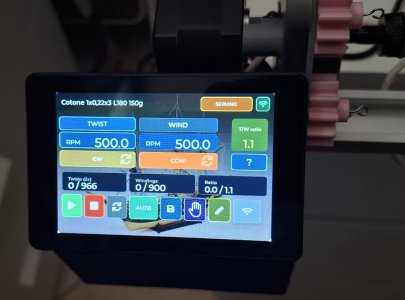
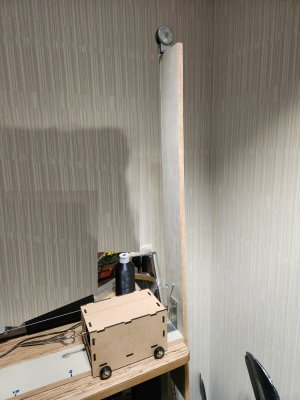
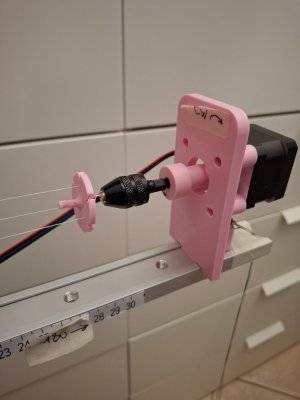
I developed a small smart ropewalk for ship modelling, with a touch display.

The machine can twist strands, close them into rope, and also perform serving. It supports manual and automatic operation, with saved recipes for repeatable results.

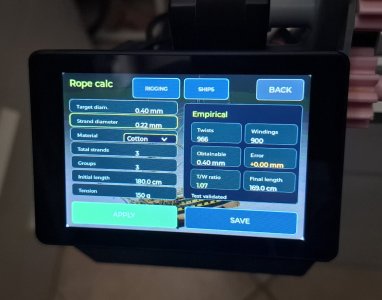
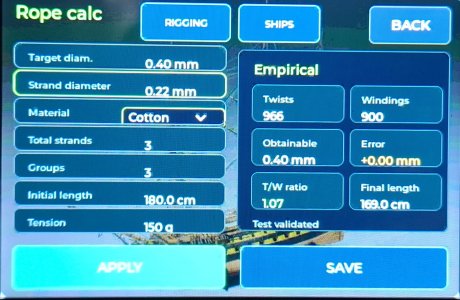
My software uses experimental recipes rather than a purely theoretical model. Starting from a known thread diameter, it suggests the number of strands, grouping, twist turns, closing turns, RPM and recommended tension to obtain a target rope diameter.

At the moment I am validating everything mainly with cotton thread, but the system can work with different materials. The current validated range goes from about 0.40 mm up to 1.50 mm finished rope diameter, with more tests being added.

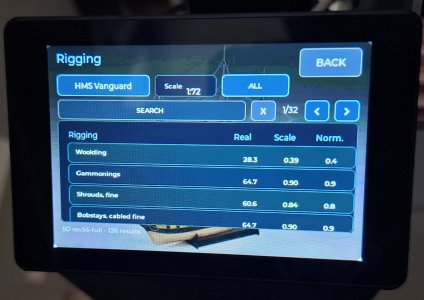
I also working on a rigging database, based on Steel tables. The idea is that the user selects the ship, scale and rigging item, and the software calculates the real rope diameter from historical data, scales it down, then suggests the closest validated rope recipe.

Firmware updates and database updates are handled via Wi-Fi/OTA, with the database stored on the microSD card.

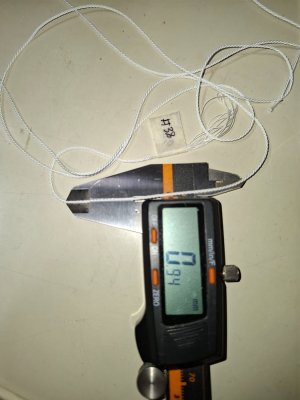
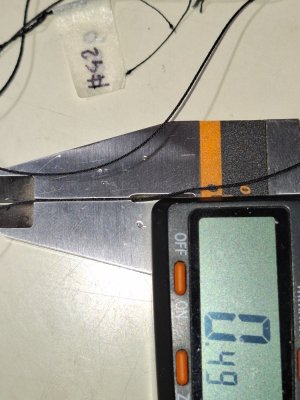
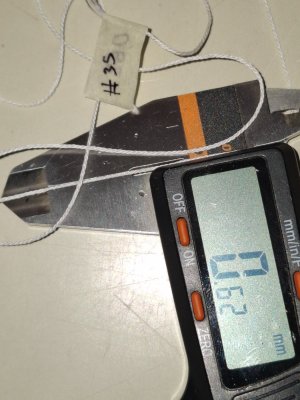
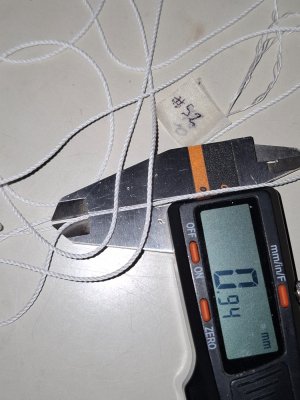
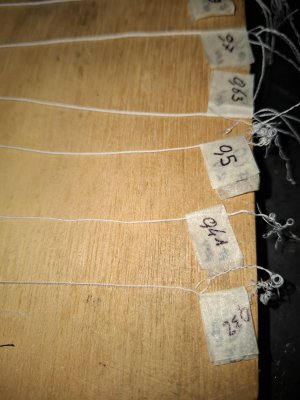
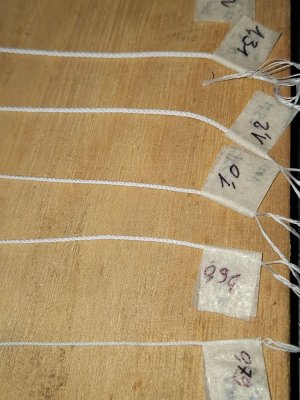
I attach some photos of the resulted ropes, still white cotton, not painted and not wax treated.

I would like to receive any comments about it.
20260707_184323.jpg

20260809_232311.jpg

20260829_121223.jpg

20260829_122220.jpg

20260829_133837.jpg

20260830_091102.jpg

20260830_091132.jpg

20260830_091139.jpg

20260830_091254.jpg
 
Wauw, Lorenzo, this certainly is next level. Do you have a movie or so and what is the length of the rope you create?
I am working on a movie to show the functionality. I am testing the machine with a lenght of about 1,8m but there's not a real limit, except the lenght of the connection cable to reach the second step motor (I did a cable of about 2,5m). It's not intended to work continuously: it doesn't have a continuous feeding. I am finding useful to have "shorts" of ropes in oder to decide which color or treatment i need to give depending on the use. Still a work in progress... I just discovered that the total number of different rigging for a vessel is about 930... Hope that the whole database will fit!
 
Great machine you made, looks like steady to make always the same rope.
A little advice, the direction is in your case LH, should be RH or named hawser laid.
Thank you Steef, I am not sure to understand your advice, can you explain what you mean?
 
Now I undedsratand! Thank you. I tried to twist in rh but the result was not perfect. Give me some minutes and I will try to reconfigure the machine to test a rh rope... Thank you agani!
 
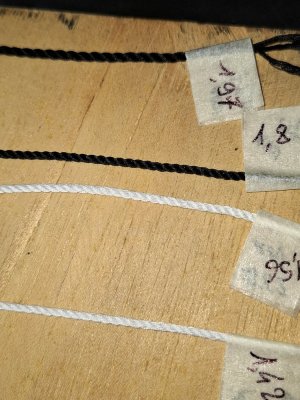
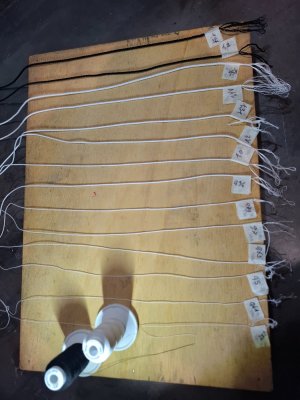
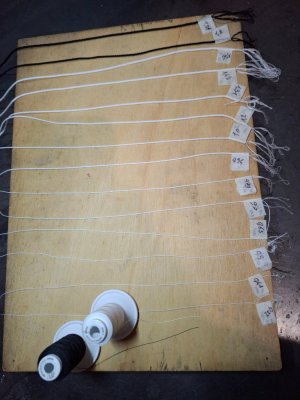
I am still working on my machine to achieve the best result I can. I did a certain number of test on various diameters, from 0,3mm to 2mm. I am quite satisfied with the ropes but maybe some more experienced eye can judge them better than me... what do you think? I attach some photos. The material is pure cotton, still wothout any painting or treatment.
Thanks for your comments!

20260903_231229.jpg

20260903_231134.jpg

20260903_231119.jpg

20260903_230950.jpg

20260903_230930.jpg
 
Back
Top