


Colleagues,
(I was absent from the forum for a long time due to a very serious illness in my closest family and you can imagine that this situation changed my priorities for some time)
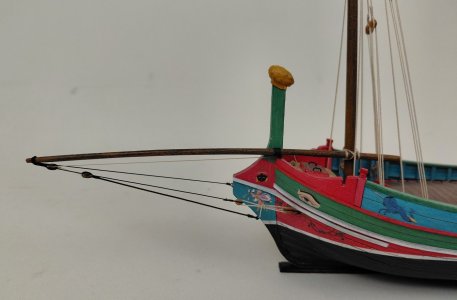
Here's a new Mediterranean boat design that has long tempted me with its cheerful colors and interesting shape. I'll base a few introductory words about the Xprunara on the works of Joseph Muscat, available online. I'm sure some of you have seen on this forum the beautiful speronara made by Javier, it's the same model in a larger scale and made of cardboard. The xprunara, or the speronara, is the prototype of all traditional Maltese boats. The main features of traditional Maltese boats were high stemposts attached at right angles to the straight keel, often additional washboards on the sides to protect against waves, and carvel planking.
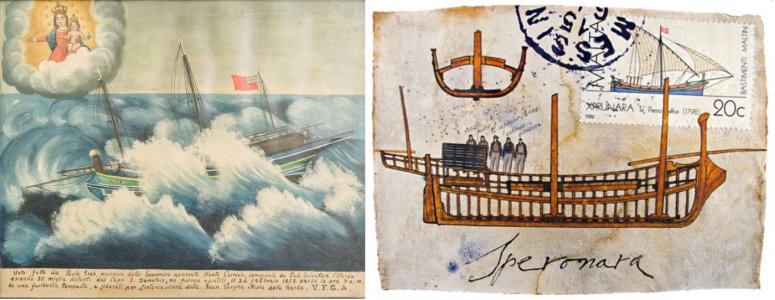
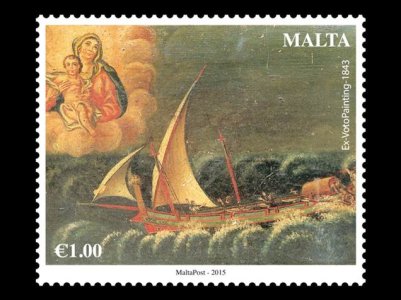
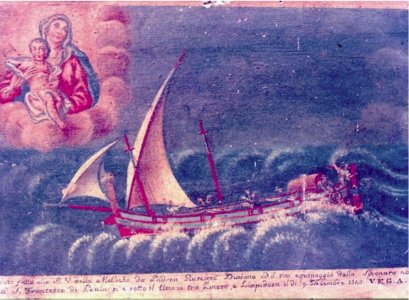
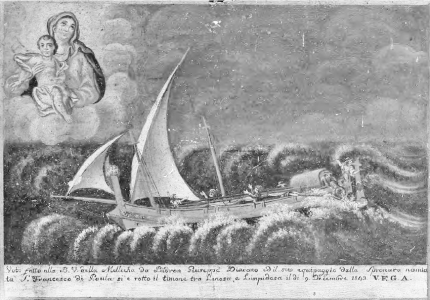
The first written information about the xprunars supposedly dates back to 1576, but fully reliable sources date back to the early 17th century. The first "visualization" of the speronara appears in a votive painting from 1740 in the Tal-Ħerba sanctuary. The Order of Malta (Sovereign Military Hospitaller Order of Saint John of Jerusalem, of Rhodes, and of Malta) had much in common with Malta. They settled on Malta in 1530 and, over time, created a monastic state that lasted until 1789, when Napoleon's fleet occupied the island and transformed it into an overseas province of France. A large number of various records, port and customs documents, and codified port regulations date from this period and beyond, which I won't describe here, as that would be boring. But a few interesting facts, if you'll allow me.
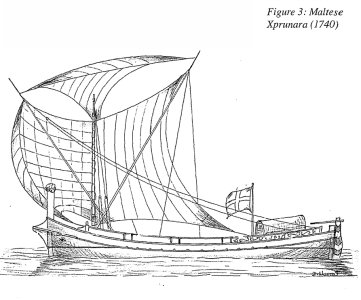
The main purpose of these vessels was to transport goods and passengers from Malta to Sicily, a journey that took approximately 12 hours. Speronars, not only those serving in the Order of Malta, were almost always named after saints. Not only the Knights of Malta but also the French, after occupying the island, attempted to use this design for military purposes, and even built an armed version of the speronar (Calypso-class). Unfortunately I haven't been able to find anything more on the subject.
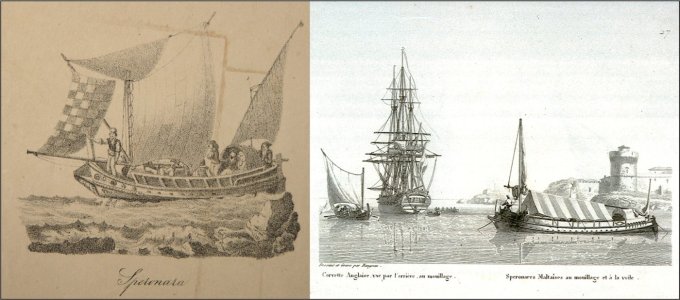
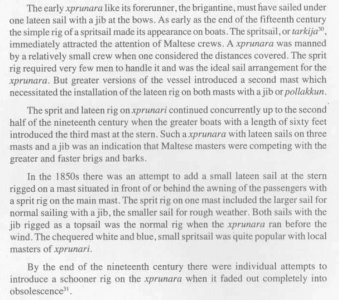
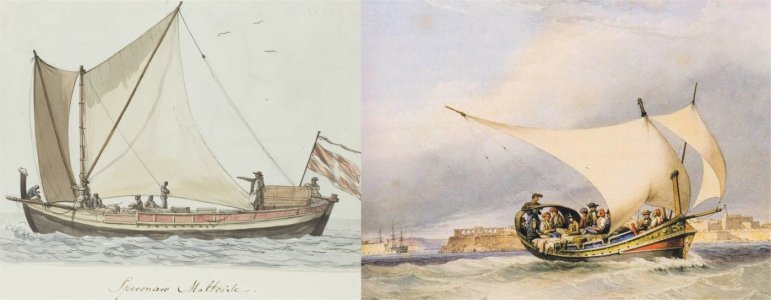
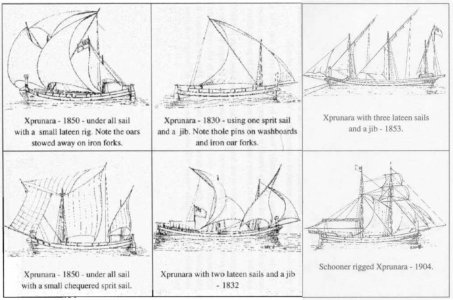
These were usually small boats with a hull length of no more than 10 meters. It wasn't until the 19th century that larger vessels, up to 18 meters long, were built. The sails could be discussed at length, as they took on a wide variety of forms: from the typical lateen sail to the spritsail, to the square sail, like a schooner. The drawing below shows the variety of hull and sail designs.
Sepronars ultimately met their demise at the beginning of the 20th century.
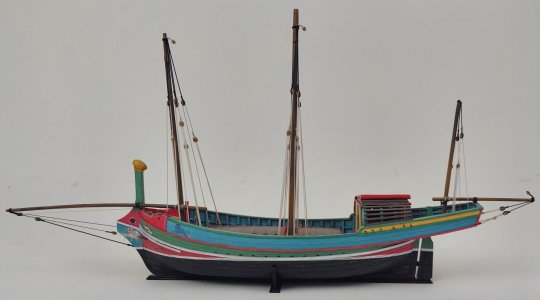
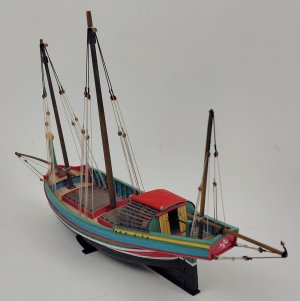
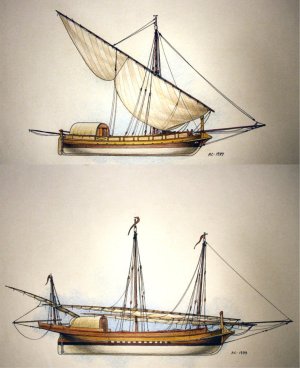
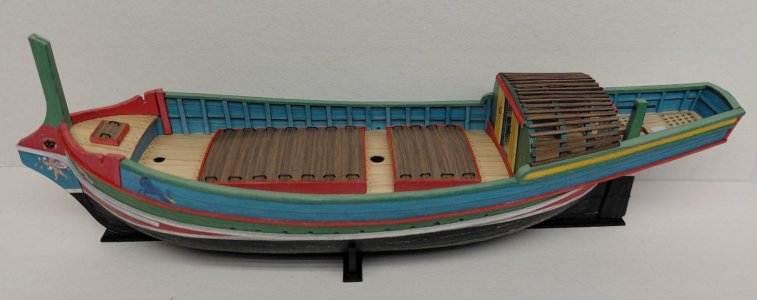
The model being built is a large mid-19th century 3-masted speronara with lateen sails.
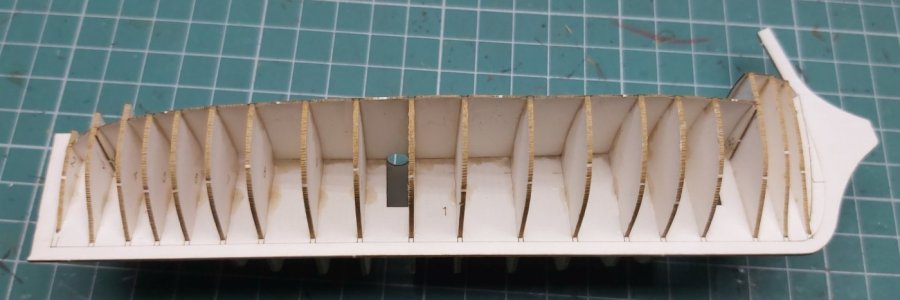
The beginning of construction was so standard that there's not much to write about: the frame, the first (transverse) skin, and the second (longitudinal) skin went together without any problems. A few photos from the construction were lost with the death of my old phone, so there are no photos of the second planking.
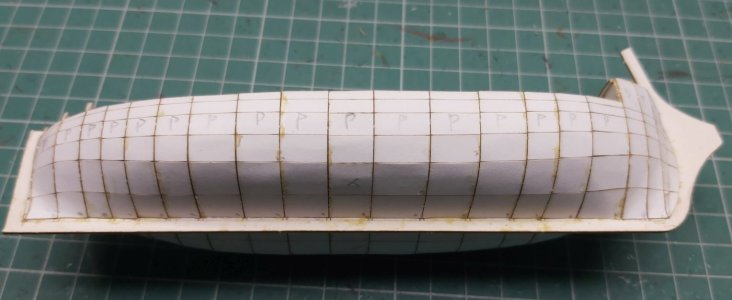
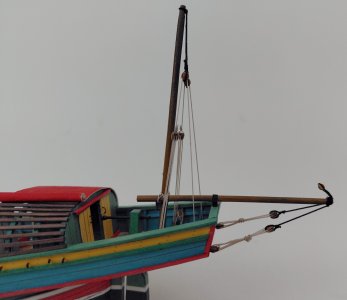
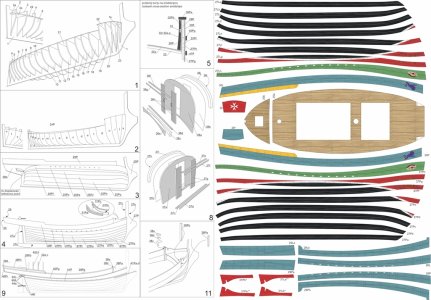
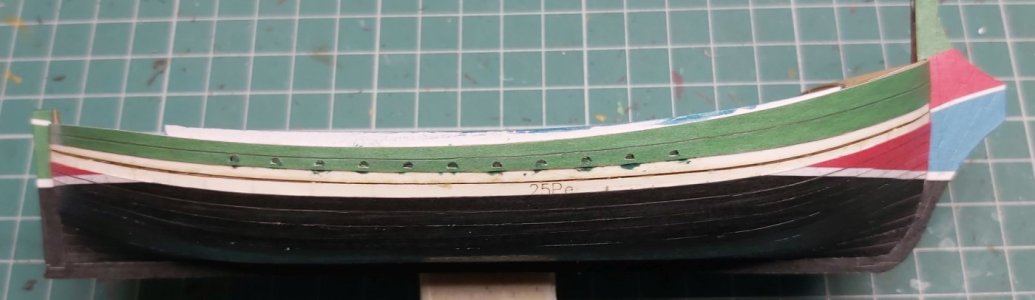
As usual, I glued the third layer of boards (in color) from the bottom, each strip being two planks. At the top, I skipped the second-to-last strip and first adjusted the drainage holes in the last strip, the green one. Finally, I glued the second-to-last strip, which I skipped, because both of its edges will be covered by reinforcements, so it is easy to fit.
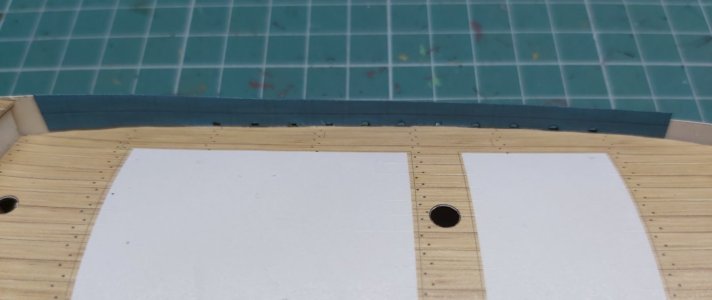
From the inside, I also glued in strips that, according to the design, extended over the edge of the gunwale, to glue next parts overlapping and connect next strip to the stern deck. The reference point for the entire stern deck gluing operation was the sternpost, which was to fit into the opening in the stern deck.
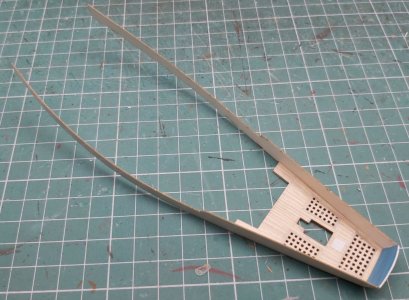
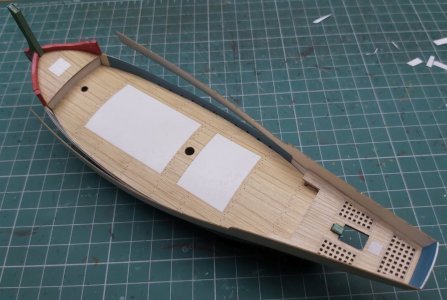
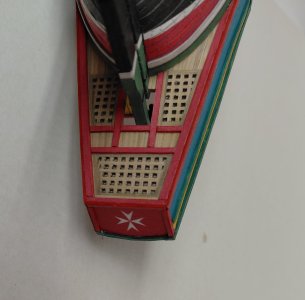
The aft deck received some slats from below, simulating reinforcements for the entire structure.
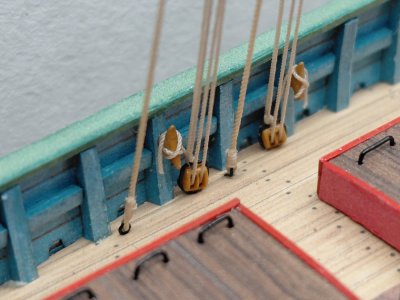
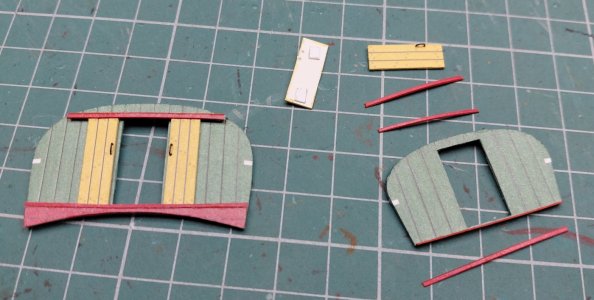
The bulkheads forming the passenger part were equipped with "rails" on which the sliding doors moved. Of course, everything is glued together (the doors are not movable).
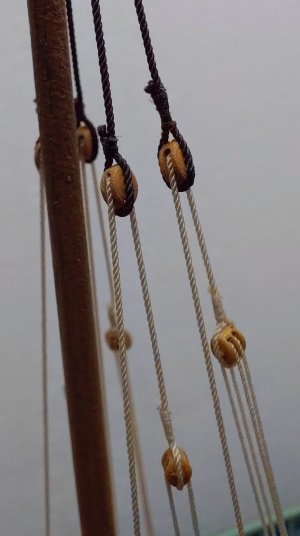
I won't describe the construction of the rudder blade and cargo holds, as that's obvious. At this stage, all that's left are the rigging, the canvas roof and perhaps the placement of a spare yard.
That's all for now.
Regards,
Tomek
(I was absent from the forum for a long time due to a very serious illness in my closest family and you can imagine that this situation changed my priorities for some time)
Here's a new Mediterranean boat design that has long tempted me with its cheerful colors and interesting shape. I'll base a few introductory words about the Xprunara on the works of Joseph Muscat, available online. I'm sure some of you have seen on this forum the beautiful speronara made by Javier, it's the same model in a larger scale and made of cardboard. The xprunara, or the speronara, is the prototype of all traditional Maltese boats. The main features of traditional Maltese boats were high stemposts attached at right angles to the straight keel, often additional washboards on the sides to protect against waves, and carvel planking.
The first written information about the xprunars supposedly dates back to 1576, but fully reliable sources date back to the early 17th century. The first "visualization" of the speronara appears in a votive painting from 1740 in the Tal-Ħerba sanctuary. The Order of Malta (Sovereign Military Hospitaller Order of Saint John of Jerusalem, of Rhodes, and of Malta) had much in common with Malta. They settled on Malta in 1530 and, over time, created a monastic state that lasted until 1789, when Napoleon's fleet occupied the island and transformed it into an overseas province of France. A large number of various records, port and customs documents, and codified port regulations date from this period and beyond, which I won't describe here, as that would be boring. But a few interesting facts, if you'll allow me.
The main purpose of these vessels was to transport goods and passengers from Malta to Sicily, a journey that took approximately 12 hours. Speronars, not only those serving in the Order of Malta, were almost always named after saints. Not only the Knights of Malta but also the French, after occupying the island, attempted to use this design for military purposes, and even built an armed version of the speronar (Calypso-class). Unfortunately I haven't been able to find anything more on the subject.
These were usually small boats with a hull length of no more than 10 meters. It wasn't until the 19th century that larger vessels, up to 18 meters long, were built. The sails could be discussed at length, as they took on a wide variety of forms: from the typical lateen sail to the spritsail, to the square sail, like a schooner. The drawing below shows the variety of hull and sail designs.
Sepronars ultimately met their demise at the beginning of the 20th century.
The model being built is a large mid-19th century 3-masted speronara with lateen sails.
The beginning of construction was so standard that there's not much to write about: the frame, the first (transverse) skin, and the second (longitudinal) skin went together without any problems. A few photos from the construction were lost with the death of my old phone, so there are no photos of the second planking.
As usual, I glued the third layer of boards (in color) from the bottom, each strip being two planks. At the top, I skipped the second-to-last strip and first adjusted the drainage holes in the last strip, the green one. Finally, I glued the second-to-last strip, which I skipped, because both of its edges will be covered by reinforcements, so it is easy to fit.
From the inside, I also glued in strips that, according to the design, extended over the edge of the gunwale, to glue next parts overlapping and connect next strip to the stern deck. The reference point for the entire stern deck gluing operation was the sternpost, which was to fit into the opening in the stern deck.
The aft deck received some slats from below, simulating reinforcements for the entire structure.
The bulkheads forming the passenger part were equipped with "rails" on which the sliding doors moved. Of course, everything is glued together (the doors are not movable).
I won't describe the construction of the rudder blade and cargo holds, as that's obvious. At this stage, all that's left are the rigging, the canvas roof and perhaps the placement of a spare yard.
That's all for now.
Regards,
Tomek