
-

Win a Free Custom Engraved Brass Coin!!!
As a way to introduce our brass coins to the community, we will raffle off a free coin during the month of August. Follow link ABOVE for instructions for entering.
You are using an out of date browser. It may not display this or other websites correctly.
You should upgrade or use an alternative browser.
You should upgrade or use an alternative browser.


Did the drop the anchor or did they not have enough time?


Why did they try? Surely they knew the height of their masts and the height of the bridge at a given state of the tide.


So sad to see that beautiful ship get damaged. 
they didn't intend to transit the bridge. they were out of controlWhy did they try? Surely they knew the height of their masts and the height of the bridge at a given state of the tide.


At least 2 dead, 22 injured after Mexican Navy ship strikes the Brooklyn Bridge, officials say
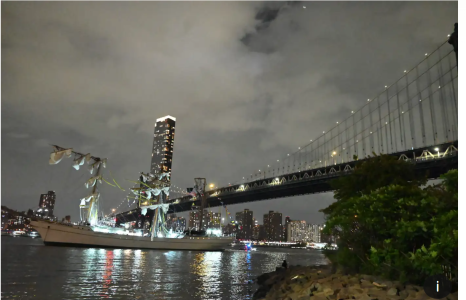
City officials said the ship, the Cuauhtemoc, struck the bridge shortly before 8:30 p.m. after losing power. Its two tall masts snapped off when it made impact with the 140-year-old suspension bridge as drivers sped by in either direction, according to multiple videos of the incident. In one video of the incident, crew members can be seen hanging onto ropes after the masts were severed.
The Mexican Navy wrote in a statement that 22 crew members were injured in the crash, with 11 left in critical condition. The NYPD reported that two people died of their injuries. The identities of the deceased have not yet been released.
The city and U.S. Coast Guard said all members of the crew had been accounted for, but city officials said 277 people were on the ship while the U.S. Coast Guard said 252. The Mexican government said the ship, which arrived in New York City on Thursday, had a total of 277 crew members.
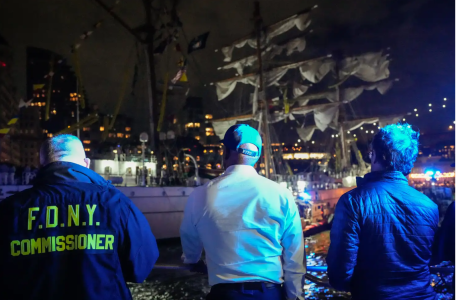
This video gives some insight to what happened.Why did they try? Surely they knew the height of their masts and the height of the bridge at a given state of the tide.
It was basically just leaving the port (to sail away from the bridge) and the current pulled it stern first under the bridge. They most likely lost engine power.
Thanks. I am now better informed. The video clip is interesting. I suppose with hindsight: keep the tug attached and/or wait for the ebb.
- Joined
- Jun 29, 2024
- Messages
- 1,432
- Points
- 393

Yeah, I agree. It share looks like she’s under power but headed in the wrong direction.

Kurt Konrath
Kurt Konrath
Now to find shipwrights to restore the masts and rigging after the engine and power issues are figured out.
I guess it will stay in NYC for a while till all is settled.
I guess it will stay in NYC for a while till all is settled.
Coincidentally, I was driving north on the FDR Drive along the western shore of the East River (Manhattan side) this afternoon. The vessel was moored on that side north of the Brooklyn Bridge. A sad sight with her masts broken and rigging in tatters. I agree with Senorbob: the video I watched seems to show the vessel going astern under power.
- Joined
- Jun 29, 2024
- Messages
- 1,432
- Points
- 393
Several years ago the museum ship Wavertree moored at the South Street Seaport was restored and rerigged at a shipyard on the New Jersey side of the New York Harbor Complex. Maybe they’ll get this job. Or maybe she’ll go under power back to Mexico.
It is interesting the way the topgallant masts broke without any apparent damage to the topmast and lower mast. It shows the strength of the traditional arrangement of shrouds and fore/aft stays.
- Joined
- Feb 11, 2019
- Messages
- 130
- Points
- 113

Mexico is our sister Republic. This is truly sad. The tug helped them out of their Manhattan berth and they turned her head toward the harbor. The East River has very strong tidal currents. We have not yet had a definitive answer to the technical issue.
This is the Mexican Navy's training ship. It's a modern build 1984 if I recall. It's named after the last emperor of the Aztecs.
The young people were "manning the yards," and they were experiencing a magnificent spectacle and providing one for the viewers on both sides of the river. They had been in port for a goodwill visit and were headed to Iceland.
It is awfully sad and we pray for the families of the two young people lost and for the injured. As always, FDNY, NYPD, Coast Guard and EMTS responded with excellence and compassion.
Ironically, the young lady who died was named America. Again prayers for America Sanchez and Adal Marcos and for their friends and families.
This is the Mexican Navy's training ship. It's a modern build 1984 if I recall. It's named after the last emperor of the Aztecs.
The young people were "manning the yards," and they were experiencing a magnificent spectacle and providing one for the viewers on both sides of the river. They had been in port for a goodwill visit and were headed to Iceland.
It is awfully sad and we pray for the families of the two young people lost and for the injured. As always, FDNY, NYPD, Coast Guard and EMTS responded with excellence and compassion.
Ironically, the young lady who died was named America. Again prayers for America Sanchez and Adal Marcos and for their friends and families.
1. You do not have to be very bright or be a very experienced OD to realize that YOU SHOULD HAVE THE GD TUGS TIED TIGHT TO YOUR VESSEL WHEN TRANSITTING A TIGHT, TORTUROUS ANDok guys here's my speculation on the accident. many variable pitch propellers go to full astern when there is a malfunction. this is my guess for the cause of the accident
UNPREDICTABLE MANEUVER such as they were undertaking. My guess is that ANY USN DECK FORCE E1 WOULD KNOW HOW TO HANDLA THIS PROBLEM.
2. This problem was created through pure stupidity. PERIOD! No excuses accepted.
3. IF their propellor was in reverse due to incompetent maintenance that just makes their excuses all the more pathetic and unacceptable.

Looks like the tug was assigned to push her bow around so that she was headed south away from the bridge. If her engine and propellor had been operating properly she would have been able to power south safely and we wouldn't be discussing her departure. However, it seems that a basic rule of safety was ignored: you should consider what could go wrong* and plan for that. As Bill points out, the tug could easily have been secured to the vessel and kept control if there was a malfunction. My thoughts are with those who grieve.1. You do not have to be very bright or be a very experienced OD to realize that YOU SHOULD HAVE THE GD TUGS TIED TIGHT TO YOUR VESSEL WHEN TRANSITTING A TIGHT, TORTUROUS AND
UNPREDICTABLE MANEUVER such as they were undertaking. My guess is that ANY USN DECK FORCE E1 WOULD KNOW HOW TO HANDLA THIS PROBLEM.
2. This problem was created through pure stupidity. PERIOD! No excuses accepted.
3. IF their propellor was in reverse due to incompetent maintenance that just makes their excuses all the more pathetic and unacceptable.
*see Murphy's Law