• Win a Free Custom Engraved Brass Coin!!!
    As a way to introduce our brass coins to the community, we will raffle off a free coin during the month of August. Follow link ABOVE for instructions for entering.
  • PRE-ORDER SHIPS IN SCALE TODAY!

    The beloved Ships in Scale Magazine is back and charting a new course for 2026!
    Discover new skills, new techniques, and new inspirations in every issue.

    NOTE THAT OUR FIRST ISSUE WILL BE JAN/FEB 2026

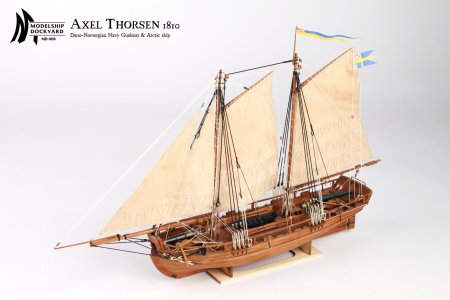
[Modelship Dockyard] Build log - PoB Axel Thorsen 1/72 Naval gunboat & Arctic ship

Joined
Oct 14, 2020
Messages
288
Points
323

Merry Christmas!

I will be taking a few days to finish this build log of the PoB Axel Thorsen 1/72 kit.
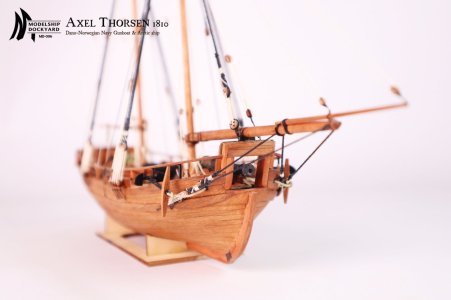
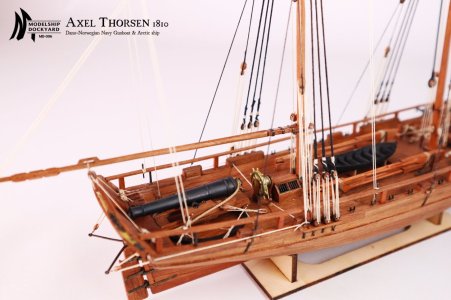
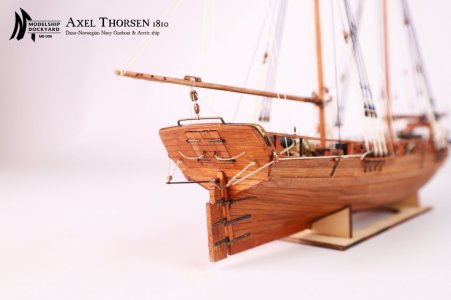
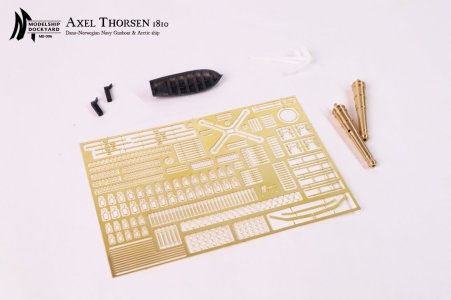
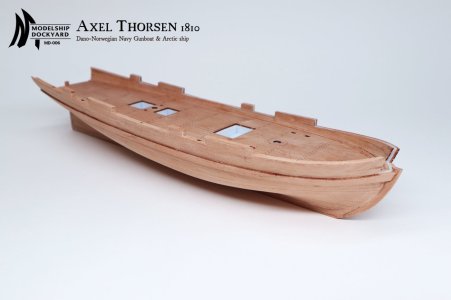
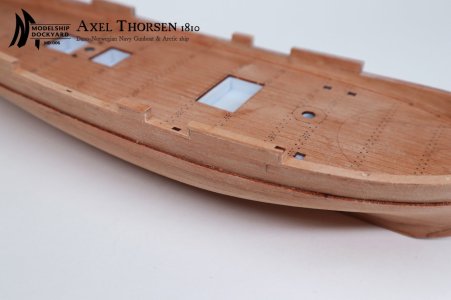
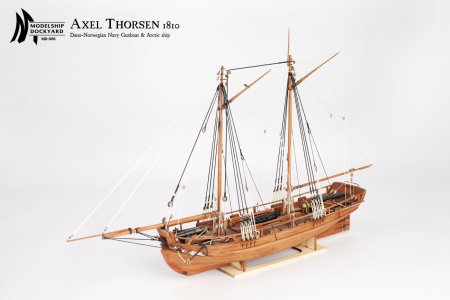
One pilot model have already build but I haven't take much photos while building it, here are some photos from that previous build:
1.jpg
2.jpg
3.jpg4.jpg5.jpg6.jpg7.jpg8.jpg
In this build log, I might do it in a relatively different fashion regarding the colouring, but I haven't decided yet.
It's estimated that the build log will be finished within this week, as it's a small and easy kit to build.
Also not sure yet if I will be building the rigging of this ship, it will depend on how much time I have when I finish the hull.


Anyways, I hope this build log provides help for those who are buillding it, and wish you enjoy the build and this lovely Christmas.

Vic.
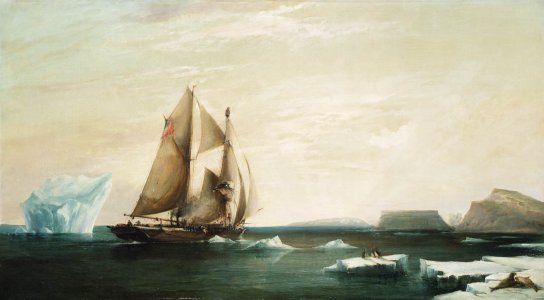
 
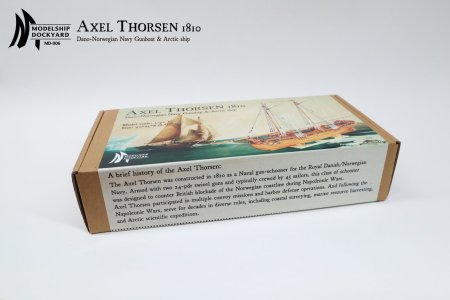
The ship's history:

The Axel Thorsen was constructed in 1810 as a Naval gun-schooner for the Royal Danish/Norwegian Navy. Built from pine, the vessel measured approximately 56 Norwegian feet (approx. 19 meters) in length with a displacement of 74 tons. It was armed with two 24-pdr swivel guns and typically crewed by 45 sailors. This class of schooner was designed to counter the British blockade of the Norwegian coastline during the Napoleonic Wars, primarily tasked with escorting merchant ships from the White Sea to Norway. In its early service, the Axel Thorsen participated in multiple convoy missions and harbor defense operations.

Following the Napoleonic Wars, the ship continued to serve for decades in diverse roles, including coastal surveying, Arctic scientific expeditions, and marine resource harvesting. Its final chapter came in 1872 during an Arctic exploration when it was trapped by ice and abandoned inTsjesjekaja Bay near Cape Kanin.

Axel Thorsen epitomized 19th-century maritime endeavors—from wartime defense and sovereignty assertion to Arctic exploration and resource exploitation. Its dual roles reflect the era’s complexities.
bhc3420.jpg
 
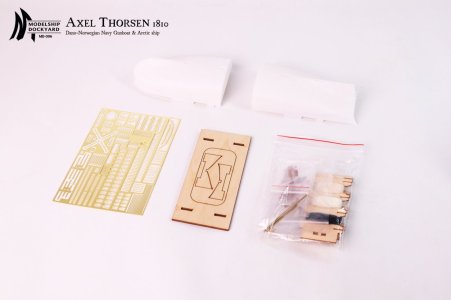
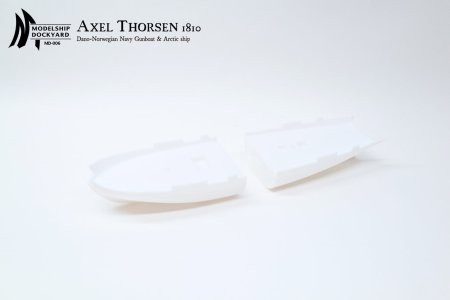
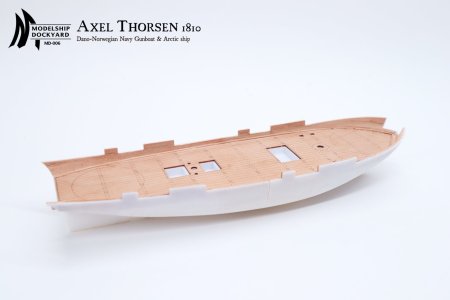
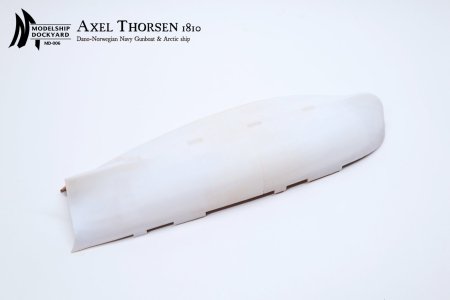
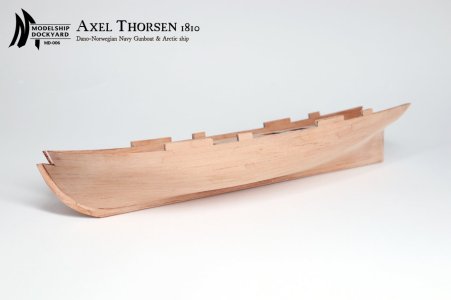
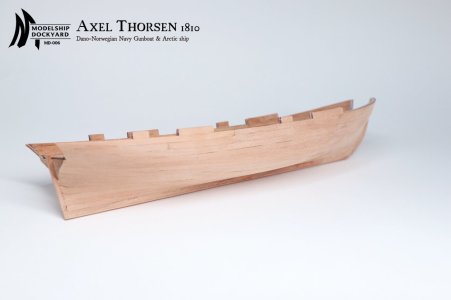
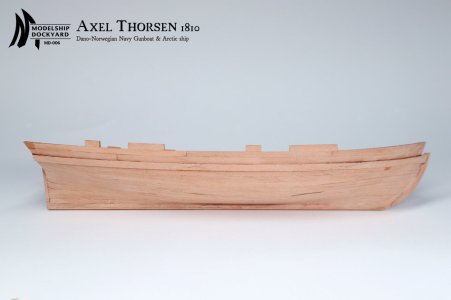
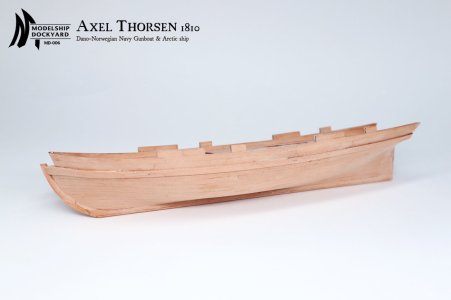
The 3D printed hull prepared, sometime there needs to be a bit of sanding to make the joint surface smooth, but as long as they can allign together with no problem (no very obvious seam or gap) it should be fine:
2.jpg
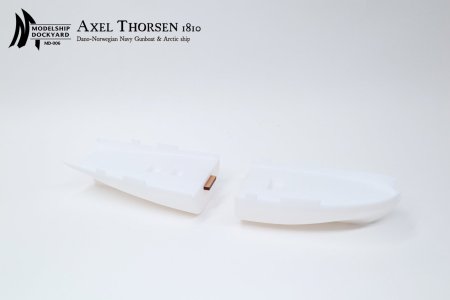
Insert the joint block. The block helps making the two pieces of hull alligned when assembling them:
3.jpg
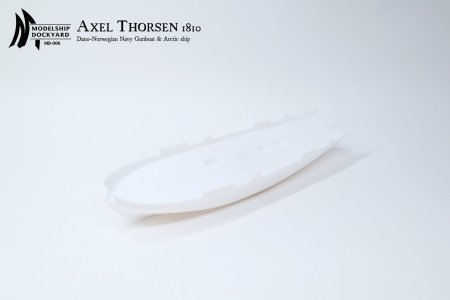
Glue the two part of the hull together using CA glue:
4.jpg
After gluing them together, I sand the joint seam of a bit, just to make them smoother.
 
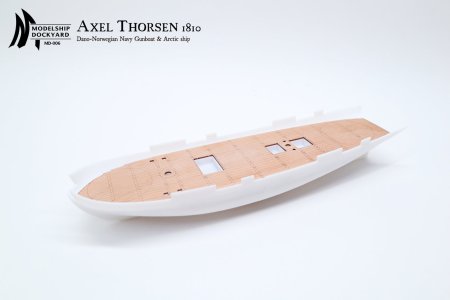
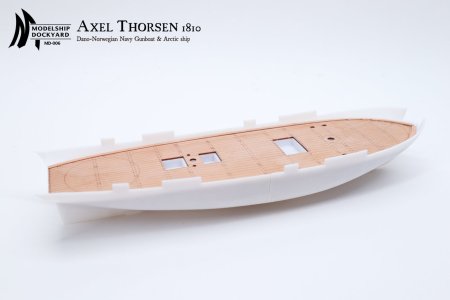
Glue the deck onto the hull with CA glue:
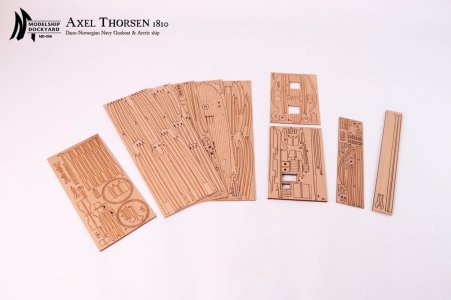
The deck was a whole cherry wood piece that was being laser cut. Well acturally all the timbers involved in this kit was cherry except the blocks which were pear wood. The nails and seams where cut on the deck.
5.jpg
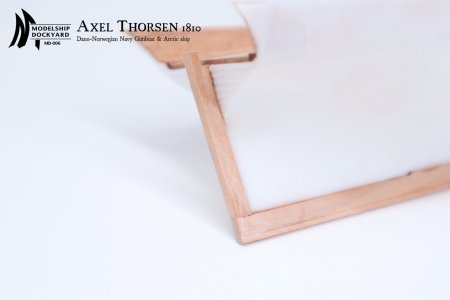
Prepare the waterways:
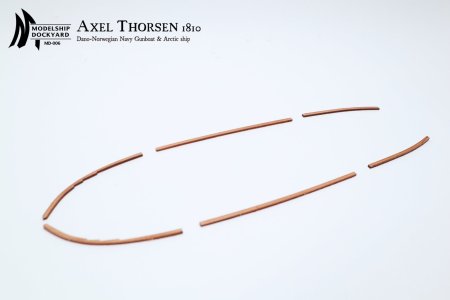
Each side of the waterway was being cut into 3 pieces. There are laser cut "reference lines/sanding lines" on the parts at the bow and stern.
6.jpg

Shape/sand the parts according to the reference line, so that they can fit well with the deck and the hull:
I used a sanding bar here that was roughly 2cm wide. A small file could also work but maybe not as efficient.
And the inside of the waterway parts also need to be sand, as there were carbon black on the pieces due to laser cutting.
The kit have given a bit of spare (0.15mm) for sanding off the carbon black, so no need to be worried about over sanding.
7.jpg
Fit the waterway parts onto the deck:
If they were sanded properly according to the reference line, and the carbon black as also sanded off, then the parts should fit smooth and tight into the gap between the hull and the deck. The upper surface of the waterway should be on the same level. If they were not, then there might be some under-sanding, and we shall sand it a bit more.
8.jpg
 
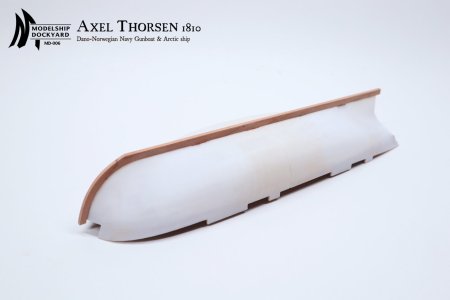
Prepare the planks for the inside of the hull:
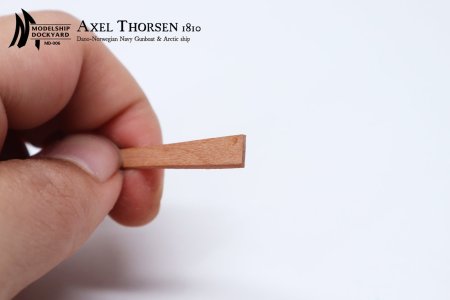
They were being 3D expanded so that should fit the shape of the hull easily. It was noticed by some builders that they find them a bit thick. It would be possible to sand them 0.1-0.3 thinner, even though I won't suggest that as it may affect the overall thickness of the wales. For my personal building experience on this part, I only soak the part of the bow in water for around 10 seconds, the part soften and can be glued fairly easily.
One thing I would recommend doing is to sand the bottom of the plank a small slope, a slope that have a same angle as the wales. This way the joint seam between the plank and the waterway would be smaller.
9.jpg
Planks are now in place: 10.jpg
 
Then I moved on to build the keel, here are all the part for the keel, including the main parts and a false keel:
12.jpg
First I sanded the joints between the parts, make sure there are no carbon black left to make negative effects on the adhesion of those parts:
13.jpg
Then the carbon black at the bottom and top also sanded. Glue the false keel in place:
14.jpg
Turned the hull upside down:
There were rabbets at the bottom for the protudes on the keel to be inserted in. This way of design can make sure the keel is straight in the middle.15.jpg
Apply glues to the inside of the keel, then fit it in place. I would suggest to mock assembly before applying glue so that nothing can go wrong.
16.jpg
Glue the stern post as well:
17.jpg
After gluing the stern post, there should be a roughly 1mm gap on each side of the stern. Those were for receiving the planks, no need to sand the stern post flat as the 3D printed hull:
18.jpg
 
Back
Top