

- Joined
- Nov 13, 2025
- Messages
- 168
- Points
- 113

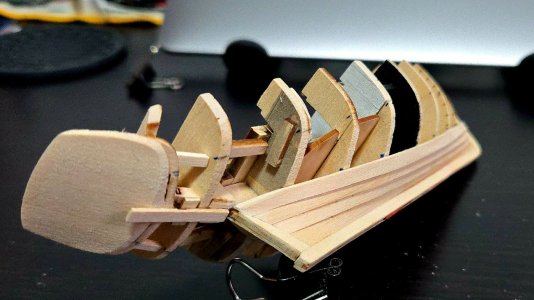
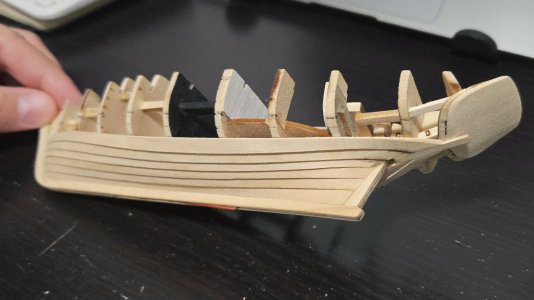
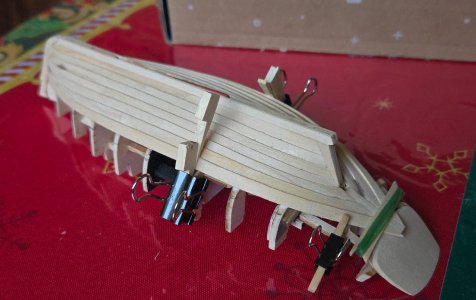
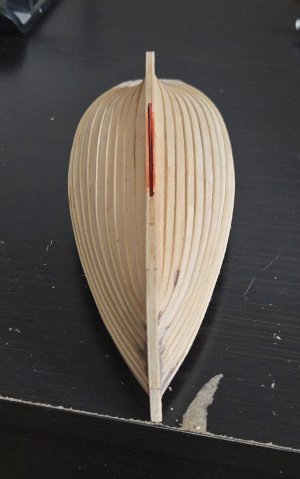
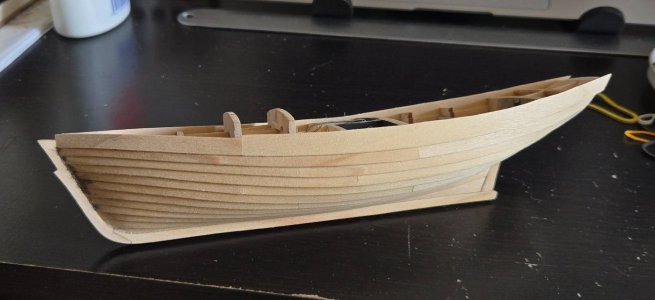
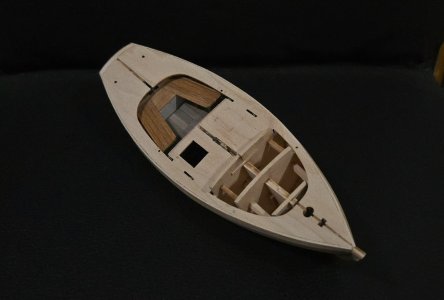
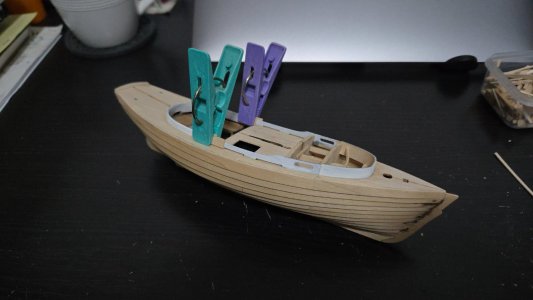
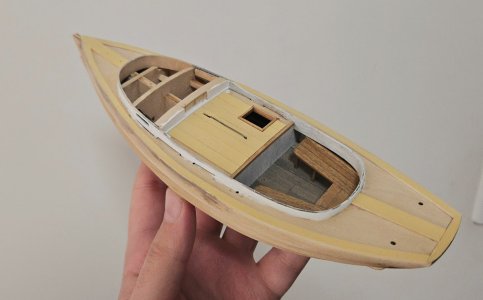
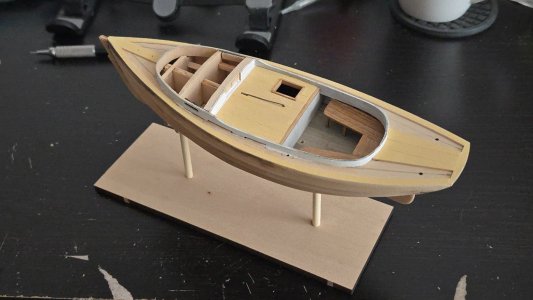
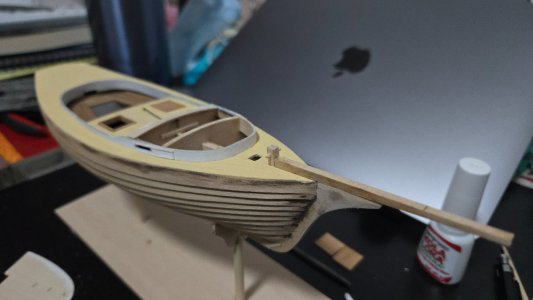
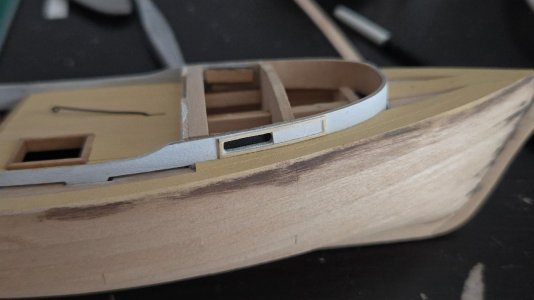
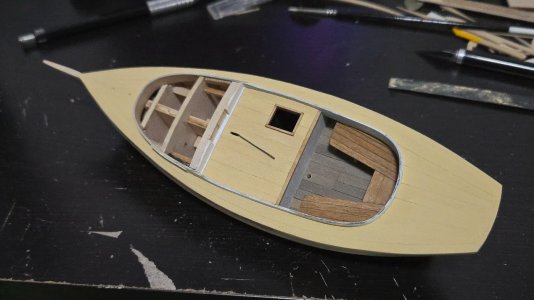
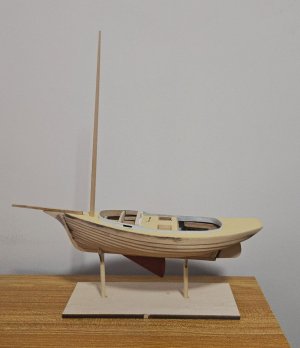
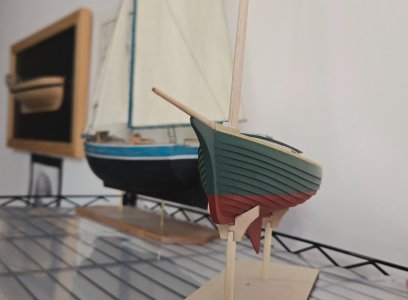
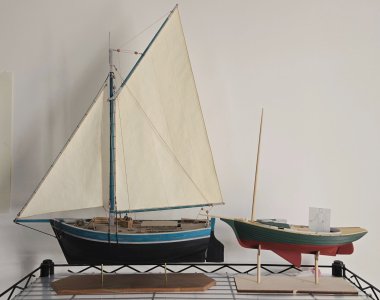
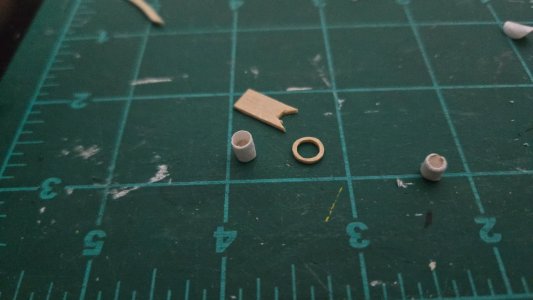
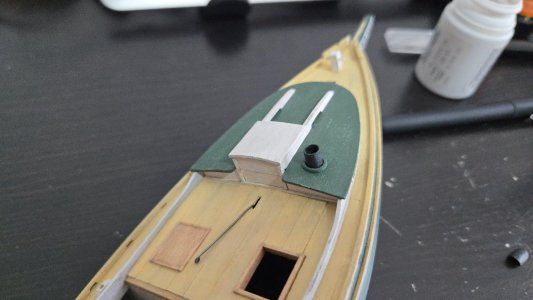
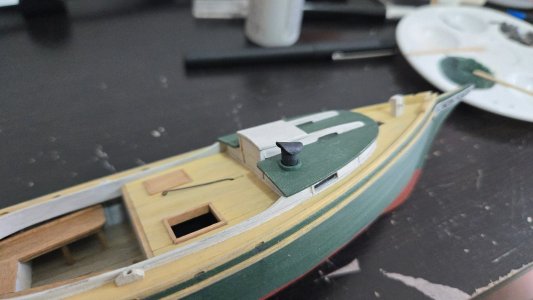
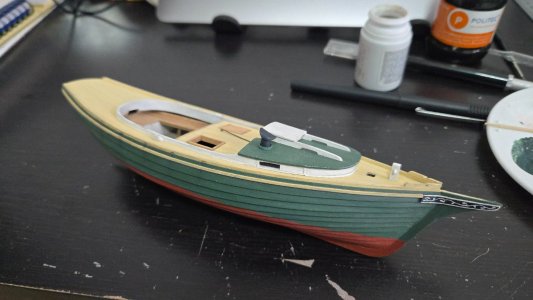
I'm midway through this build, but I thought it might be worthwhile to start a build log for it here. The complete story is on MSW.
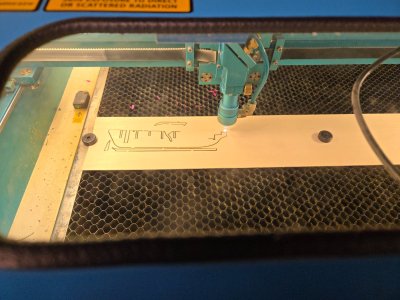
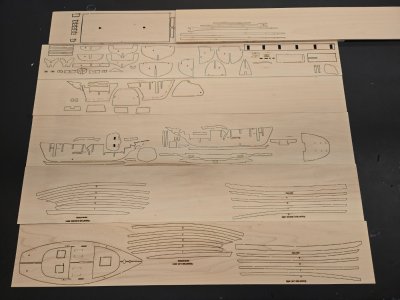
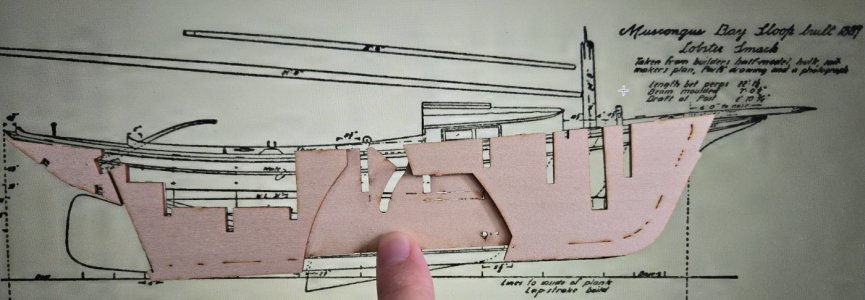
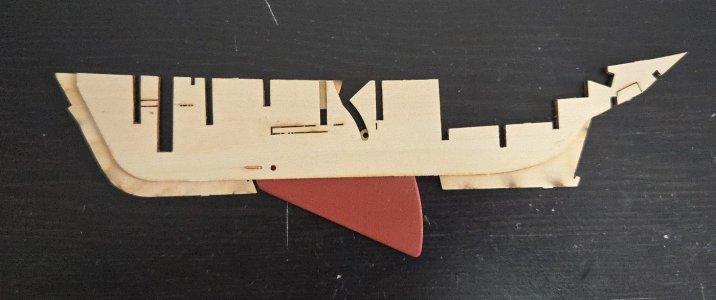
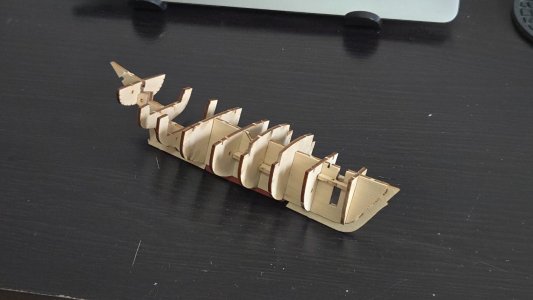
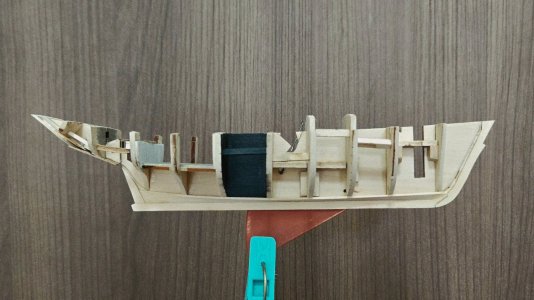
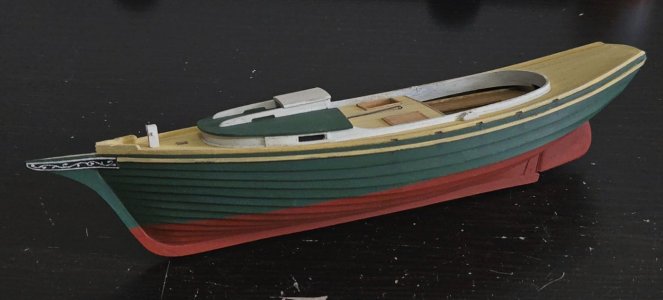
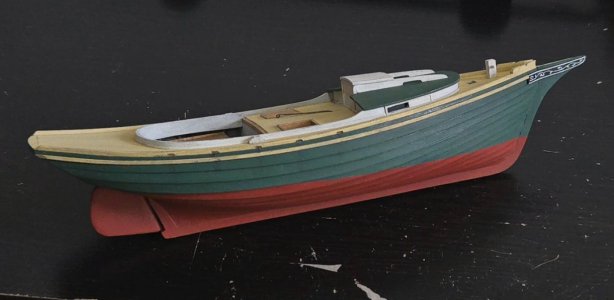
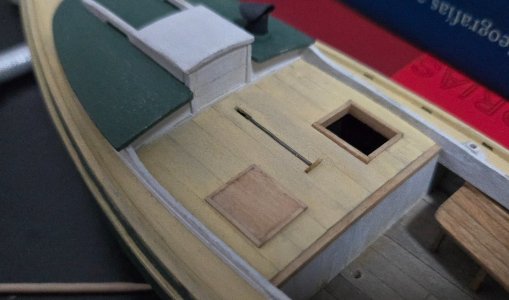
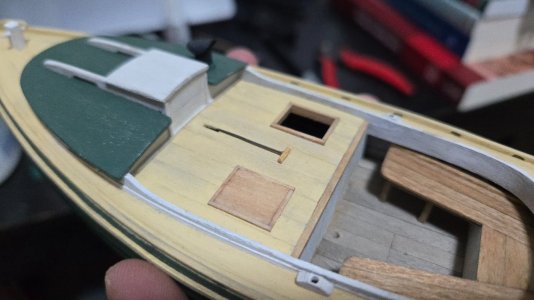
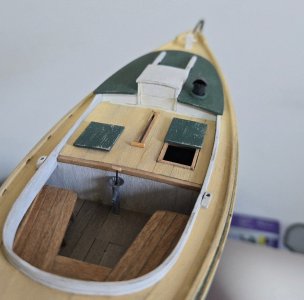
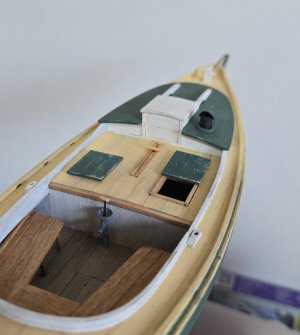
Several months ago, I started building a heavily kitbashed version of the Model Shipways Muscongus Bay Lobster Smack. I had initially tried to buy the kit as my third build, after having started with the Model Shipways Dory and a scratch-built Trajinera canal barge, as it seemed like a useful learning experience. However, I had difficulties shipping to Mexico, and so I ended up not receiving it until I was back in the US. By the time I could start it, I had already come to feel fairly confident in my modeling (at least with simple vessels) after having already done several kits and scratch-builds. Nonetheless, I wanted to build this kit. As a modeler, I'm mostly interested in vernacular workboats. Moreover, the kit had a reputation for being relatively accurate, so it seemed like a good basis for some kitbashing to make a more accurate and unique model. Finally, the scratchbuilds I was working on, while rewarding, were in pretty slow stages, so I wanted something faster-paced.
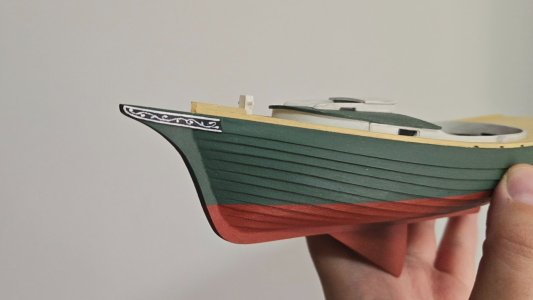
To summarize, my main modifications to the kit are the following:
- Rescale from 1:24 to 1:32 (in order to match my other builds)
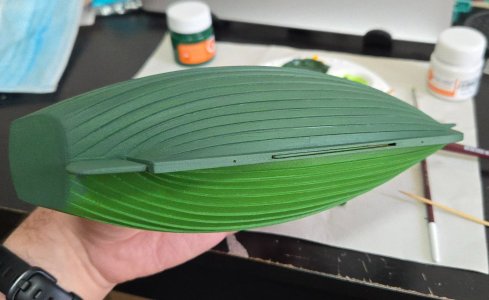
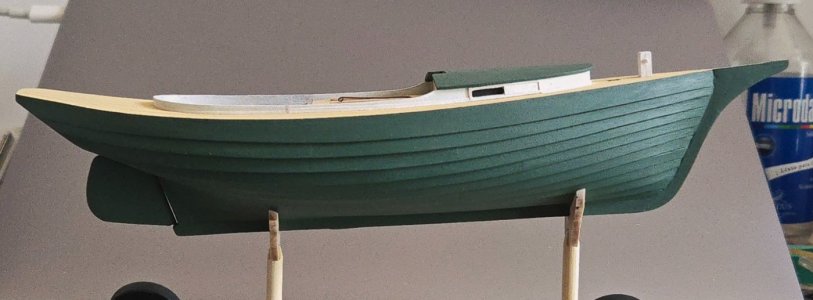
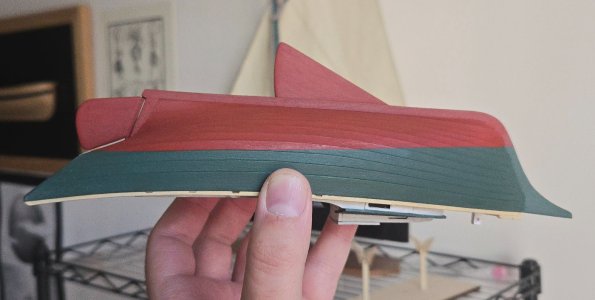
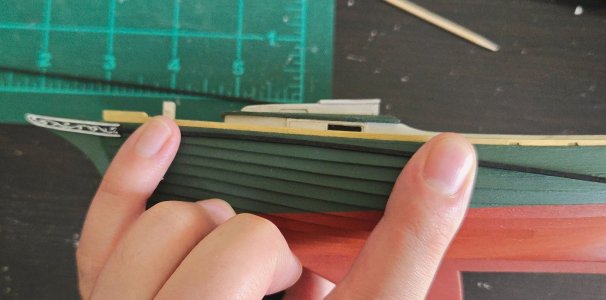
- Employ lapstrake rather than carvel planking
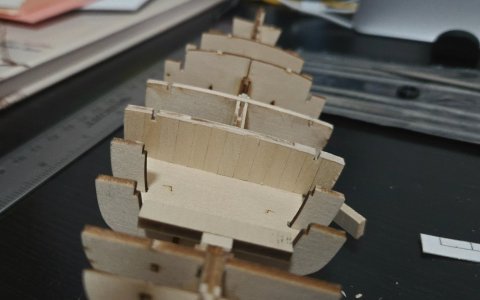
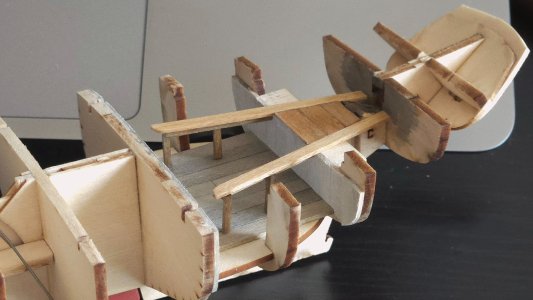
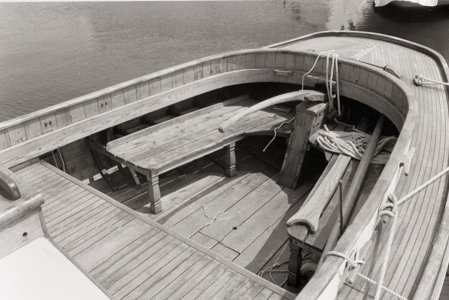
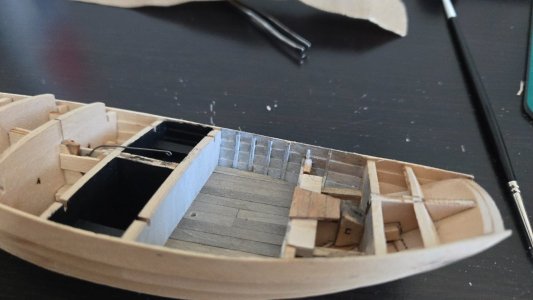
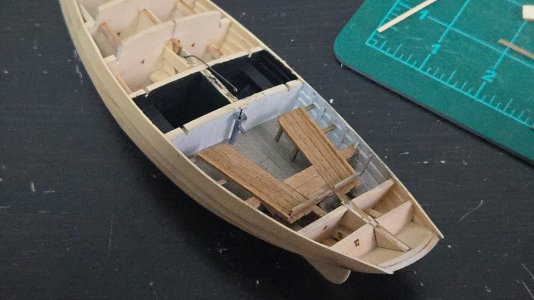
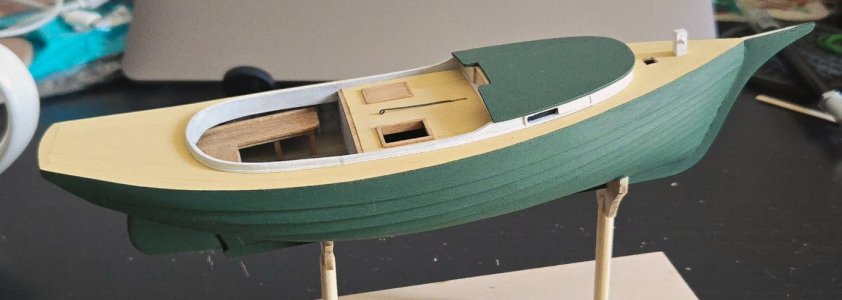
- Build out the cockpit with more accurate framing, benches, etc.
- Plank the deck
- Go with an unstayed mast
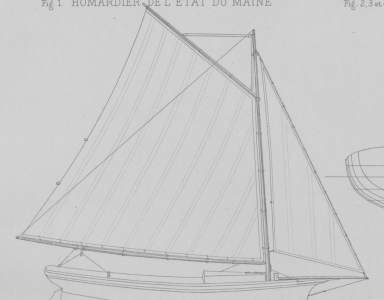
My research for this project is described in more detail on the other forum, but to be brief, I'm kitbashing in accordance with several sources. The most important source is the writings and plan drawings of Howard I Chapelle, especially in American Small Sailing Craft (1951) but also in The National Watercraft Collection (1960). Both include discussions and images of the Muscongus Bay centerboarders. Also vital was Willits D. Ansel's "The Boat as Record," pp. 19-26 in Lipke, Spectre, and Fuller's Boats: A Manual for Their Documentation (1993), which discusses the construction of the sloop Ranger and its modification from a fishing boat to a yacht. Roger F. Duncan's Coastal Maine (1992) and Lincoln Paine's Down East (2000) provided useful context on the history of Maine's fisheries. There is further useful information in Volume 5 of François-Edmond Pâris's Souvenirs de Marine, and in Volume 3 of G. Brown Goode's The Fisheries and Fishery Industries of the United States (1884-1887). For visual sources, I've especially employed the Penobscot Marine Museum's digitized photo collections. Finally, I have also drawn on many existing build logs for this model, some of which discuss the type's history/design/construction in detail and which have provided inspiration for kitbashing.
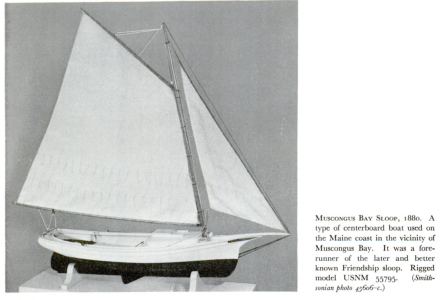
To summarize the history of this vessel type: in the years after the US Civil War, boatbuilders along the shores of Muscongus Bay in Maine began adding centerboards, sloop rigs, and partial decks and cuddies to rowboats, creating a vessel well-suited to inshore fishing in the summer months. These early Muscongus Bay sloops were often fairly small (16-25 feet long) with lapstrake planking, although carvel planking came into use as well by the 1880s. In the 1880s, the type began to undergo substantial changes. The expansion of railway lines made Boston's markets accessible to Maine fishermen, fueling demand for a more seaworthy vessel for all-year fishing, while changing fashions in the offshore fishery away from clipper schooners toward deeper and safer hulls impacted inshore fishery designs as well. This led to the emergence of the Friendship Sloop, a larger (30-40 ft) vessel with a deeper keeled hull, doing away with the centerboard and trading shallow-water abilities for greater seaworthiness and capacity. The Friendship Sloop became a popular yacht design, leading to a great deal being written about it.
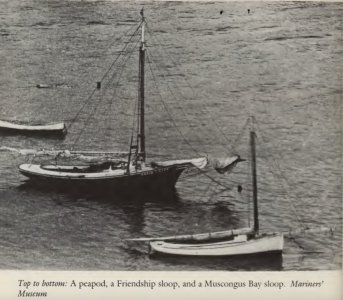
Below: A Friendship Sloop, at center, and a smaller vessel identified as a Muscongus Bay Sloop, at bottom.
Source: Duncan, Coastal Maine, p. 430.
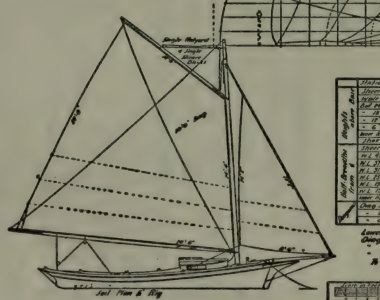
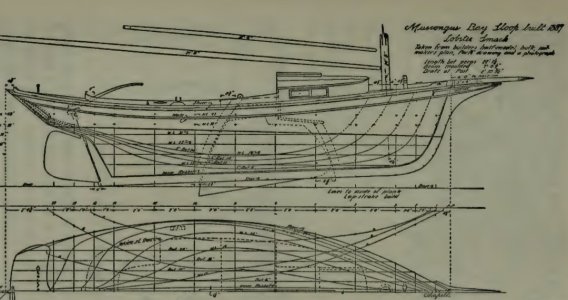
The late 1800s and early 1900s, then, saw a great variety of small sloops in Muscongus Bay. As the lapstrake centerboard sloop developed into the carvel Friendship Sloop, builders experimented with a variety of styles and design concepts. The Muscongus Bay Sloop is a moving target, sharing some general characteristics but with plenty of different possibilities. Chapelle's plan of a Muscongus Bay Sloop, for instance, which amalgamates several models and hulks, shows a vessel that is essentially a miniature Friendship Sloop with a centerboard (below).
Source: Chapelle, American Small Sailing Craft, p. 267.
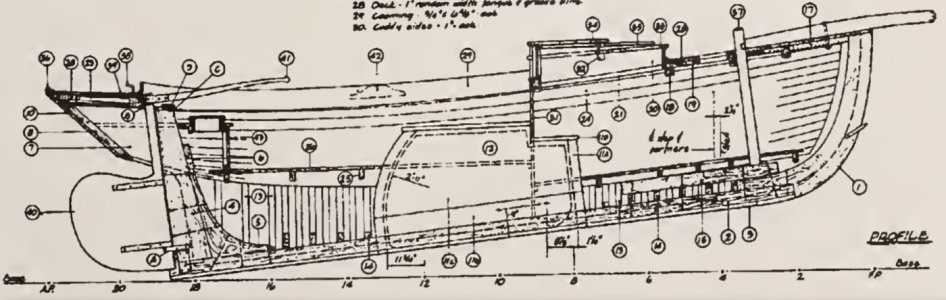
Although he said it was lapstrake planked, some vessels like this (including the hulk he examined) were carvel planked. Other Muscongus Bay centerboarders could look quite different. The Ranger, for instance, was about the same size and carvel planked, but had more drag, included a stayed mast, and lacked the clipper bow (below).
Source: Ansel, "The Boat as Record," p. 26.
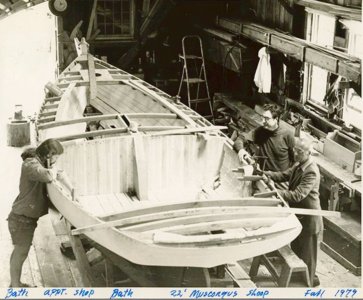
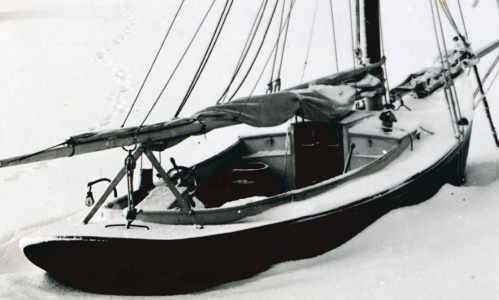
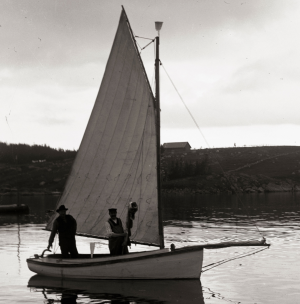
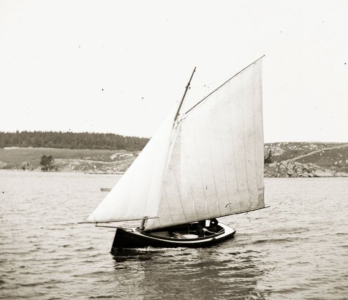
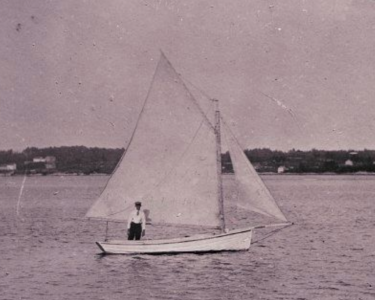
Photos show other designs, as well. The small vessel below has lapstrake planking, a small cuddy, and a vertical stem.
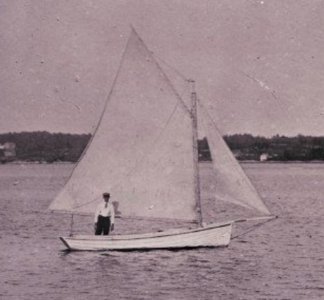
Source
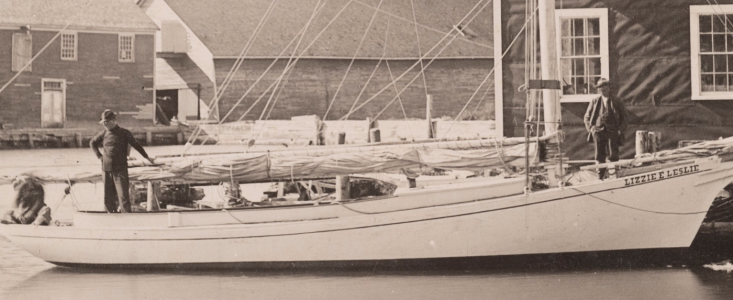
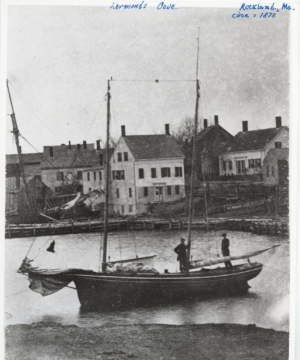
And finally, the vessel below from the 1870s is of a type Chapelle briefly mentions, having a schooner rig on a lapstrake hull that appears to be quite similar to that of the sloops.
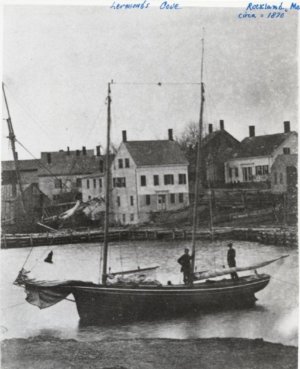
Source
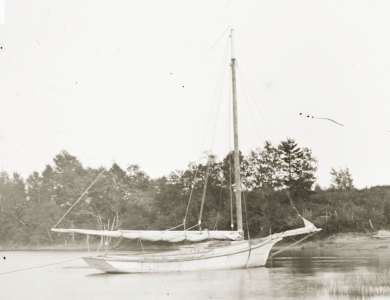
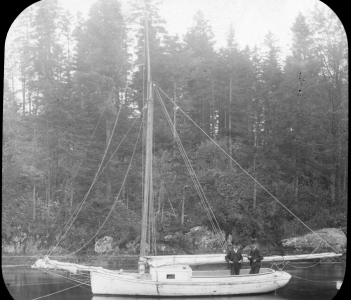
While Chapelle's plan has provided the basis for a lot of understandings of Muscongus Bay Sloops (including of most models), the type was really quite diverse. There was no single vessel type, but a constellation, with individual vessels' build styles probably depending on builder preference, intended use, and possibly local variations.
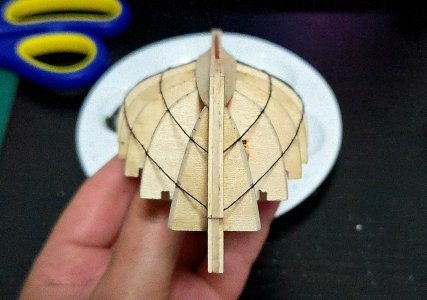
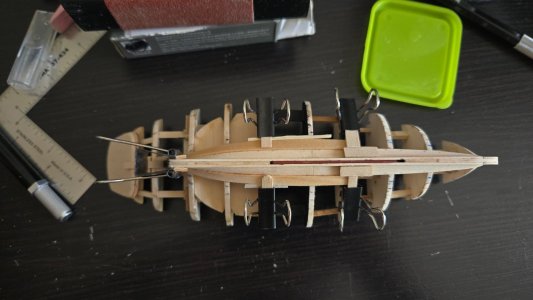
All of which is to say, there's a lot of room to modify the kit into something a bit different. Of course, not all modifications are equally possible. For example, while it would have been interesting to give my model a plumb bow, as some actual vessels had, doing so would require reshaping the spine and bulkheads so much that it would be easier to build from scratch, so I kept the beakhead (which is certainly a plausible option as well).
This post is already pretty long, so I'll get into the build itself in the next post.
Several months ago, I started building a heavily kitbashed version of the Model Shipways Muscongus Bay Lobster Smack. I had initially tried to buy the kit as my third build, after having started with the Model Shipways Dory and a scratch-built Trajinera canal barge, as it seemed like a useful learning experience. However, I had difficulties shipping to Mexico, and so I ended up not receiving it until I was back in the US. By the time I could start it, I had already come to feel fairly confident in my modeling (at least with simple vessels) after having already done several kits and scratch-builds. Nonetheless, I wanted to build this kit. As a modeler, I'm mostly interested in vernacular workboats. Moreover, the kit had a reputation for being relatively accurate, so it seemed like a good basis for some kitbashing to make a more accurate and unique model. Finally, the scratchbuilds I was working on, while rewarding, were in pretty slow stages, so I wanted something faster-paced.
To summarize, my main modifications to the kit are the following:
- Rescale from 1:24 to 1:32 (in order to match my other builds)
- Employ lapstrake rather than carvel planking
- Build out the cockpit with more accurate framing, benches, etc.
- Plank the deck
- Go with an unstayed mast
My research for this project is described in more detail on the other forum, but to be brief, I'm kitbashing in accordance with several sources. The most important source is the writings and plan drawings of Howard I Chapelle, especially in American Small Sailing Craft (1951) but also in The National Watercraft Collection (1960). Both include discussions and images of the Muscongus Bay centerboarders. Also vital was Willits D. Ansel's "The Boat as Record," pp. 19-26 in Lipke, Spectre, and Fuller's Boats: A Manual for Their Documentation (1993), which discusses the construction of the sloop Ranger and its modification from a fishing boat to a yacht. Roger F. Duncan's Coastal Maine (1992) and Lincoln Paine's Down East (2000) provided useful context on the history of Maine's fisheries. There is further useful information in Volume 5 of François-Edmond Pâris's Souvenirs de Marine, and in Volume 3 of G. Brown Goode's The Fisheries and Fishery Industries of the United States (1884-1887). For visual sources, I've especially employed the Penobscot Marine Museum's digitized photo collections. Finally, I have also drawn on many existing build logs for this model, some of which discuss the type's history/design/construction in detail and which have provided inspiration for kitbashing.
To summarize the history of this vessel type: in the years after the US Civil War, boatbuilders along the shores of Muscongus Bay in Maine began adding centerboards, sloop rigs, and partial decks and cuddies to rowboats, creating a vessel well-suited to inshore fishing in the summer months. These early Muscongus Bay sloops were often fairly small (16-25 feet long) with lapstrake planking, although carvel planking came into use as well by the 1880s. In the 1880s, the type began to undergo substantial changes. The expansion of railway lines made Boston's markets accessible to Maine fishermen, fueling demand for a more seaworthy vessel for all-year fishing, while changing fashions in the offshore fishery away from clipper schooners toward deeper and safer hulls impacted inshore fishery designs as well. This led to the emergence of the Friendship Sloop, a larger (30-40 ft) vessel with a deeper keeled hull, doing away with the centerboard and trading shallow-water abilities for greater seaworthiness and capacity. The Friendship Sloop became a popular yacht design, leading to a great deal being written about it.
Below: A Friendship Sloop, at center, and a smaller vessel identified as a Muscongus Bay Sloop, at bottom.
Source: Duncan, Coastal Maine, p. 430.
The late 1800s and early 1900s, then, saw a great variety of small sloops in Muscongus Bay. As the lapstrake centerboard sloop developed into the carvel Friendship Sloop, builders experimented with a variety of styles and design concepts. The Muscongus Bay Sloop is a moving target, sharing some general characteristics but with plenty of different possibilities. Chapelle's plan of a Muscongus Bay Sloop, for instance, which amalgamates several models and hulks, shows a vessel that is essentially a miniature Friendship Sloop with a centerboard (below).
Source: Chapelle, American Small Sailing Craft, p. 267.
Although he said it was lapstrake planked, some vessels like this (including the hulk he examined) were carvel planked. Other Muscongus Bay centerboarders could look quite different. The Ranger, for instance, was about the same size and carvel planked, but had more drag, included a stayed mast, and lacked the clipper bow (below).
Source: Ansel, "The Boat as Record," p. 26.
Photos show other designs, as well. The small vessel below has lapstrake planking, a small cuddy, and a vertical stem.
Source
And finally, the vessel below from the 1870s is of a type Chapelle briefly mentions, having a schooner rig on a lapstrake hull that appears to be quite similar to that of the sloops.
Source
While Chapelle's plan has provided the basis for a lot of understandings of Muscongus Bay Sloops (including of most models), the type was really quite diverse. There was no single vessel type, but a constellation, with individual vessels' build styles probably depending on builder preference, intended use, and possibly local variations.
All of which is to say, there's a lot of room to modify the kit into something a bit different. Of course, not all modifications are equally possible. For example, while it would have been interesting to give my model a plumb bow, as some actual vessels had, doing so would require reshaping the spine and bulkheads so much that it would be easier to build from scratch, so I kept the beakhead (which is certainly a plausible option as well).
This post is already pretty long, so I'll get into the build itself in the next post.