
- Joined
- Oct 31, 2023
- Messages
- 92
- Points
- 78

![]() |
As a way to introduce our brass coins to the community, we will raffle off a free coin during the month of August. Follow link ABOVE for instructions for entering. |
![]() |
![]() |
The beloved Ships in Scale Magazine is back and charting a new course for 2026! Discover new skills, new techniques, and new inspirations in every issue. NOTE THAT OUR NEXT ISSUE WILL BE MARCH/APRIL 2026 |
![]() |


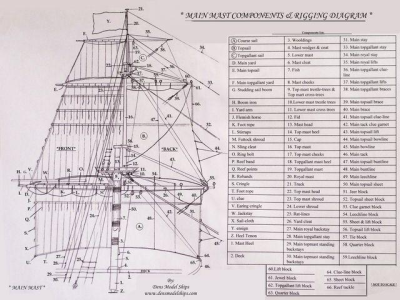
7 = fish - a wood bumper guard on the front of the mast (Something for the bottom of the sail to wack against when it is flapping?) held by turns of rope: wooldings

From James Lees' The Masting and Rigging of English Ships of War, page 2.Correction: in the illustration above, the fish is rightfully installed on the sides of the mast.
Not an expert, but I would suggest a need (for some) to revisit its actual purpose.

Uh Oh! The original illustration may need some caveats about just how authoritative it is?Lees notes that models of ships from before 1773 rarely show a fish, and might be better to leave them off.

With me - a question mark meaning correct me if I am wrong should be understood.
Fish on the sides, the sail has nothing to do with. A flapping sail seemed a bit of a stretch for producing a need for protection.
Almost always the sails are wings with lift pulling the vessel forward - unless the wind is dead astern?
So the stays would be extra taut on the windward side and a bit slack on the leeward side? an imbalance of force wanting additional support?
Lateral support for the mast proper?


Please, cant we all be friends!I want some of what you are smoking!
G.