• Win a Free Custom Engraved Brass Coin!!!
    As a way to introduce our brass coins to the community, we will raffle off a free coin during the month of August. Follow link ABOVE for instructions for entering.
  • SUBSCRIBE TO SHIPS IN SCALE TODAY!

    The beloved Ships in Scale Magazine is back and charting a new course for 2026!
    Discover new skills, new techniques, and new inspirations in every issue.

    NOTE THAT OUR NEXT ISSUE WILL BE MARCH/APRIL 2026

New vendor offering 3D printed kits

  • Thread starter Thread starter Moxis
  • Start date Start date
  • Watchers Watchers 6
Joined
Jul 27, 2018
Messages
378
Points
323

Location
Finland
Just found a new vendor offering completely 3D printed kits: https://printrcdream.com/ At present they have a very beautiful tug model, an icebreaker, a shrimper, etc.
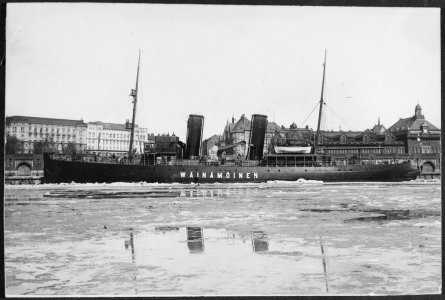
I just placed my order for the icebreaker kit, of which it is possible to build three different models, Russian Volynets, Estonian Suur Tõll and Finnish Vainamoinen. My intention is to build the latter.museovirasto.A0D0E6955801BB508C8BC6207D643738-0-master (1).jpg
 
Looks interesting. As someone who's gotten addicted to 3D printing, I'd almost rather to be able to obtain the .stl files and be able to print the model myself. But certainly for anyone without access to a printer, being able to buy the components as a kit seems like a great option. Speculation on my part, but since the kit is printed, I'm guessing the parts are also going to be thicker and more sturdy than those that might come from a traditional plastic model production process. I guess it's also a bit of a double edged sword... on the plus side, you get sturdier pieces, and as time goes on you don't have to worry about the quality of the molded parts as the dies become worn through use. Each print would be as good as the first. On the negative side, you'll have to deal with seams, as most printers have limitations that keep the parts down to around 25 or 30cm (10 to 12 inches) of size. Granted there are some monster size 3D printers starting to come on the market, but they're still pretty rare.

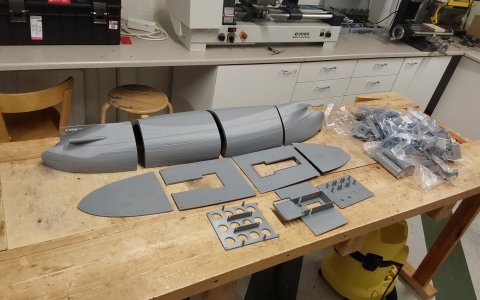
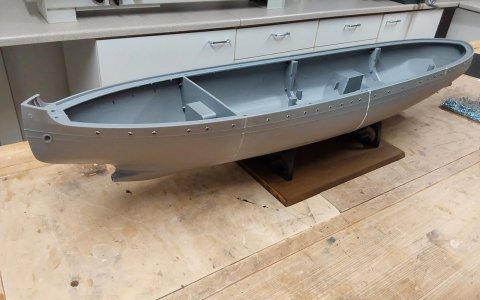
Thank you for sharing the images of your kit. Truly very interesting. One final question... how would you compare the price to a comparable formed plastic model kit of similar size and complexity?
 
Thanks for your message seadeep! As you said, they are offering the kit both as STL files or ready printed parts. For me the only option is ready printed, because I do not own a printer of any size, not to mention a big one capable to print such big parts as the hull pieces.

One more advantage to get the kit as STL files is, that you can print the ship at any scale ( if your printer is big enough). For instance my kit is in scale 1/75 resulting to the model of ca. one meter length. I would have liked a bit bigger model, say 120 cm of length, but you cannot get everything. Otherwise I am quite happy of the quality of parts, but being just in the beginning of the build, cannot say much about the details yet.

Concerning the price of the kit, at least in my case it was negotiable, because I was helping the vendor to find old pictures of the ship. And I do not know how much the traditionally formed plastic kits of appr. same size cost, but I have a feeling that they are much more expensive.
 
Looks interesting. He also sells the STL files if you have your own printer. I have a 3D printer so I might give a try to printing it. I have been using it alot to make and replace many poorer quality parts and castings that I have gotten in commercial kits.

I have been using the free version of Fusion 360 CAD software to design the parts. Once you use the software to produce a few parts I found out that it is not as hard to use as one may first think.

Also is anyone aware of any other vendors who are producing 3D printed full kits or are selling STL files for ship model parts?
 
Great find looks like a really interesting new option for 3D printed kits with what’s on offer so far (nice variety of tug, icebreaker, shrimper, etc.) and some good feedback about part quality on here already. I’m curious how others feel about price vs. traditional plastic kits and whether the STL + print‑it‑yourself option is worth it if you’ve got access to a printer. Also, for anyone thinking about planning builds or storage space, you might want to read more about how to organise larger models and workspace effectively could be useful while you’re waiting for parts to arrive!
 
More ponderings on the topic...

I've got a little over four thousand hours of 3D printing experience, so I'll share my thoughts on the topic. And I'll be talking about printing via filament extrusion, not resin printing.... resin printing is far more accurate with details, but it's also messy and requires substantially more work (IMHO).

If you have a printer (or have access to one through a local library or a teenager that an access one through their school), the printing is easy enough. The hard part is printing the items with the quality level you expect from a conventional plastic model kit. Understand I'm not saying its not an option, but there are considerations that have to be taken into account. So here they are, in no particular order:

To properly and decently print small items, you need to use a small printhead nozzle (0.2mm). Those prints will take a long time, but you can get decent detail as a result. Small nozzles can be fussy about filament types, which leads us to:

Filament type. PLA is the easiest to work with and comes in a wide variety of colours and types (including filaments that contain actual wood... it smells like you're using a wood burning hobby tool when you run that stuff through the machine). PLA is pretty hard stuff, but if your plan is to position your completed model where it can be exposed to lots of sunlight, I'd recommend using PETG instead. PLA will deform under moderate heat (as in a sunroom or a sunny table location). PETG is more heat and UV tolerant, but is also a bit softer material. That has pluses and minuses depending upon your desired goals regarding part strength. Also, I don't think PETG comes in wood variants... but you can find matte versions of PETG that look close enough to wood colour to work for you.

Printed part size maximums. Most printer beds only support parts that will fit in a 225 x 225 x 225mm volume (a cube of nine inches). Obviously if you place parts diagonally, you can get slightly longer printed items, but not significantly so. As such, the scale of your model will be a consideration, otherwise you're dealing with a lot of joints... and filling, sanding and painting to hide such said joints.

Lastly... plate cleaning and printer and filament calibration. If you own your own printer this is something you can do at your leisure. If you're using a public domain printer, you have no idea what the last person did with it. You'll always want to ensure the build plate is spotlessly clean (no oils from handling or residue from prior prints). Just scrub it with regular dish soap, rinse thoroughly with hot water, and then dry with a lint free cloth. Calibration before each session you use the printer is essential. That will ensure the printer has locked down it's three axis of movement, and the printhead has calibrated its distance from the build plate. That's important because print layers might be as low as 0.08mm, so accuracy is a big deal. Without proper calibration, you'll get flaws in your prints... or complete print failures. So, general rule of thumb... always calibrate and ensure the settings for the filament you're using are properly defined in your print slicer software (temperature, flow rates, build plate temps, etc.).

Again, I'm not trying to discourage you from trying this. 3D printing is a lot of fun and a very interesting process. As others have noted, designing your own components in apps like AutoDesk's Fusion 360, or even using online tools like TinkerCAD, are quite fulfilling... and the basics are pretty easy to pick up. If you tackle this, perhaps create a build thread so we can follow your progress and we can all share in the experience... you can pass on what you learn, and we may be able to provide some guidance if you run into any challenges.
 
I have just started with 3-D printing over the last two months. I agree with everything set above however, you should know that if you’re going to use “wood” filament, the manufacturers are recommending that you don’t use it with a 0.2 mm nozzle. https://us.store.bambulab.com/products/pla-wood. I think they are worried about nozzle clogs using wood filament with a small nozzle.
I haven’t tried it yet with a small nozzle. Has anyone tried to use it with that nozzle?
If so, what was the result?
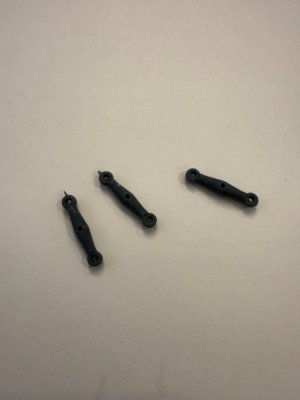
I just added a resin printer to my tool set in addition to the filament printer that I have already. So far, I’ve been very impressed with the detail obtainable with the resin printer. I agree that the resin is pretty messy. I recently tried printing with a water washable resin thinking that that would be less of a mess. It was definitely easier to clean up however, I did find that the parts printed were more brittle then with an ABS resin. I printed some nice turnbuckles to use in my stay rigging and the loops at the end kept breaking during the tying and positioning process. I re-printed them with ABS resin, and they seem to be much more sturdy. I have attached a photo of the ABS printed turnbuckles before cleaning up the small support tabs and painting them. A lot less cleanup then removing flash from the metal casted parts supplied in kits. Also they take primer paint more easy than metal. Took me about 15 minutes using Auto-CAD fusion to create the printer file and about 10 minutes of printing time.IMG_2372.jpeg
 
I have just started with 3-D printing over the last two months. I agree with everything set above however, you should know that if you’re going to use “wood” filament, the manufacturers are recommending that you don’t use it with a 0.2 mm nozzle. https://us.store.bambulab.com/products/pla-wood. I think they are worried about nozzle clogs using wood filament with a small nozzle.
I haven’t tried it yet with a small nozzle. Has anyone tried to use it with that nozzle?
If so, what was the result?
I just added a resin printer to my tool set in addition to the filament printer that I have already. So far, I’ve been very impressed with the detail obtainable with the resin printer. I agree that the resin is pretty messy. I recently tried printing with a water washable resin thinking that that would be less of a mess. It was definitely easier to clean up however, I did find that the parts printed were more brittle then with an ABS resin. I printed some nice turnbuckles to use in my stay rigging and the loops at the end kept breaking during the tying and positioning process. I re-printed them with ABS resin, and they seem to be much more sturdy. I have attached a photo of the ABS printed turnbuckles before cleaning up the small support tabs and painting them. A lot less cleanup then removing flash from the metal casted parts supplied in kits. Also they take primer paint more easy than metal. Took me about 15 minutes using Auto-CAD fusion to create the printer file and about 10 minutes of printing time.

Agreed, and good catch. Yes, I should have been more clear on that. You should not try to print wood filaments with the 0.2mm nozzle. I've had great success with wood filaments and the 0.4mm nozzle, and the 0.6 and 0.8 should be a no-brainer. There are specific filaments that cannot print using the smallest nozzle due to particulates clogging it up... so those would be wood, carbon fiber, and I "believe" also maybe glow-in-the-dark filament. I give you credit for taking on resin printing. I just don't have the space to allocate for one, and in all honesty, I'm too lazy to deal with the process.
:)

One thing to keep in mind with filament printing... the greatest strength is in the X-Y axis. Because of the layering that occurs during printing, the Z axis is where you'll most often see splitting occur. I've seen some folks try to mitigate that weakness by printing things pitched up 45 degrees and using support structures to hold them as they print. Personally I'm a bit torn on that process, as IMHO, it would result in a rougher looking exterior, and you sacrifice some of your X-Y strength to gain a bit of Z axis strength.

The turnbuckles you resin printed look very nice, and again, that's where resin printing can really shine... super smooth details, especially when it comes to small parts.
 
Back
Top