• Win a Free Custom Engraved Brass Coin!!!
    As a way to introduce our brass coins to the community, we will raffle off a free coin during the month of August. Follow link ABOVE for instructions for entering.
  • PRE-ORDER SHIPS IN SCALE TODAY!

    The beloved Ships in Scale Magazine is back and charting a new course for 2026!
    Discover new skills, new techniques, and new inspirations in every issue.

    NOTE THAT OUR FIRST ISSUE WILL BE JAN/FEB 2026

Next build -- HMS Victory (Hull only)

Joined
Dec 26, 2025
Messages
30
Points
48

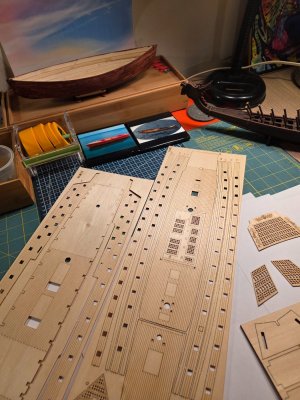
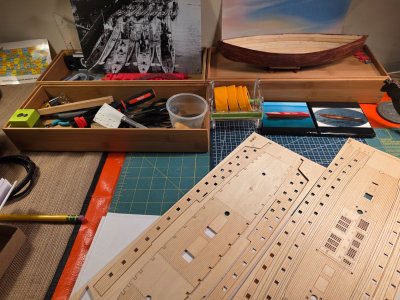
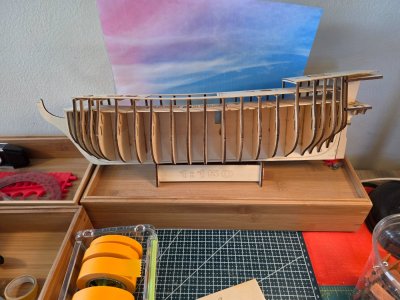
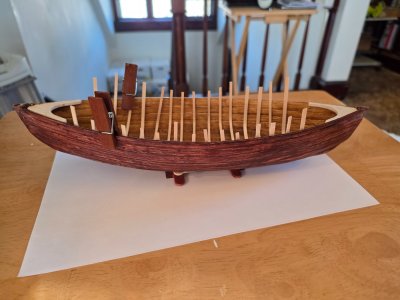
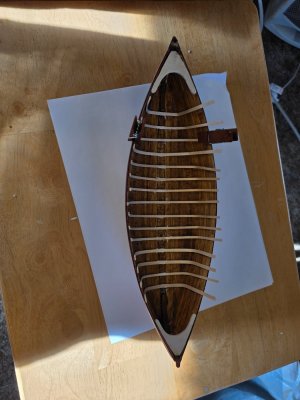
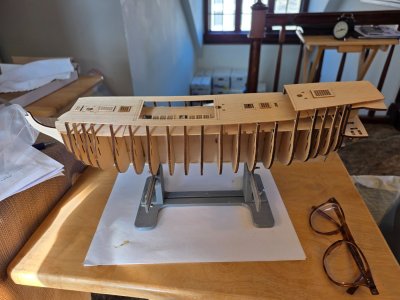
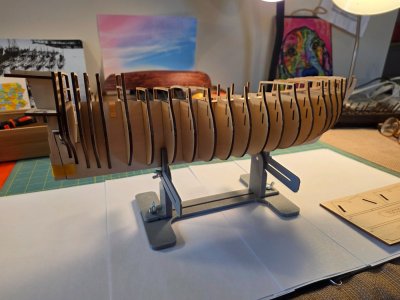
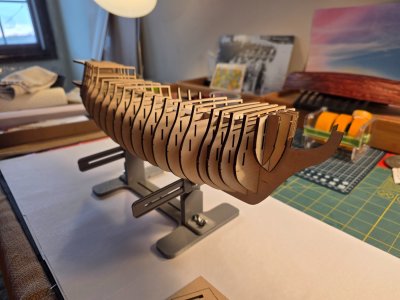
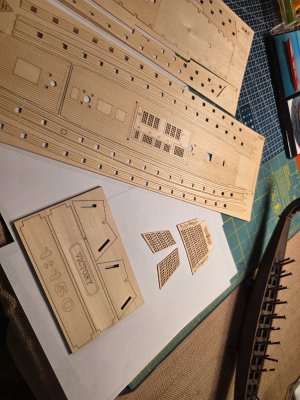
I just started my 5th wooden boat build after finishing the Maine Peapod, a cheap internet version of the HMS Victory in 1:150 scale. At this point, I just want to focus on framing and planking the hull since this is a hull shape I haven't built before. I may do a few details on the Quarter Deck, Poop Deck or Foc'sle, but this is as far as my skills will bring me right now. I will focus on rigging, staining, and miniature detailing later when I do a full build of the HMS Victory (a year or two down the road), and I want to save up for an Occre or Artisania Latina model with all the bells and whistles.

The "learned lesson" of the day is to make sure you cut out each part with an exacto knife on both sides of the wood templates. I pushed a couple of these frames out with a bit too much force and broke 3 of the tiny horns on frame. Thank goodness a bit of CA glue put them back to right.

QUESTION: I want to do a really clean planking job and I heard that you should only use wood glue to attach the planks. I know CA glue doesn't stain well, and I learned from my last build that the CA glue leaves dark residue on the planks when stain is applied. It will slow down the build time to use wood glue (are there any other types of glue that would work better?) but hey, "slow and steady wins the race," right?
20260127_160014.jpg

1000010304.jpg

1000010309.jpg

1000010310.jpg

1000010313.jpg

1000010316.jpg

1000010318.jpg
 
Last edited:
I just started my 5th wooden boat build after finishing the Maine Peapod, a cheap internet version of the HMS Victory in 1:150 scale. At this point, I just want to focus on framing and planking the hull since this is a hull shape I haven't built before. I may do a few details on the Quarter Deck, Poop Deck or Foc'sle, but this is as far as my skills will bring me right now. I will focus on rigging, staining, and miniature detailing later when I do a full build of the HMS Victory (a year or two down the road), and I want to save up for an Occre or Artisania Latina model with all the bells and whistles.

The "learned lesson" of the day is to make sure you cut out each part with an exacto knife on both sides of the wood templates. I pushed a couple of these frames out with a bit too much force and broke 3 of the tiny horns on frame. Thank goodness a bit of CA glue put them back to right.

QUESTION: I want to do a really clean planking job and I heard that you should only use wood glue to attach the planks. I know CA glue doesn't stain well, and I learned from my last build that the CA glue leaves dark residue on the planks when stain is applied. It will slow down the build time to use wood glue (are there any other types of glue that would work better?) but hey, "slow and steady wins the race," right?
View attachment 573588

View attachment 573589

View attachment 573590

View attachment 573591

View attachment 573592

View attachment 573593

View attachment 573594
Good luck with your new build. Yes, CA can cause issues with stains. But so can PVA glues. What about just leaving the wood for the decks it's natural color and just put a poly coat on it which does not change the color?
 
Corsair -- I'll take your advice for the deck levels, will probably use a Minwax product. I'd also like to use a very light teak stain for the hull so I can highlight the planking. At this point Im not going for historic colors of yellow and black. The deck details for this kit are basic -- anchors, cannons, railings, and jolly boats are all fairly rudimentary. I may not add them just to focus on the planking.

Do you ever stain decking material before you attach the piece to the frames? Do you stain both sides before gluing to prevent warping? I also forgot to check whether the keel is warped...there is a slight bend in the keel but I haven't glued it yet, so may be able to bend it true. Thanks!
 
Last edited:
I just started my 5th wooden boat build after finishing the Maine Peapod, a cheap internet version of the HMS Victory in 1:150 scale. At this point, I just want to focus on framing and planking the hull since this is a hull shape I haven't built before. I may do a few details on the Quarter Deck, Poop Deck or Foc'sle, but this is as far as my skills will bring me right now. I will focus on rigging, staining, and miniature detailing later when I do a full build of the HMS Victory (a year or two down the road), and I want to save up for an Occre or Artisania Latina model with all the bells and whistles.

The "learned lesson" of the day is to make sure you cut out each part with an exacto knife on both sides of the wood templates. I pushed a couple of these frames out with a bit too much force and broke 3 of the tiny horns on frame. Thank goodness a bit of CA glue put them back to right.

QUESTION: I want to do a really clean planking job and I heard that you should only use wood glue to attach the planks. I know CA glue doesn't stain well, and I learned from my last build that the CA glue leaves dark residue on the planks when stain is applied. It will slow down the build time to use wood glue (are there any other types of glue that would work better?) but hey, "slow and steady wins the race," right?
View attachment 573588

View attachment 573589

View attachment 573590

View attachment 573591

View attachment 573592

View attachment 573593

View attachment 573594
I have used Titebond II for years. It has a good (i.e., short) drying time and sands well. I have also used Minwax Natural for most of the staining. It brings out the grain and color of whatever wood I need to stain.
 
I have used Titebond II for years. It has a good (i.e., short) drying time and sands well. I have also used Minwax Natural for most of the staining. It brings out the grain and color of whatever wood I need to stain.
Thanks unchained - I'll try Titebond II instead of CA glue once I start planking.
 
I just started my 5th wooden boat build after finishing the Maine Peapod, a cheap internet version of the HMS Victory in 1:150 scale. At this point, I just want to focus on framing and planking the hull since this is a hull shape I haven't built before. I may do a few details on the Quarter Deck, Poop Deck or Foc'sle, but this is as far as my skills will bring me right now. I will focus on rigging, staining, and miniature detailing later when I do a full build of the HMS Victory (a year or two down the road), and I want to save up for an Occre or Artisania Latina model with all the bells and whistles.

The "learned lesson" of the day is to make sure you cut out each part with an exacto knife on both sides of the wood templates. I pushed a couple of these frames out with a bit too much force and broke 3 of the tiny horns on frame. Thank goodness a bit of CA glue put them back to right.

QUESTION: I want to do a really clean planking job and I heard that you should only use wood glue to attach the planks. I know CA glue doesn't stain well, and I learned from my last build that the CA glue leaves dark residue on the planks when stain is applied. It will slow down the build time to use wood glue (are there any other types of glue that would work better?) but hey, "slow and steady wins the race," right?
View attachment 573588

View attachment 573589

View attachment 573590

View attachment 573591

View attachment 573592

View attachment 573593

View attachment 573594
 
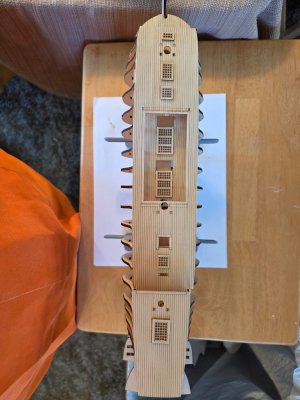
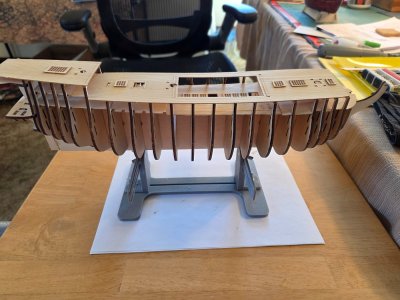
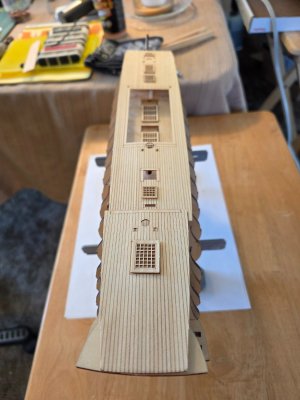
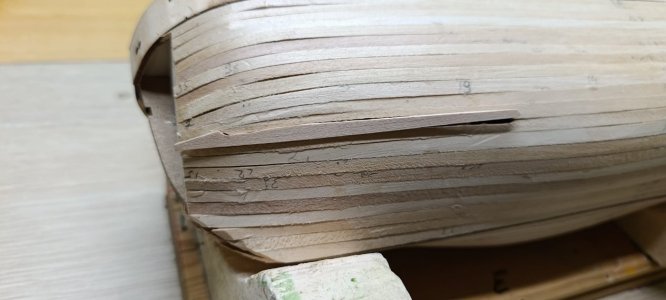
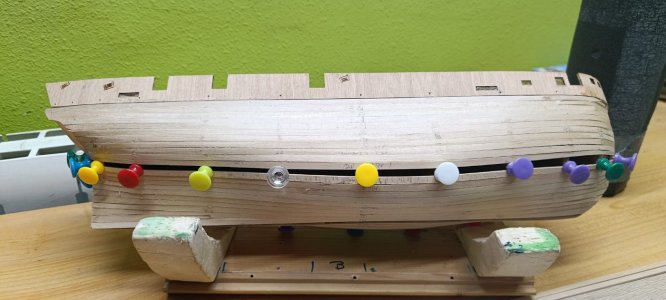
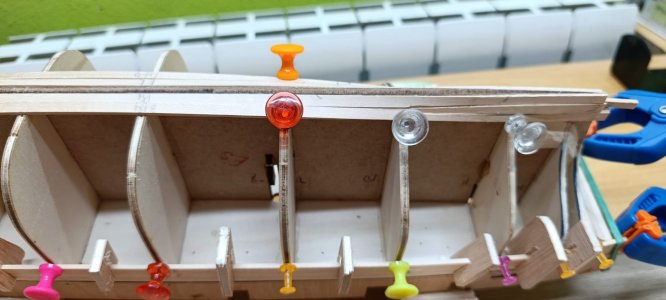
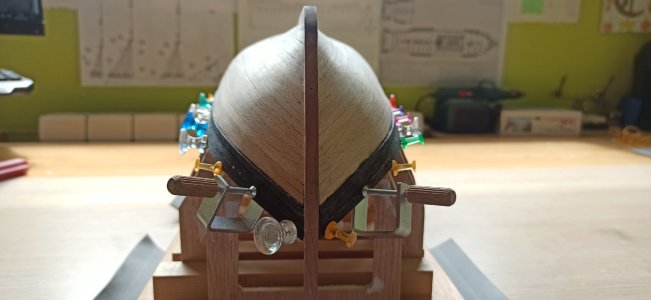
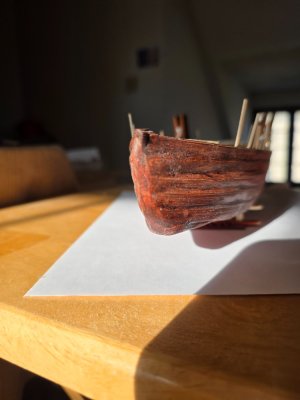
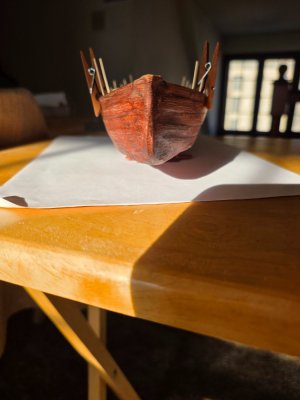
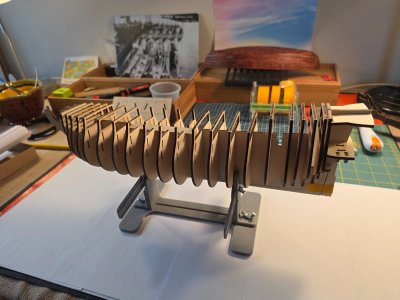
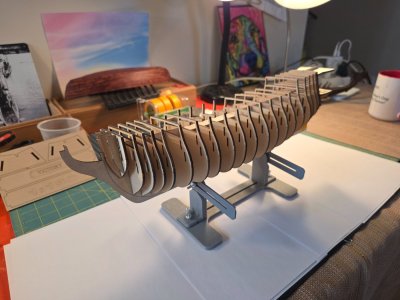
I am starting to build the decks on my cheap internet HMS Victory and I discovered an (ever so slight) bending of the keel and frame over the poop deck. Maybe 2 to 3 degrees to the port side. I made sure the naked keel was perfectly straight before I started framing. Probably happened when I was gluing in the aft frames. You can see it in the last picture where the poop deck is bending slightly to the port side.

QUESTION: If I am just building the hull and planked frame, do I need to worry about this bend? It's hardly noticeable, but I want to be sure that it doesn't impact my planking job. What would be the best way to fix the curvature if I've already started building the decks...or should I just leave it?

20260130_113035.jpg

20260130_113010.jpg

20260130_113020.jpg
 
Hola Ignacio, un par de cosas, yo me decantaría más por Ocre que por Artesania Latina, te cuento el por que, estoy haciendo el San Juan Nepomuceno, solo me falta poner las velas en las vergas, que iran recogidas, y toda la jarcia de labor, ando loco, pues las instrucciones de Artesania en cuanto a jarcia son demasiado escuetas, y yo ya padezco de SMA (Síndrome del Modelista Avanzado) y lo voy dejando por miedo y por no tener claro las maniobras, una m la verdad. Pues bien, tengo de hace días el Montañes de Ocre en su caja, y las instrucciones son una pasada, los planos de maniobras mucho más trabajados que los de AL. Como verás también entre medias estoy con el HMS Erebus, lo empecé para hacer de conejillo de indias y ya veremos, jejejeje.
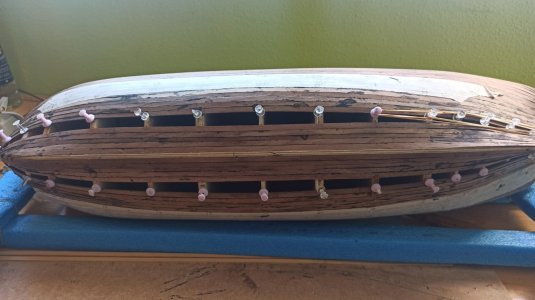
En cuanto al forrado, es lo mas laborioso pero lo que casí más me gusta, te puedo pasar creo un manual de como hacerlo bien, lo importante, no adelgazar demasiado las tracas, menos de 1/2 esta prohibido, jejejeje, medir el contorno de las cuadernas segun vamos forrando e ir viendo la anchura que necesita cada parte, yo de esto me empiezo a preocupar hacia mitad de forrado que es donde realmente empiezo a poner atención. Se pueden poner atunes, sobre todo en la zona del codaste, la parte baja de popa. El buen forrado es de tracas enteras desde proa a popa, y nunca acabadas en punta como se ven en muchas instrucciones. Como ves en las fotos, no clavo en la traca y si en el borde, con chinchetas grandes, asi sujeta, y no taladro la traca, con lo que no quedan agujeros a la vista. Espero te sirva, un saludo desde el Pirineo de Huesca, España.WhatsApp Image 2026-01-07 at 20.29.44.jpegWhatsApp Image 2026-01-07 at 20.29.43 (1).jpegWhatsApp Image 2026-01-07 at 20.29.42.jpegWhatsApp Image 2026-01-06 at 19.32.25.jpegWhatsApp Image 2026-01-04 at 17.42.06 (2).jpegWhatsApp Image 2026-01-04 at 17.25.02 (1).jpegjabeque cazador 00000018.jpgjabeque cazador 00000016.jpgjabeque cazador 00000009.jpgSan Juan Nepomuceno de AL  (10227).jpegSan Juan Nepomuceno de AL  (10226).jpegSan Juan Nepomuceno de AL  (10214).jpeg
 

Attachments

Por cierto, para el San Juan, use cola teñida de negro para simular el calafateado, el curro es considerable para no manchar el resto de la traca, solo el canto, y total, luego lo forre de cobre, y el resto teñi de negro, pero, asi aprendí que se puede hacer.
 
Hola Ignacio, un par de cosas, yo me decantaría más por Ocre que por Artesania Latina, te cuento el por que, estoy haciendo el San Juan Nepomuceno, solo me falta poner las velas en las vergas, que iran recogidas, y toda la jarcia de labor, ando loco, pues las instrucciones de Artesania en cuanto a jarcia son demasiado escuetas, y yo ya padezco de SMA (Síndrome del Modelista Avanzado) y lo voy dejando por miedo y por no tener claro las maniobras, una m la verdad. Pues bien, tengo de hace días el Montañes de Ocre en su caja, y las instrucciones son una pasada, los planos de maniobras mucho más trabajados que los de AL. Como verás también entre medias estoy con el HMS Erebus, lo empecé para hacer de conejillo de indias y ya veremos, jejejeje.
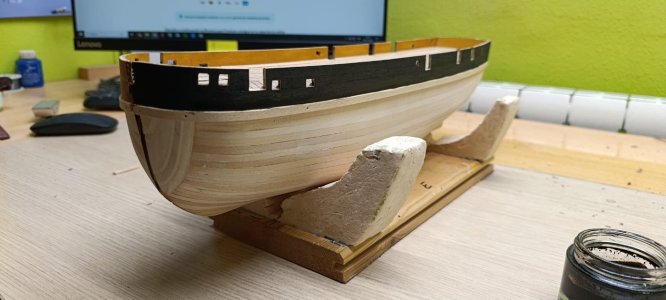
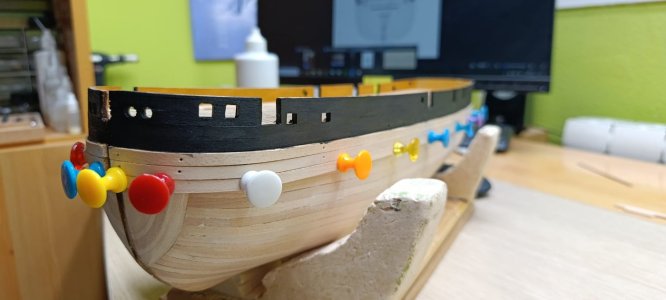
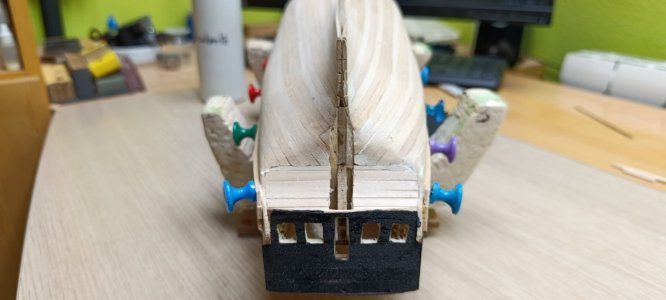
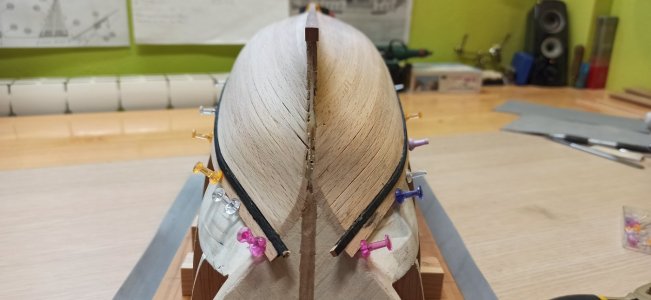
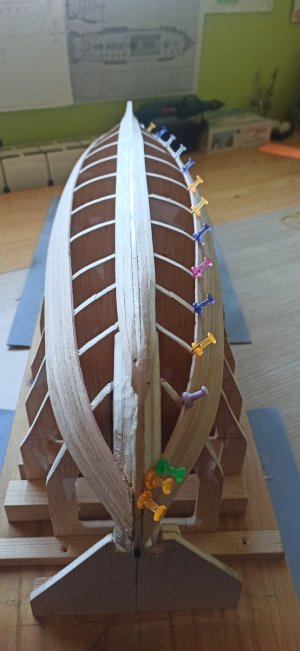
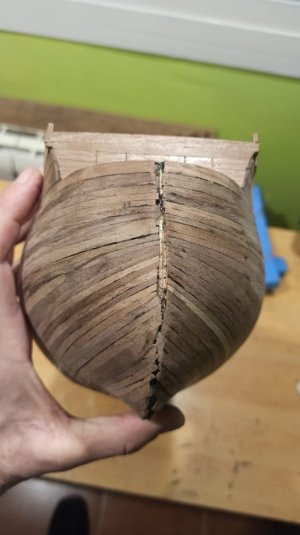
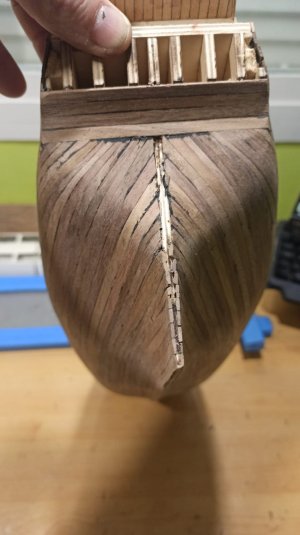
En cuanto al forrado, es lo mas laborioso pero lo que casí más me gusta, te puedo pasar creo un manual de como hacerlo bien, lo importante, no adelgazar demasiado las tracas, menos de 1/2 esta prohibido, jejejeje, medir el contorno de las cuadernas segun vamos forrando e ir viendo la anchura que necesita cada parte, yo de esto me empiezo a preocupar hacia mitad de forrado que es donde realmente empiezo a poner atención. Se pueden poner atunes, sobre todo en la zona del codaste, la parte baja de popa. El buen forrado es de tracas enteras desde proa a popa, y nunca acabadas en punta como se ven en muchas instrucciones. Como ves en las fotos, no clavo en la traca y si en el borde, con chinchetas grandes, asi sujeta, y no taladro la traca, con lo que no quedan agujeros a la vista. Espero te sirva, un saludo desde el Pirineo de Huesca, España.View attachment 574247View attachment 574248View attachment 574249View attachment 574250View attachment 574251View attachment 574252View attachment 574253View attachment 574254View attachment 574255View attachment 574256View attachment 574257View attachment 574258
Hola Ignacio, un par de cosas, yo me decantaría más por Ocre que por Artesania Latina, te cuento el por que, estoy haciendo el San Juan Nepomuceno, solo me falta poner las velas en las vergas, que iran recogidas, y toda la jarcia de labor, ando loco, pues las instrucciones de Artesania en cuanto a jarcia son demasiado escuetas, y yo ya padezco de SMA (Síndrome del Modelista Avanzado) y lo voy dejando por miedo y por no tener claro las maniobras, una m la verdad. Pues bien, tengo de hace días el Montañes de Ocre en su caja, y las instrucciones son una pasada, los planos de maniobras mucho más trabajados que los de AL. Como verás también entre medias estoy con el HMS Erebus, lo empecé para hacer de conejillo de indias y ya veremos, jejejeje.
En cuanto al forrado, es lo mas laborioso pero lo que casí más me gusta, te puedo pasar creo un manual de como hacerlo bien, lo importante, no adelgazar demasiado las tracas, menos de 1/2 esta prohibido, jejejeje, medir el contorno de las cuadernas segun vamos forrando e ir viendo la anchura que necesita cada parte, yo de esto me empiezo a preocupar hacia mitad de forrado que es donde realmente empiezo a poner atención. Se pueden poner atunes, sobre todo en la zona del codaste, la parte baja de popa. El buen forrado es de tracas enteras desde proa a popa, y nunca acabadas en punta como se ven en muchas instrucciones. Como ves en las fotos, no clavo en la traca y si en el borde, con chinchetas grandes, asi sujeta, y no taladro la traca, con lo que no quedan agujeros a la vista. Espero te sirva, un saludo desde el Pirineo de Huesca, España.View attachment 574247View attachment 574248View attachment 574249View attachment 574250View attachment 574251View attachment 574252View attachment 574253View attachment 574254View attachment 574255View attachment 574256View attachment 574257View attachment 574258
Crisjaca, my Spanish is not good but I understand we share a working interest in perfecting the skill of planking hulls. Your work is very beautiful and skillful. It shows how hard you work to attain the skill of planking the hull. I also have a problem getting all the planks to meet exactly at stern and bow!

20260130_144427.jpg

20260130_144455.jpg

20260130_144300.jpg

20260130_144236.jpg

20260130_144244(0).jpg

20260130_144030.jpg
 
Thanks Corsair! I am told that Gorilla Wood Glue is the same ad Titebond II, so it's a PVA glue also?
If it is the same as Titebond II then yes, it is a PVA glue.
You might test it to make sure the heat gun will work. Just glue to pieces of wood together with it and let it cure, then hit it with the heat and pull while heating to see if it separates.
 
Crisjaca, mi español no es muy bueno, pero entiendo que compartimos el interés por perfeccionar la técnica de entablar los cascos. Tu trabajo es muy hermoso y hábil. Demuestra lo mucho que te esfuerzas para lograr la técnica. ¡También tengo problemas para que todos los tablones encajen perfectamente en la popa y la proa!
Mi ingles seguro es peor, no deberia escribir en castellano? y usar el traductor de google? No te preocupes por el encaje de las tablas, te lo ira dando la experiencia. Un saludo.
 
Back
Top