• Win a Free Custom Engraved Brass Coin!!!
    As a way to introduce our brass coins to the community, we will raffle off a free coin during the month of August. Follow link ABOVE for instructions for entering.
  • PRE-ORDER SHIPS IN SCALE TODAY!

    The beloved Ships in Scale Magazine is back and charting a new course for 2026!
    Discover new skills, new techniques, and new inspirations in every issue.

    NOTE THAT OUR FIRST ISSUE WILL BE JAN/FEB 2026

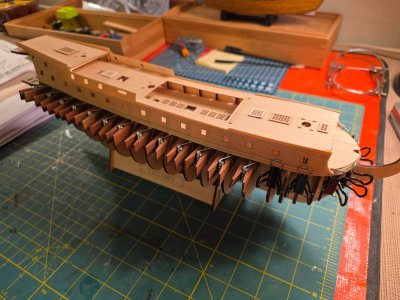
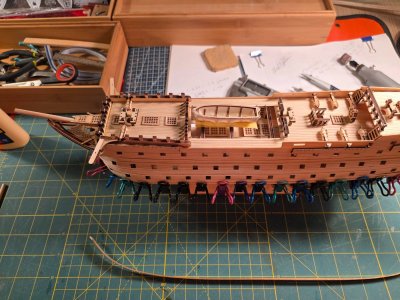
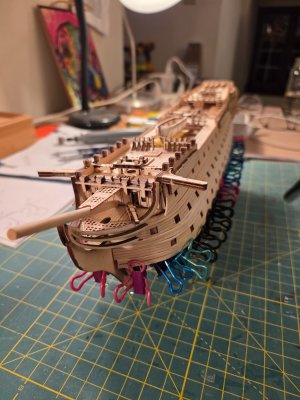
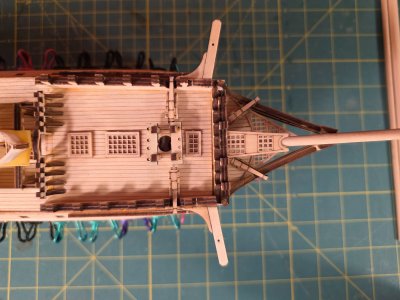
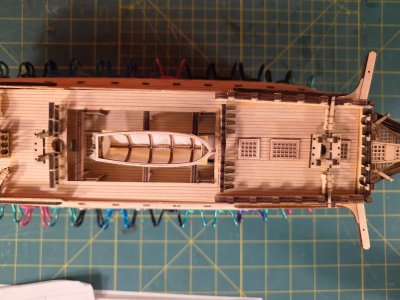
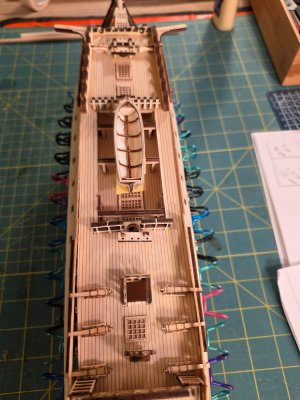
Next build -- HMS Victory (Hull only)

Good luck with your new build. Yes, CA can cause issues with stains. But so can PVA glues. What about just leaving the wood for the decks it's natural color and just put a poly coat on it which does not change the color?
I use PVA primarily with a touch of CA on the ends. That way I can get the ends to hold fast while I hold the rest of the plank to the bulkheads/frames.
 
I have had to do that as well from time to time. I have to remember to dampen the pieces before I apply the CVA. I also have a bottle of "Zip Kicker" that speeds set-up very quickly and I use it in pinch. I also agree with leaving the deck wood natural with Minwax "Natural" followed by a light sanding and then put down a couple coats of Satin Polyurethane.
 
Por cierto, para el San Juan, use cola teñida de negro para simular el calafateado, el curro es considerable para no manchar el resto de la traca, solo el canto, y total, luego lo forre de cobre, y el resto teñi de negro, pero, asi aprendí que se puede hacer.
Debo decir que su trabajo de entablado es magnífico. ¿Podría compartir qué manual o recurso utilizó para aprender a entablar? Tengo algunos recursos (como "Modelismo naval de proa a popa"), pero aprendo mejor practicando. Intento comprender cuándo es necesario biselar o achaflanar los extremos de las tablas y cuándo se debe biselar la parte superior e inferior. ¿Depende esto del largo y el ancho de la tabla y del tipo de madera? Además, ¿los números que escribe en las tablas se basan en alguna fórmula? Me resulta muy confuso, ya que solo llevo seis meses practicando este oficio. Muchas gracias por compartir sus conocimientos.
 
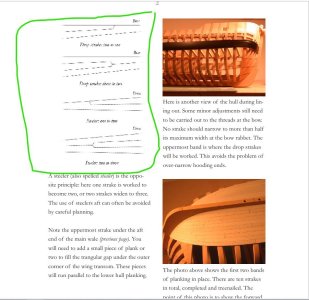
If you really want to plank a model like a real ship I suggest studying articles by David Antsherl and videos by Chuck Paasaro both of which can be found on the internet. There are numerous posts here at SoS on how to plank a hull including links to the articles and videos mentioned. It is not just trying to glue a piece from the kit unless it is spiled, and even then, some adjustments may be needed. Look at some planking expansion drawings such as can be found on the RMG Collections site to see the dynamic shape of every strake of planking. Even the thickness varies from strake to strake including the wales, the thick stuff above and below the wales, the quickwork and more. It is not easy, but can be done with some research and practice.
Allan
 
If you really want to plank a model like a real ship I suggest studying articles by David Antsherl and videos by Chuck Paasaro both of which can be found on the internet. There are numerous posts here at SoS on how to plank a hull including links to the articles and videos mentioned. It is not just trying to glue a piece from the kit unless it is spiled, and even then, some adjustments may be needed. Look at some planking expansion drawings such as can be found on the RMG Collections site to see the dynamic shape of every strake of planking. Even the thickness varies from strake to strake including the wales, the thick stuff above and below the wales, the quickwork and more. It is not easy, but can be done with some research and practice.
Allan
AllanKP69 - Thanks so much for these resources. Im going to start with David Antsherl's podcast on A Model Life, and Chuck Passaro's videos on planking the HMS Winchelsea, which look fascinating. I think doing a deep dive in the resources available on this site and watching the videos already out there will help me find answers to questions that have been asked many times. It's becoming clear that every plank is worked individually for the specific location it is planked to the frame...advice you don't get from the cheap internet builds many start with!
 
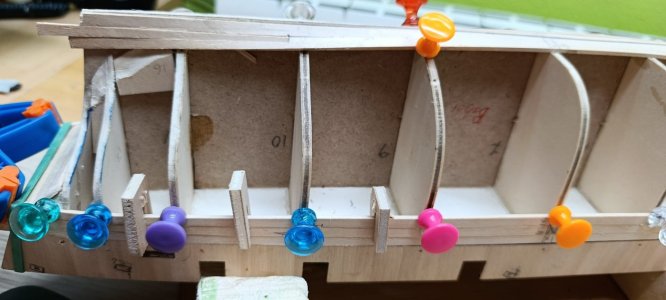
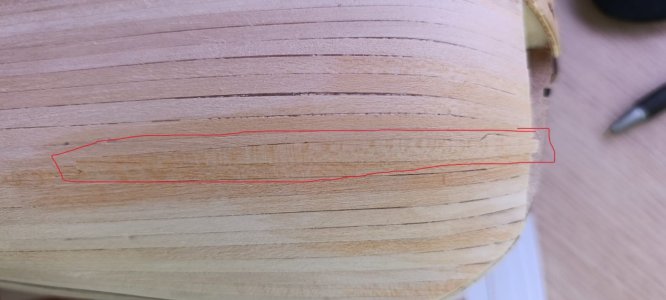
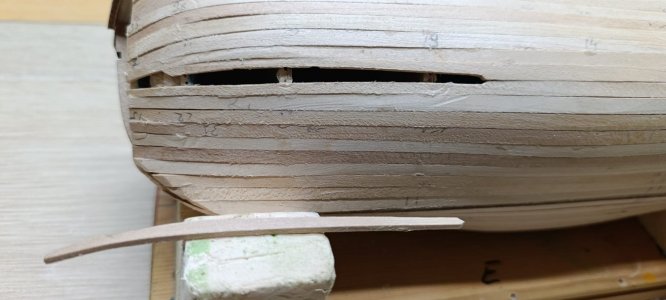
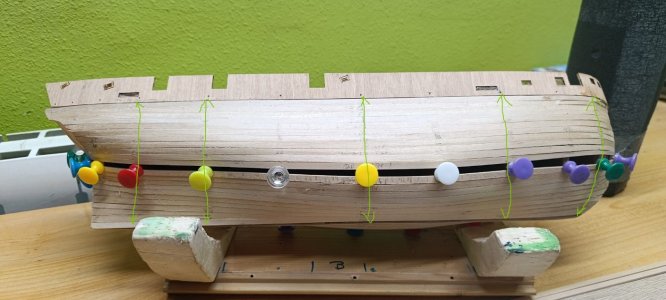
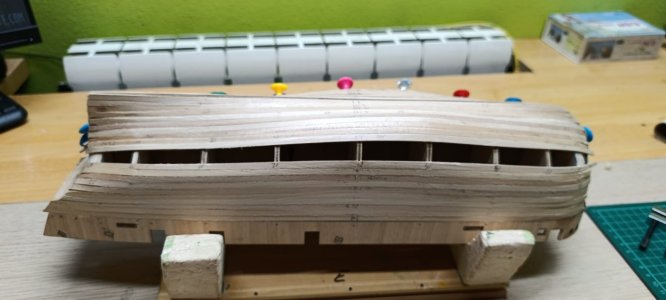
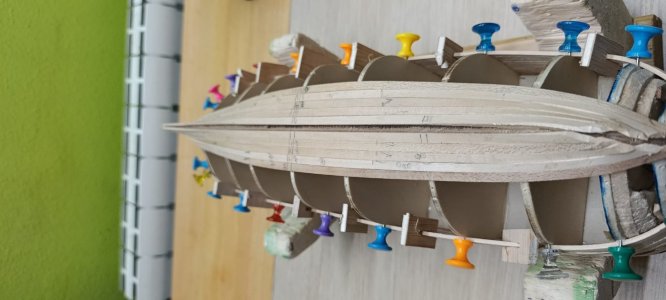
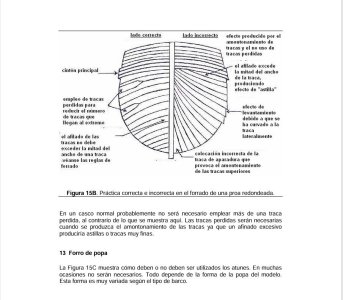
Buenos días, claro, para eso estamos para compartir conocimiento, y aprender de otros. Lo que hago es medir el contorno de las falsas cuadernas, en popa, maestra y proa, se divide por la anchura de las tracas a usar, y nos da el nº de tracas a usar, claro en cuaderna maestra es donde no vamos a tocar su anchura pero en proa sobre todo verás que los cm lineales son menos, pues esos cm se dividen por el nº de tracas que te ha dado en cuaderna maestra, y ya sabemos más la menos anchura que deben de tener, ya digo, nunca se debe rebajar por debajo de 1/2 de la anchura. En popa, sobre todo en la zona del codaste, verás que igual tienes que poner un atún, o varios. Estos no deben de empezar o terminar en cuña, por eso la forma que se ve en una de las fotos. La primera que coloco es la de aparadura, la que va pegada a la quilla, luego voy alternando de banda y de cubierta-quilla, vamos que coloco dos de cada banda a la vez, asi se evitan reviros.
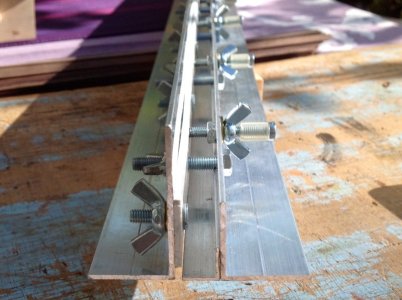
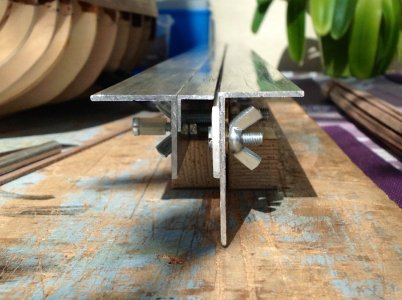
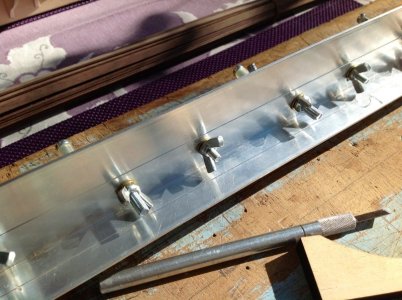
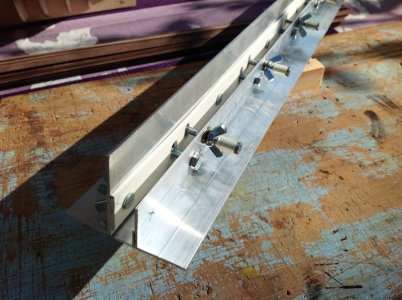
Para darle la anchura, no me complico mucho, cepillo carpintero con muy poco corte, poner las tracas en vertical, hago en principio las dos bandas a la vez, babor y estribor, y como he marcado en ellas donde más menos debo empezar a rebajar, solo es dar pasadas e ir rebajando. Hay gente que se hace un útil con unos ángulos de aluminio para sujetar las tablas, pero me parece innecesario. Cuando llevo más o menos la mitad forrado, es cuando hay que prestar más atención, y medir en cada cuadrana su anchura y el rebaje que hay que hacerle. Pero no te preocupes, llevo más de 20 años haciendo modelos, y no empecé sabiendo lo que se ahora. NOTA. Escribo en castellano, por que así si entiendes algo es mejor que no traducir con Google y que invente palabras.
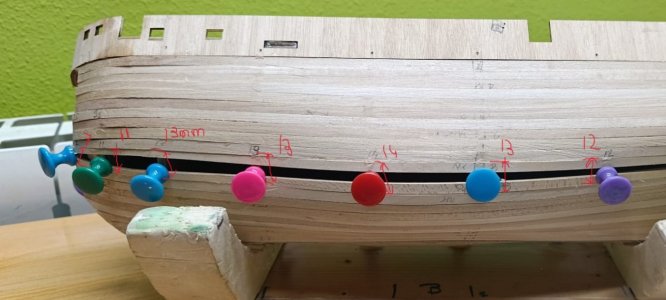
En la última foto te he señalado, cuando me quedaban tre tracas por colocar, la anchura que tenia de hueco, como ves en maestra casi ni tocar, pero en cada cuaderna habia una anchura, eso es lo que hay que tener en cuenta.
Debo decir que su trabajo de entablado es magnífico. ¿Podría compartir qué manual o recurso utilizado para aprender a establecer? Tengo algunos recursos (como "Modelismo naval de proa a popa"), pero aprendo mejor practicando. Intento comprender cuándo es necesario biselar o achaflanar los extremos de las tablas y cuándo se debe biselar la parte superior e inferior. ¿Depende esto del largo y el ancho de la tabla y del tipo de madera? Además, ¿los números que escriben en las tablas se basan en alguna fórmula? Me resulta muy confuso, ya que solo llevo seis meses practicando este oficio. Muchas gracias por compartir sus conocimientos.

Afilado de tracas (1).jpg

Afilado de tracas (2).jpg

Afilado de tracas (3).jpg

Afilado de tracas (4).jpg

Atún en Popa, zona de codaste.jpg

Atún en proa (1).jpeg

Atún en proa (2).jpeg

Medir cada cuaderna para saber su anchura.jpeg

Imagen de WhatsApp 2026-01-04 a las 17.24.58 (2).jpeg

Imagen de WhatsApp 2026-01-04 a las 17.42.06.jpeg
 
Back
Top