


• Win a Free Custom Engraved Brass Coin!!!
    As a way to introduce our brass coins to the community, we will raffle off a free coin during the month of August. Follow link ABOVE for instructions for entering.
  • SUBSCRIBE TO SHIPS IN SCALE TODAY!

    The beloved Ships in Scale Magazine is back and charting a new course for 2026!
    Discover new skills, new techniques, and new inspirations in every issue.

    NOTE THAT OUR NEXT ISSUE WILL BE MARCH/APRIL 2026

Next build -- HMS Victory (Hull only)

Por Dios! acabo de alucinar, vaya cañones, cabilleros, etc...con razón te costo solo 40 $. Tu planteamiento de hacer este para aprender me parece muy inteligente, haya gente que se mete a construir un Victory sin haber hecho nada antes, curiosamente algunos los hacen perfecto, pero no es lo normal. Yo personalmente me decantaria mas por Ocre que por Artesania Latina, a nivel de planos sobre todo de jarcia, es mucho mas completo que AL. Yo para mi SAn Juan Nepomuceno de AL estoy siguiendo las instruicciones del Montañes de Ocre, por que si no es imposible montar jarcia, velas, etc...mira la diferencia de planos


Montañes de Ocre.jpg
 

Attachments

Hi Chris
I would bet the vast majority of people that do not speak Spanish read your post. I did and it is worth the read. Maybe post in both languages. It took literally ten seconds to translate this. I went through the entire topic and see no picture of cannon or pintles that you mention. Probably just me, but where are they?

Good heavens! I'm blown away, look at those cannons, the pintles, etc...no wonder it only cost you $40. Your approach of building this to learn seems very clever to me. There are people who jump into building a Victory without any prior experience, and interestingly, some do it perfectly, but that's not the norm. Personally, I'd go with Ocre over Artesania Latina, especially in terms of rigging plans; it's much more complete than AL. For my San Juan Nepomuceno from AL, I'm following the instructions from Montañes de Ocre, because otherwise it's impossible to assemble the rigging, sails, etc...just look at the difference in plans.

I went through the entire topic and see no picture of cannon or pintles. Probably just me, but where are they?

Thanks

Allan
 
Hola Chris
Apuesto a que la gran mayoría de las personas que no hablan español leyeron tu publicación. Yo sí, y vale la pena leerla. Quizás las publicaciones en ambos idiomas. Me tomó literalmente diez segundos traducirla. Revisé todo el tema y no veo ninguna imagen del cañón ni de los pivotes que mencionas. Probablemente solo yo, pero ¿dónde están?

¡Cielos! Estoy impresionado. Mira esos cañones, los pivotes, etc. , con razón solo te costó $40. Tu estrategia de construir esto para aprenderme parece muy ingeniosa. Hay gente que se lanza a construir un Victory sin experiencia previa, y curiosamente, algunos lo hacen a la perfección, pero no es lo habitual. Personalmente, preferiría Ocre a Artesanía Latina, sobre todo en cuanto a los planos de aparejo; es mucho más completo que AL. Para mi San Juan Nepomuceno de AL, sigo las instrucciones de Montañes de Ocre, porque si no es imposible montar el aparejo, las velas, etc., solo hay que ver la diferencia de planos.
Revisé todo el tema y no veo ninguna imagen del cañón ni de los pivotes. Probablemente solo sea yo, pero ¿dónde están?

Gracias

Alano
Hola gracias por tu comentario, y por el mensaje, Soy español, y por desgracia no se inglés, con lo que si escribo es castellano, la solución esta el traductor de google, pero no se lo que escribira, seguramente una barbaridad, quiero decir con esto, que si yo lo escribo traducido, es lo mismo que si lo traducis vosotros, con la diferencia que si alguno sabe español, no lo entenderá si hay errores. Esto esta hablado con el administrador del foro, y le planteé esta cuestión, escribir en inglés de google, o en castellano, me dijo que mejor castellano, que si alguien no entendia, podría usar el traductor.
Tengo ese problema cuando intento seguir un hilo escrito en inglés, que hay apalabras sobre todas las técnicas que no las sabe traducir. Lo siento Alan.
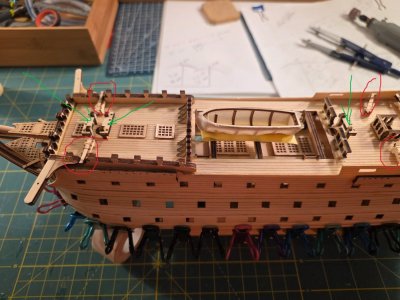
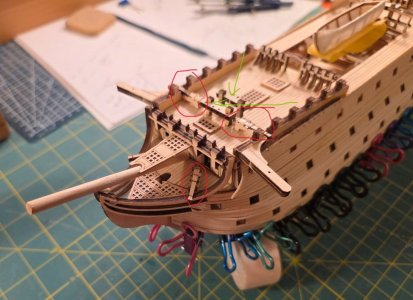
En cuanto a los cañones que digo, los pivotes deben ser lo que en castellano es Cabillero, que es donde se hacen firmes las maniobras. Este es el problema del traductor de google. En rojo señalados los cañones, en dos dimensiones, y lo marcado en flecha verde, son los cabilleros, que el traductor llama pivotes. Un saludo y virutas

20260214_204547.jpg

20260214_204443.jpg
 
Last edited:
Today's Question for HMS Victory Hull-only Build:

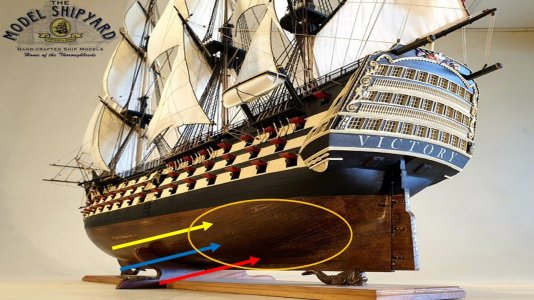
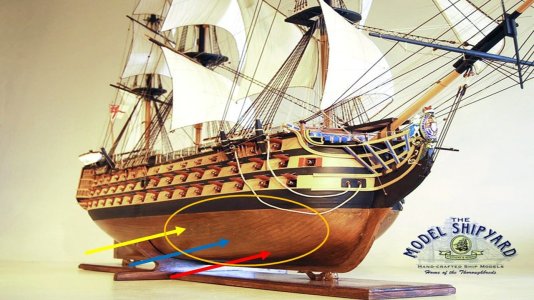
I came across these pictures of the hull of HMSV that show an alternative way to run the planks in a long "U" shape from stem to stern. The planks above these "U-shaped" planks appear shaped to fill the negative space on the bulkheads leading down from the bottom wale to where the U-shaped planks start. Is this an alternative to running each plank parallel to the previous plank going from the bottom wale to the keel, or is this the standard pattern of planking the HMSV hull that everyone follows?

It looks like this is a nice way to cover the complicated set of framing bulwarks fore and aft, and it also looks like the multiple planks do not need to be planed down on both ends of the plank (where one would ordinarily being tapering the planks) as they are attached at the stem and at the stern. But it also seems like the rabbet does not come into play for many of the planks in this pattern.

Does anyone have a planking diagram that shows this alternative way of attaching plank to frame on the HMS Victory? Not saying that I would even attempt it on this hull-only build, but it has some appeal because it covers quite a bit of the planked-over space without the tapering that is necessary to work the individual planks.

HMS Victory Alternate Planking pics.jpg

HMS Victory Alternate Planking pics 2.jpg
 
Last edited:
I think I'll start off with a disclaimer. I am definitely NOT an expert on this topic.
I believe what you are actually viewing is a copper plating that was put on the model. Be aware This likely does not follow the lines of the planking.
Secondly, Just because a model company builds something, does not make it accurate when compared to the real item. Research is your friend (this one has probably been the hardest for me to learn. :)
 
I believe what you are actually viewing is a copper plating that was put on the model. Be aware This likely does not follow the lines of the planking.
Totally agree with your comment Jeff. Assuming this is supposed to be copper plating, as it is shown in the photo, it is completely wrong.
 
Cris

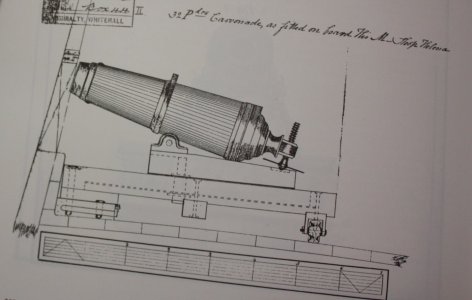
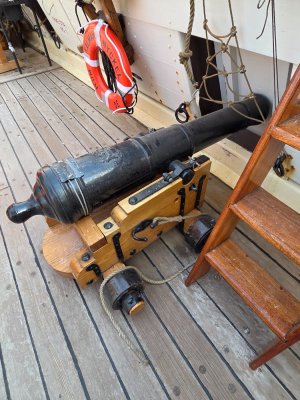
Los travesaños de las bitas tienen agujeros para cabillas. Los agujeros en tu foto son demasiado grandes y hay muy pocos. Los cañones que muestras parecen cañones largos en lugar de carronadas, por lo que no encajarán correctamente. Mira el dibujo de una carronada a continuación.

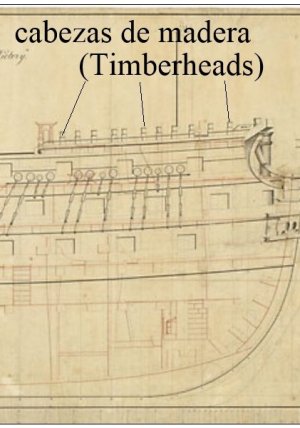
Muestras solo seis cabezas de madera a cada lado del castillo de proa. Debería haber unos doce a cada lado. Espero que esto ayude. :)
The cross pieces of the bitts have holes for belaying pins. The holes in your photo are much too large nd there to few of them. The cannons you show look like long guns instead of Carronades so will not fit properly. See drawing below of a Carronade.

You show only 6 timberheads on each side of the forecastle. There should be about twelve on each side.

I hope this helps


Allan

Carronados
1771184564828.jpeg
1771184908714.jpeg
 
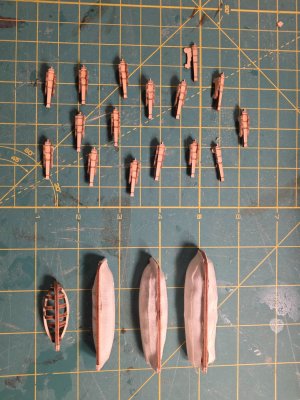
Yep...I'm going to remove these silly "cannons" and ships tenders. Since I'm focusing on the hull planking they are really a distraction and not even in the building "plans" such as they are. A very cheap kit bought online indeed. The Revell 1/225 plastic model of HMSV may look better, but then I wouldn't be learning how to plank hulls on this site!
20260215_181931.jpg

20260214_143829.jpg

20260209_223606.jpg
 
Last edited:
and ships tenders
Regarding the launch, pinnace, and cutter you have alternative choices for your build. Ship's boats can make for fun projects from scratch with simple hand tools. Nothing fancy is needed. If cutting wood is a problem, after market suppliers like The Lumberyard offer strip or sheet stock. See the posts here at SoS on how to build boats if you think it would be interesting and helpful. There is an article in the first edition of the relaunch of Ships In Scale magazine that showed up in the mail yesterday showing an alternate method for making the ship's boats. One example, for building a cutter..... https://shipsofscale.com/sosforums/threads/building-a-cutter.17081/
Allan
 
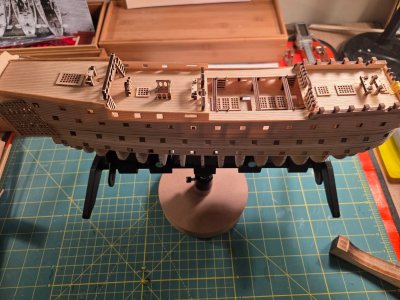
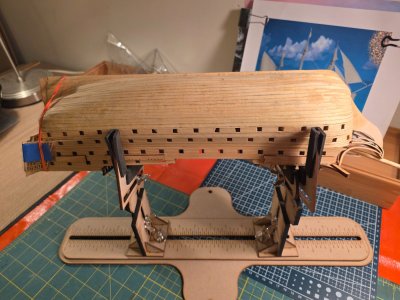
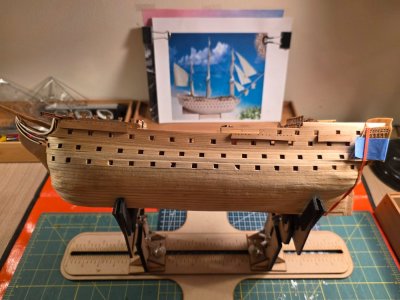
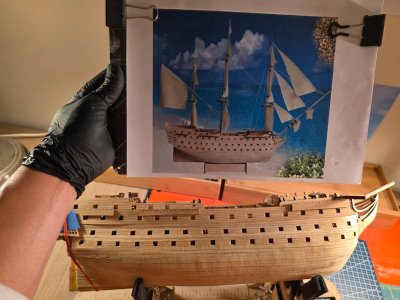
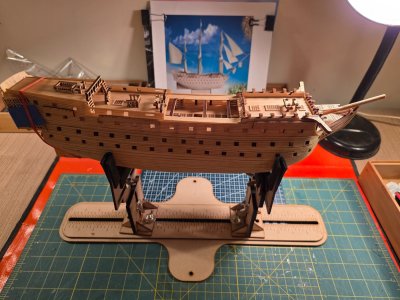
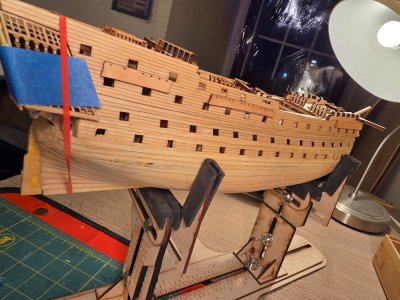
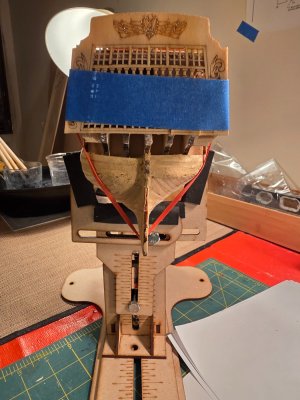
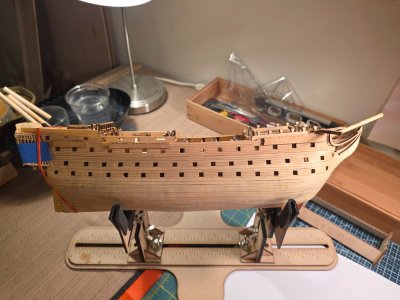
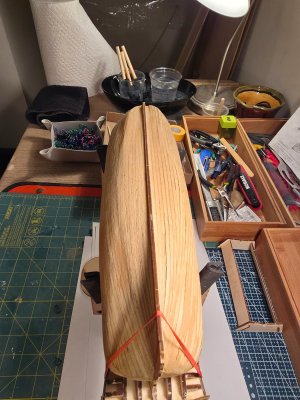
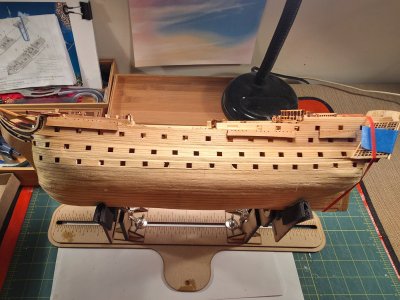
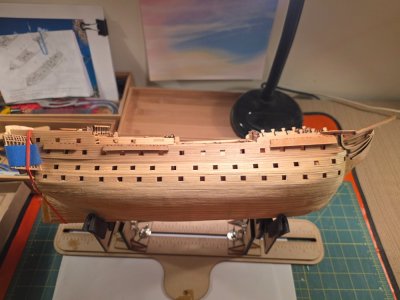
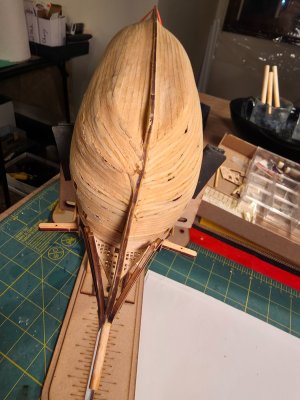
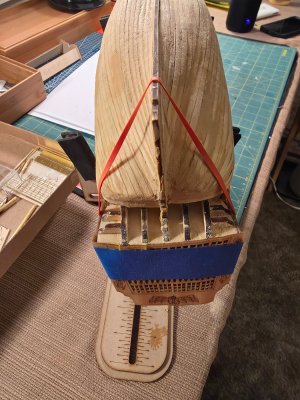
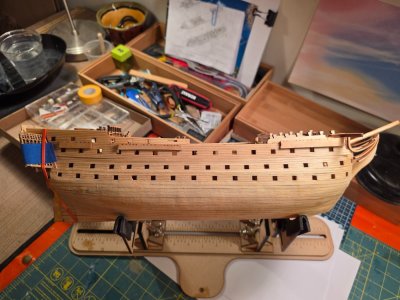
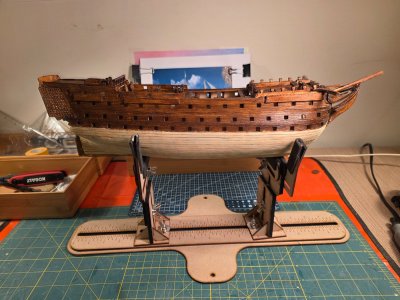
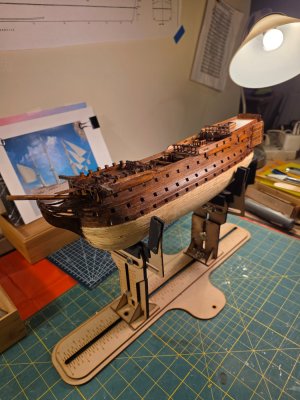
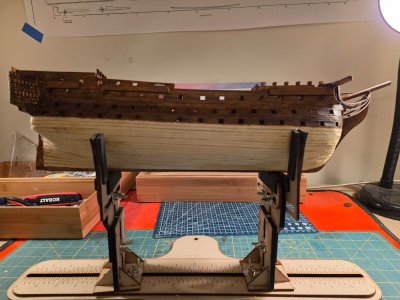
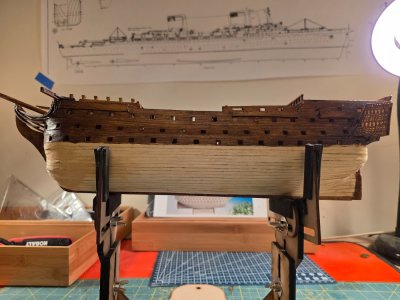
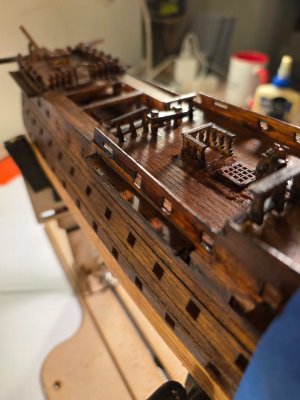
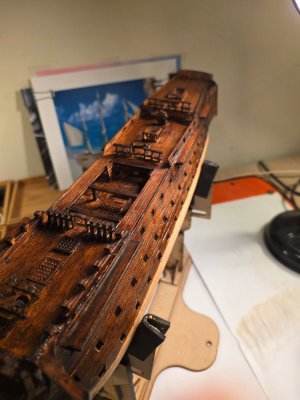
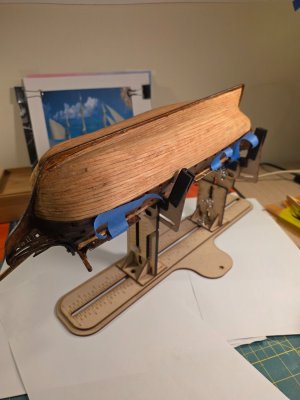
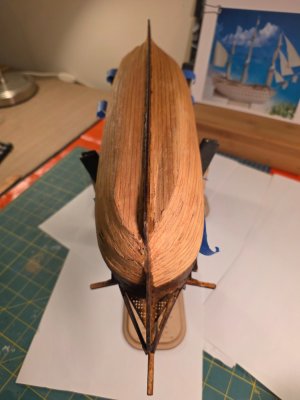
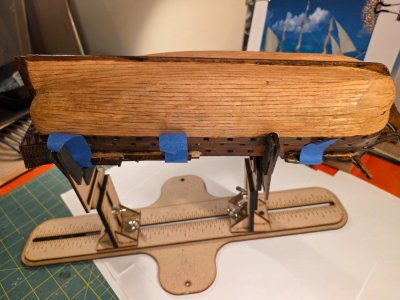
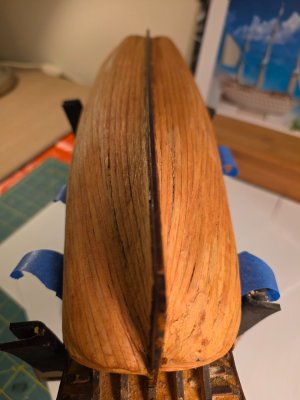
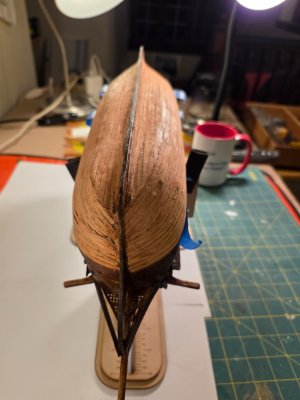
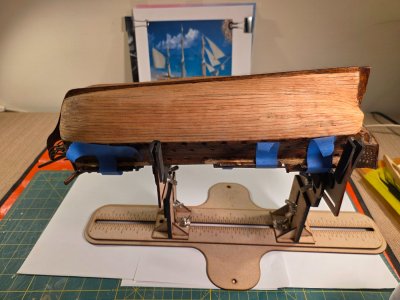
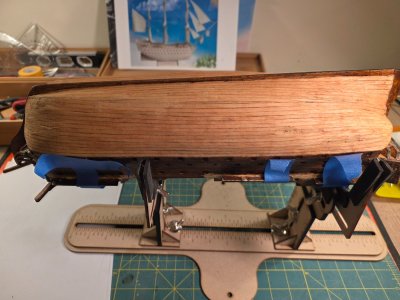
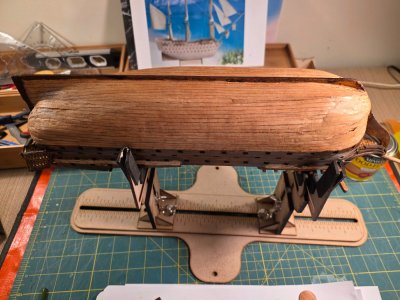
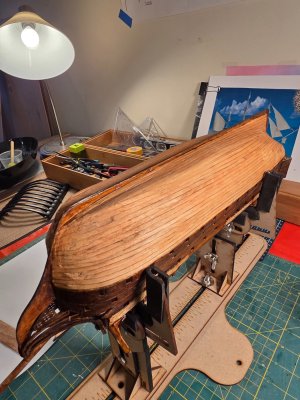
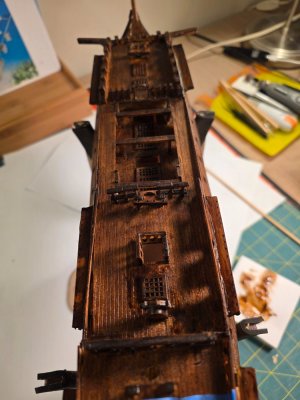
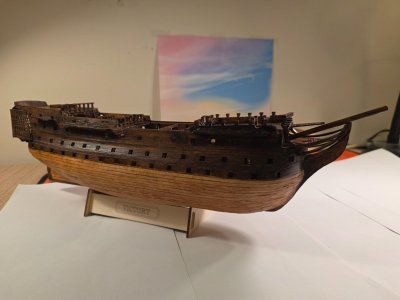
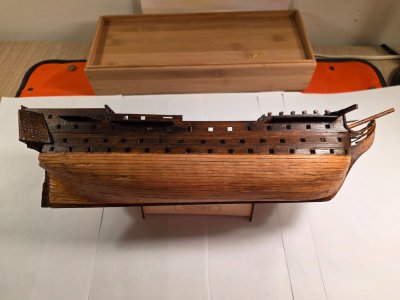
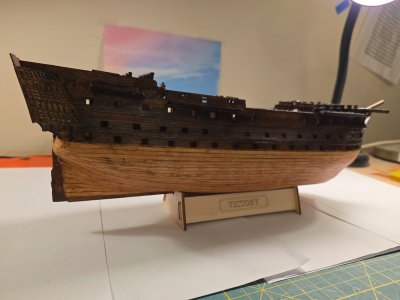
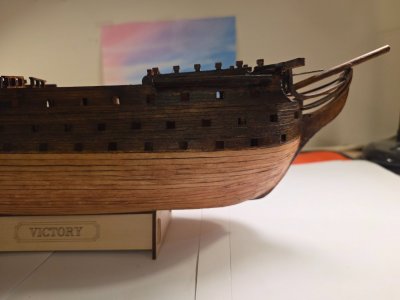
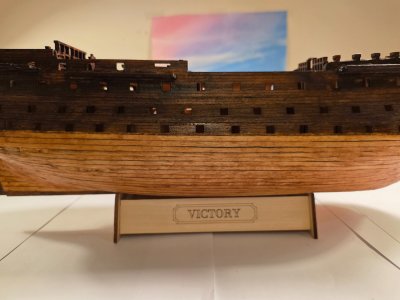
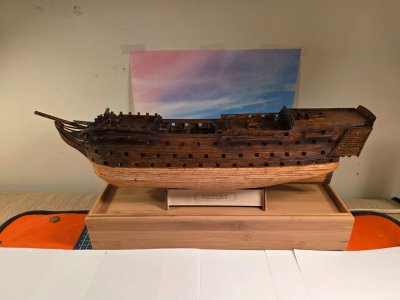
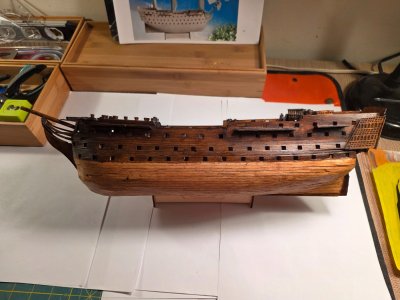
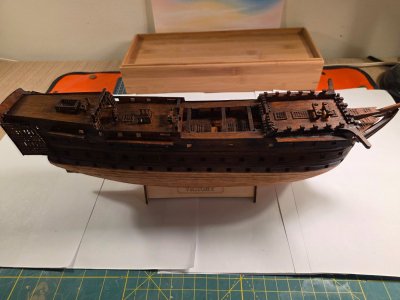
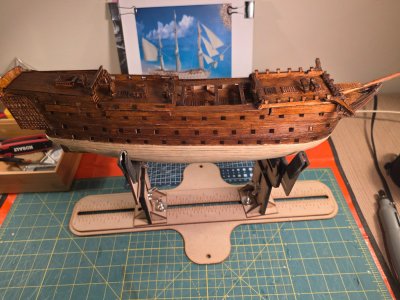
Finally finished planking the hull of this cheap internet version of HMS Victory 1/150 scale. It came out so-so but I learned a ton about plank on frame building, tapering planks at the bow and using sneakers or stealers at the stern.

Looking forward to building another wooden planked hull, this time on my next build...the Mayflower 1/140 scale kit from Corel. This build has a solid wood hull, so I will be learning how to plank over a solid wood hull for the first time.

These pics are before staining, using Minwax Pre-Staining sealant, and fixing an issue in the cheapo sterncastle. I will stain tonight and post final pics tomorrow.

20260302_193939.jpg

20260302_193826.jpg

20260302_193735.jpg

20260302_193649.jpg

20260302_192740.jpg

20260302_192727.jpg

20260302_192536.jpg


20260302_192204.jpg

20260302_192142.jpg

20260302_192119.jpg

20260302_192319.jpg

20260302_192343.jpg

20260302_192419.jpg
 
Last edited:
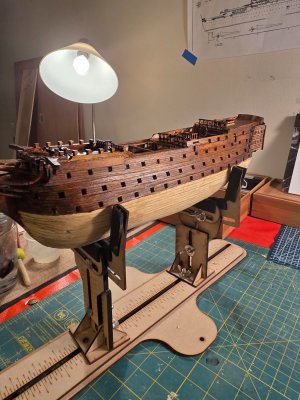
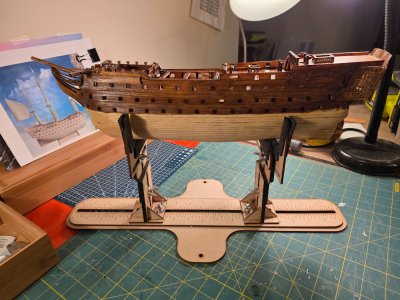
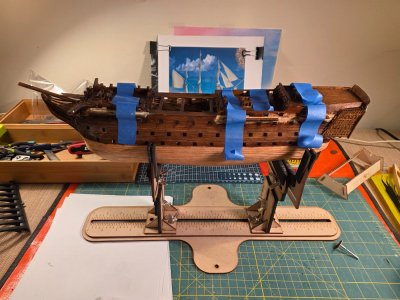
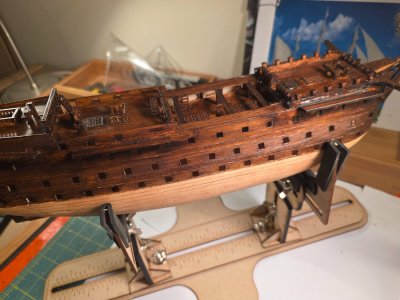
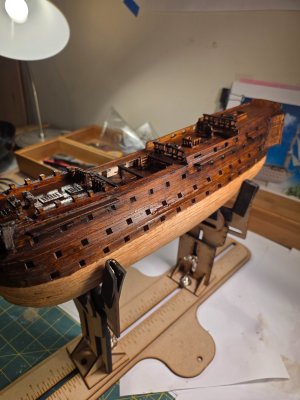
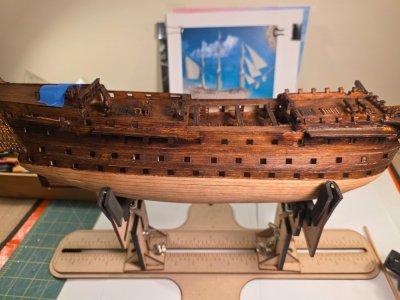
Done with my first wooden hull-only build of the HMS Victory 1/150 scale from a cheap internet $40 kit. Wanted to get the feel for doing a wooden hull before I start making better quality models, like my next build, the Mayflower 1/140 plank on solid hull kit from Corel.

Can't say it came out perfectly, it didn't. But I learned a lot about plank on frame building from some great resources on this site and helpful members. Shout outs to Crisjaca, Corsair and AlanKP69!

I think I'll keep it unstained for now, if only to remind me how hard this craft is and how much work it takes over an extended period of time -- in this case four+ weeks. Lesson learned: The build would have been better if I took six+ weeks instead!

1000012137.jpg

1000012142.jpg

1000012145.jpg

1000012146.jpg

1000012147.jpg

1000012149.jpg

20260303_195202.jpg
 
Last edited:
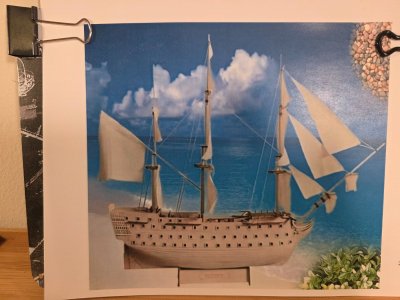
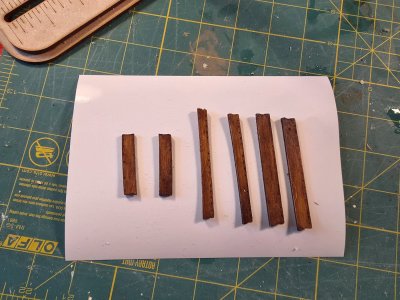
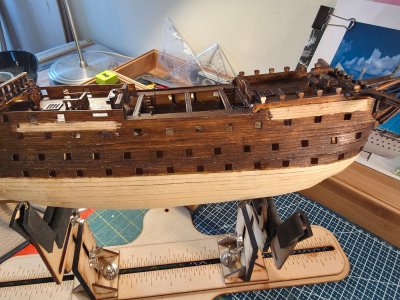
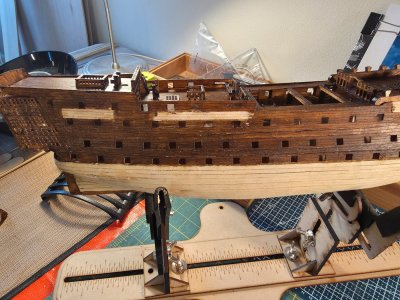
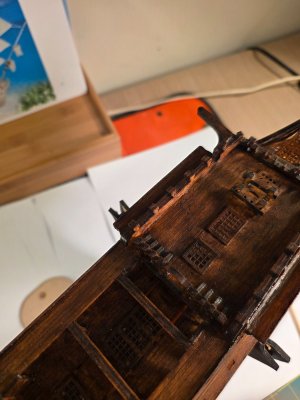
Wait a minute...SoS member Unchains correctly points out that my hull-only build of the HMS Victory 1/150 scale from a cheap internet kit had the rigging channels attached to the top gunwale deck incorrectly. In earlier pics of this build I attached the rigging channels flush against the top gunwale deck, whereas the correct placement was perpendicular to the top gunwale deck (pointing outward from the decks). But the rigging channels have to keep the rigging away from the gun decks so they need to project outward ftom the hull. Attaching the "template photo" of this generic Chinese kit with rigging channels pointing outwards for reference.

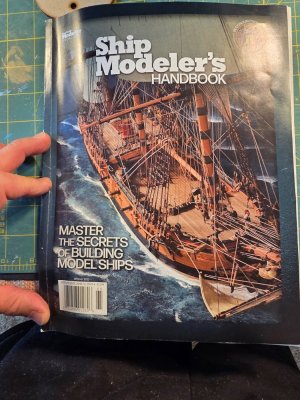
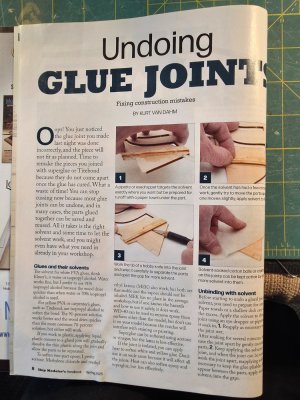
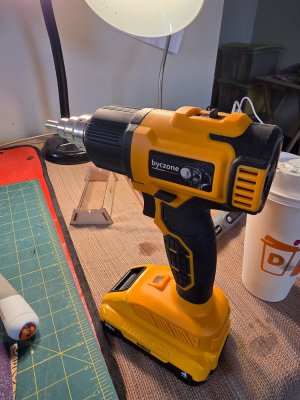
So I had to remove the 6 rigging channels from their flush attachment to the top gunwale and reposition them correctly. I had attached the rigging channels with wood glue (Titebond II) so all I had to do was use tap water and my heat gun to remove them. I checked the Ship Modelers Handbook and the last issue had a good article on loosening glue bonds whether joined with wood glue or CA glue by using tap water or rubbing alcohol and a heat gun. Lucky I bought a heat gun at the beginning of this build 4+ weeks ago.

I sanded everything down and reapplied Minwax Pre-Stain to the top gunwales and then reattached the rigging channels correctly with Titebond II glue.

As Unchains said, even if this is a hull-only build without rigging, there is no reason why the rigging channels should not be attached correctly. Someone with experience building HMS Victory kits would notice that the rigging channels are off, so trying my best to give a true presentation of the build. Thanks Unchains for setting me straight!

20260304_211813(1).jpg

20260304_211756.jpg

20260304_195020.jpg

20260304_194149.jpg

20260304_194348.jpg

20260304_105323.jpg

20260304_105307.jpg

20260304_101542.jpg

20260304_095837.jpg

20260304_095831.jpg

20260304_095828.jpg

20260304_211900.jpg
 
Last edited:
Now I'm done with this build! After fixing the rigging channels I stained the hull with a light Golden Pecan color to show off the planking (warts and all). Once this has 24 hours to dry, I will spray the final topcoat of matte clear enamel to protect this model and move on to other projects.

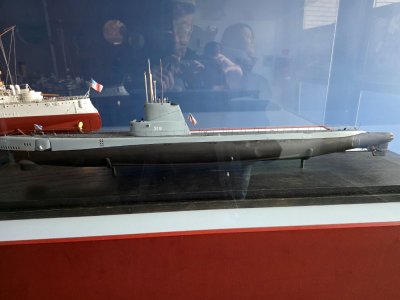
Besides finishing my Build Log of the Juan Sebastian de Elcano next, I will do a quick club build of the U.S.S. Becuna, a Balao-class submarine launched in 1944 and now part of the "Philadelphia Navy" as a plastic 1/180 scale kit from Revell (see my signature for the Philly Navy club build). Waiting a couple of weeks for my Mayflower 1/140 solid wooden hull kit from Corel to arrive next.

20260304_190123.jpg

20260304_190113.jpg

20260304_190012.jpg

20260304_185959.jpg

20260304_185937.jpg

20260304_185930.jpg

20260304_185746.jpg

20260304_173014.jpg

20260304_173101.jpg

20260304_185422.jpg

20260304_194057.jpg

20260304_194158.jpg
 
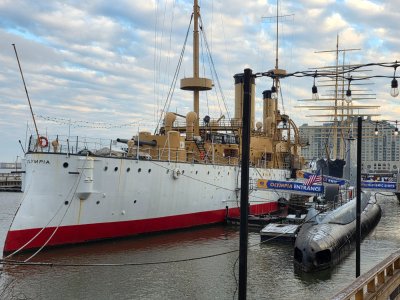
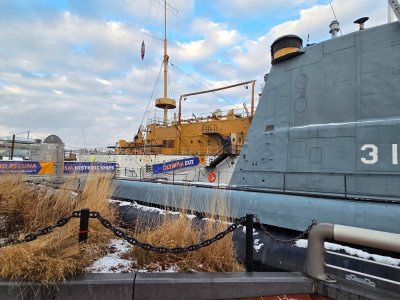
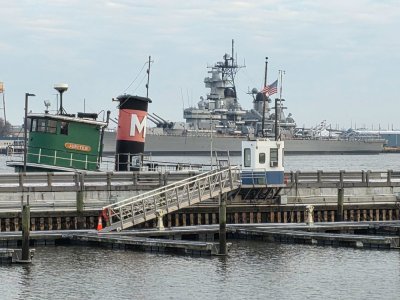
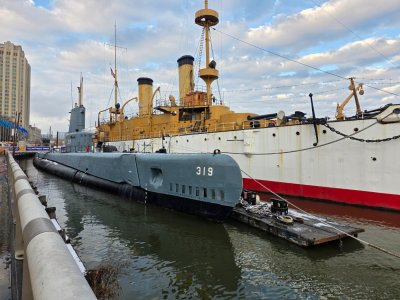
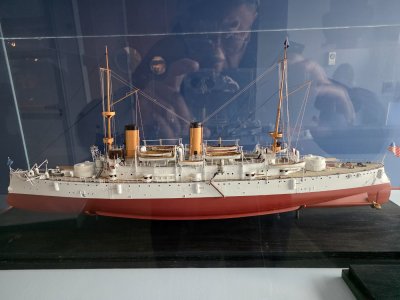
Some pics of the U.S.S. Becuna submarine (S.S. 319) moored at the Independence Seaport Museum in Philadelphia, next to the U.S.S. Olympia battle cruiser (Commodore Perry's flagship at the Battle of Manila Bay), the Moshulu 4-masted barque/restaurant, the tugboat Jupiter, and across the river from "Big J," the battleship U.S.S. New Jersey (S.S. 62) herself. Until recently, the S.S. United States (once the world's fastest cruise ship) was moored 4 or 5 piers down Columbus Blvd. in South Philly. At least until she was towed down to Destin, Florida to be sunk as an artificial reef late last year.

20260117_161915.jpg

20260117_161741.jpg

20260117_161937.jpg

20260117_161506.jpg

20260117_161245.jpg

20260117_160620.jpg

20260117_160520.jpg

20260117_160528.jpg

44_SSUS+copy.png
 
Last edited:
Now I'm done with this build! After fixing the rigging channels I stained the hull with a light Golden Pecan color to show off the planking (warts and all). Once this has 24 hours to dry, I will spray the final topcoat of matte clear enamel to protect this model and move on to other projects.

Besides finishing my Build Log of the Juan Sebastian de Elcano next, I will do a quick club build of the U.S.S. Becuna, a Balao-class submarine launched in 1944 and now part of the "Philadelphia Navy" as a plastic 1/180 scale kit from Revell (see my signature for the Philly Navy club build). Waiting a couple of weeks for my Mayflower 1/140 solid wooden hull kit from Corel to arrive next.

View attachment 582520

View attachment 582521

View attachment 582522

View attachment 582523

View attachment 582524

View attachment 582525

View attachment 582526

View attachment 582527

View attachment 582528

View attachment 582529

View attachment 582530

View attachment 582531
Congrats on completing your build !
 
Congrats on completing your build !
Thanks Corsair! I think you were one of the SoS members who recommended getting a heat gun to help remove parts attached with wood glue. It certainly came in handy for removing the rigging channels to complete this build. I'm really enjoying this hobby/craft and I can see why it appeals to so many of us "almost seniors" who have the time to dedicate to it.
 
Back
Top