• SUBSCRIBE TO SHIPS IN SCALE TODAY!

    The beloved Ships in Scale Magazine is back and charting a new course for 2026!
    Discover new skills, new techniques, and new inspirations in every issue.

    NOTE THAT OUR NEXT ISSUE WILL BE MARCH/APRIL 2026
  • Win a Free Custom Engraved Brass Coin!!!
    As a way to introduce our brass coins to the community, we will raffle off a free coin during the month of August. Follow link ABOVE for instructions for entering.

Occre Gorch Fock

MDB

Joined
Jan 5, 2025
Messages
17
Points
48

This ship will be my next adventure, she has a steel hull and as such everyone fills it so it appears to be steel (no planks in sight)

If I decided to go against the grain and build her with a painted but definitely wooden hull do you think I will come up against scaling issues
 
As they say, it’s your model, do what you want.

BUT!

If you want to build an accurate model of the real ship, it’s a steel ship not a wooden one. If I were building this model after planking the hull I would plate it with shellac coated paper glued with PVA glue. I’m assuming that this is the 1958 Gorch Fock not the 1933 version. The 1933 version probably had a riveted hull with lapped plating. The 1958 hull would probably have been welded with plates flush to one another.


Roger
 
Your probably correct

What product would you recommend to use to smooth it out, i would hate for the paint to start cracking if it expands
 
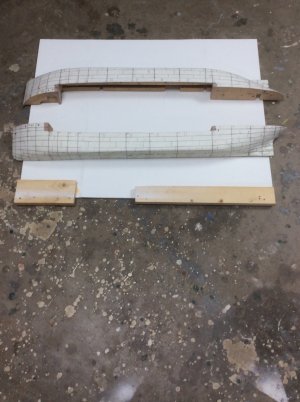
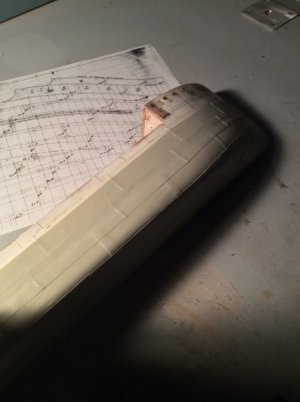
I can’t answer that specific question as I don’t build models from POB kits. My present very long term project is a steel hulled vessel; the canal sized GreatLakes freighter Benjamin Noble. I carved the hull from lumberyard pine, coated it with epoxy paint, and plated it with paper as described above. Photos below:

IMG_0551.jpegIMG_1279.jpeg
 
Hi ‘MDB’.
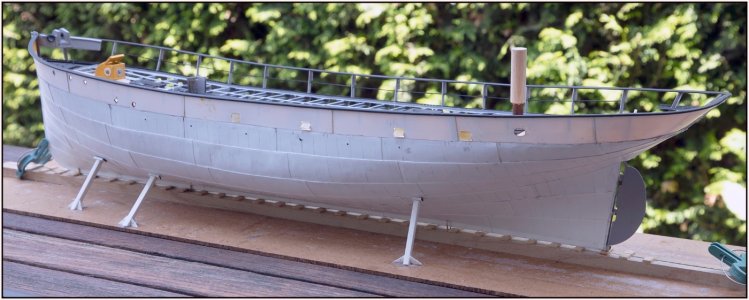
You can also imitate the steel hull plates by cutting scale size plates from Evergreen plate. Depending of the scale of your model, they have sheets starting with 0,12 mm, 0,24 mm etc. With rubbing the heat of you hands and some rounded wood you can shape it very well.
Did it on my Balder:
IMG_0569.jpeg
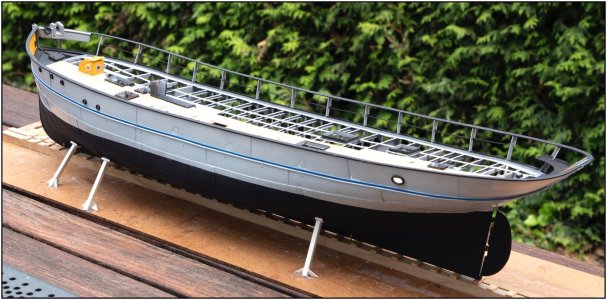
Once painted it gives a very realistic view:
IMG_0570.jpeg
Regards, Peter
 
Use wood with tight grain, think of the opposite of Oak it has open grain with deep pores.

Ok now it’s planked. Level the planks with a wood file - sandpaper takes too long.

Next, fill the cracks sparingly with filler. Mask along the seams first. Layout a line of filler and cut off thin lines with an xacto spade bit. Avoid globing filler on the face of the planks, unless a depression needs filling. Pull the tape and sand the fine lines of filler - 220 or 320 should do it.

Now the finish.

Shellac can be used to build up a finish, brush, or Rattle can, it out, sand progressively from say 150, 220, 320. Brush, sand, repeat.

Artists Gesso is not talked about here. It’s an acrylic artists use to prep canvas. Make sure it’s the sandable kind. I’ve airbrush it with a mini spray gun (Iwata RG-3.). Lays out well with a brush.

Make up sample boards, find out what is right for you.

Once you have a smooth hull, ready for the techniques shown above.

Good luck with your ship.

 
Back
Top