
Today, I received a test piece of 1/16" thick yellowheart wood. It is loaded with pink streaks. Does anyone know how to get rid of them? Alternatively, does anyone know of a supplier that sells thin sheets of yellowheart and guarantees the wood doesn't have these streaks?

-

SUBSCRIBE TO SHIPS IN SCALE TODAY!
The beloved Ships in Scale Magazine is back and charting a new course for 2026!
Discover new skills, new techniques, and new inspirations in every issue.
NOTE THAT OUR NEXT ISSUE WILL BE MARCH/APRIL 2026 -

Win a Free Custom Engraved Brass Coin!!!
As a way to introduce our brass coins to the community, we will raffle off a free coin during the month of August. Follow link ABOVE for instructions for entering.
You are using an out of date browser. It may not display this or other websites correctly.
You should upgrade or use an alternative browser.
You should upgrade or use an alternative browser.

- Joined
- May 3, 2026
- Messages
- 22
- Points
- 28

- Joined
- May 3, 2026
- Messages
- 22
- Points
- 28
Sorry to hear that. Did you try to contact them?
If it was a test piece, it may have been less likely to be pristine.
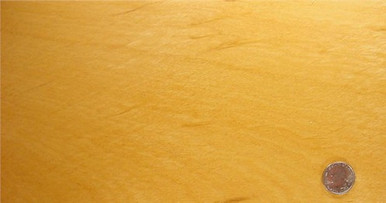
Here is the only other place I have found 1/16
 woodnshop.net
If it was a test piece, it may have been less likely to be pristine.
Here is the only other place I have found 1/16
YELLOWHEART / GOIABAO 1/16 Random Widths and Lengths
For a wide selection of ASH hardwood from 1/16" TO 3/4" thick 1" to 12" wide plus over 60 species of hardwoods for the woodworker
woodnshop.net
Last edited:

Hi Charlie,
Check out the offering from Rare Woods - and if you email them they are very responsive. Gilmer is another option but what they show online looks like it may also suffer from pink/red intrusions (never mind the breathtaking price point of most Gilmer woods).
Check out the offering from Rare Woods - and if you email them they are very responsive. Gilmer is another option but what they show online looks like it may also suffer from pink/red intrusions (never mind the breathtaking price point of most Gilmer woods).

- Joined
- Dec 1, 2016
- Messages
- 6,645
- Points
- 728

i have yellow satinwood a clean clear yellow and no streaks also Pau Maffim and Osage Orange i can mill out sheets for you
PM me
PM me
- Joined
- Oct 2, 2025
- Messages
- 382
- Points
- 128

If you are going to bail on the miscolored wood anyway, you could try an experiment.Does anyone know how to get rid of them?
Buy a small size packet of lemon yellow alcohol soluble aniline dye. The alcohol will not raise the grain.
Dye dissolved in water penetrates more deeply but also raises the grain.
Many sources - here is one https://www.shellac.net/PLBEaniline...ImQrTMCKTF6F3WRBkVOSM29-ApXMQj9AUK0eXU-svNgHz
- Joined
- Dec 1, 2016
- Messages
- 6,645
- Points
- 728
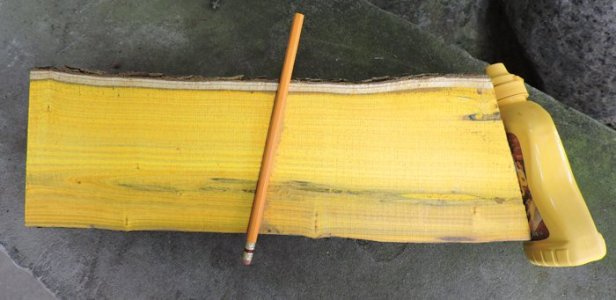
now here is a yellow wood
- Joined
- Dec 1, 2016
- Messages
- 6,645
- Points
- 728
That IS yellow! What kind of wood is it?
Cotinus Anacardiaceae common name smoketree cashew, sumac family
- Joined
- Sep 25, 2025
- Messages
- 59
- Points
- 58

May not be related but Holly, if cut before the sap rises remains a creamy white but if cut in the wrong season will have purple streaks. This may be the case of yellow wood but I'm just guessing.
- Joined
- Jun 29, 2024
- Messages
- 1,769
- Points
- 488

How about Osage Orange? OR Is that what you actually got? I have read that it can have red streaks.
Roger
Roger
- Joined
- Oct 2, 2025
- Messages
- 382
- Points
- 128
American Holly Ilex opaca can be either snow white or light yellow - depends of "the grand parents".but Holly, if cut before the sap rises remains a creamy white but if cut in the wrong season will have purple streaks.
If harvested before the tree has entered its Winter dormant phase - the wood has a high moisture content.
The transport tubes are open and communicate efficiently over long distances. When I was billeting a green "trunk"
-a visible stream of water dripped out of the cut end ahead of the bandsaw blade.
There is a fungus in North America that focuses on Ilex opaca - Blue Mold. It will swim up the open water transport tubes. It almost seems so fast at it that you can see it happening. The fungus changes the color of the wood from white or yellow to robins egg blue or grey. There is no purple. That is all that this fungus does. Most woodworkers seek the snow white color for marquetry or similar purposes. The color change is a disaster for them. For ship modelers it should be seen as a boon. The wood is just as sound as uninfected wood. The script with Holly - harvest only in Winter - get it into a kiln the same day - should not apply to what we should want.
Long ago - an over enthusiastic writer - probably for popular press - waxed poetic about a ship's freshly holystoned deck being "white". Holystone is sanding. No freshly sanded wood from a wood species with a large enough trunk to be commercial lumber is white - or even off white. Oak is not white - Pine is not white. Elm is not white. Sanding will not make it white - rather back to freshly sawn.
Some American ship modeler wrote about using American Holly for decking - it started a fad that resists to this day. There were no decks on wooden sailing ships that were actually white. The look is wrong. It is kitsch.
English Holly is yellow to grey - spot on for decking. Blue Mold infected American Holly that is grey is a correct look for a neglected deck..
Holly has become so popular with woodworkers that the price for even Blue Mold stained wood is too high to consider.
- Joined
- Oct 2, 2025
- Messages
- 382
- Points
- 128
Something has happened recently with Yellowheart. It used to be about $20/BF but readily available. I bought 9BF of 8x4 S4S from Yukon's showroom for $150 in 2008. Those who sell "Exotic" lumber used to have it in stock. I have been seeing OOS beside its listing as of late. It is one of the few "exotic" wood species that does not have "interesting grain". We want dull, plain looking - boring grain.
I think I read that the yellow fades over time. The atmosphere of Terra has a highly reactive and poisonous gas making up ~21% of its atmosphere.
I think I read that the yellow fades over time. The atmosphere of Terra has a highly reactive and poisonous gas making up ~21% of its atmosphere.
Last edited:
- Joined
- Dec 1, 2016
- Messages
- 6,645
- Points
- 728
i have been in the wood business as a side line for 40 some years and part owner of a trees service company with my brother an arborist i have seen and used a lot of lumber, thousands of board feet. Here are some typical yellow color woods. They all look very close to the same.
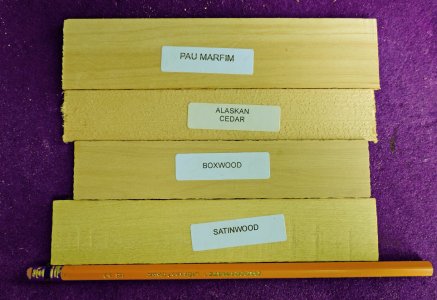
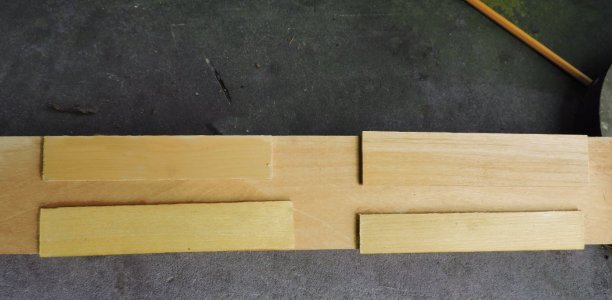
When i took the pictures lighting will change the color, so does the computer monitor here are the same wood as above sitting on a piece of Yellowheart. Mind you Yellowheart and Pau Marfim were sold as the same wood. it is difficult to tell them apart. Actually Yellowheart is not a bright yellow some of it has a pale pinkish tint. I did not include Osage Orange because when fresh cut is is bright yellow but quickly oxidizes to orange or a deep gold maybe light bronze, brass-ish
As Dean said "it started a fad that resists to this day. There were no decks on wooden sailing ships that were actually white. The look is wrong. It is kitsch." could be back in the late 1970s when Hahn was at his peak, he used Holly for decking and that might have been the start of the fad. Everyone at the time admired Hahn's work and wanted to copy the look.
there was this other fad "paint with natural colored wood" in ship modeling. problem with it was wood may vary in color from board to board and even in the same piece. What color is tan so many times i get from a customer i want a tan color wood. or a kind of sort of a light cream color brown that looks like Teak. Then those who want no figure and every piece to match in exact color. I tell them work with plastic that is consistent, wood is not or paint it.
Here is a typical plank of steamed pearwood it will vary from board to board and across the board. Lighter where my hand is you can follow that lighter part up the board. The two pieces on the ground wrapped in plastic are quarter round logs of ebony when it was affordable. Today those pieces would be around $800.00 each
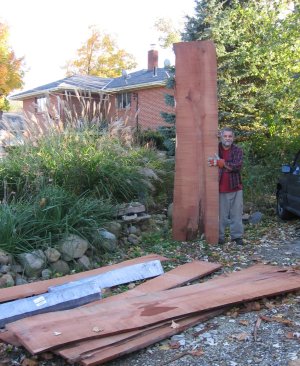
Wood ship modeling in my opinion should look like "wood" and not try to be consistent in matching color to the point it has no character. Decking looks best with faint shades of color, planking should have tones to it so you can see individual planks. built up frames should have shade of color so you can see the futtocks that make up a frame, A deck planked in glaring white Holly with black caulking looks like a cartoon Zebra.
what is that color? i want a pinkish tan, a yellow tint tan, brown tan, light tan, tan with a slight figure, tan with no figure, Would you sort through 100 board feet to match every piece in color and texture and figure? When i go to the saw mill to buy 300 board feet of Cherry the yardmen pull boards off the top they do not pick and choose. Look close at that plank of steamed pearwood notice the rot section you do not scrap the board because of it you get all of it. Some dealers will figure out bad sections others you get the stack regardless of flaws.
keep in mind when working with wood it is not manmade it is made by mother nature and it will most likely vary .
When i took the pictures lighting will change the color, so does the computer monitor here are the same wood as above sitting on a piece of Yellowheart. Mind you Yellowheart and Pau Marfim were sold as the same wood. it is difficult to tell them apart. Actually Yellowheart is not a bright yellow some of it has a pale pinkish tint. I did not include Osage Orange because when fresh cut is is bright yellow but quickly oxidizes to orange or a deep gold maybe light bronze, brass-ish
As Dean said "it started a fad that resists to this day. There were no decks on wooden sailing ships that were actually white. The look is wrong. It is kitsch." could be back in the late 1970s when Hahn was at his peak, he used Holly for decking and that might have been the start of the fad. Everyone at the time admired Hahn's work and wanted to copy the look.
there was this other fad "paint with natural colored wood" in ship modeling. problem with it was wood may vary in color from board to board and even in the same piece. What color is tan so many times i get from a customer i want a tan color wood. or a kind of sort of a light cream color brown that looks like Teak. Then those who want no figure and every piece to match in exact color. I tell them work with plastic that is consistent, wood is not or paint it.
Here is a typical plank of steamed pearwood it will vary from board to board and across the board. Lighter where my hand is you can follow that lighter part up the board. The two pieces on the ground wrapped in plastic are quarter round logs of ebony when it was affordable. Today those pieces would be around $800.00 each
Wood ship modeling in my opinion should look like "wood" and not try to be consistent in matching color to the point it has no character. Decking looks best with faint shades of color, planking should have tones to it so you can see individual planks. built up frames should have shade of color so you can see the futtocks that make up a frame, A deck planked in glaring white Holly with black caulking looks like a cartoon Zebra.
what is that color? i want a pinkish tan, a yellow tint tan, brown tan, light tan, tan with a slight figure, tan with no figure, Would you sort through 100 board feet to match every piece in color and texture and figure? When i go to the saw mill to buy 300 board feet of Cherry the yardmen pull boards off the top they do not pick and choose. Look close at that plank of steamed pearwood notice the rot section you do not scrap the board because of it you get all of it. Some dealers will figure out bad sections others you get the stack regardless of flaws.
keep in mind when working with wood it is not manmade it is made by mother nature and it will most likely vary .