




- Joined
- Oct 22, 2018
- Messages
- 157
- Points
- 253

Gundalows were riverboats that operated primarily on the rivers and bays of coastal New Hampshire and southern Maine from the mid-17th to the early 20th century. These vessels evolved into a practical and efficient means of transporting goods and people to and from the deep-water port of Portsmouth, New Hampshire, and the towns along the Piscataqua River basin. Gundalows helped boost the region's economy by transporting raw materials to the various mills and factories in these towns, and then facilitating the transport and trade of manufactured goods along the East Coast of the United States to destinations as far away as Europe and the Mediterranean.
The first European settlers in the Piscataqua region encountered a vast network of rivers, streams, and bays that the Indigenous peoples of the area had used for centuries as a source of food, water, and transportation to the ocean fishing grounds and their summer and winter encampments. As Europeans settled in the area, the need for an efficient and timely method of transporting goods and materials to the numerous villages that developed in the watershed increased to such an extent that a solution was required. The roads in the area were little more than hunting trails established by the Indigenous peoples and were not suitable for horses and wagons, which would have been the alternative to canoes or boats. Overland journeys meant days of travel, adding miles to the journey between Portsmouth and a village on Great Bay, which could be covered by water in a matter of hours. Having observed the indigenous population's dependence on water as an efficient means of transport and realizing the speed of the tidal current and its periodicity – almost two high tides and two low tides per day – those involved in the region's trade came to conceptualize and develop the first gundalows.
Drawing on their experiences in their homelands and taking advantage of the abundance of building materials, local farmers, fishermen, traders, and landowners began constructing flat-bottomed, square-ended barges that could be loaded, float on the water, and be steered with long oars. The earliest barges had no deck and no raised platforms from which to steer the vessel; all cargo rested on the bottom of the barge. The flat bottoms and wide beams were necessary for voyages spanning more than one tidal cycle, allowing the barge to beach evenly on the salt marshes left behind at low tide. The flat bottoms also facilitated beach access for loading and unloading goods and passengers, as there was little infrastructure of docks, basins, and piers in those early days. The long oars were used as poles to haul the gundalow out of the water at high tide and also served as a rudimentary rudder for steering, similar to Venetian gondolas, from which the name gundalow is believed to derive. Gundalows also had a shallow draft (generally less than 90 cm), which allowed them to reach the head of the tide in many of the rivers that flowed into Great Bay, Little Bay, and Piscataqua.
From approximately 1800 to 1860, the design of gundalows changed as more people from Europe and the Mediterranean settled in the basin. After 1800, the square-pronged configuration of the gundalows gradually evolved, adopting a rounded stern that accommodated a more sophisticated steering system. This consisted of a fixed tiller and a raised platform from which the gundalow's skipper could see and steer the vessel. The raised stern platform led to a similar platform at the bow, from which the crew could observe hazards and landmarks used to navigate the treacherous waters of the Piscataqua River. To shorten travel times, sails began to be fitted to gundalows around 1820, not as a means of steering, but rather as a way to gain speed against the fast-moving tidal current. These sails were typically square and mounted on a vertical mast at the bow. The detachable mast and sail configuration could be turned to take advantage of the wind direction, but required the crew to handle the rigging and stabilize the sail. This method of navigation in the sometimes narrow river basin was neither fast (tacking and gybing would have been quite an adventure!) nor efficient, and additional speed could only be gained by moving with the current and if the wind was blowing from points of passage downwind. Along with the increase in population in the region came the desire to travel across the rivers and streams on foot or horseback more efficiently. Bridges sprang up in various places in the basin, presenting a new challenge for gundalow captains. Bridges were built at locations along the rivers where the banks were relatively close together.
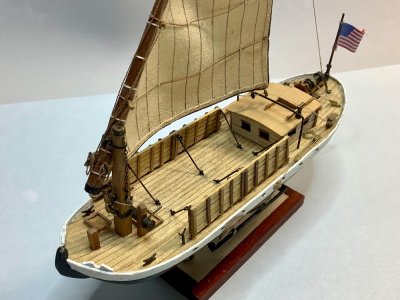
The clearance under bridges was typically less than 7.5 meters, even at low tide, and a square-rigged gundalow could not sail upstream or downstream with the mast and sail set beyond the bridge. This dilemma forced gundalow captains to either load or unload cargo far from its destination or forgo the extra speed provided by the sail when sailing with the mast and sail set. Many farmers, fishermen, and landowners built gundalows without plans, modifying designs as they went along to incorporate improvements made by other builders. While the standard characteristics of gundalows remained consistent (flat bottom, wide beam, shallow draft, square-rigged sail, and tall upright mast), other innovations were added to improve their performance. These innovations, such as the addition of cabins for the skipper and crew to take refuge at night or when bad weather made operations difficult, and the modification of the steering system to include a wheel connected to a drum that turned the tiller by means of a system of pulleys and tackle located on deck, were common as gundalows multiplied in the Piscataqua watershed.
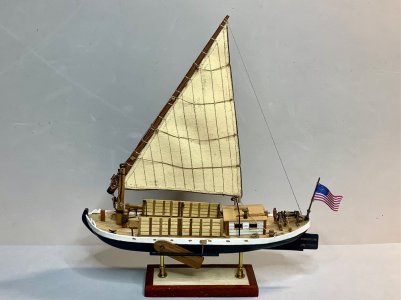
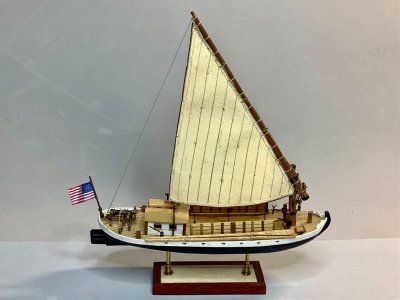
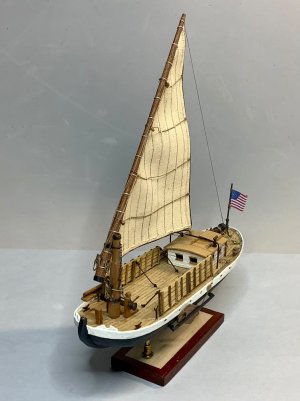
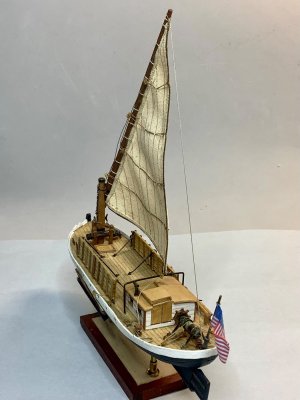
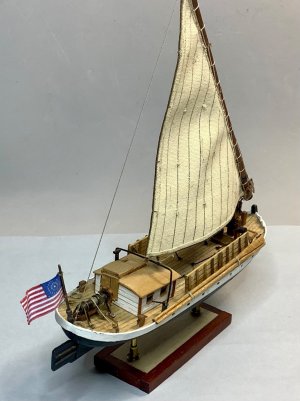
It is estimated that over 1,000 gundalows were used on the Piscataqua River and the tributaries that fed Great and Little Bays at some point in the 19th century. Unfortunately for the enterprising gundalow owners, there was a challenge they could not overcome. With the introduction of the steam engine and, later, the railroad, a faster and more reliable mode of transporting goods and materials began to take over. The first railroad to reach New Hampshire established a station in the town of Dover in 1832. Ironically, with the rise of rail transport, infrastructure such as bridges and train stations was needed to keep pace with the popularity of the new transportation system. Gundalows were widely used to haul the materials needed to construct this infrastructure, which inadvertently contributed to the decline in reliance on these vessels as the railroad system grew and assumed their role. During this final phase of gundalow construction, one innovation stands out that helped overcome the problem of navigating upstream or downstream across a river where a bridge had been built. Drawing inspiration from boat designs such as the dhows and feluccas of the Mediterranean and Middle East, many gundalow owners adopted the lateen rig. The lateen rig eliminated the tall upright mast and square sail of earlier models and replaced them with a system incorporating a shorter stump mast and a long yard attached to the mast at an angle with a pulley system that allowed the yard to be lowered and raised. With this rig, gundalow skippers could now "pass bridges"—that is, lower the yard to the deck when approaching a bridge, pass underneath, and raise the yard and sail back to their sailing position once they were clear. Even with this innovation, "passing bridges" required a good command of river conditions, boat speed, and maneuverability, as there were no other methods of propulsion to guide the gundalow under the bridge.
The gundalow was not a high-performance vessel, nor was it suited for ocean navigation. It was slow, simple, and designed for practical use. But it played an important role in transporting many of the things people used every day and was a very visible sight along the coast. Bales of cotton, shipped from the southern states to Portsmouth, were transported by gundalows to the cotton mills in South Berwick, Durham, and other towns. Finished cotton products were also exported. The tidal basin area produced large quantities of bog hay, which, along with agricultural produce, livestock, timber, and firewood, were among the items regularly shipped, and gundalows were also used for passenger transport. Everything that would be transported by local trucks today was carried by gundalows back then. Most of these boats operated close to home, but some, equipped with sails, ventured as far as the River Merrimack or the Saco and Neddick Rivers.
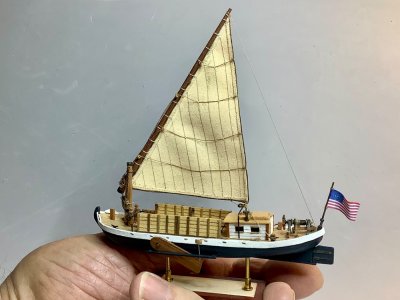
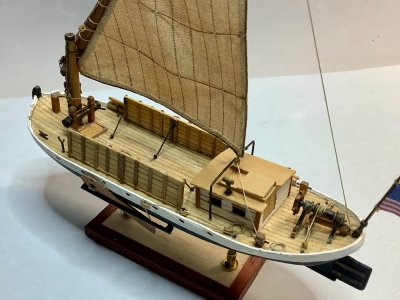
Model Specifications
• Length: 117 mm
• Beam: 36 mm
• Scale: 1:150
The first European settlers in the Piscataqua region encountered a vast network of rivers, streams, and bays that the Indigenous peoples of the area had used for centuries as a source of food, water, and transportation to the ocean fishing grounds and their summer and winter encampments. As Europeans settled in the area, the need for an efficient and timely method of transporting goods and materials to the numerous villages that developed in the watershed increased to such an extent that a solution was required. The roads in the area were little more than hunting trails established by the Indigenous peoples and were not suitable for horses and wagons, which would have been the alternative to canoes or boats. Overland journeys meant days of travel, adding miles to the journey between Portsmouth and a village on Great Bay, which could be covered by water in a matter of hours. Having observed the indigenous population's dependence on water as an efficient means of transport and realizing the speed of the tidal current and its periodicity – almost two high tides and two low tides per day – those involved in the region's trade came to conceptualize and develop the first gundalows.
Drawing on their experiences in their homelands and taking advantage of the abundance of building materials, local farmers, fishermen, traders, and landowners began constructing flat-bottomed, square-ended barges that could be loaded, float on the water, and be steered with long oars. The earliest barges had no deck and no raised platforms from which to steer the vessel; all cargo rested on the bottom of the barge. The flat bottoms and wide beams were necessary for voyages spanning more than one tidal cycle, allowing the barge to beach evenly on the salt marshes left behind at low tide. The flat bottoms also facilitated beach access for loading and unloading goods and passengers, as there was little infrastructure of docks, basins, and piers in those early days. The long oars were used as poles to haul the gundalow out of the water at high tide and also served as a rudimentary rudder for steering, similar to Venetian gondolas, from which the name gundalow is believed to derive. Gundalows also had a shallow draft (generally less than 90 cm), which allowed them to reach the head of the tide in many of the rivers that flowed into Great Bay, Little Bay, and Piscataqua.
From approximately 1800 to 1860, the design of gundalows changed as more people from Europe and the Mediterranean settled in the basin. After 1800, the square-pronged configuration of the gundalows gradually evolved, adopting a rounded stern that accommodated a more sophisticated steering system. This consisted of a fixed tiller and a raised platform from which the gundalow's skipper could see and steer the vessel. The raised stern platform led to a similar platform at the bow, from which the crew could observe hazards and landmarks used to navigate the treacherous waters of the Piscataqua River. To shorten travel times, sails began to be fitted to gundalows around 1820, not as a means of steering, but rather as a way to gain speed against the fast-moving tidal current. These sails were typically square and mounted on a vertical mast at the bow. The detachable mast and sail configuration could be turned to take advantage of the wind direction, but required the crew to handle the rigging and stabilize the sail. This method of navigation in the sometimes narrow river basin was neither fast (tacking and gybing would have been quite an adventure!) nor efficient, and additional speed could only be gained by moving with the current and if the wind was blowing from points of passage downwind. Along with the increase in population in the region came the desire to travel across the rivers and streams on foot or horseback more efficiently. Bridges sprang up in various places in the basin, presenting a new challenge for gundalow captains. Bridges were built at locations along the rivers where the banks were relatively close together.
The clearance under bridges was typically less than 7.5 meters, even at low tide, and a square-rigged gundalow could not sail upstream or downstream with the mast and sail set beyond the bridge. This dilemma forced gundalow captains to either load or unload cargo far from its destination or forgo the extra speed provided by the sail when sailing with the mast and sail set. Many farmers, fishermen, and landowners built gundalows without plans, modifying designs as they went along to incorporate improvements made by other builders. While the standard characteristics of gundalows remained consistent (flat bottom, wide beam, shallow draft, square-rigged sail, and tall upright mast), other innovations were added to improve their performance. These innovations, such as the addition of cabins for the skipper and crew to take refuge at night or when bad weather made operations difficult, and the modification of the steering system to include a wheel connected to a drum that turned the tiller by means of a system of pulleys and tackle located on deck, were common as gundalows multiplied in the Piscataqua watershed.
It is estimated that over 1,000 gundalows were used on the Piscataqua River and the tributaries that fed Great and Little Bays at some point in the 19th century. Unfortunately for the enterprising gundalow owners, there was a challenge they could not overcome. With the introduction of the steam engine and, later, the railroad, a faster and more reliable mode of transporting goods and materials began to take over. The first railroad to reach New Hampshire established a station in the town of Dover in 1832. Ironically, with the rise of rail transport, infrastructure such as bridges and train stations was needed to keep pace with the popularity of the new transportation system. Gundalows were widely used to haul the materials needed to construct this infrastructure, which inadvertently contributed to the decline in reliance on these vessels as the railroad system grew and assumed their role. During this final phase of gundalow construction, one innovation stands out that helped overcome the problem of navigating upstream or downstream across a river where a bridge had been built. Drawing inspiration from boat designs such as the dhows and feluccas of the Mediterranean and Middle East, many gundalow owners adopted the lateen rig. The lateen rig eliminated the tall upright mast and square sail of earlier models and replaced them with a system incorporating a shorter stump mast and a long yard attached to the mast at an angle with a pulley system that allowed the yard to be lowered and raised. With this rig, gundalow skippers could now "pass bridges"—that is, lower the yard to the deck when approaching a bridge, pass underneath, and raise the yard and sail back to their sailing position once they were clear. Even with this innovation, "passing bridges" required a good command of river conditions, boat speed, and maneuverability, as there were no other methods of propulsion to guide the gundalow under the bridge.
The gundalow was not a high-performance vessel, nor was it suited for ocean navigation. It was slow, simple, and designed for practical use. But it played an important role in transporting many of the things people used every day and was a very visible sight along the coast. Bales of cotton, shipped from the southern states to Portsmouth, were transported by gundalows to the cotton mills in South Berwick, Durham, and other towns. Finished cotton products were also exported. The tidal basin area produced large quantities of bog hay, which, along with agricultural produce, livestock, timber, and firewood, were among the items regularly shipped, and gundalows were also used for passenger transport. Everything that would be transported by local trucks today was carried by gundalows back then. Most of these boats operated close to home, but some, equipped with sails, ventured as far as the River Merrimack or the Saco and Neddick Rivers.
Model Specifications
• Length: 117 mm
• Beam: 36 mm
• Scale: 1:150

