• SUBSCRIBE TO SHIPS IN SCALE TODAY!

    The beloved Ships in Scale Magazine is back and charting a new course for 2026!
    Discover new skills, new techniques, and new inspirations in every issue.

    NOTE THAT OUR NEXT ISSUE WILL BE MARCH/APRIL 2026
  • Win a Free Custom Engraved Brass Coin!!!
    As a way to introduce our brass coins to the community, we will raffle off a free coin during the month of August. Follow link ABOVE for instructions for entering.

Plans HMS Pégasus

Joined
May 5, 2026
Messages
8
Points
1

Hello everyone, In my project to build the HMS Pegasus from Amati, I would like to acquire the "Arsenal" type plans for this ship. This would allow me to improve the kit and create the frieze drawings to try and replicate Olha Batchvarov's step-by-step tutorial on YouTube.

She mentions using the 1/48 scale plans by David Antcherel.

So far, the only plans I've found online are on the website "https://seawatchbooks.com" under the title "Swan Plans - Supplement to The Fully Framed Ship Model by David Antscherl and Greg Herbert".
Has anyone already acquired these plans, and could you tell me if the friezes are included?

Sincerely,
 
I have the books. I'm expecting delivery of the plans today actually. :)
It's great, you can tell me if it's worth it to buy the blueprints to make some improvements to the Amati kit and if there are the friezes.
Which site did you buy from ?
 
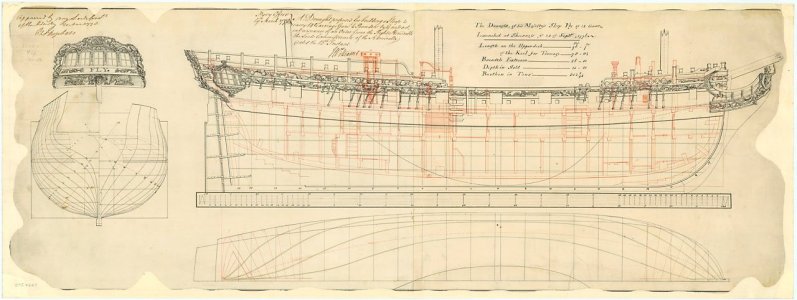
If you want an actual frieze of a Swan class vessel - you cannot do much better than an original design plan.


j7978 ZAZ4667 .jpg

https://upload.wikimedia.org/wikipe....org&utm_campaign=index&utm_content=thumbnail

HMS Fly 1776 = a PNG of the full size plan is free at WIKI Commons site.

There are also design plans - full size - for:
Atalanta 1775
Cygnet 1776
Spy 1776
Swan 1767

An experienced scratch builder can build a model using just the information on the design plan. The red ink is a treasure trove.

The monograph series on Seawatch is aimed at doing a scratch build with all of the really difficult work having been already done by the author/draftsmen.

The kit has a specific design. - Unless you have a depth of prior experience, it is probably best to follow the intended design for the major assembly part of it. The superficial part is .... well .... superficial ... so doing variations on the theme there will not get you into trouble.

If you wish to build a model that is objectively detail authentic. One that is actually as close to true replication of an original as skill and knowledge allows. - The course to follow is a scratch build. Start with an original plan - research and develop your own build - choose your stock wood species - choose your own style presentation of the swimming body. Starting with a kit just makes what you really want -- more difficult -- and probably impossible.. Doing it with a kit is a way to develop skills and experience. An expensive way - for sure - but it is still a way.
 
If you want an actual frieze of a Swan class vessel - you cannot do much better than an original design plan.


View attachment 597968

https://upload.wikimedia.org/wikipe....org&utm_campaign=index&utm_content=thumbnail

HMS Fly 1776 = a PNG of the full size plan is free at WIKI Commons site.

There are also design plans - full size - for:
Atalanta 1775
Cygnet 1776
Spy 1776
Swan 1767

An experienced scratch builder can build a model using just the information on the design plan. The red ink is a treasure trove.

The monograph series on Seawatch is aimed at doing a scratch build with all of the really difficult work having been already done by the author/draftsmen.

The kit has a specific design. - Unless you have a depth of prior experience, it is probably best to follow the intended design for the major assembly part of it. The superficial part is .... well .... superficial ... so doing variations on the theme there will not get you into trouble.

If you wish to build a model that is objectively detail authentic. One that is actually as close to true replication of an original as skill and knowledge allows. - The course to follow is a scratch build. Start with an original plan - research and develop your own build - choose your stock wood species - choose your own style presentation of the swimming body. Starting with a kit just makes what you really want -- more difficult -- and probably impossible.. Doing it with a kit is a way to develop skills and experience. An expensive way - for sure - but it is still a way.
Thank you for all this information and for the link to the original plan.

I'll start studying it all.

Sincerely
 
Hi
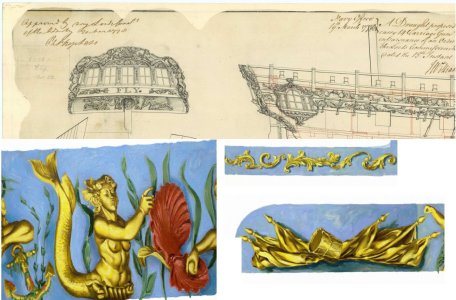
I'm curious how to go from orginal friez drawing to painted one. A part from painting by hand. Is there some sort of program or AI assistant that could transform gray sketch to a colorful picture that can be printed.

FLY Friez.jpeg
 
Hello everyone, In my project to build the HMS Pegasus from Amati, I would like to acquire the "Arsenal" type plans for this ship. This would allow me to improve the kit and create the frieze drawings to try and replicate Olha Batchvarov's step-by-step tutorial on YouTube.

She mentions using the 1/48 scale plans by David Antcherel.

So far, the only plans I've found online are on the website "https://seawatchbooks.com" under the title "Swan Plans - Supplement to The Fully Framed Ship Model by David Antscherl and Greg Herbert".
Has anyone already acquired these plans, and could you tell me if the friezes are included?

Sincerely,

No, they aren't. Do not expect anything in Acre's fashion. Cheers
 
Hi
I'm curious how to go from orginal friez drawing to painted one. A part from painting by hand. Is there some sort of program or AI assistant that could transform gray sketch to a colorful picture that can be printed.
Hi!
Indeed, we have no choice but to paint by hand.

I find that with a little care, it always looks better than the photo-etched decorations provided in the kit.

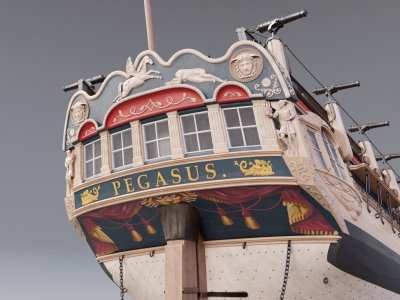
Here are a few ideas I've gathered from the web.


1778062514195.jpeg
 
In reference to your expressed desire to improve your kit:That photo in post #10....
Ummmm --- On the actual ship - The sternpost was tapered - up and down and fore and aft. The rudder was tapered even more. The rudder was almost delicate. The shaping takes work, time and attention. I am not sure what the blocky thing on that - what is obviously a model - is? But it sure is ugly.

The grip - stem - the knee of the head were also significantly tapered fore and aft and up and down. The thickness of the knee of the head where the figure joined it was a mere shadow of the thickness of the apron.

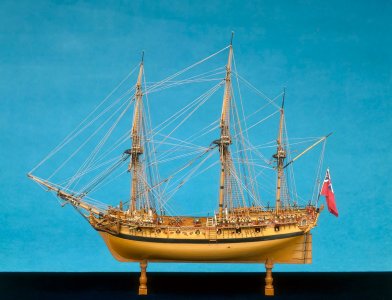
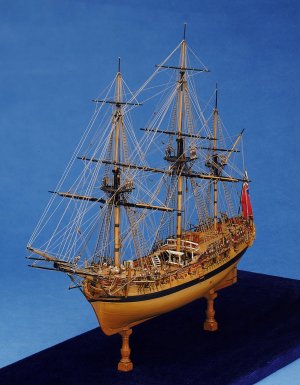
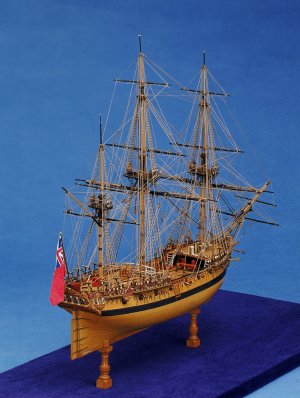
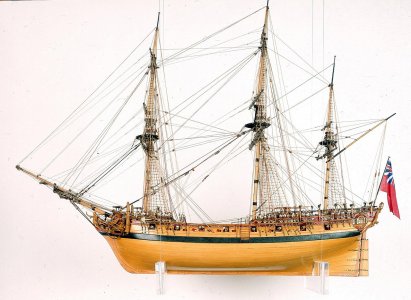
I have four photos of a model of one of the Swan class that was built at the same time as the actual ships in the NMM collection:
Atalanta 1775
d4085_1.jpgd4085_3.jpgd4085_4.jpgd7826.jpg
 
In reference to your expressed desire to improve your kit:That photo in post #10....
Ummmm --- On the actual ship - The sternpost was tapered - up and down and fore and aft. The rudder was tapered even more. The rudder was almost delicate. The shaping takes work, time and attention. I am not sure what the blocky thing on that - what is obviously a model - is? But it sure is ugly.

The grip - stem - the knee of the head were also significantly tapered fore and aft and up and down. The thickness of the knee of the head where the figure joined it was a mere shadow of the thickness of the apron.

I have four photos of a model of one of the Swan class that was built at the same time as the actual ships in the NMM collection:
Atalanta 1775
View attachment 598168View attachment 598169View attachment 598170View attachment 598171
In the photo, I was just showing an example of painting; the photo does not show a model made following a plan. I believe it is a digital reconstruction of this model, so there is nothing authentic in this image.
 
There is a scale effect to painting a model that is in most cases - totally ignored.
I do not know how to do it or what is actually involved.
Quite some time ago there was an article in NRJ about scale effect - it makes things more difficult if you honor it. My first impulse was denial.
I have no links to sources that explain it. I have no idea about the painting techniques necessary to achieve it or where to go to learn it. But if you look with a critical eye you will see that it is real. Disregarding it leaves a model looking more like a toy. This is perfectly valid if a toy is what a display is what is intended.

I think that it also applies to rigging. I suspect that if rigging lines are exact in scale that your eye will see the lines as being fatter than they actually are. Rigging may look more elegant and pleasing if the lines are a step down in scale from prototype. I mean this as something to consider: a possibility.

I will leave you alone now. I have probably already gotten you into too much trouble.
 
If you want an actual frieze of a Swan class vessel - you cannot do much better than an original design plan.


View attachment 597968

https://upload.wikimedia.org/wikipe....org&utm_campaign=index&utm_content=thumbnail

HMS Fly 1776 = a PNG of the full size plan is free at WIKI Commons site.

There are also design plans - full size - for:
Atalanta 1775
Cygnet 1776
Spy 1776
Swan 1767

An experienced scratch builder can build a model using just the information on the design plan. The red ink is a treasure trove.

The monograph series on Seawatch is aimed at doing a scratch build with all of the really difficult work having been already done by the author/draftsmen.

The kit has a specific design. - Unless you have a depth of prior experience, it is probably best to follow the intended design for the major assembly part of it. The superficial part is .... well .... superficial ... so doing variations on the theme there will not get you into trouble.

If you wish to build a model that is objectively detail authentic. One that is actually as close to true replication of an original as skill and knowledge allows. - The course to follow is a scratch build. Start with an original plan - research and develop your own build - choose your stock wood species - choose your own style presentation of the swimming body. Starting with a kit just makes what you really want -- more difficult -- and probably impossible.. Doing it with a kit is a way to develop skills and experience. An expensive way - for sure - but it is still a way.

That is a very nicely drawn plan.....Tempting.
 
There is a scale effect to painting a model that is in most cases - totally ignored.
I do not know how to do it or what is actually involved.
Quite some time ago there was an article in NRJ about scale effect - it makes things more difficult if you honor it. My first impulse was denial.
I have no links to sources that explain it. I have no idea about the painting techniques necessary to achieve it or where to go to learn it. But if you look with a critical eye you will see that it is real. Disregarding it leaves a model looking more like a toy. This is perfectly valid if a toy is what a display is what is intended.

I think that it also applies to rigging. I suspect that if rigging lines are exact in scale that your eye will see the lines as being fatter than they actually are. Rigging may look more elegant and pleasing if the lines are a step down in scale from prototype. I mean this as something to consider: a possibility.

I will leave you alone now. I have probably already gotten you into too much trouble.

You may be referring to the 'inverse square law of light'?

Brightness and colour saturation decrease with distance. If we remind ourselves that looking at a model equates to seeing it at a distance, the effect can be accounted for, with some effort!

The rigging issues relates to the way the eye resolves detail and the function of the 'Airy disk' in vision.........
...When viewing object smaller than resolvable by the diameter of our eyes objective lens, a thin line will appear as the smallest possible resolvable line. Under certain circumstances it will look thicker than it is. Making the line thinner will not make a difference as we are looking at the line at the highest possible resolution. Thus, as the pupil dilates, more detail and thinner lines are visible. If the light is too bright, the pupil contracts and less resolution is possible.

The same, of course, applies to photography where the objective lens and image resolution are the limiting factors,
 
I'm curious how to go from orginal friez drawing to painted one. A part from painting by hand. Is there some sort of program or AI assistant that could transform gray sketch to a colorful picture that can be printed.
AI may get there but not yet from what was posted above. Painting by hand is well detailed for the Swan class ships in The Fully Framed Model, Volume II pages 24 to 30 and page 310. Anyone building a Swan class model will benefit from this series of books. The attachment in post 10 shows even more detail and credits these books as well. You can also purchase Adobe Illustrator and try it. I have no experience with it but others here at SoS may have more input on how well it works.
Allan
 
Back
Top