• SUBSCRIBE TO SHIPS IN SCALE TODAY!

    The beloved Ships in Scale Magazine is back and charting a new course for 2026!
    Discover new skills, new techniques, and new inspirations in every issue.

    NOTE THAT OUR NEXT ISSUE WILL BE MARCH/APRIL 2026
  • Win a Free Custom Engraved Brass Coin!!!
    As a way to introduce our brass coins to the community, we will raffle off a free coin during the month of August. Follow link ABOVE for instructions for entering.

Removing build rafts from platens - tip

Joined
Feb 19, 2026
Messages
88
Points
58

Location
Kennebunkport, Maine
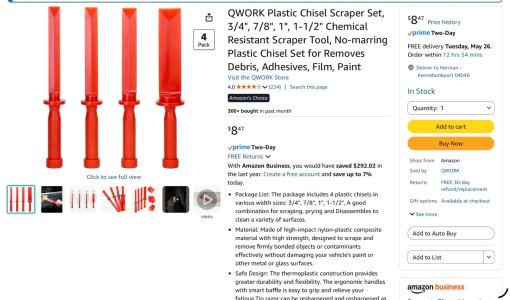
I have been using a “plastic” scrapper to remove build rafts from platens. I have the plastic razor blades but this is much better in my opinion. No risk of marring the platen, can get a good grip of it and actually have some leverage. Your mileage may vary, just thought I would pass along my experience. View attachment 606681

IMG_4145.jpeg
 
Last edited:
If you mean build plate (vice platen) for an FDM printer, I used EZ-Stik GeckoTech build surfaces which require no tools to remove supports and leave a very smooth finish on any surface that contacts it. Excellent product that lasts a long time as long as it's cleaned with IPA after each print. Much better longevity than BuildTak.

I gave up on FDM printing and switched to resin once I saw the superior detail. Never looked back.

For resin prints, I use a very strong, thin-bladed metal scraper from Ace Hardware. Once I soak the build plate in hot water for five minutes, the parts are easily removed along with the supports.

YMMV
 
I use this for my resin printers…no worry at all putting marks into the platen. A metal scrapper won’t touch my platen…hence the plastic tools that don’t mar. Since you are soaking it in hot water you are creating another contaminated bath that needs to be dealt with safely…its not a big deal, just something else to be dealt with safely.
 
With ten years of 3D printing under my belt, (FDM and resin) I've learned a number of workflow improvements to mitigate any resin-contaminated water, so it's a non-issue for me. As for minor scratches on my build plate, they are also a non-issue once the first layer of the raft is laid down and as long as the plate is thoroughly cleaned with 91 IPA afterwards, adhesion remains solid. I consistently get 100+ prints from each fep. Using a silicone spatula to feel for any debris in the vat, is an excellent way to verify the fep is smooth, the pigment that settles is scraped and mixed with the rest of the resin.

I keep a log of every print to document all maintenance, and any print failures - usually due to part orientation. If your workflow meets your needs, all is good.

 
With ten years of 3D printing under my belt, (FDM and resin) I've learned a number of workflow improvements to mitigate any resin-contaminated water, so it's a non-issue for me. As for minor scratches on my build plate, they are also a non-issue once the first layer of the raft is laid down and as long as the plate is thoroughly cleaned with 91 IPA afterwards, adhesion remains solid. I consistently get 100+ prints from each fep. Using a silicone spatula to feel for any debris in the vat, is an excellent way to verify the fep is smooth, the pigment that settles is scraped and mixed with the rest of the resin.

I keep a log of every print to document all maintenance, and any print failures - usually due to part orientation. If your workflow meets your needs, all is good.

Nice. Perhaps you can share your process for minimizing resin in the water as well as what process you use for cleaning the resin produced pieces. I would also be interested in what size pieces you make and how long you rinse them. This part of the process isn’t discussed a lot.
 
Back
Top