
-

SUBSCRIBE TO SHIPS IN SCALE TODAY!
The beloved Ships in Scale Magazine is back and charting a new course for 2026!
Discover new skills, new techniques, and new inspirations in every issue.
NOTE THAT OUR NEXT ISSUE WILL BE MARCH/APRIL 2026 -

Win a Free Custom Engraved Brass Coin!!!
As a way to introduce our brass coins to the community, we will raffle off a free coin during the month of August. Follow link ABOVE for instructions for entering.
You are using an out of date browser. It may not display this or other websites correctly.
You should upgrade or use an alternative browser.
You should upgrade or use an alternative browser.



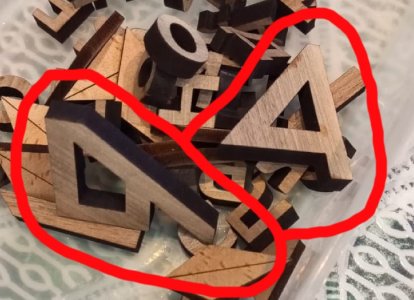
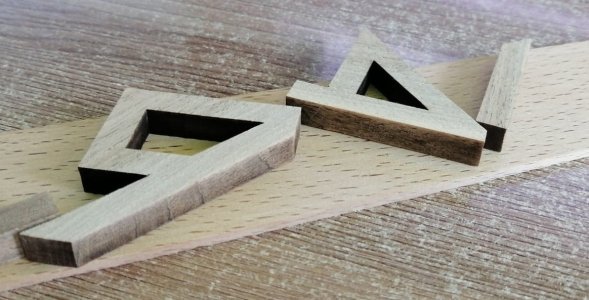
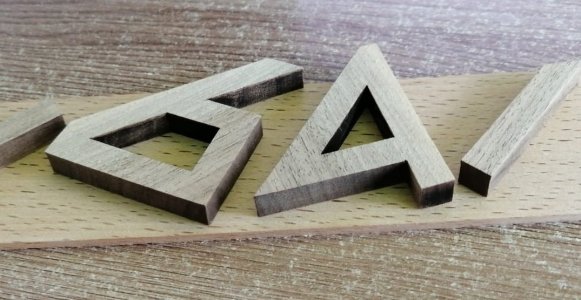

I like to keep it simple. Use emery boards from the nail polish section of the local pharmacy for the flat sections. For curved areas I use a piece of 220-grit sandpaper wrapped around a suitable sized piece of left-over dowel (or a round chopstick from the local Chinese takeout restaurant).


Sandblasting laser char article.

Laser charred wood is God's way of telling you that He did not create wood to be cut with a laser beam.
And the kit manufacturers' way of telling you that they are doing you a favor when they actually aren't.
But if you must work with laser-cut parts and the charred part doesn't show, I would suggest simply sealing it with clear shellac or Paraloid B-72 (the former reversible with alcohol, the latter with acetone) and leaving it at that. The worst thing about charcoal is that it gets all over everything and makes a huge mess. Sanding only spreads it everywhere. Sealing it where it sits keeps it from spreading everywhere and also offers the advantage of eliminating the risk of removing too much material and affecting the accuracy of the part's shape.
And the kit manufacturers' way of telling you that they are doing you a favor when they actually aren't.
But if you must work with laser-cut parts and the charred part doesn't show, I would suggest simply sealing it with clear shellac or Paraloid B-72 (the former reversible with alcohol, the latter with acetone) and leaving it at that. The worst thing about charcoal is that it gets all over everything and makes a huge mess. Sanding only spreads it everywhere. Sealing it where it sits keeps it from spreading everywhere and also offers the advantage of eliminating the risk of removing too much material and affecting the accuracy of the part's shape.

And as an added feature, the cuts left by the laser are ever so slightly beveled. Not enough to notice with the naked eye, but enough to mess up your assembly.Laser charred wood is God's way of telling you that He did not create wood to be cut with a laser beam.
And the kit manufacturers' way of telling you that they are doing you a favor when they actually aren't.
But if you must work with laser-cut parts and the charred part doesn't show, I would suggest simply sealing it with clear shellac or Paraloid B-72 (the former reversible with alcohol, the latter with acetone) and leaving it at that. The worst thing about charcoal is that it gets all over everything and makes a huge mess. Sanding only spreads it everywhere. Sealing it where it sits keeps it from spreading everywhere and also offers the advantage of eliminating the risk of removing too much material and affecting the accuracy of the part's shape.


The bevel in the laser cut depends on the beam spot and how it was focused. I have a 10W violet diode cutter on a gantry that I keep focused and cut at reasonable speeds, and i get good cuts that are really difficult to tell if they aren't square.
There's a tool for every job, especially in this hobby.
A lot of people have gotten 100s of thousands of hours of enjoyment from this hobby starting with kits with laser cut parts, and many of them are a real pleasure to see and fill the builder with pride.
Cutting parts on a scroll saw isn't the only way to make something of historical significance that is beautiful.
There's a tool for every job, especially in this hobby.
A lot of people have gotten 100s of thousands of hours of enjoyment from this hobby starting with kits with laser cut parts, and many of them are a real pleasure to see and fill the builder with pride.
Cutting parts on a scroll saw isn't the only way to make something of historical significance that is beautiful.
Which brings us to the question: Under what conditions is it necessary or desirable to remove char? Fair winds!Hmmm…for actually removing char the above posts are all good suggestions. However, I do not always try to remove char.

I don't think it is necessary to remove it all. If a part is not going to be visible I believe just removing the superficial char is enough. You certainly do not have to go down to totally non charred wood to insure a good bond.Which brings us to the question: Under what conditions is it necessary or desirable to remove char? Fair winds!
Rob