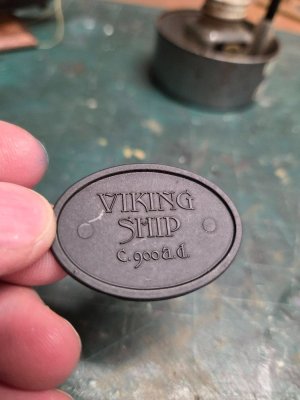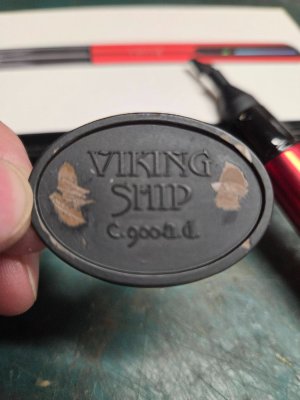



• Win a Free Custom Engraved Brass Coin!!!
    As a way to introduce our brass coins to the community, we will raffle off a free coin during the month of August. Follow link ABOVE for instructions for entering.
  • PRE-ORDER SHIPS IN SCALE TODAY!

    The beloved Ships in Scale Magazine is back and charting a new course for 2026!
    Discover new skills, new techniques, and new inspirations in every issue.

    NOTE THAT OUR FIRST ISSUE WILL BE JAN/FEB 2026

Revell Viking Build - Once more unto the breach, dear friends, once more.

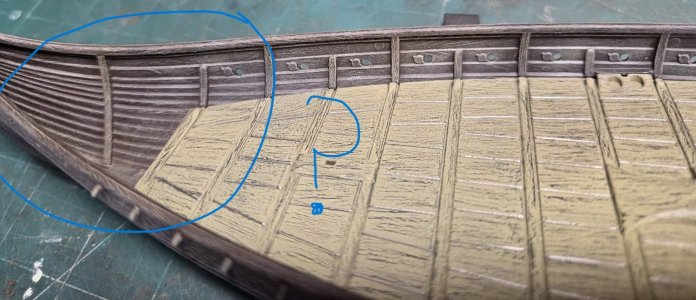
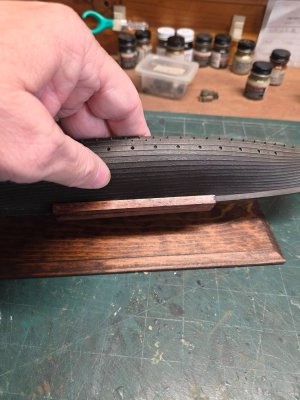
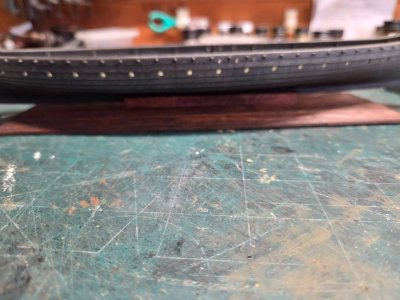
From what I can tell the stay were attached/tied to loops of ropes that went through holes drilled into the ribs? there is no way to do this on the model as there is not enough room or material to drill through, so I'll need to drill through an area just at the edge of the top rail so the stays have an anchor point, the shields will cover this but I'm trying to see if I can make up a dead loop. Also, I'm trying to decide if I need 3 or stays, I'm seeing pics of both. Anybody have pictures of the stay rigging they can share?
I have been searching for it (rather extensively) but it seems the Gokstad ship had no holes in the ribs. I read (can't remember where) continuous tension on those ribs would have warped them, of which there was no evidence.
So in the end I just drilled holes were you also did.
 
Last edited:
I have been searching for it (rather extensively) but it seams the Gokstad ship had no holes in the ribs. I read (can't remember where) continuous tension on those ribs would have warped them, of which there was no evidence.
So in the end I just drilled holes were you also did.
3 stays or 4 you think?
 
3 stays or 4 you think?
I did 3 myself, but anything could have have been possible.
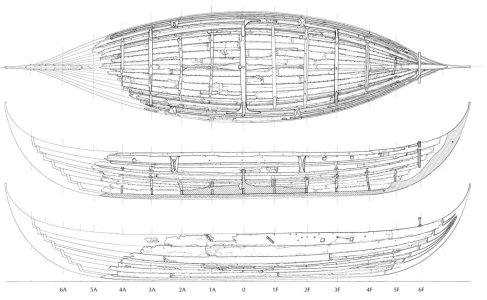
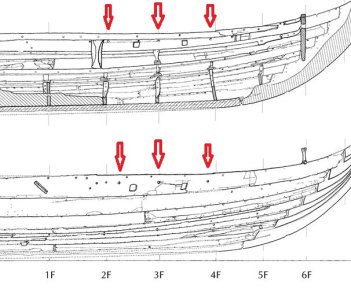
The Skuldelev 3 ship shows on the upper sideboard a lot of holes. Those might be inspirational to design a layout.
If you zoom in, you see 3 large round holes, evenly spaced in the middle of the board. That is why I decided on 3.
Skuldelev ship
img-1.jpg

img-2.JPG
 
Last edited:
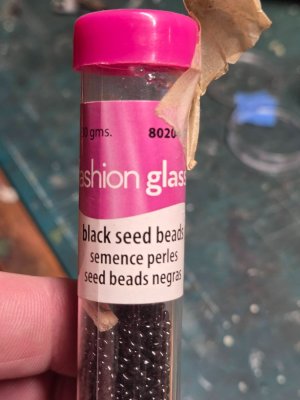
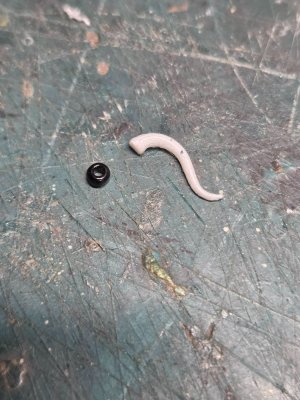
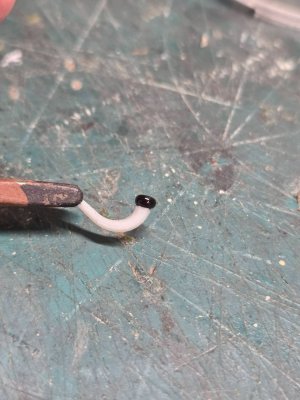
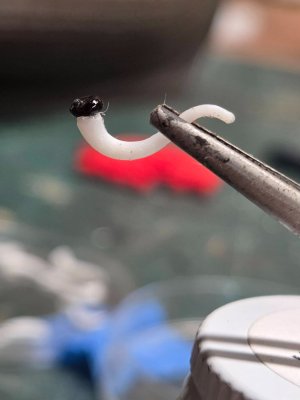
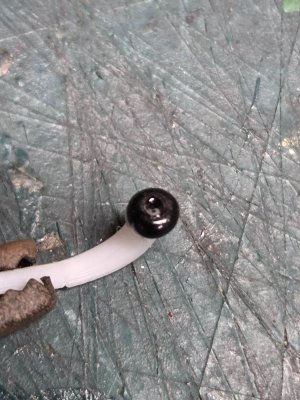
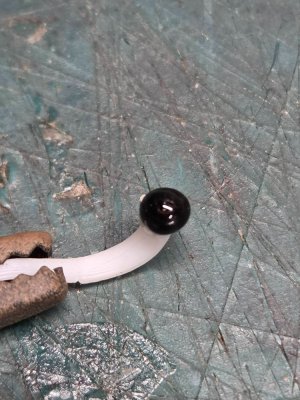
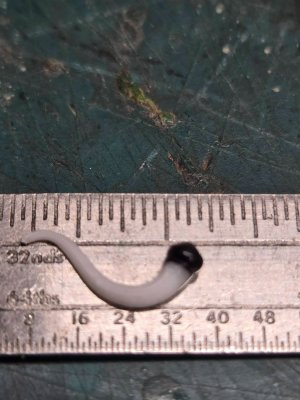
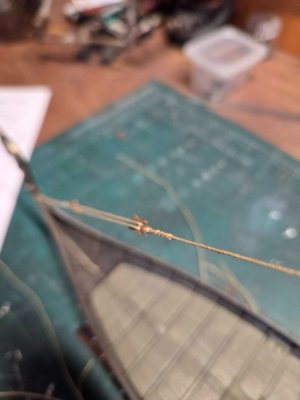
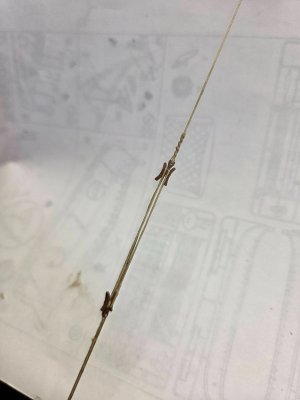
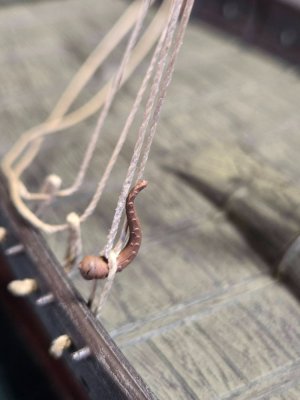
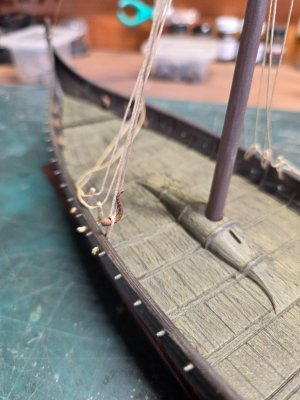
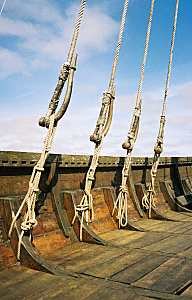
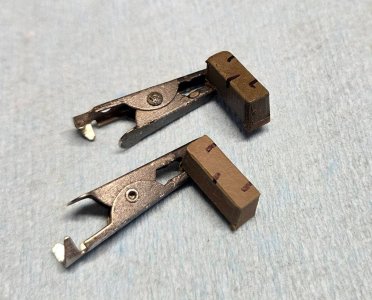
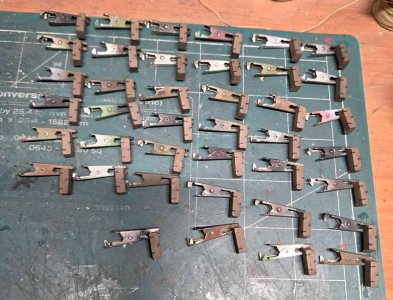
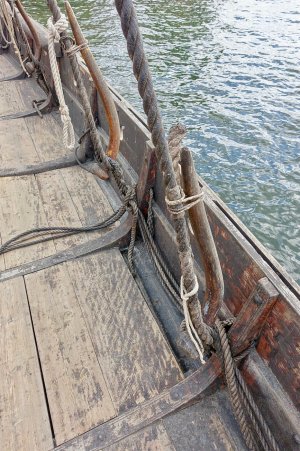
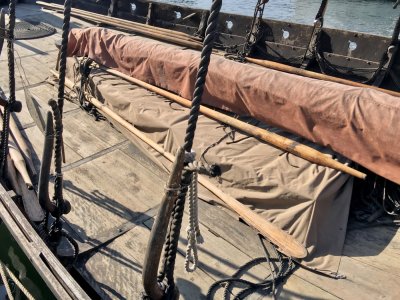
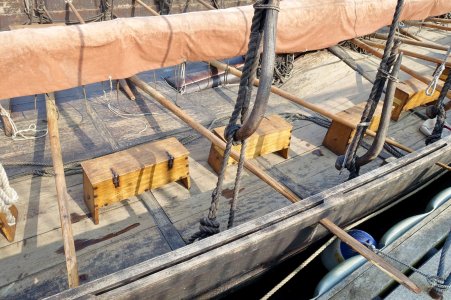
Here is what I did this evening, the stay 'hooks' are great, but I felt the end would let the rigging slip off, so I gave it some thought and figure if I use glass beads which are near perfect in size, using acc glue to the end of the bottom, this would form the 'bulb' as the real one have. After they dried a few minutes, I took my pin tip and touched the 'hole' with the glue forming a perfect ball at the end, much of this really won't be seen, but I wanted to make sure the rigging stayed in place while the lines are pulled taught. The last picture is the real part on a Viking longboat; you can see the bulb at the end. Crazy modelers UNITE!

1.jpg

2.jpg

3.jpg

4.jpg

5.jpg

6.jpg

7.jpg
 
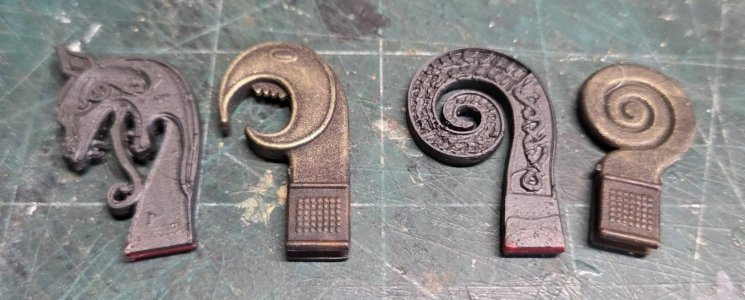
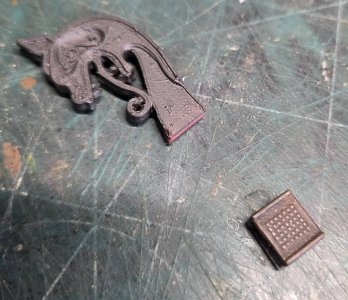
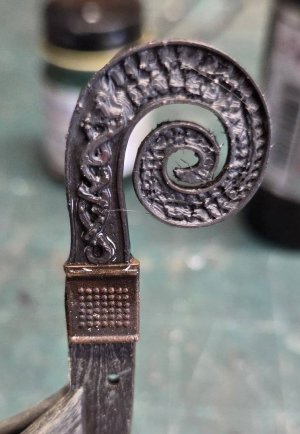
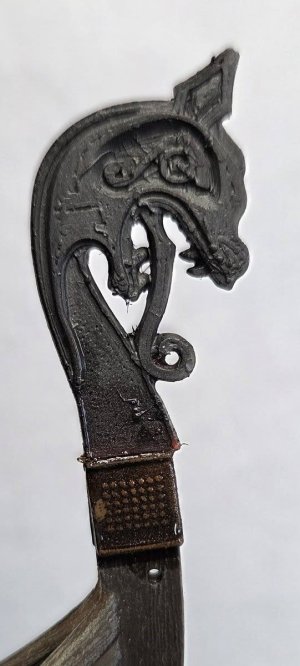
This morning's adventure consisted of cutting off the mounting parts from kit supplied head and scroll, then mounting them to the new 3D prints more accurate head pieces from the Netherlands. these prints are much more accurate than the simpler parts from 1977. Revell Models still did an outstanding job on the parts from the information known from the excavations done at the time.

I had to cut off the original mounts from kits parts and using ACC (aka crazy glue), fix them to the new prints, measuring to make sure they did not stand too tall. A lot of folks don't know that these parts on the real ships were removable, so the boat could navigate tight spaces and fiords.

First the base coat of Rubber color was applied, then a coat of a mix of Titanium and Burnt Iron from Testors Model Master line, once dried overnight a dry brush of bronze was applied to burnish the highlights.

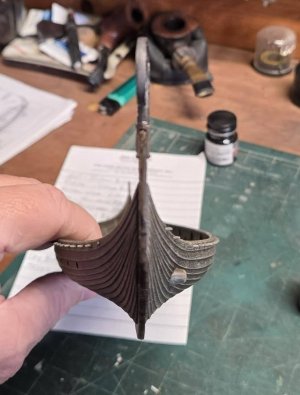
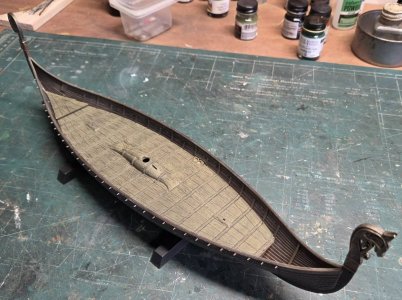
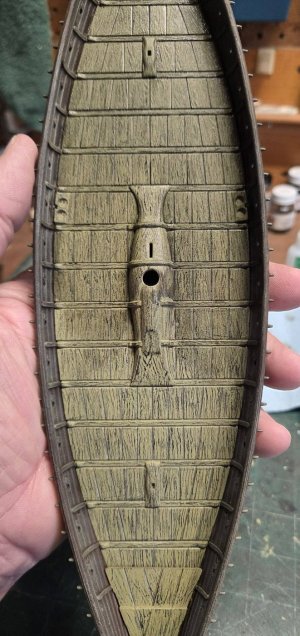
The deck was given its final black water wash to darken all seams. All in all, 3 hours.

a.jpg

b.jpg

c.jpg

d.jpg

e.jpg

f.jpg

g.jpg

h.jpg
 
After the past 3-week stall (hard winter conditions and a 4-day trip to Washington to speak with our Senate and Reps on water funding), I'm back at the bench.

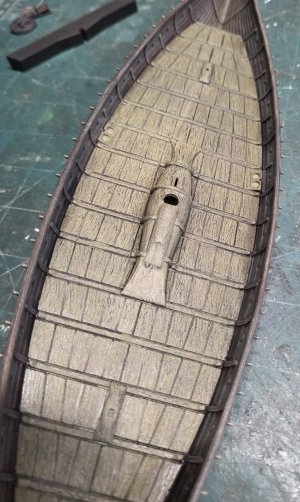
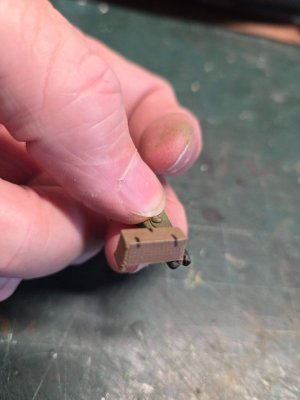
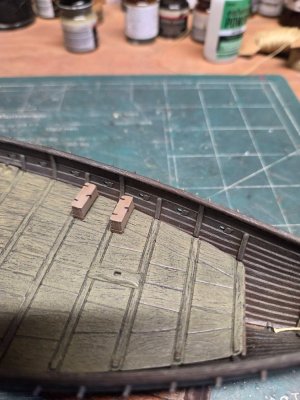
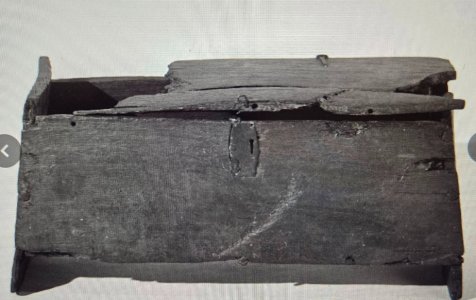
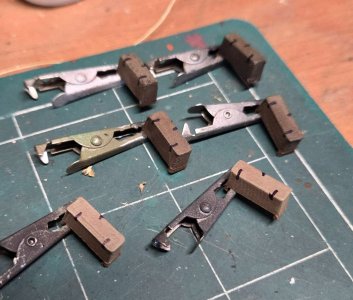
The Revell kit does not have any decking in the box section where the anchor would be stowed. Did the real ships have this are open? To me there are 2 ways of dealing with this, build out a section of decking or fill the area with stowage barrels, roil coils, boxes.

4.jpg
 
20aae17f541588408289aeb8ed165f55.jpg gokstad-viking-ship-excavation-photo.jpg
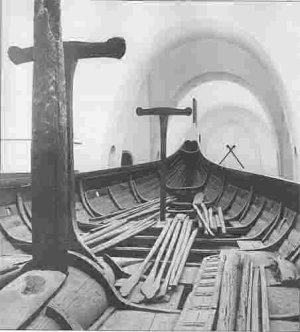
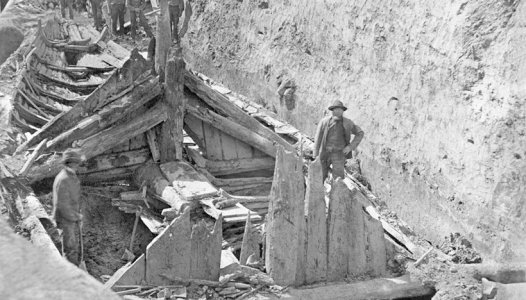
The supporting rib is there. As can be seen in the pictures of the deck as in the museum, and as is was freshly sprung from the earth.
It is absent in the kit. Shame on Revell for that. :)
There is not a double rib (one above the other) behind that (closer to the camera), so it is unclear if there was a higher horizontal deck, or if there was a sloping section.
Perhaps there was none, but I can hardly believe that since there must have been a spot for a lookout.
There might have a small piece of deck, from that rib forward, and a open section for storage between the ribs. Everything is possible, since the planking was loose anyway.
It might be there is something about this in the aforementioned book of Vikingetidens Redskaper, but is in Norwegian, and being 66MB, it is hard to get it translated online.
 
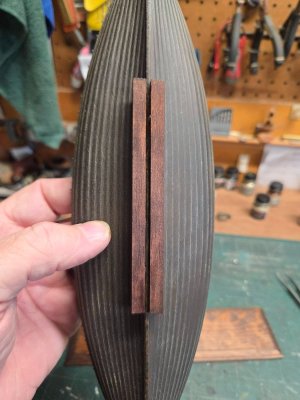
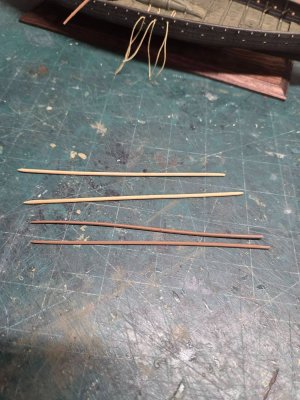
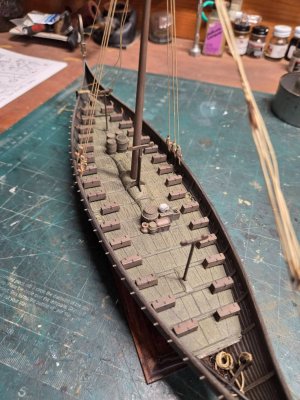
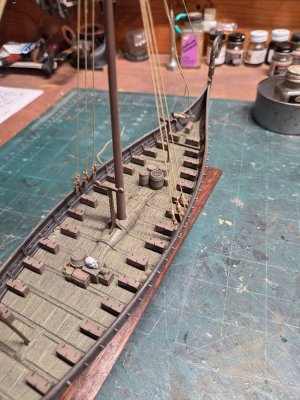
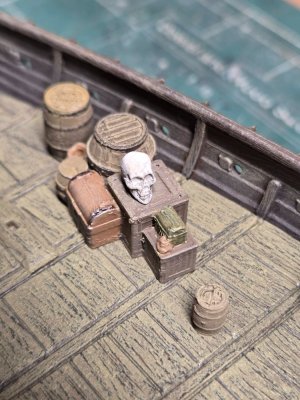
Got a bit of work in today. Figured out the base mount, test placed of of the cargo she'll have, remade the tent poles as the box parts were beyond saving and installed the lower mast stays.

B1.jpg

B2.jpg

B3.jpg

Cargo.jpg

New Poles.jpg

Stay.jpg
 
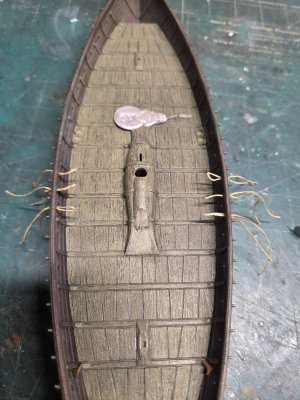
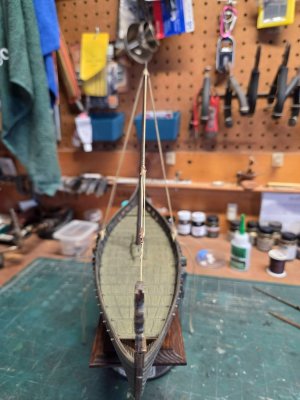
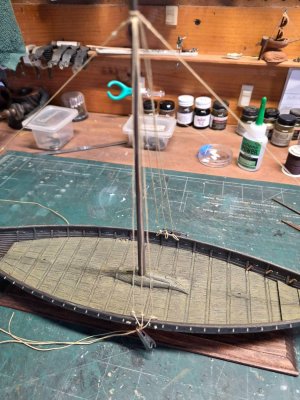
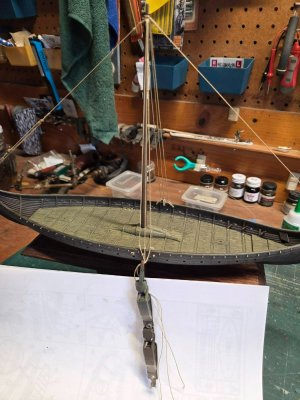
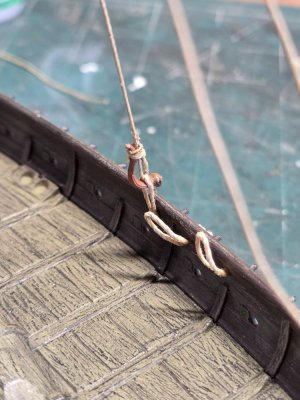
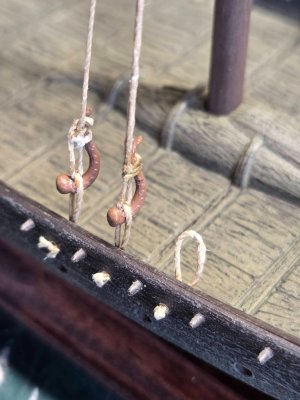
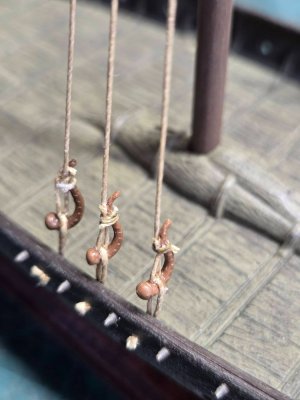
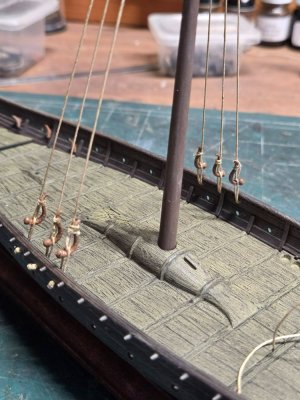
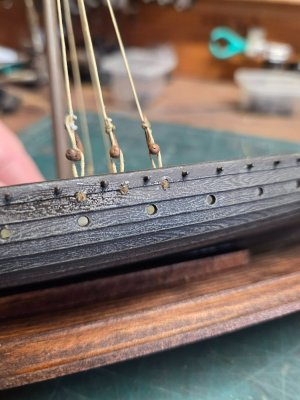
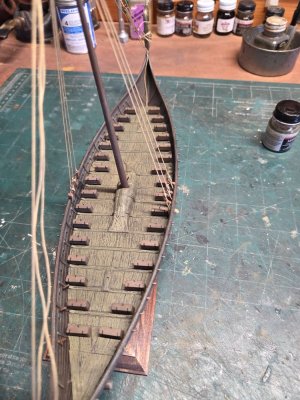
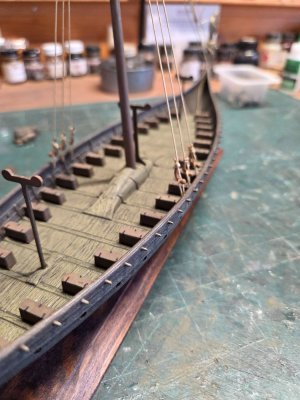
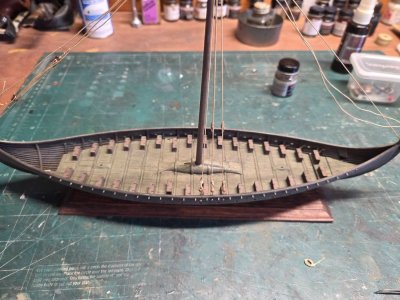
Finally beginning to rig the lines for the mast and stays. The instructions do not cover the installation of the 3 side stays, but all the research I've does mention and show where the longboats discovered did have them (at least the holes where they mounted on the sides). These lines will be fixed with 'hooks' for the sailors to be able to strike the mast quickly. Research does show where some boats had 4 stays per side but for the most part based on 3 of the 4 boats that have been discovered they had 3, but it was prob left up to the builders. the model is on a can allowing weights to hang tension on the stays to stretch them out. all lines have bees wax to preserve them.

1.jpg

2.jpg

3.jpg

4.jpg

5.jpg
 
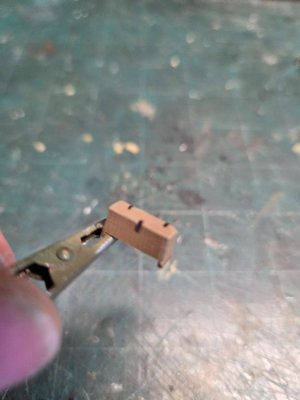
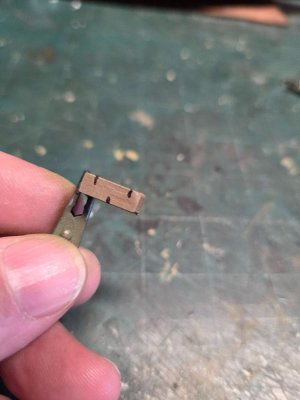
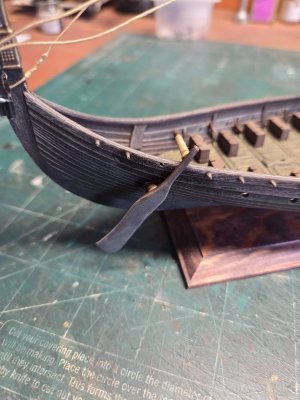
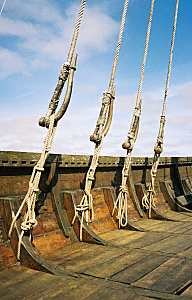
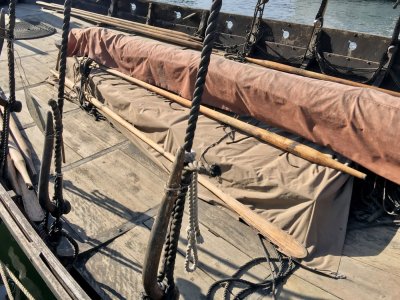
I got the rigging horns installed, still need to weather, wash and dull coat to get the glue sheen off of the rigging. After that dries, I'll add some coiled lines. You can see the real ones in the last photo. The kit never came with these parts. These are 3D printed from a friend in Norway. I trimmed off the knots at the hull line as well so they would not interfere with the placement of the shields.

1.jpg

2.jpg

3.jpg

4.jpg

5.jpg

6.jpg

7.jpg

ship_shrouds.jpg
 
Back
Top