Follow along with the video below to see how to install our site as a web app on your home screen.
Note: This feature may not be available in some browsers.
Ships of Scale has incorportated an extra level of security when you log In. Please follow
on-screen prompts to acknowledge that you are not a robot via a "Check Box" or a "Pictorial Check Box Puzzle". This is needed due
to higher level of AI Activity Security.
The beloved Ships in Scale Magazine is back and charting a new course for 2026!
Discover new skills, new techniques, and new inspirations in every issue.
NOTE THAT OUR NEXT ISSUE WILL BE July/August 2026
Win a Free Custom Engraved Brass Coin!!!
As a way to introduce our brass coins to the community, we will raffle off a free coin during the month
of August. Follow link ABOVE for instructions for entering.
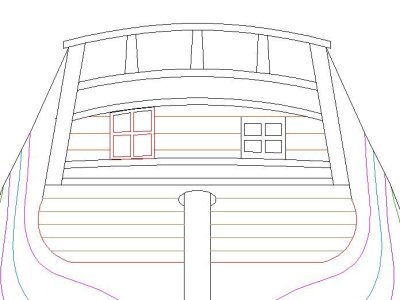
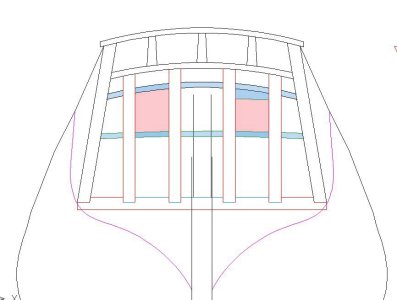
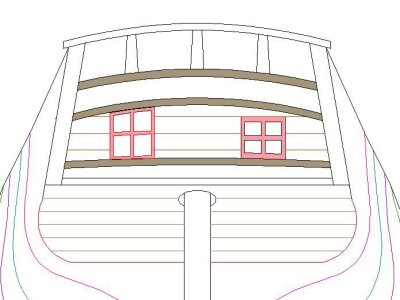
Few notice or consider the construction of the actual ship and if it works the right side is the square window shown on Chalelle's drawing. The left side is what i was thinking. Above the square window would be hollow.
To use the square window you need a header the blue pieces above the window. it is possible to work in a header for square windows or just run the window to the upper deck transom on the left
Now there are two option for the stern windows
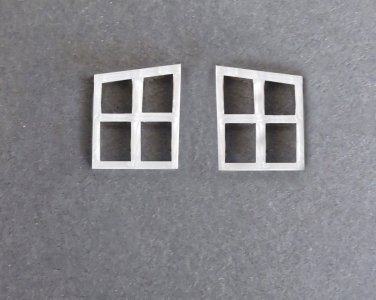
i redrew the windows and did a print of them
Any builder who takes on a build of the Sir Edward Hawke i am just giving options there is no historical record of what the stern looked like so it is your call. Comment from the discussion in the teachers lounge "The trapezoidal windows are much more elegant looking. No builder with any sense of style would use the rectangular. Repairs at sea from a shot up stern or rogue wave smashing the stern - the rectangular would be an easier quick fix."
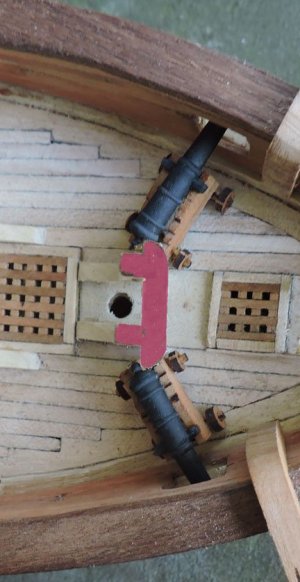
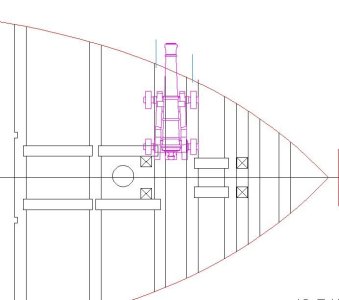
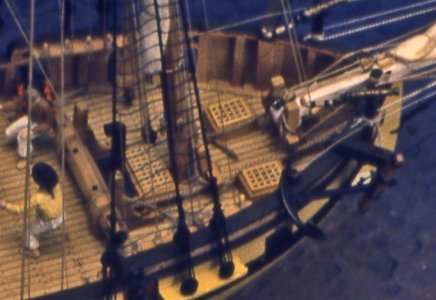
Next is the bow gun port when i installed the cannons i found out a cannon would not fit at the bow. I tinted the pin rail red and there is not enough room between the bulwark and the pin rail let alone the recoil of firing the cannon.
my first thought was where is the mistake? in the drawing or building? so i checked and sure enough both the drawing and the build were correct a cannon will not fit.
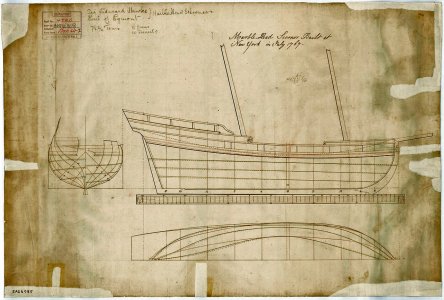
Where to next is the researchers quest for an answer so first is to look at the sources both Chapelle and Hahn included a bow gun port did they just make it up like the stern? let's look at the original drawing. Five gun ports per side the bow port is there but why?
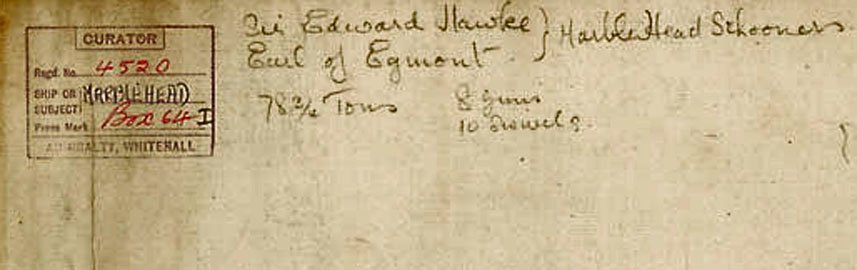
How many guns are historically mentioned? the original note on the drawing so what we have here are 8 guns and 10 gun ports.
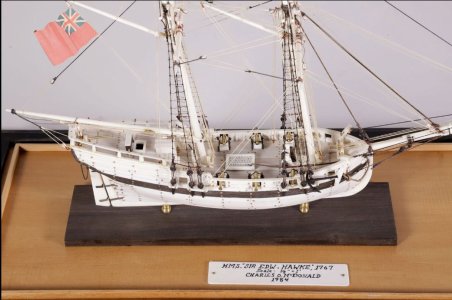
There are two models one done by Harold Hahn and another ivory model done by Charles McDonald who was editor of the Nautical Research journal a long time ago. Charley was a members of our local club and what he did was salvage ivory piano keys and built ship models.
first clue Hahn does not have a cannon at the bow ports
nor did Charley look at his model he has 6 cannons and no swivel guns.
Inquisitive builders and researchers want to know just because it is a head scratcher why there are 10 gun ports and 8 cannons why do that?
here is the discussion when it was brought up among the faculty members.
In scratch building models there is usually an unknown somewhere along the way. At this point, you just have to make an educated guess. This could be a teaching moment, by pointing out the difference between an educated guess about a detail that could have existed and fantasy.
Would there have been any maintenance advantage if the bow ports are present? e.g. loading something thru these ports
Would there have been a intimidation factor against an opponent? Let him think that he was facing 5 guns instead of 4. Let him be less prone to trying to cross the bow.
If these are not sufficient to overcome the disadvantages, I would not cut the ports at the bow.
The port had to require more attention than the same area as just more bulwark. A hole at the bow had to be a potential entry for more water washing over the deck in heavy seas.
On the other hand - as a warship - five ports has a proper look. With four - it would look like a merchantman.
Would the ports in the bow assist with handling the anchors? Warships later on sometimes had empty gunports in the bow called bridal ports.
I don't know if my observation will be of any help since I have only a passing acquaintance with the relevant period being discussed, but I will ask whether the two "gunports" forward aren't actually not gunports at all, but rather "bridle ports," which frequently appear identical to gunports when viewed from outboard.
Historical context
Bridle port: A square port cut in the bows on either side of the stem of wooden ships on main deck level through which mooring bridles were led. The same ports were used in sailing warships for guns, moved up from the gunport next abaft, when the ship was required to fire as nearly ahead as possible, as when chasing an enemy vessel. When used at sea for this purpose they were sometimes known as main deck chase-ports instead of bridle-ports.
From: bridle-port in The Oxford Companion to Ships and the Sea »
Spar Extension Through Bridle Ports When Catting s
On many sailing ships, spars (or spar‑deck structures) were extended through or over the bridle port to assist in “catting” the anchor, using the bridle port’s specific role in handling the anchor tackle when it broke water
How the bridle port was used
The bridle port was a forward hull opening distinct from gun ports. Its main function was to assist with the tackle attached to the anchor when it broke water during the “catting” process — the act of hauling the anchor up from the water and securing it to the cathead. It also served as ventilation for the foredeck and as a recovery area for injured crew, but in anchor work it was a key point for running lines and tackle.
Role of spars in the process
On some vessels, spars were extended through the bridle port to form part of a temporary “spar deck” or working platform. This allowed crew to:
Support the anchor cable and tackle as it was hauled in.
Provide a stable working surface for handling the heavy chain and rope.
Keep the anchor clear of the ship’s side while it was being lifted, similar to the function of the cathead
This practice was especially useful when the anchor was being “catted” — the anchor was secured to the cathead, and the shank painter and cat stopper were used to hold it in place. The spar extension through the bridle port could help manage the catfall (anchor cable) and catline (rope to the anchor) during this stage.







 s
s