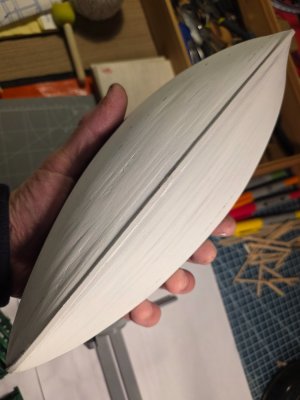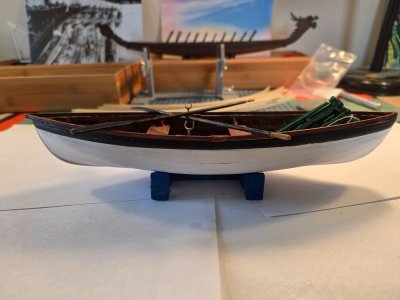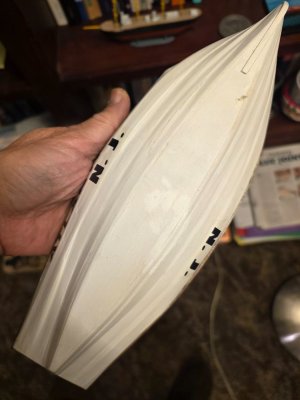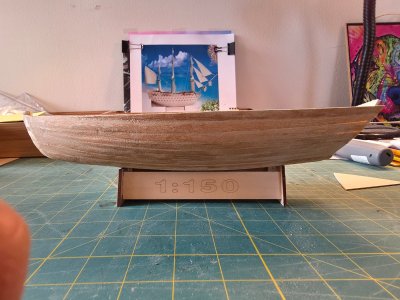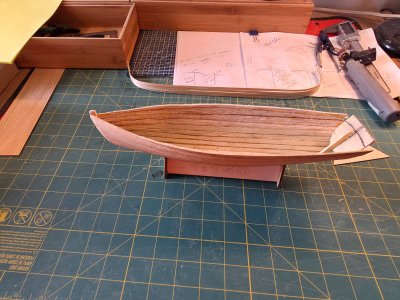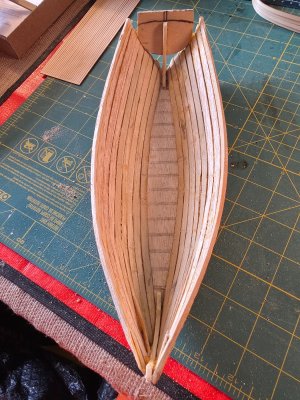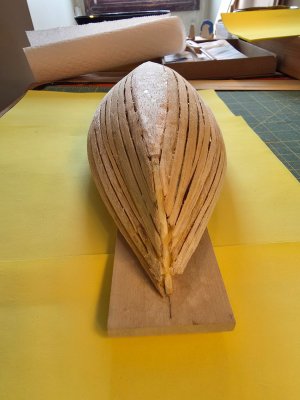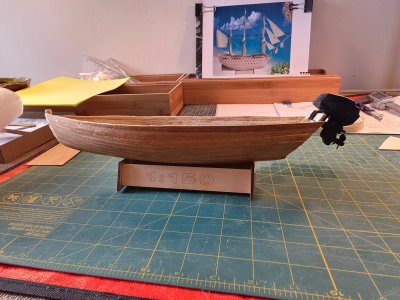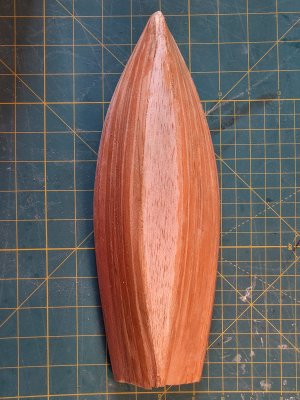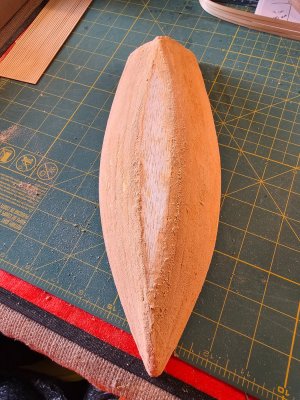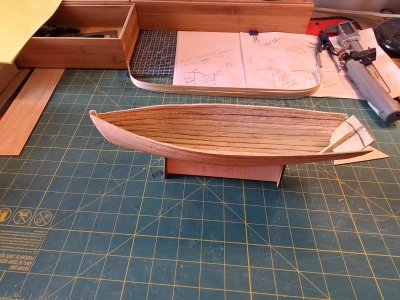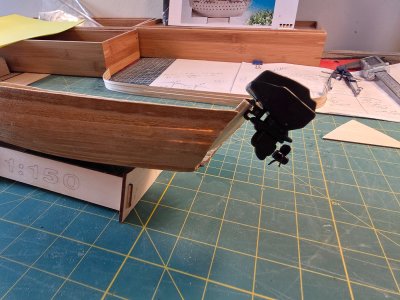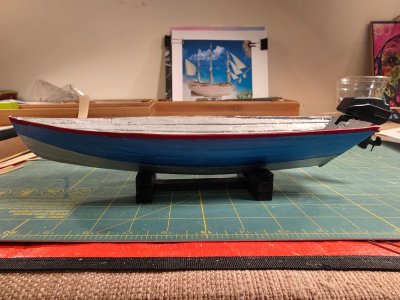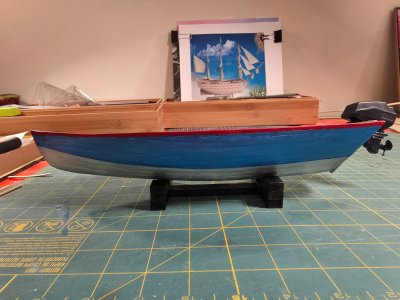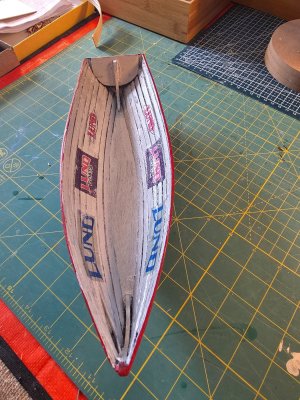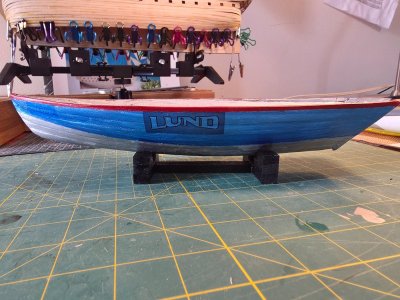





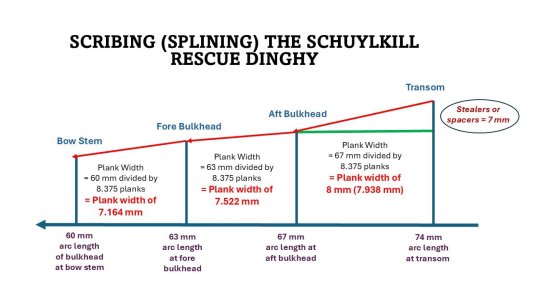
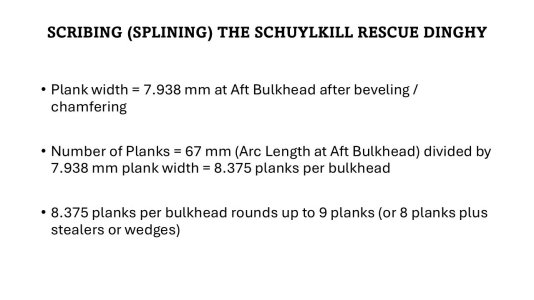
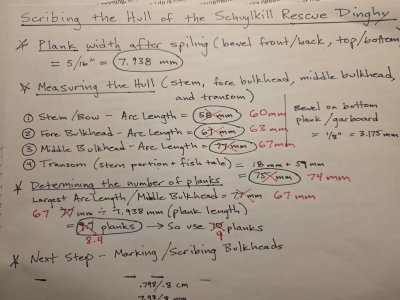
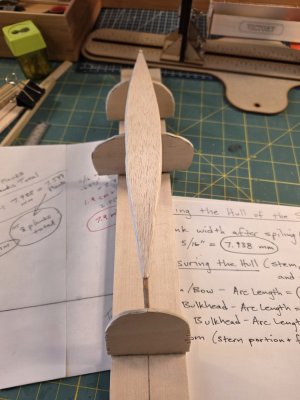
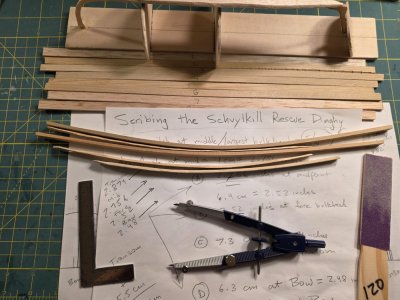
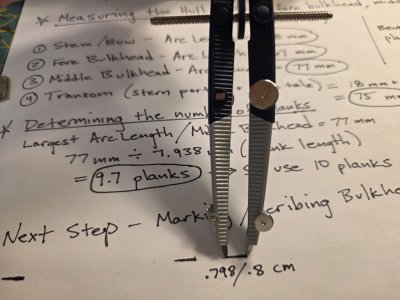
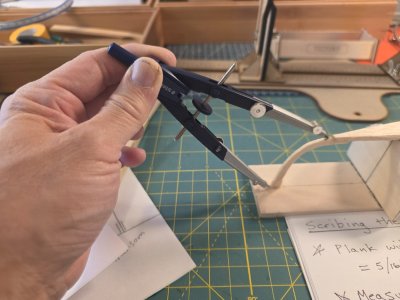
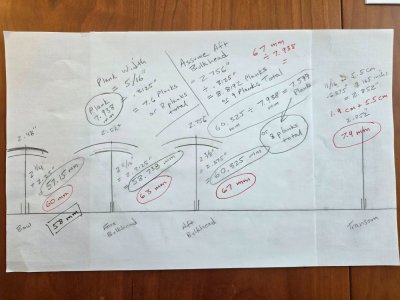
I am new to wooden boat building and I want to master the fundamentals before I move on to building larger and more complex ship builds. So this week I'm doing a deep dive into Scribing and Spiling the hull. I know both terms are somewhat interchangeable, but I believe I will be doing both in this exercise. I had just started doing a scratch build of a simple boat called the "Schuylkill Rescue Dinghy" for my model boat club and I thought I could try out scribing the hull of this build right after I framed out the hull. I am not a math person, so it took me a full day and 4 different tries at the calculations to arrive at a place where I was comfortable. Being more of a visual person, I wrote out my final calculations on a PowerPoint slide to visualize the process. (Pics 2 & 3). I'm looking for some feedback from members of this site to improve / critique / correct my approach.
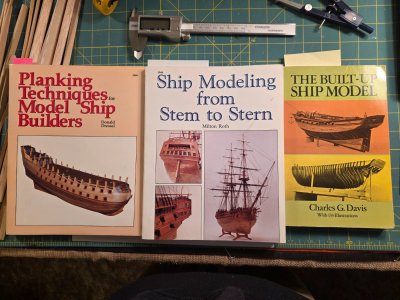
Resources: Planking books by Dressel, Roth & Davis (Pic 4), Chuck Passaro's videos on "Planking the HMS Winchelsea Parts 1-4," a clear and helpful description of the scribing process by site member Crisjaca translated from Spanish (Pic 5), and many comments and posts on this site.
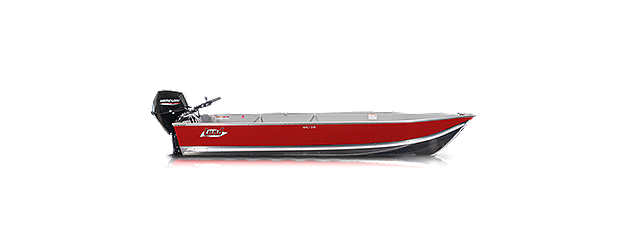
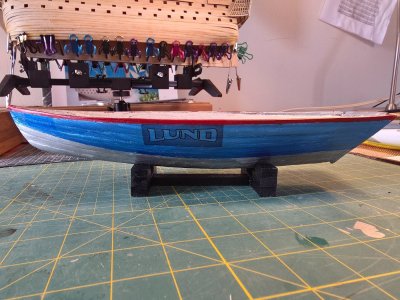
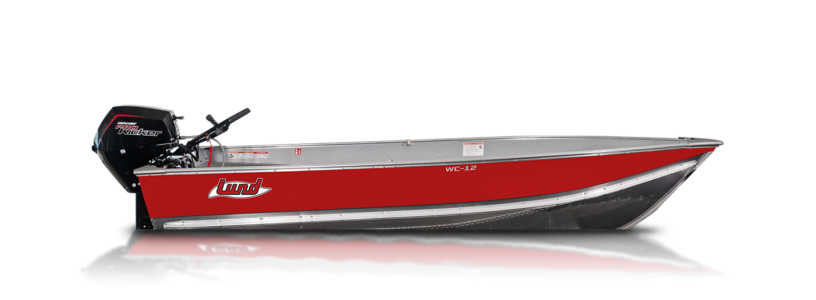
Background: Philadelphia (Pennsylvania U.S.) is bounded by the Schuylkill River (pronounced "Skoo-kill"), the Delaware River and Delaware Bay. The city has about 11 bridges and each time a bridge is inspected, repaired or painted, one sees a small boat hanging from the bridge work area. (Pics 6 & 7). I am told this is a requirement from OSHA. The Delaware River Port Authority calls this vessel a Rescue Dory, but based on my research about the different uses of dinghies and dories, I believe that the boat is actually a dinghy because it is not an ocean-going vessel. I'm calling it a rescue dinghy as such. The original Rescue Dinghy is a 12 foot standard aluminum-hulled utility boat from Lund, possibly their WC-12 model (Pic 18).
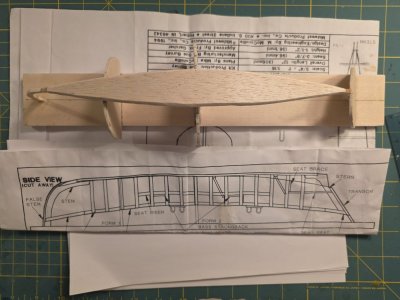
My small model boat club is doing a year-long project to build the "Philadelphia Navy" consisting of: the battleship U.S.S. New Jersey, the submarine U.S.S. Becuna, the cruiser U.S.S. Olympia (Admiral Dewey's flagship during the Battle of Manila Bay), the Moshulu 4-masted bark (originally a sister ship to the Spanish trainer Juan Sebastian Elcano), the tug Jupiter, an 8-man rowing skull, a 20-paddle dragon boat, and the Schuylkill Rescue Dinghy. Doing a scratch-build, I based the plans for the Rescue Dinghy on a kit from Midwest Products and am using wood stock from my shop.
Day 1: The first day consisted of doing the math for this project. I am not a math person, so it took me 4-5 tries to get the measurements in reasonably good order. The first two tries, I used inches rather than centimeters/millimeters, and got very confused converting everything from inches to fractions of 1/8, 1/16, etc. So on the third try I used centimeters and millimeters and got more consistent results. Then I discovered that I forgot to factor in the 1/8 inch (3.175 mm) bevel that is required on both sides of the bottom plank (this kit doesn't have a garboard strake). On the 4th try I included the bevel to reach the measurements on the PowerPoint.
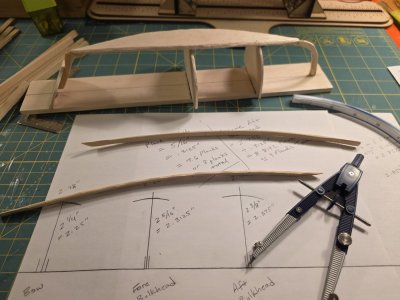
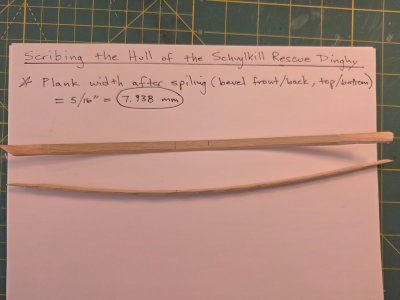
Question: I am using 3/8 inch (9.52 mm) wide planks on this build, but after splining the plank by putting a 1/16 inch bevel on the top and bottom of the plank and a 3/8 inch bevel/chamfer at each end of the plank fore and aft, the worked plank is closer to 5/16th inch (7.938 mm). Which measure should I be using? The 9.52 mm width before working the plank, or the 7.938 mm width after working the plank? I chose to use the 7.938 width measure on the grounds that each plank going forward towards the bow will be narrower than the mid-plank, so I decided to use the narrower width as the basis for the calculations. This is an important choice and I'm not entirely clear whether I made the right choice. (Pic 8). I couldn't find the answer in the Roth, Dressel and Davis books.
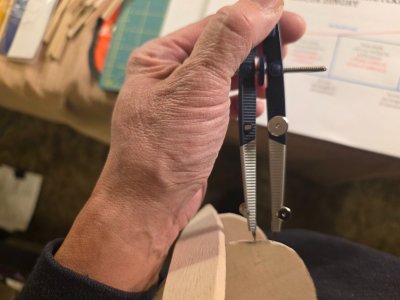
I also made the mistake of marking out the bulkheads when I was using inches for measurement, which I had to correct when I got better measurements using cm/mm, so I have to clean up those scribes before I mark the bulkheads for the final time before planking. (Pic 9).
Next, I determined the number of total planks to use on each side port and starboard, by dividing the arc length at the aft bulkhead (67 mm) by the 7.938 mm max plank width to arrive at 8.375 planks per bulkhead...rounded up to 9 planks total. This calculation will change if I use the wider 9.52 mm plank width instead. Trying both, I came up with a total of 9 or 10 planks per side, which seemed wrong. So my calculations are all over the place. I will be planking from the keel / bottom plank upwards towards the wale.
I then used my PowerPoint to see how much I would need to narrow each plank going forward towards the fore bulkhead and the bow stem. I then realized that I had to find the answer to whether to use the 9.52 mm or 7.938 mm width at the aft bulkhead before I marked the bulkheads, so I stopped for the day before marked the bulkheads based on the appropriate width at each point.
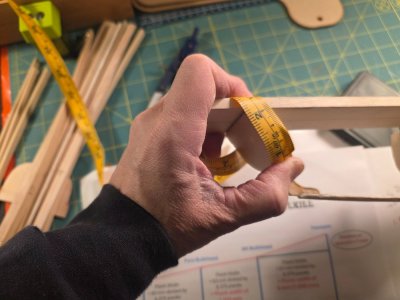
Question: I am not sure I measured the appropriate arc length for the transom, since it has two parts -- the portion of the stern stem down to the fishtail and then the fishtail. Based on this measurement, there is 7 mm left of space to cover and I figured I could use spacers or stealers to cover it. Did I measure the transom correctly?
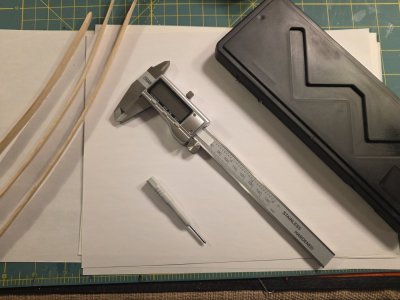
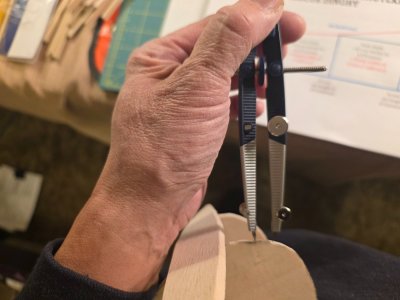
Plans for Day 2: Get feedback on the work/calculations so far. Make the decision about the appropriate plank width to use. Mark the bulkheads with a compass based on the chosen plank width at each contact point. Figure out how to use my new Vernier Caliper to ensure that the plank width at each contact point is accurate. Bend more plank stock to get 9 planks per side, or 18 planks total. Work the first 2 planks per side to the right width and then put bevels and chamfers on before attaching planks to frame.
Thanks for reading mates!
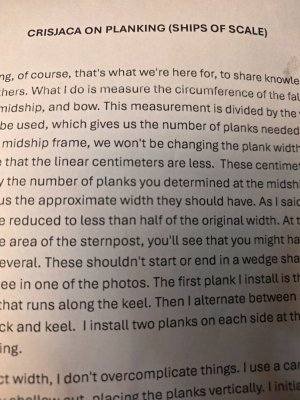


Resources: Planking books by Dressel, Roth & Davis (Pic 4), Chuck Passaro's videos on "Planking the HMS Winchelsea Parts 1-4," a clear and helpful description of the scribing process by site member Crisjaca translated from Spanish (Pic 5), and many comments and posts on this site.
Background: Philadelphia (Pennsylvania U.S.) is bounded by the Schuylkill River (pronounced "Skoo-kill"), the Delaware River and Delaware Bay. The city has about 11 bridges and each time a bridge is inspected, repaired or painted, one sees a small boat hanging from the bridge work area. (Pics 6 & 7). I am told this is a requirement from OSHA. The Delaware River Port Authority calls this vessel a Rescue Dory, but based on my research about the different uses of dinghies and dories, I believe that the boat is actually a dinghy because it is not an ocean-going vessel. I'm calling it a rescue dinghy as such. The original Rescue Dinghy is a 12 foot standard aluminum-hulled utility boat from Lund, possibly their WC-12 model (Pic 18).
My small model boat club is doing a year-long project to build the "Philadelphia Navy" consisting of: the battleship U.S.S. New Jersey, the submarine U.S.S. Becuna, the cruiser U.S.S. Olympia (Admiral Dewey's flagship during the Battle of Manila Bay), the Moshulu 4-masted bark (originally a sister ship to the Spanish trainer Juan Sebastian Elcano), the tug Jupiter, an 8-man rowing skull, a 20-paddle dragon boat, and the Schuylkill Rescue Dinghy. Doing a scratch-build, I based the plans for the Rescue Dinghy on a kit from Midwest Products and am using wood stock from my shop.
Day 1: The first day consisted of doing the math for this project. I am not a math person, so it took me 4-5 tries to get the measurements in reasonably good order. The first two tries, I used inches rather than centimeters/millimeters, and got very confused converting everything from inches to fractions of 1/8, 1/16, etc. So on the third try I used centimeters and millimeters and got more consistent results. Then I discovered that I forgot to factor in the 1/8 inch (3.175 mm) bevel that is required on both sides of the bottom plank (this kit doesn't have a garboard strake). On the 4th try I included the bevel to reach the measurements on the PowerPoint.
Question: I am using 3/8 inch (9.52 mm) wide planks on this build, but after splining the plank by putting a 1/16 inch bevel on the top and bottom of the plank and a 3/8 inch bevel/chamfer at each end of the plank fore and aft, the worked plank is closer to 5/16th inch (7.938 mm). Which measure should I be using? The 9.52 mm width before working the plank, or the 7.938 mm width after working the plank? I chose to use the 7.938 width measure on the grounds that each plank going forward towards the bow will be narrower than the mid-plank, so I decided to use the narrower width as the basis for the calculations. This is an important choice and I'm not entirely clear whether I made the right choice. (Pic 8). I couldn't find the answer in the Roth, Dressel and Davis books.
I also made the mistake of marking out the bulkheads when I was using inches for measurement, which I had to correct when I got better measurements using cm/mm, so I have to clean up those scribes before I mark the bulkheads for the final time before planking. (Pic 9).
Next, I determined the number of total planks to use on each side port and starboard, by dividing the arc length at the aft bulkhead (67 mm) by the 7.938 mm max plank width to arrive at 8.375 planks per bulkhead...rounded up to 9 planks total. This calculation will change if I use the wider 9.52 mm plank width instead. Trying both, I came up with a total of 9 or 10 planks per side, which seemed wrong. So my calculations are all over the place. I will be planking from the keel / bottom plank upwards towards the wale.
I then used my PowerPoint to see how much I would need to narrow each plank going forward towards the fore bulkhead and the bow stem. I then realized that I had to find the answer to whether to use the 9.52 mm or 7.938 mm width at the aft bulkhead before I marked the bulkheads, so I stopped for the day before marked the bulkheads based on the appropriate width at each point.
Question: I am not sure I measured the appropriate arc length for the transom, since it has two parts -- the portion of the stern stem down to the fishtail and then the fishtail. Based on this measurement, there is 7 mm left of space to cover and I figured I could use spacers or stealers to cover it. Did I measure the transom correctly?
Plans for Day 2: Get feedback on the work/calculations so far. Make the decision about the appropriate plank width to use. Mark the bulkheads with a compass based on the chosen plank width at each contact point. Figure out how to use my new Vernier Caliper to ensure that the plank width at each contact point is accurate. Bend more plank stock to get 9 planks per side, or 18 planks total. Work the first 2 planks per side to the right width and then put bevels and chamfers on before attaching planks to frame.
Thanks for reading mates!
Last edited: