

• Win a Free Custom Engraved Brass Coin!!!
    As a way to introduce our brass coins to the community, we will raffle off a free coin during the month of August. Follow link ABOVE for instructions for entering.
  • PRE-ORDER SHIPS IN SCALE TODAY!

    The beloved Ships in Scale Magazine is back and charting a new course for 2026!
    Discover new skills, new techniques, and new inspirations in every issue.

    NOTE THAT OUR FIRST ISSUE WILL BE JAN/FEB 2026

selling model ships

I think the "gem-like" or precious quality of miniatures is most appealing, as well as most accessible. Easy to ship, carry and display.
Most appealing to impulse purchase. I also believe that, if well executed, the miniature "gem-like quality" adds to the impression of value.
I agree wholeheartedly. The catch for guys like us is that the ultra-miniatures done by guys like McNarry, Reed, McCaffery, Wilson, and Ough are mind-bogglingly detailed for the scales they work in. When you look at pictures of their models, often their size isn't fully appreciated because we're used to looking at pictures of much larger scales. I've closely examined a couple of McCaffery's models displayed in the Columbia River Maritime Museum in Astoria, Oregon. He does fully rigged ships that are three to five inches long with all the detail you'd expect on a model at 1:48 scale and the workmanship is impeccable. These guys are in the "can-engrave-the-Lord's-Prayer-on-a-grain-of-rice" class. Their models aren't "gem-like," they are gems. We're talking the Faberge eggs of ship models.
Additionally, as Bill Wall notes in his articles cited above, these artists have developed names for themselves and have a following of collectors (and investors) who are standing in line to snatch up anything they build (or built, in the case of McNarry and Ough.)
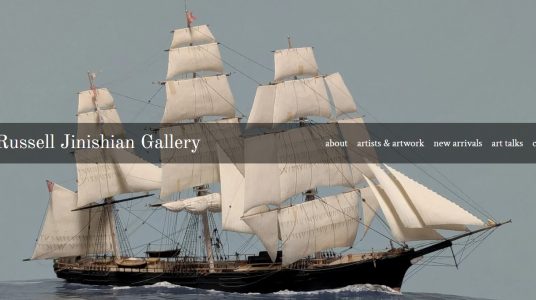
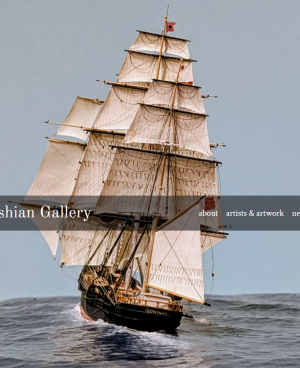
McCaffery's recent build of the clipper Lightning (1854):
1758245161382.png

1758245196621.png

1758245314896.png

1758245403684.png


While the above pictures appear almost as photographs of a full-sized ship at sea under full sail, the model is actually only 9 and a half inches long, built to the scale of 1:384 (1"=32'). Priced at $75,000.00

(McCaffery's model of Prince holds the world's record for the highest auction price paid for a present-day ship model at $100,000.00)

1758245728897.png

1758245634259.png

For a fascinating read on McCaffery and his work with lots more pictures like those above, see: https://www.jrusselljinishiangallery.com/lloyd-mccaffery
 
A word of caution. It has been mentioned that a contribution to a museum is a way to get your model out to the public but many of these institutions will accept your excellent work but on condition that you pay for insurance on your masterpiece while on display.
 
A word of caution. It has been mentioned that a contribution to a museum is a way to get your model out to the public but many of these institutions will accept your excellent work but on condition that you pay for insurance on your masterpiece while on display.

These days it seems even this option varies greatly from museum to museum. The museum business is in a state of change today. In times past, museums were relatively eager to fill their storage facilities with donations, since the status of a museum often depended upon the size of its acquisition holdings. Museums often served as repositories for collections which were held for academic study, while only a fraction of the total holdings were ever on public exhibit at any one time. For a variety of reasons, the trend in museums now is a focus not on collections of things on hand, but the collection of admission fees at the turnstiles. In order to draw the attendance, many museums are transitioning to "interactive" exhibits and video presentations, to provide the public with an "experience," perhaps at the expense of providing an "education." We've seen the majority of the greatest museum ship models formerly on display be relegated to warehouses, or worse, "deaccessioned" to generate operating capital and create space for "dumbed down" "video game simulator" exhibits and the like. Short of a very small local historical society museum, which are often less sophisticated volunteer-curated operations, I would expect that few museums would be interested in accepting any ship model other than a high-quality scratch-built model of a vessel specifically relevant to the museum's scope of interest. The only exceptions being, perhaps, donations which a museum might wish for resale at a "silent auction" fundraiser or in a museum shop. Even at that, most museum shop managers will tell you that completed ship models are more floor display decorations than serious inventory because they are very slow sellers.
 
I live on the shores of Lake Erie and have been all around the lakes from Quebec thousand Islands and down to lake Champlain the finger lakes and all the way to the western most shores several times. Been to every maritime museum and gift shop and here are examples of model ship that do sell called "folk art"
So if you want to get into the business of making ship models these are the ones that sell from $30.00 to $75.00

View attachment 543185View attachment 543186View attachment 543187View attachment 543188
OMG! I hate these kid toys!
 
I agree wholeheartedly. The catch for guys like us is that the ultra-miniatures done by guys like McNarry, Reed, McCaffery, Wilson, and Ough are mind-bogglingly detailed for the scales they work in. When you look at pictures of their models, often their size isn't fully appreciated because we're used to looking at pictures of much larger scales. I've closely examined a couple of McCaffery's models displayed in the Columbia River Maritime Museum in Astoria, Oregon. He does fully rigged ships that are three to five inches long with all the detail you'd expect on a model at 1:48 scale and the workmanship is impeccable. These guys are in the "can-engrave-the-Lord's-Prayer-on-a-grain-of-rice" class. Their models aren't "gem-like," they are gems. We're talking the Faberge eggs of ship models.
Additionally, as Bill Wall notes in his articles cited above, these artists have developed names for themselves and have a following of collectors (and investors) who are standing in line to snatch up anything they build (or built, in the case of McNarry and Ough.)
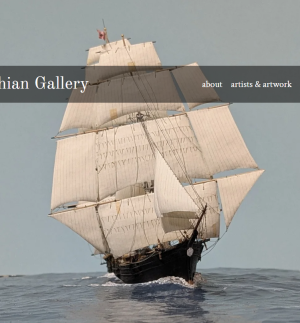
McCaffery's recent build of the clipper Lightning (1854):
View attachment 545479

View attachment 545480

View attachment 545482

View attachment 545483


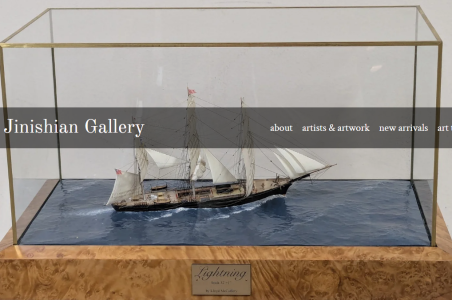
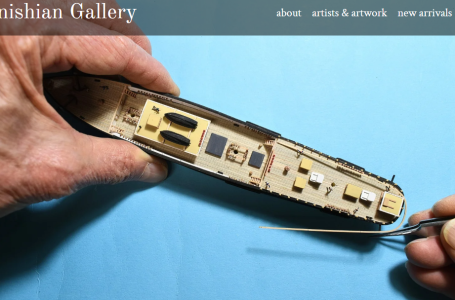
While the above pictures appear almost as photographs of a full-sized ship at sea under full sail, the model is actually only 9 and a half inches long, built to the scale of 1:384 (1"=32'). Priced at $75,000.00

(McCaffery's model of Prince holds the world's record for the highest auction price paid for a present-day ship model at $100,000.00)
View attachment 545485

View attachment 545484

For a fascinating read on McCaffery and his work with lots more pictures like those above, see: https://www.jrusselljinishiangallery.com/lloyd-mccaffery
The detail of these tiny models is beyond the pale. I strive to get that level of detail but as yet fall short of the mark. What's amazing is how they retain such realism when photographed. They look SO REAL!
 
is beyond the pale.
A lot off-topic, my apologies, but we learned while in Ireland what that term actually means. Great piece of trivia for a bar bet. And so you don't have to look it up :):
The phrase "beyond the pale" originates from the concept of a "pale:, a boundary, most notably the area around Dublin, controlled by English settlers, outside of which was considered lawless and uncivilized. The term "pale" comes from the Latin palus, meaning "stake," referring to the stakes used to form the fence.

The Core Meaning

  • A Pale as a Boundary:
    Historically, a "pale" was a delimited area, separated by a physical or figurative boundary.
  • The Irish Pale:
    The most significant reference is to the English-controlled region in Ireland, known as the Pale, where English law and administration applied.
  • Beyond the Boundary:
    Anything outside this defined territory was considered "beyond the pale," associated with the perceived lawlessness and barbarity of the native Irish.

Allan
 
Last edited:
A lot off-topic, my apologies, but we learned while in Ireland what that term actually means. Great piece of trivia for a bar bet. And so you don't have to look it up :):
The phrase "beyond the pale" originates from the concept of a "pale:, a boundary, most notably the area around Dublin, controlled by English settlers, outside of which was considered lawless and uncivilized. The term "pale" comes from the Latin palus, meaning "stake," referring to the stakes used to form the fence.

The Core Meaning

  • A Pale as a Boundary:
    Historically, a "pale" was a delimited area, separated by a physical or figurative boundary.
  • The Irish Pale:
    The most significant reference is to the English-controlled region in Ireland, known as the Pale, where English law and administration applied.
  • Beyond the Boundary:
    Anything outside this defined territory was considered "beyond the pale," associated with the perceived lawlessness and barbarity of the native Irish.

Allan
And don’t ignore ‘palisade’ the first ‘castles’ after 1066 were palisades too,protect the Normans - and of course the American invasion by Europeans was policed by forts made of logs on end. I remember the grainy black and white tv pictures of Davy Crockett and the whole Wild West genre of ‘forts’

J
 
(McCaffery's model of Prince holds the world's record for the highest auction price paid for a present-day ship model at $100,000.00)
If it took a year to build then that price would just about equal what a job paying $50/hr would for the same time committed.

This is just a guess:
It has been a long time, but I saw something at a crafts show here that may yield a return for time spent that is perhaps above minimum wage.
That was half hull models of small or smaller craft which included a frame. A folk art level of detail. Anything more detailed would probably become a vanishing returns situation. Instead = think Starving Artist type mass production - every step optimized and stream lined.
A thought just hit me - even this will probably lose out to someone using a 3D printer to produce the hulls.

For a kt, my money is on a bet that there would be a better return per hour spent working part time in a fast food franchise shop.
 
For a kt, my money is on a bet that there would be a better return per hour spent working part time in a fast food franchise shop.

Most definitely! However, I did know of a guy once who realized a respectable return on his investment by selling half-models of popular fiberglass production sailboats back in the 1980's. He would make a half-hull mold of the hull and deck furnishings of popular class designs and then make a "production run" of fiberglass half-models in the mold. He'd spray paint these all white, assembly line fashion, and, based on the orders he received from owners he solicited through the class associations and sailing publications, he'd "customize" them to match the buyer's accent colors, and mount them on nice walnut plaques with an engraved brass plate with the name and homeport of the vessel. They were short on detail, but entirely presentable and just the ticket for the rich guys on the class racing circuit who wanted something to hang on their office wall. I can't say they made him entirely self-supporting, but he did "have a thing going" with them, as the saying goes. I don't remember what they cost, but they weren't cheap.
 
All commercially produced (kit) models are sold to us suckers, who see the 'potential' in their heads.

Very few reach completion; the ones that do are way below the standard the 'potential' promised.

You can build the Airfix 'Bounty' for pocket money. It's a respectably accurate basis in a reasonable scale (1:87); the creativity of the finish and rigging can be just as absorbing and satisfying as any of the vastly more expensive box of sticks the 'wooden' variety.

I've yet to see any of the latter built to a higher standard; especially with the inferior sub-standard materials provided.

It's the fun and escapism of the builder which is the true value.
In that regard, the endeavour isn't pointless.

All are ultimately financially worthless.

A very few may survive briefly as a memoir to dad or grandad, 'who spent years building it, and almost finished it' (probably).

Eventually it becomes a burden of space, ultimately destroyed by a well meant feather duster.

An absorbing hobby has its own value.
The thing to remember is all things are ultimately ephemeral.
Enjoy any pleasure while you can.

If you can derive any pleasure in life, that would be worth every penny.
 
All commercially produced (kit) models are sold to us suckers, who see the 'potential' in their heads.
Other than Drydock and one or two others, most kit makers like OcCre, AL, Caldercraft, et al produce kits that are phantasmagorical. But, if the model builder is not concerned with a realistic looking vessel, it does not really matter.
Allan
 
I found a way to make money using my model ship building skills. I advertise locally on line or on grocery store pin up boards. What do I advertise? I ask the question, "Do you have a family sailing ship treasure in need of repair?" I can bring that sailing ship Dad or Grandpa made years ago back again. This has turned out to be very successful. True, I see some very poor examples of clipper ships or just a gift store model in disrepair. But they hold value to their owners and they pay to have them repaired. A simple fix of rigging has rewarded me with hundreds of dollars. An added value to me is the looks on their faces when I come back with a completed restoration . I had great fun taking a gift store model and rigging it with the correct fittings and parts. Don't underestimate the personal attachment these people have for their family treasures. Using your skills to bring a smile to someone can be payment in itself. Also it is a satisfying diversion from a tedious part of your current build.
 
Other than Drydock and one or two others, most kit makers like OcCre, AL, Caldercraft, et al produce kits that are phantasmagorical. But, if the model builder is not concerned with a realistic looking vessel, it does not really matter.
Allan
I HAD to look this up:

Phantasmagorical: Having a fantastic, bizarre, or dreamlike appearance, often with strange and shifting imagery. It describes something that seems unreal or is created by the imagination, like a psychedelic film or a vivid dream. The term can also refer to optical illusions or a sequence of images that appear and change in a rapid, shifting way.

@AllanKP69 .. what sort of LED's are you using inside your model ships? I want some.
 
Last edited:
Someone mentioned MicroMark’s sale of fully assembled models. These things are not cheap, some selling into the 1000’s. They offer three sizes of SS Titanic even if one knows nothing about Naval Architecture it is obvious that each “ Titanic” has a different shaped hull.

I suppose that everyone has a different idea about how much to pay for a sight unseen trinket, But as PT Barnum once said…..!

Roger
 
I HAD to like this up:
Hi Kurt,
This is clearly off topic, but............. I never heard the word until recently. :) It was used by Dan Brown in the book Secret of Secrets. When I looked it up, it sounded like a great description of a lot, (NOT ALL), of kit model designs as well as bringing back memories of the early seventies after graduating from our beloved zoo in '69. LEDS? Nah, I prefer black lights and fluorescent paint on the walls and other stuff to go with it.

Allan
 
Last edited:
Back
Top