





- Joined
- Sep 23, 2021
- Messages
- 380
- Points
- 238

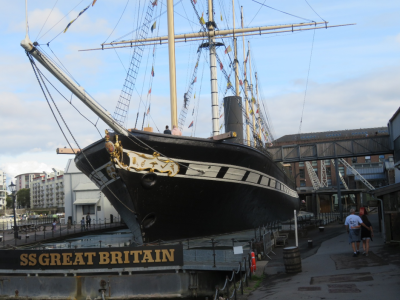
My wife and I have been out-and-about visiting friends and relatives in the West Country, so we took the opportunity to spend the afternoon in Bristol and visit the museum ship SS Great Britain.
“Ship-shape and Bristol Fashion” is a well-known English phrase that has come to mean “well-organized”, “tidy” or “everything in good or excellent order”. If you have ever wondered where it came from, it is a merger of two phrases that came together in the early 19th century: the phrase “ship-shape” dates back to the 17th century, first recorded in Sir Henry Mainwaring’s The Sea-man’s Dictionary (1644) as "ship-shapen" meaning properly arranged or well-formed for seafaring. It was particularly linked to Bristol’s ships which were renowned for their sturdy construction and meticulous maintenance that was needed for the challenging tidal conditions of the River Avon and the Bristol Harbour, which has a tidal range of 30-40ft, the vessels having to cope with rapid tidal flows and settling on their keels twice per day. The phrase “Bristol fashion” was coined later and high-lighted the high standards of Bristol’s maritime practices as a major trading port at the time.
I digress – back to the SS Great Britain!
A little bit of history: SS Great Britain is a museum ship and was the largest passenger ship in the world from 1845 to 1853, she was designed by Isambard Kingdom Brunel (The Elon Musk of his day!) for the Great Western Steamship Company, and built in Bristol Docks by William Patterson for the transatlantic service from Liverpool to New York. While other ships had previously been built of iron or equipped with a screw propeller, Great Britain was the first to combine these features in a large ocean-going ship, making her one of the most technologically advanced ships of her time. When she was built, she incorporated a steam engine driving a single screw propeller and had five fore and aft rigged masts and one square-rigged mast. The lower yard on the square rig was made from wrought iron plates and at over 100 ft in length, was the largest yard ever fitted to a ship. In later service the ship was sold and used for passenger and goods to Australia and was converted to five and then four masts (two square rigged) with a smaller steam engine and a removable propeller to provide assistance. After 1853 she was converted to three square-rigged masts and sailed the Australian route for over 30 years, during which time she also carried troops to fight in the both the Crimean war and the Indian Mutiny. After 1882 she was converted to a sailing ship carrying coal. In 1886, a fire broke out on route to San Francisco, and she made for Port Stanley in the Falkland Islands where she ran aground. Beyond economical repair, she was sold and used as a coaling hulk before being finally abandoned and scuttled in 1937. In 1970, after Great Britain had been abandoned for 33 years, funds were raised to salvage the ship and she was returned to the Bristol dry dock where she had been built 127 years earlier. She is now a visitor attraction and museum ship alongside the Brunel Museum.
I have selected a few of the pictures that I took that show the ship and its construction.
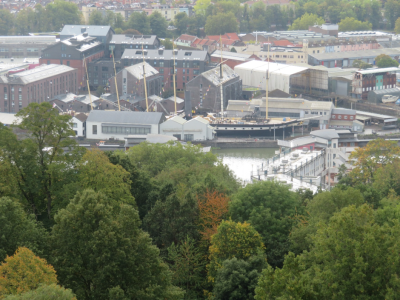
The SS Great Britain and Museums - Viewed from Cabot Tower, the Highest Point in Bristol (Cabot, as in John Cabot and the Mathew)
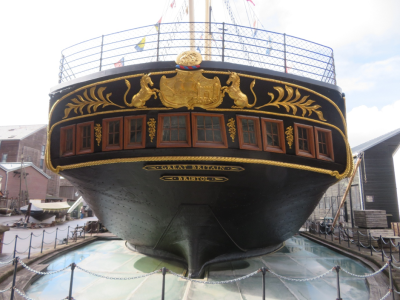
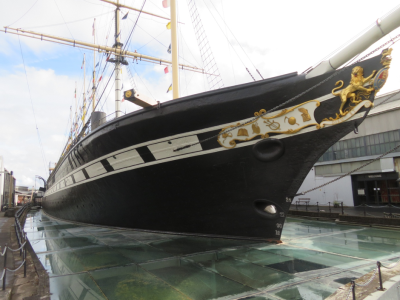
The transom and the ships side clearly show how the design was still heavily influenced by naval architecture of the day – it looks like a Man-O’-War! If you look at the profile of HMS Warrior, which was built a few years later, you can see how the SS Great Britain had clearly influenced her design.
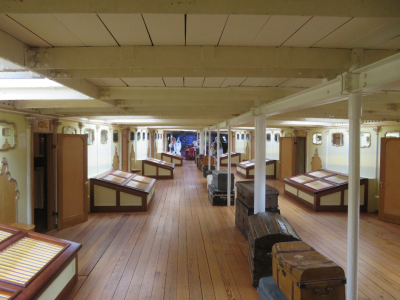
First Class Promenade Deck
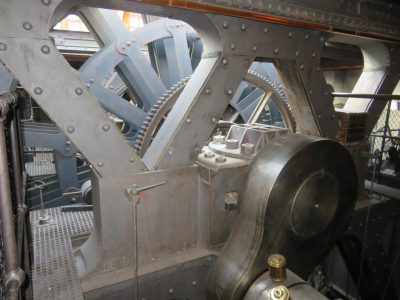
The Engine Room (Twin Cylinder, 88” Bore x 72” Stroke = 500hp @ 18 rpm, Stepped-up with a 1:3 Ratio Chain Drive to the Propeller Shaft)
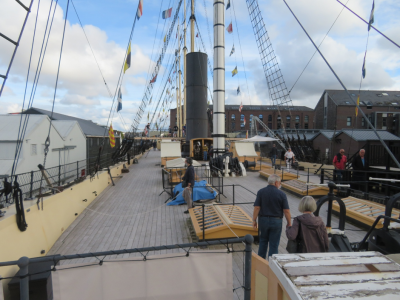
The Weather Deck
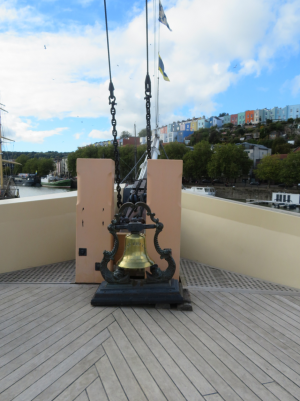
Ships Bell and Prow
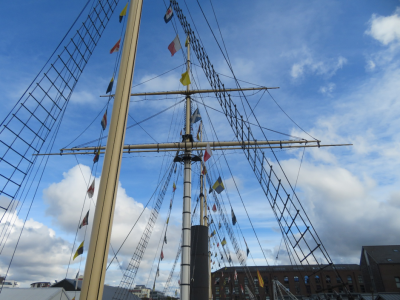
The Masts, the Lower Yard is a Replica and is Smaller Than the Original 100ft Yard
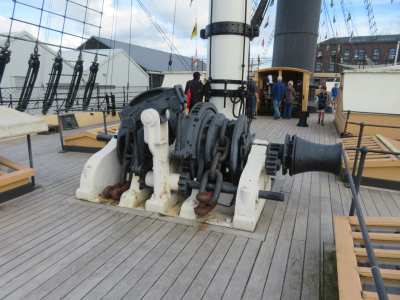
Windlass
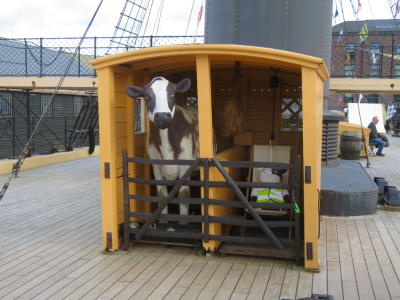
Fresh Milk!
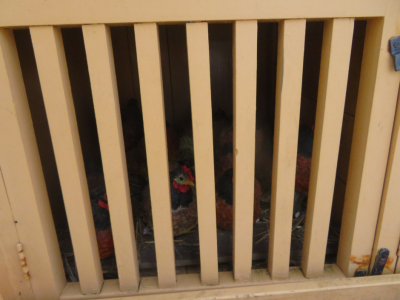
And Fresh Eggs!
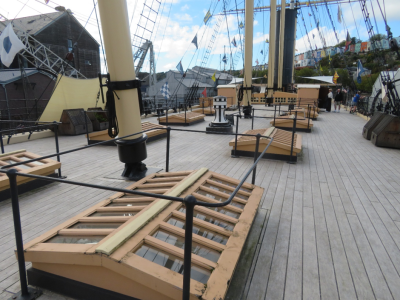
From the Stern Looking to the mid-ship bridge - Some Interesting Detail showing the Swinging Base of the Fore and Aft Masts
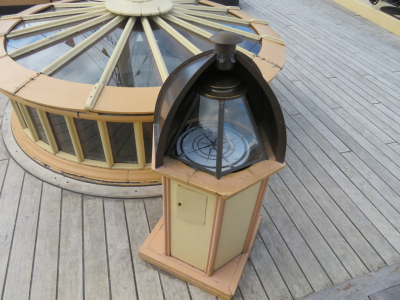
Skylight and Compass
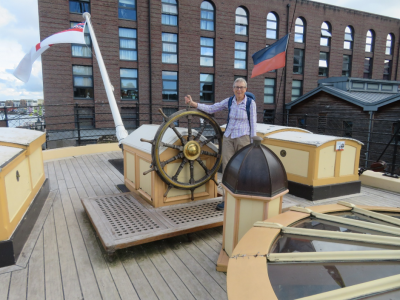
Helen Steers the Ship! It was Incredible That They Could Not Build a Wheelhouse for the Poor Helmsman!
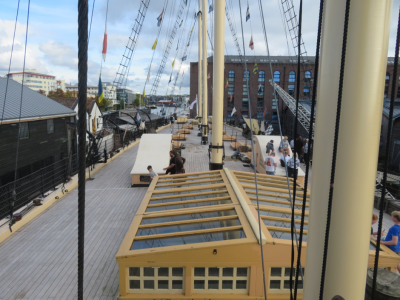
Along the Deck from the Mid-Bridge
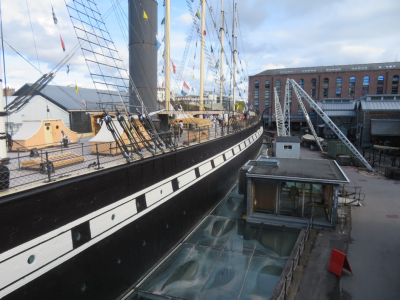
From the Dockside
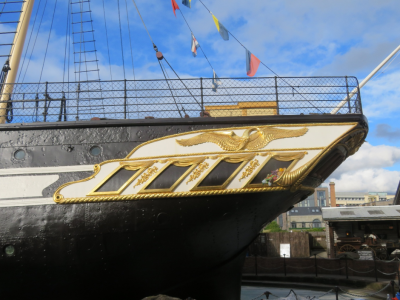
Quarter Detail
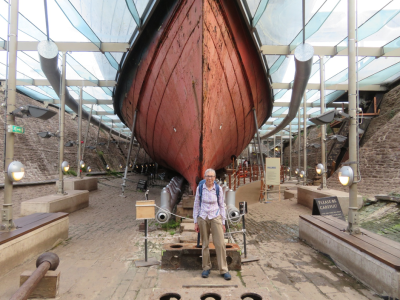
In the Dry Dock (Helen for size reference!)
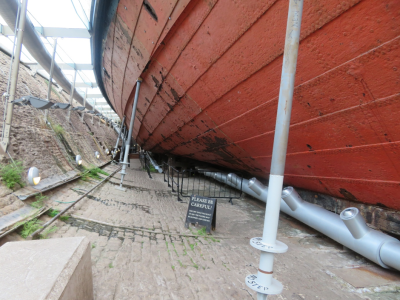
The Hull
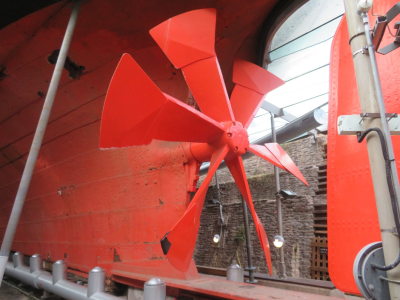
Replica of the Original Six Blade Propeller
To round off our visit, we walked along the harbour where you can see a replica of John Cabot's ship the Mathew.
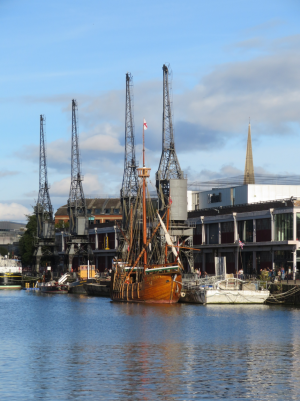
The Mathew - It’s tiny!
***************
There are some very impressive models built from the original plans in the museum, and if anyone is tempted to build a model from scratch, the museum holds an extensive archive of original engineering drawings and documents which are readily accessible (free) to the public. Surprisingly, there has not been a kit of this ship offered by any manufacturer in plastic or wood, but there are some high-end prebuilt models offered by Stephens & Kenau and also Admiralty Ship Models (for around £4500!).
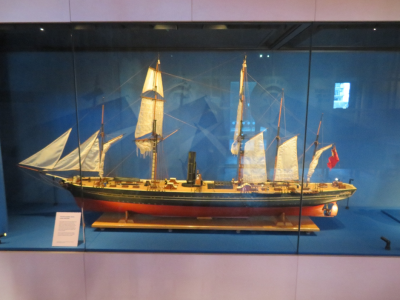
Museum Quality Model Ship
It's not the type of ship I like to build, but since this is SOS, I thought I would build the 1/450 paper model kit that I purchased from the gift shop for £7.
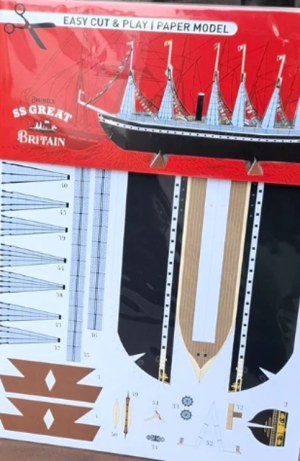
Verdict - IT WAS TERRIBLE! - I have never been so frustrated trying to cut out and build a 3D model from a 2D printed piece of paper! In the end I just slapped loads of CA everywhere and stuck the bits on!
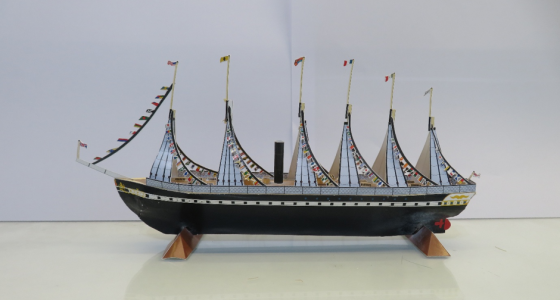
Definitely NOT a Museum Quality Model!
Have fun!
Dom
“Ship-shape and Bristol Fashion” is a well-known English phrase that has come to mean “well-organized”, “tidy” or “everything in good or excellent order”. If you have ever wondered where it came from, it is a merger of two phrases that came together in the early 19th century: the phrase “ship-shape” dates back to the 17th century, first recorded in Sir Henry Mainwaring’s The Sea-man’s Dictionary (1644) as "ship-shapen" meaning properly arranged or well-formed for seafaring. It was particularly linked to Bristol’s ships which were renowned for their sturdy construction and meticulous maintenance that was needed for the challenging tidal conditions of the River Avon and the Bristol Harbour, which has a tidal range of 30-40ft, the vessels having to cope with rapid tidal flows and settling on their keels twice per day. The phrase “Bristol fashion” was coined later and high-lighted the high standards of Bristol’s maritime practices as a major trading port at the time.
I digress – back to the SS Great Britain!
A little bit of history: SS Great Britain is a museum ship and was the largest passenger ship in the world from 1845 to 1853, she was designed by Isambard Kingdom Brunel (The Elon Musk of his day!) for the Great Western Steamship Company, and built in Bristol Docks by William Patterson for the transatlantic service from Liverpool to New York. While other ships had previously been built of iron or equipped with a screw propeller, Great Britain was the first to combine these features in a large ocean-going ship, making her one of the most technologically advanced ships of her time. When she was built, she incorporated a steam engine driving a single screw propeller and had five fore and aft rigged masts and one square-rigged mast. The lower yard on the square rig was made from wrought iron plates and at over 100 ft in length, was the largest yard ever fitted to a ship. In later service the ship was sold and used for passenger and goods to Australia and was converted to five and then four masts (two square rigged) with a smaller steam engine and a removable propeller to provide assistance. After 1853 she was converted to three square-rigged masts and sailed the Australian route for over 30 years, during which time she also carried troops to fight in the both the Crimean war and the Indian Mutiny. After 1882 she was converted to a sailing ship carrying coal. In 1886, a fire broke out on route to San Francisco, and she made for Port Stanley in the Falkland Islands where she ran aground. Beyond economical repair, she was sold and used as a coaling hulk before being finally abandoned and scuttled in 1937. In 1970, after Great Britain had been abandoned for 33 years, funds were raised to salvage the ship and she was returned to the Bristol dry dock where she had been built 127 years earlier. She is now a visitor attraction and museum ship alongside the Brunel Museum.
I have selected a few of the pictures that I took that show the ship and its construction.
The SS Great Britain and Museums - Viewed from Cabot Tower, the Highest Point in Bristol (Cabot, as in John Cabot and the Mathew)
The transom and the ships side clearly show how the design was still heavily influenced by naval architecture of the day – it looks like a Man-O’-War! If you look at the profile of HMS Warrior, which was built a few years later, you can see how the SS Great Britain had clearly influenced her design.
First Class Promenade Deck
The Engine Room (Twin Cylinder, 88” Bore x 72” Stroke = 500hp @ 18 rpm, Stepped-up with a 1:3 Ratio Chain Drive to the Propeller Shaft)
The Weather Deck
Ships Bell and Prow
The Masts, the Lower Yard is a Replica and is Smaller Than the Original 100ft Yard
Windlass
Fresh Milk!
And Fresh Eggs!
From the Stern Looking to the mid-ship bridge - Some Interesting Detail showing the Swinging Base of the Fore and Aft Masts
Skylight and Compass
Helen Steers the Ship! It was Incredible That They Could Not Build a Wheelhouse for the Poor Helmsman!
Along the Deck from the Mid-Bridge
From the Dockside
Quarter Detail
In the Dry Dock (Helen for size reference!)
The Hull
Replica of the Original Six Blade Propeller
To round off our visit, we walked along the harbour where you can see a replica of John Cabot's ship the Mathew.
The Mathew - It’s tiny!
***************
There are some very impressive models built from the original plans in the museum, and if anyone is tempted to build a model from scratch, the museum holds an extensive archive of original engineering drawings and documents which are readily accessible (free) to the public. Surprisingly, there has not been a kit of this ship offered by any manufacturer in plastic or wood, but there are some high-end prebuilt models offered by Stephens & Kenau and also Admiralty Ship Models (for around £4500!).
Museum Quality Model Ship
It's not the type of ship I like to build, but since this is SOS, I thought I would build the 1/450 paper model kit that I purchased from the gift shop for £7.
Verdict - IT WAS TERRIBLE! - I have never been so frustrated trying to cut out and build a 3D model from a 2D printed piece of paper! In the end I just slapped loads of CA everywhere and stuck the bits on!
Definitely NOT a Museum Quality Model!
Have fun!
Dom
Last edited: