
• Ships of Scale has incorportated an extra level of security when you log In. Please follow on-screen prompts to acknowledge that you are not a robot via a "Check Box" or a "Pictorial Check Box Puzzle". This is needed due to higher level of AI Activity Security.
  • SUBSCRIBE TO SHIPS IN SCALE TODAY!

    The beloved Ships in Scale Magazine is back and charting a new course for 2026!
    Discover new skills, new techniques, and new inspirations in every issue.

    NOTE THAT OUR NEXT ISSUE WILL BE July/August 2026
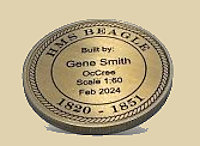
  • Win a Free Custom Engraved Brass Coin!!!
    As a way to introduce our brass coins to the community, we will raffle off a free coin during the month of August. Follow link ABOVE for instructions for entering.

something interesting

Ever read a good isekai or time travel novel like the 1632 series and wonder how you'd survive if it ever got magically sent back in time? This video made me realize I could make a fortune selling activated charcoal to ships. You could use it to filter any type of water, including saltwater, into clean drinking water, and then, when it is no longer working, you can dry it and burn it as fuel for the ships oven. And all it takes to make it is charcoal, a mortar & pestle, and lemon juice.
 
While teaching tech in remote parts of Kenya 30-odd years ago, one of the party tricks was to make a charcoal fridge. In reality they didn’t take the temperature down to the 2 or 3 degrees of a modern refrigerator but you could still get a 20 degree reduction over ambient temp. Charcoal is great stuff!
 
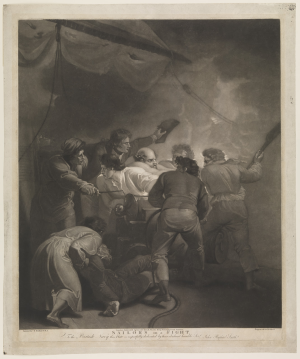
I was not sure if I should start a new topic, Maritime Paintings or attach it on this string. The Society for Nautical research assists in the purchase of works of art for the Royal Museums Greenwich. Among those purchased are a large number of paintings, prints and drawings by noted marine artists. Each month, they feature an artwork purchased by the SNR. This one is of a gun crew in action. It brings up a question regarding the gun captain, who would have been in charge of aiming and firing. When did the British, or other nations for that matter, stop using a linstock with slow match and go with gunlocks? Gunlocks and firing tubes of paper or tin were around for a long time and named in ordnance lists in the mid 18th century, but when did they become predominant?

Sailors in a Fight (1798)​

by W. Ward after T. Stothard​

1786097451784.png
 
Captain Sir Charles Douglas, captain of the three-decker HMS Duke, was the man responsible for the introduction of flintlock firing mechanisms to the Royal Navy, during the American War of Independence. He paid for these from his own pocket, and trained his crews to be so proficient at firing that his example was adopted through the Navy. The moment of firing was more controllable, and the gun captain could stand further away, out of the recoil's path. Douglas was responsible for other improvements in gunnery, but I can't for the life of me remember what they were! I believe that he introduced a change in cartridge material also, to one (flannel?) which burnt completely during firing; much reducing the chance of an accidental discharge when a fresh charge was rammed home, a most unhappy occurrence for the poor bloke pushing the rammer.
 
very interesting. im sure, like me, i really never gave it much thought. these ships were at sea for months n years, where did the water come from? well this was a real eye opener.

now how do i include this on my models?... even just a few clues will do.
 
Ever read a good isekai or time travel novel like the 1632 series and wonder how you'd survive if it ever got magically sent back in time? This video made me realize I could make a fortune selling activated charcoal to ships. You could use it to filter any type of water, including saltwater, into clean drinking water, and then, when it is no longer working, you can dry it and burn it as fuel for the ships oven. And all it takes to make it is charcoal, a mortar & pestle, and lemon juice.
That’s a clever idea for a time-travel scenario. Though activated charcoal alone can’t turn seawater into drinking water — you’d still need to remove the salt.
 
I was not sure if I should start a new topic, Maritime Paintings or attach it on this string. The Society for Nautical research assists in the purchase of works of art for the Royal Museums Greenwich. Among those purchased are a large number of paintings, prints and drawings by noted marine artists. Each month, they feature an artwork purchased by the SNR. This one is of a gun crew in action. It brings up a question regarding the gun captain, who would have been in charge of aiming and firing. When did the British, or other nations for that matter, stop using a linstock with slow match and go with gunlocks? Gunlocks and firing tubes of paper or tin were around for a long time and named in ordnance lists in the mid 18th century, but when did they become predominant?

Sailors in a Fight (1798)​

by W. Ward after T. Stothard​

It’s fascinating how long older firing methods remained in use alongside newer technology. I’d be curious to know when gunlocks became standard across the fleet.
 
It’s fascinating how long older firing methods remained in use alongside newer technology. I’d be curious to know when gunlocks became standard across the fleet.

Hello Hoppert
Which nation?
Adrian Caurana gives a good history and drawings of gunlocks and their associated fire tubes in The History of English Sea Ordnance Volume 2, pages 389 - 394. He gives various dates when introduced in France, the USA, and England and when they became standard gun gear.
Allan
 
Back
Top