
• Win a Free Custom Engraved Brass Coin!!!
    As a way to introduce our brass coins to the community, we will raffle off a free coin during the month of August. Follow link ABOVE for instructions for entering.
  • PRE-ORDER SHIPS IN SCALE TODAY!

    The beloved Ships in Scale Magazine is back and charting a new course for 2026!
    Discover new skills, new techniques, and new inspirations in every issue.

    NOTE THAT OUR FIRST ISSUE WILL BE JAN/FEB 2026

Steam box

Tobias

Staff member
Forum Moderator
Joined
Mar 14, 2021
Messages
3,315
Points
688

Location
Bayern, Töging am Inn
Hello dear colleagues,
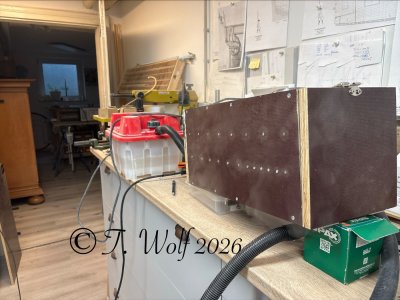
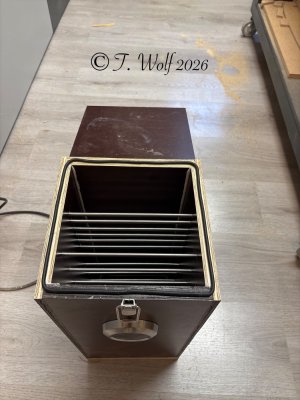
some time ago I decided to build a steam box for steaming wooden strips. I did some research online and found a video on YouTube. The box shown in the video is obviously designed for larger pieces of wood, so I built a smaller version.

Materials used:
- 15mm thick plywood, 20cm x 20cm x 40cm;
- 20 stainless steel rods, 5mm thick, arranged in two layers and spaced 7cm apart;
- silicone sealant for sealing the box;
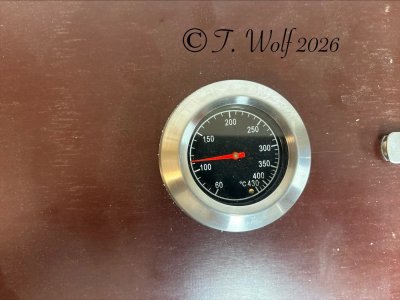
- a grill thermometer;
- 2 hinges and a latch;
- 4mm silicone sealing cord;
- a few 3/8" water fittings;
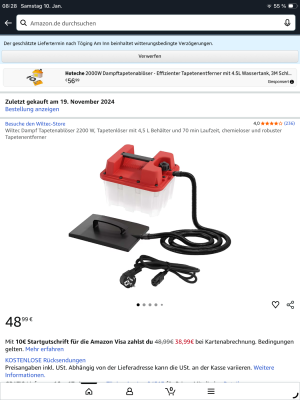
- and a steam box normally used for removing wallpaper.

eZy Watermark_08-01-2026_12-58-34-7470PM.jpeg

eZy Watermark_09-01-2026_12-19-25-2330PM.jpeg

eZy Watermark_09-01-2026_03-48-53-5770PM.jpeg

eZy Watermark_09-01-2026_03-50-00-2980PM.jpeg

The first test went better than expected; the temperature inside the box reached approximately 120 degrees Celsius. The box needs a slight slope towards the back to allow the water to drain. A support bracket and a drip tray will need to be built for this. My conclusion: However, due to the escaping steam, I wouldn't recommend doing this in the shipyard's workshop – just think of the humidity!
 
This is an elegant and more than adequately constructed device.

It also involves a a bit of a dilemma. A shop that is manned and equipped well enough to construct it probably is also situated well enough not to need a steam box to begin with.
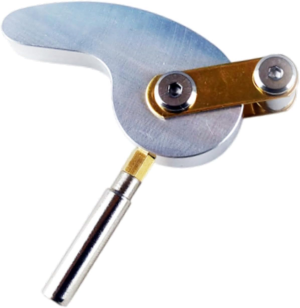
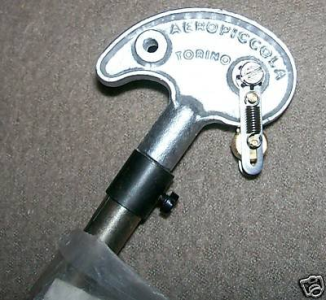
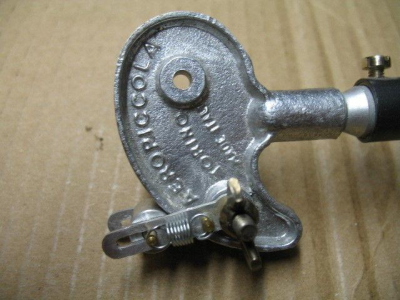
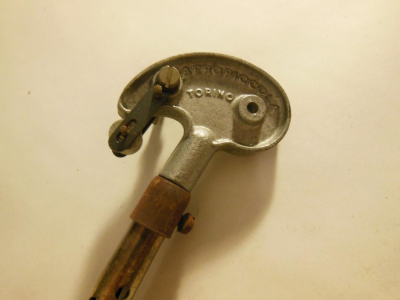
The old Aeropiccola plank bending tron design - which is about as close to optimal as is - has been resurrected by a company - Pistro - Amazon - as a tip for a 936 series soldering iron. I am thinking that the temp is controllable using a dimmer switch or Router speed control box? Dry heat thru the thin dimension usually is all that is needed. Edge bending is generally something to be avoided. A twist is what Nature prefers under this stress. With the equipment on hand a wider piece of wood stock should be easy to cut and dimensioned. The curve is better spilled - spiled - spoiled. That is the shape drawn on and cut out of the wider stock.

Tree grown sizes limit what can be sawn out at full size, so steam bending is the practical solution. At model scale here is no such limit. Wide stock is easily resawn. Few kits provide for this option so desperate and ill-advised bending is often the apparent option. But fabrication of a steam box is not practical within kit level tool stock.
 
I used to restore wood canvas canoes. Not the strip planked kind but the ones with internal framing, usually associated with the Old Town Canoe Company. These projects almost always require replacement of some frames and planking. These frames and sometimes the planking require steam bending.

After several jury rigged attempts, like Tobias I found a used wallpaper steamer to be ideal for generating steam. Here in the USA Webber (the sprayable gun people) sell these. Festool also offers what appears to be the same unit for boat builders at boatbuilding prices. I would argue that the temperature gage is unnecessary. Water at sea level boils at 212F (100C) period. The unit does not superheat the steam.

I have used mine in a cement floored basement without ill effects from the steam.

Roger
 
The old Aeropiccola plank bending iron design - which is about as close to optimal as is - has been resurrected by a company - Pistro - Amazon - as a tip for a 936 series soldering iron.

It's about time somebody resurrected the old Aeropiccola plank bending iron! I've had mine for years and I can't imagine a better thought-out and elegantly simple tool for the job. It's also great for "hot melt soldering" PVA when hanging planks. You can apply the PVA to the faying surfaces and let it dry. Then put the two surfaces together and heat the outside of the plank with the iron. The PVA melts and immediately "grabs" when it starts to cool off. Alternately, you can join the plank and frame surfaces with wet PVA and then apply the iron to the outside of the plank, and the heat will cause the water in the PVA to evaporate faster, giving a quick "grab," as well. Sort of like spot welding.

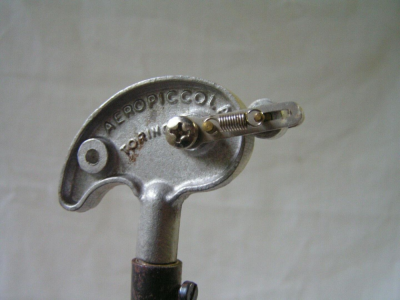
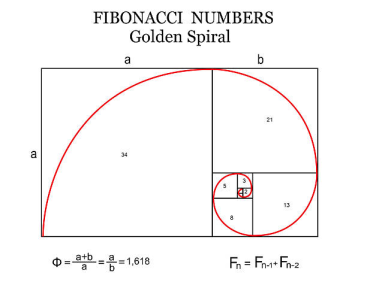
I do note that while this new Pisto soldering iron plank bending head has "sort of" gotten the "Fibonacci Curve" shape correct, they haven't put a spring on the bail to hold the workpiece against the face of the iron, and they have only one hole for the bail axle. The Aeropiccola version has a spring-loaded bail that holds the work piece against the face of the curve and two holes in the head of the tool so that the bail can be attached in two places in order to best hold the workpiece, depending upon the part of the curve you want to use to form the work piece.

The great advantage of the Aeropiccola plank bending iron with its adjustable bail is that you can hold the iron in one hand and bend the wood piece with your other hand grasping one of the "cool" ends of the piece or place the iron in a vise and use both hands to manipulate the work piece from both of its "cool ends." When you put a work piece in a pot of boiling water or "steam" it in a steam box, you end up heating the whole piece and burning your fingers holding it while bending it to shape. (You can even heat wood in a microwave, although it can be unforgiving regarding figuring moisture content and the exact timing and intensity of RF exposure! See: https://www.diva-portal.org/smash/get/diva2:542402/FULLTEXT01.pdf ),

The "steam box" that's posted is a beautiful piece of craftsmanship and I'm sure it will work, but it seems more than I would think necessary for scale modeling purposes. I won't belabor the point which I've addressed several times before, but it's not the moisture that softens the lignin, but the heat. Steam only provides a good heat conductive mechanism (as does the ambient moisture in the wood itself) for the heat to raise the temperature throughout the work piece to about the boiling point of water so it's heated sufficiently to bend properly.

With the relatively minute sizes of modeling wood pieces, the heat easily travels through the work piece and softens it through and through, while in full-size practice, you do need to "cook" the wood for quite some time, the "rule of thumb" being "one hour for each inch of thickness," so a steam box is the best way to do this. For those interested in successfully heat bending wood (the scientific term for it is "wood plasticization,") Chapter 19 on wood bending in the U.S.D.A.'s Wood Handbook will tell you all you need to know and cut through the considerable amount of nonsensical "folk wisdom" about bending wood with heat that seems to circulate on the internet. It's well worth a read if for no other reason than it's one of the rare examples of something useful the government provides for free! :D See: https://www.fpl.fs.usda.gov/documnts/fplgtr/fplgtr190/chapter_19.pdf

Pisto electric plank bending head: See: https://www.amazon.com/Electric-Wooden-Strip-Bending-Models/dp/B0FCCPTJTD/ref=sr_1_1?crid=6WRAC2XC776W&dib=eyJ2IjoiMSJ9.9_-_kEclz69BMKbbJ2p5IhbYygumsGcV10QHXlxxg_Yt4KGowSid-R05unocZGX2y_3DW_dSWlcy8QQL0t5dO4ggi5JlRjVUNTwusnF2fpU66OoZAai0nqKNkxeuElSvk07dlQauqWCjQPU60CNu2jq-JdEctWUS7C8pWnNFHxtDwzB_QdgezymXljnnnfBaniM-0_6HU7ToL2rpWq5gDEKflacTz1jmeg1hTxKLRrSXppjdj4QpBPHqbWjvkw3i1oETHtSeFSZJ2KvtiqI3vvKyDTsX8A2HTLIAZ228Zb8.Egk9atgGcc8yGKPJh1J41lRuqVd5d1A9hebLwceRHb8&dib_tag=se&keywords=Pistro&qid=1768019239&sprefix=pistro,aps,188&sr=8-1&th=1

1768019962818.png

Aeropiccola head with bail in various positions to yield a full range of progressive curvatures from the Fibonacci Curve shape of the head.
1768020080261.png
1768020500905.png

1768020383529.png

1768020650339.png

Fibonacci Curves or "Golden Spirals" explained for those who got better grades in math than I did and for computer nerds who will wonder, "Can I draw these with my CAD program?" (Spoiler: "Unlikely, unless you have one of the most expensive programs available."): https://en.wikipedia.org/wiki/Fibonacci_sequence

1768019962831.png
 
Last edited:
Hello Tobias,

Very nice work on your steam box. I have been thinking about how best to build one myself. I was thinking about what would be best to create steam. I like your idea of using a wallpaper remover. Great idea.

Bill
 
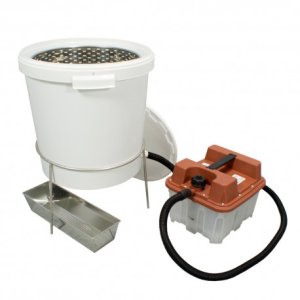
Very interesting Tobias, because in Poland we use such steamers to melt beeswax from beehive frames, so it could have a dual or multi purpose.
I have one, so it's a ready to use product, and i wouldn't even have thought it could be used for wood...
Topiarka-do-wosku-z-wytwornica-pary-Komplet.jpeg
 
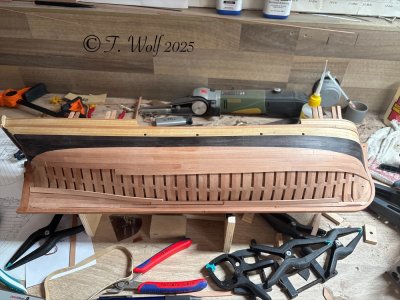
Hello colleagues, it's great that you're engaging with this topic so thoroughly. I also use the bending jig Bob mentioned, even for small parts. The reason I built this box is relatively simple. When planking my models, I sometimes use 7x4mm pearwood and hornbeam strips up to 25cm long. To attach these perfectly to the hull, the wood needs to be very flexible. I can only achieve this by steaming the wooden strips. Furthermore, at the bow and stern, I often have to bend in different directions. The wood also needs to twist, which I can only achieve by making it very pliable.

eZy Watermark_18-05-2025_11-54-15-6610AM.jpeg

Here is an example picture of my Le Rochefort
 
I used to restore wood canvas canoes. Not the strip planked kind but the ones with internal framing, usually associated with the Old Town Canoe Company. These projects almost always require replacement of some frames and planking. These frames and sometimes the planking require steam bending.

After several jury rigged attempts, like Tobias I found a used wallpaper steamer to be ideal for generating steam. Here in the USA Webber (the sprayable gun people) sell these. Festool also offers what appears to be the same unit for boat builders at boatbuilding prices. I would argue that the temperature gage is unnecessary. Water at sea level boils at 212F (100C) period. The unit does not superheat the steam.

I have used mine in a cement floored basement without ill effects from the steam.

Roger
Hi Roger, you're absolutely right that a thermometer isn't necessary. Regarding the temperature, steam can get hotter than 100 degrees Celsius when it's under pressure. The wallpaper stripper box is a closed system and opens an internal valve at around 1.5 bar, which is why the steam gets a bit hotter.


Steam temperature is the temperature of water vapor and depends strongly on pressure: At normal pressure (1 bar), water boils at 100 °C, but under higher pressure (e.g., in a pressure cooker) the temperature rises above 100 °C (e.g., 118 °C), while under lower pressure (e.g., at high altitudes) it decreases. A distinction is made between saturated steam (at boiling point, e.g., 100 °C at 1 bar) and superheated steam, which, through additional heating without a pressure increase, can reach temperatures of 300 to 600 °C and achieves higher efficiency in turbines.
 
Back
Top