
Can anyone tell me if the C-2 fiberglass hull from Loyalhanna Dockyard is the same scale as the Sterling's American Scout kit? Both show the length and beam as 50" x 7". However when I search what scale is the sterling kit I find 1:100. I'm not very well versed on scales so any help would be greatly appreciated.

-

SUBSCRIBE TO SHIPS IN SCALE TODAY!
The beloved Ships in Scale Magazine is back and charting a new course for 2026!
Discover new skills, new techniques, and new inspirations in every issue.
NOTE THAT OUR NEXT ISSUE WILL BE MARCH/APRIL 2026 -

Win a Free Custom Engraved Brass Coin!!!
As a way to introduce our brass coins to the community, we will raffle off a free coin during the month of August. Follow link ABOVE for instructions for entering.
You are using an out of date browser. It may not display this or other websites correctly.
You should upgrade or use an alternative browser.
You should upgrade or use an alternative browser.

@ AndyA I understand the differences : P As most references for a C2 say they were 459' design length and most sources equate design length with LOD, the LOA of the model should be even longer, not 5 inches less. The math simply doesn't work. This description of a model C2 hull is even worse : https://www.hartmanmodelboats.com/HMBC2FREIGHTER.htm It gives the same dimensions for the model but says it's 1/96th scale! Even if it was the 435' "designed" length C2, (Edit: A C2-S-AJ5 is not) that would still be 4" too short as specified on that page.
Last edited:
- Joined
- Jun 29, 2024
- Messages
- 1,812
- Points
- 488

Basic scale info: 1:96 means that the model and all of its parts is 1/96 Times the real thing. Likewise 1:100 is 1/100.
Therefore, a 1:96 scale model is larger than a 1:100 scale model by a factor of 100/96=1.0417.
Andy is 100 percent correct, length can vary depending on one’s reason for measurement. Particularly, the lengths published in various shipping registers may not correspond to the overall length of a ship model hull.
Roger
Therefore, a 1:96 scale model is larger than a 1:100 scale model by a factor of 100/96=1.0417.
Andy is 100 percent correct, length can vary depending on one’s reason for measurement. Particularly, the lengths published in various shipping registers may not correspond to the overall length of a ship model hull.
Roger

- Joined
- Jan 21, 2023
- Messages
- 397
- Points
- 138

there are different versions of the C2 such as Arcturus Class - C2-F Type, Ormsby Class - C2-S-B1 Type, Sumter Class - C2-S-E1 Type & Tolland Class Attack Cargo Ship - C2-S-AJ3 Type which means the overall lengths might different. if 459' long with the model at 50" long then the scale is 1/110 scale not 1/96 scale.
Last edited:
- Joined
- Jan 21, 2023
- Messages
- 397
- Points
- 138
the 1/429 scale was the original scale as we think it was a 1/426 scale typo started in the 1970's. take a look at this link.
A tad off topic but it sounds like we have some folks with American Scout knowledge. I am restoring a C2 that was donated to the Southeastern Railway Museum in Duluth GA. We are the transportation museum for the State of Georgia so we have more than just railroad stuff. Would these ships have served Georgia ports? Were thay all American Scouts or many other names? If other names, is there a way to find out what might have come to GA ports? Any information would be helpful. Thanks
- Joined
- Jan 21, 2023
- Messages
- 397
- Points
- 138
is American Scout not American Scouts & is the name for 1 of the C2 class ships. have a look at this link. https://www.google.com/search?hl=en.......0...1.1.34.heirloom-hp..4.0.0.2Bg7iIC9N34
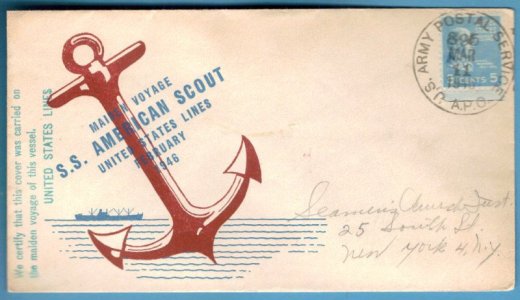
I have a Sterling American Scout waiting for restoration. The model is in 1/96 scale, as for their USS Missouri, because this is the scale of the avalaible plans of true ships. As far as I remember fiberglass hull was in "Sterling Scale". Consider that were built several and different lenght hull of C-2 ships. American Scout was an C-2 S AJ5 Hull. dimension are in meter
Sterling plan is a little bit simplified to facilitate the building for stand off scale modeller. American Scout was built in 1946, scrapped in 1973. Here a little story:
From the "Letter Rip" column, May 1974 Flying Models Magazine:
Fate of "American Scout"
We recently received a very interesting letter from Ed Manulkin of Sterling Models that included the following correspondence that he received from Captain E.P. Shepherd of Peabody, Massachusetts, regarding the Sterling scale R/C model freighter American Scout.
"Since you manufacture the model of the American Scout, I thought you might be interested in what finally happened to the ship. In 1969 she was sold to Amercargo, Inc., along with twelve other former U.S. Lines C2's. She retained her same colors except that the blue part of her stack was painted red. In 1970 I became Chief Officer of the American Scout and stayed on her until she made her last voyage under the American flag. During this period she was chartered to the 'Military Sea Lift Command' carrying ammo to Vietnam. In early 1971 she was placed under the Panamanian flag by Amercargo and renamed Inter-Scout, since she could no longer compete profitably under the U.S. flag. They manned her with a Spanish crew except for one American engineer as an adviser since the Spanish crew was inexperienced with steam turbine ships.
"The next time I ran into her I was Captain of the S.S. Intercloud, another ship of the same company. The Scout had broken down about 300-miles from Yokohama while she was carrying a cargo of sulfur to that port. At the time I was proceeding to Yokohama for bunkers before going on to Taiwan. We connected a tow line and hauled her to Yokohama.
"After a couple more voyages, she obtained a charter as a lighter in Chittagong, Pakistan. She was being employed to offload grain from large tankers into the port since the tankers were loaded too deep to enter the harbor. While alongside one of the tankers she suddenly started listing. I don't actually know the cause of this, but it may have been due to rapid loading and putting too much grain on one side. When she had taken a 30-degree list, the crew abandoned her and went aboard the tanker. After a while, the Captain and some of the crew returned aboard her and attempted to beach her on a nearby sand bar. However, when she reached the sand bar, her list started increasing until she rolled right over on her side. No one was hurt and all hands got off all right. The ship now filled with mud and was considered a total loss. No plans were made for salvaging her. Amercargo is now out of business as they found it unprofitable to operate ships this old.
"As one of many people who have built the American Scout, I thought you might be interested in the last chapter of her history." —Capt. Edward P. Shepherd
regards Pit
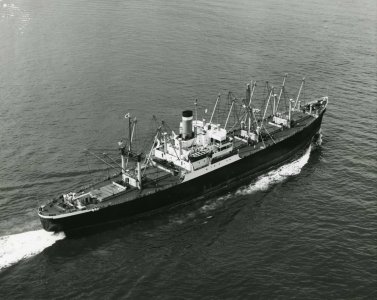
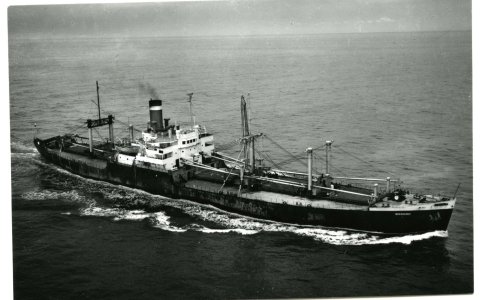
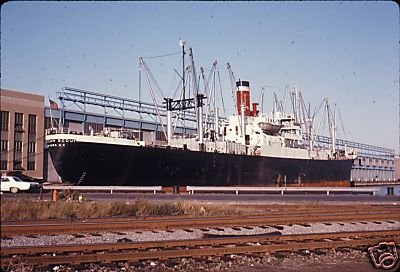
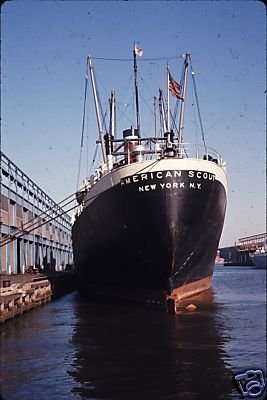
Tons: | 8228 |
DWT: | 10400 |
Length overall: | 139.9 |
LPP: | 132.6 |
Beam: | 19.2 |
From the "Letter Rip" column, May 1974 Flying Models Magazine:
Fate of "American Scout"
We recently received a very interesting letter from Ed Manulkin of Sterling Models that included the following correspondence that he received from Captain E.P. Shepherd of Peabody, Massachusetts, regarding the Sterling scale R/C model freighter American Scout.
"Since you manufacture the model of the American Scout, I thought you might be interested in what finally happened to the ship. In 1969 she was sold to Amercargo, Inc., along with twelve other former U.S. Lines C2's. She retained her same colors except that the blue part of her stack was painted red. In 1970 I became Chief Officer of the American Scout and stayed on her until she made her last voyage under the American flag. During this period she was chartered to the 'Military Sea Lift Command' carrying ammo to Vietnam. In early 1971 she was placed under the Panamanian flag by Amercargo and renamed Inter-Scout, since she could no longer compete profitably under the U.S. flag. They manned her with a Spanish crew except for one American engineer as an adviser since the Spanish crew was inexperienced with steam turbine ships.
"The next time I ran into her I was Captain of the S.S. Intercloud, another ship of the same company. The Scout had broken down about 300-miles from Yokohama while she was carrying a cargo of sulfur to that port. At the time I was proceeding to Yokohama for bunkers before going on to Taiwan. We connected a tow line and hauled her to Yokohama.
"After a couple more voyages, she obtained a charter as a lighter in Chittagong, Pakistan. She was being employed to offload grain from large tankers into the port since the tankers were loaded too deep to enter the harbor. While alongside one of the tankers she suddenly started listing. I don't actually know the cause of this, but it may have been due to rapid loading and putting too much grain on one side. When she had taken a 30-degree list, the crew abandoned her and went aboard the tanker. After a while, the Captain and some of the crew returned aboard her and attempted to beach her on a nearby sand bar. However, when she reached the sand bar, her list started increasing until she rolled right over on her side. No one was hurt and all hands got off all right. The ship now filled with mud and was considered a total loss. No plans were made for salvaging her. Amercargo is now out of business as they found it unprofitable to operate ships this old.
"As one of many people who have built the American Scout, I thought you might be interested in the last chapter of her history." —Capt. Edward P. Shepherd
regards Pit
Last edited: