


SZKUTA WISLANA
También conocidas como la "Barcaza del Vístula", eran grandes botes de vela y remos. Desde el siglo XIII hasta el XVIII, se utilizaron para transportar diversas cargas y granos a lo largo del Vístula hasta Gdansk. El grano simplemente se vertía en grandes cajas sujetas a la cubierta, y la barcaza aprovechaba el viento y la corriente del río. Los párrafos entre comillas corresponden al artículo "Szkuta Wislana - Marek Zuzanski – Modelarz 1985-12"
1 Historia
"La barcaza", según afirma la Enciclopedia PWN, "es el velero polaco más antiguo: sin cubierta, con vela y remo, con proa muy alta y popa plana. Cabe añadir que es el barco polaco de vela mejor descrito y documentado. Imágenes de la barcaza pueden encontrarse en numerosos grabados y pinturas que representan puertos polacos en los siglos XVII y XVIII. Las barcazas más bellas, representadas hasta el más mínimo detalle, pueden verse en el grabado de Schuster de 1770 y en la pintura de Canaleto titulada "Vista de Varsovia desde el lado de Praga", también de 1770. Sin embargo, el documento principal que nos permite reconstruir la forma, construcción y equipamiento de los barcos fluviales polacos es el informe de 1796 de Losy von Losennau. Es un inventario de embarcaciones que contiene dibujos. técnicos, listas tabulares de dimensiones de unidades, materiales usados para su construcción y equipos.
Los Szkuta navegaron por el Vístula hasta finales del siglo XVIII. Transportaban diversas mercancías: barriles, cajas y madera, y tras montar cajas especiales, también transportaban carga a granel: grano o mineral de cobre. Las estadísticas muestran que el 72 por ciento de los barcos que navegaron hacia Gdańsk entre 1766 y 1770 eran barcazas. En la primera mitad del siglo XIX, la barcaza fue destronada por un nuevo tipo de barco: el Statku, que era más maniobrable y económico.
Tras la fecha de ese artículo, se encontró el pecio de un Szkuta cerca de Czersk, en Mazovia, y gracias a las excavaciones de 2009, sabemos mucho sobre su construcción. Consistía en una gran barcaza bien conservada del siglo XV. El casco medía unos 30 m de largo, 7,4 m de ancho, 1,45 m de profundidad y tenía un mástil de 21 m. Estaba hecha de madera de roble, con fondo plano y sin quilla. Las bandas de roble tenían entre 7 cm de grosor y 34 a 48 cm de ancho, estaban atadas y selladas con musgo y tiras de pelo de animal mezcladas con alquitrán. El análisis dendrocronológico muestra que el roble utilizado para la construcción de este barco fue abatido en la segunda mitad del siglo XV y que la barcaza de Czersk navegó por el Vístula durante al menos 60 años. Muy similar al barco que se muestra aquí. Cabe mencionar que, además del patrón y el timonel, este barco requería hasta 16 tripulantes para remar o tirar río arriba por caminos, a veces asistidos por bueyes o medios similares.
2. Referencias:
https://zagle.se.pl/zeglarstwo/jachty-niezwykle-wislana-barka-aa-zeM6-owkc-1brX.html
https://pl.wikipedia.org/wiki/Szkuta
https://pl.wikipedia.org/wiki/Szkuta_czerska
https://modelshipworld.com/topic/31...seahorse-finished-1100-card-xv-xviii-century/
http://www.wiazar.pl/szkuta-wanda
https://encyklopedia.pwn.pl/szukaj/szkuta.html
3. Datos generales
SZKUTA WISLANA
País: Río Vístula, Polonia
Tipo: Barcaza
Función: Transporte
Longitud: 38,50 m (385 mm)
Manga: 9,90 m (99 mm)
Calado: 1,55 m (15 mm)
Longitud total: 48,70 m (487 mm)
Altura total: 21,60 m (216 mm)
Escala: 1:100
4. Preparación del modelo
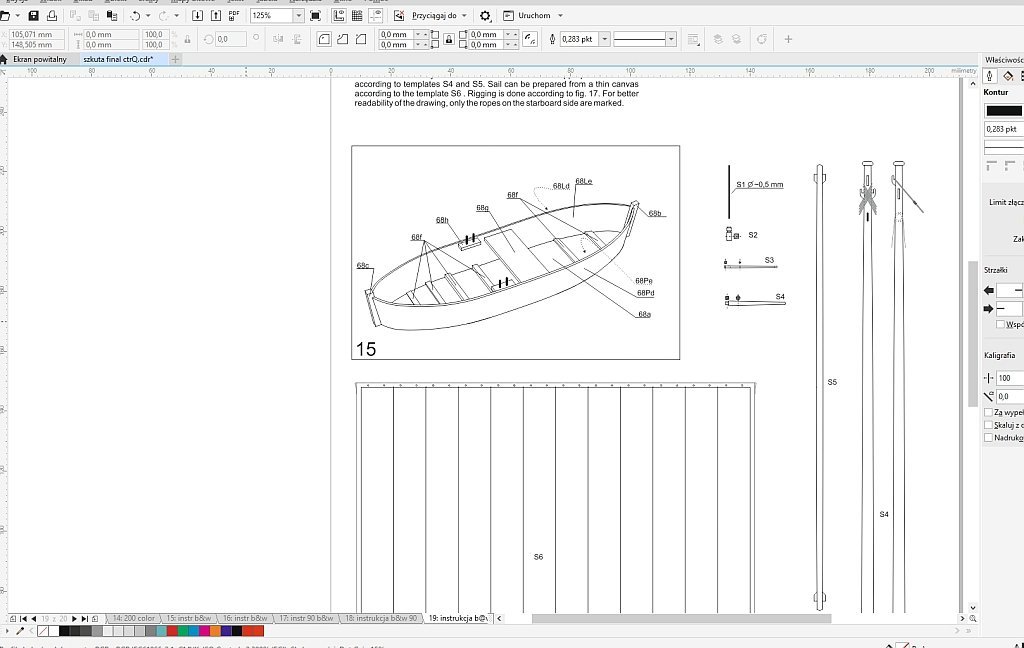
Tomé la idea e información de la revista Modelarz de 1985-1989, pero a diferencia de otros modelos elaborados, no se hizo ningún plano de marco ni quilla falsa. En este caso, imprimí con láser la parte inferior del recipiente (que es plana) así como los planos a escala 1/100 del plano y la elevación. Utilicé toda la información disponible, que incluyo en las referencias, donde hay fotos del modelo en el Museo Marítimo Polaco.
En el fondo plano, empecé a colocar bastidores horizontales de 2x3 mm y luego los refuerzos del casco, que tenían una pendiente de 53 a 60 grados. Como las bandas tuvieron que instalarse más tarde, todos estos marcos se reforzaron internamente para mantener la forma deseada tanto como fuera posible. La quilla de 4x5 mm estaba colocada en el centro, pero como no sería visible en la popa, la extendí hasta el espejo de popa. Era importante señalar que, aunque el fondo es mayormente plano, aproximadamente 50 mm antes de la proa y la popa, el nivel inferior sube unos 6 mm. Esto se logró con refuerzos temporales.
Comenzamos con los paneles longitudinales y laterales (chapados para simular tablones verticales) de la cabina de popa; Luego se construyó el tejado colocando tablones superpuestos de 0,5 x 5 mm. A continuación, se construyó la pasarela del timonel, que abarcaba todo el ancho del barco, y se añadió una tabla en la parte inferior para facilitar el acceso de la tripulación.
El mástil de 200 mm (20 metros) descansa sobre la manga en el centro; su posición es vertical. Hay un refuerzo compuesto por dos elementos curvos que van de proa a proa y abarcan el mástil.
Se preparó un recinto entre el mástil y la proa; No he podido determinar su propósito, pero es posible para la tripulación. El timón es muy especial. Tiene algo más de una cuarta parte de la eslora del barco, mide 9 metros, y es manejado por el timonel usando un timón muy largo, de más de 13 metros de longitud.
Aparte del almacenamiento de materiales, me enfrento al dilema de (a) dejar el barco vacío, o (b) llenarlo con carga a granel, barriles, paquetes, etc.
Otro problema que me preocupa es que he usado muchos cianoacrilatos y se está filtrando en varias zonas. Así que, si aplico un tinte, las manchas se notarán y no quedará bien.
Terminé de atar la vela a la, el timón de 9 metros y su timón de 13 metros, los remos, el ancla, un tanque de carga a granel (simulé la carga allí con su lona protectora), añadí un barril que tenía por ahí y completé los bitts y el cabrestante de proa.
Y sí, después de teñir la madera con un tono miel, todavía tenía varias manchas con manchas, pero un poco de pintura suaviza esos errores.
Empecé a montar los obenques, luego la vela, el bosque y finalmente las maniobras de la vela. Cruzé una cuerda para que el timón no se moviera, y creo que eso es todo.


También conocidas como la "Barcaza del Vístula", eran grandes botes de vela y remos. Desde el siglo XIII hasta el XVIII, se utilizaron para transportar diversas cargas y granos a lo largo del Vístula hasta Gdansk. El grano simplemente se vertía en grandes cajas sujetas a la cubierta, y la barcaza aprovechaba el viento y la corriente del río. Los párrafos entre comillas corresponden al artículo "Szkuta Wislana - Marek Zuzanski – Modelarz 1985-12"
1 Historia
"La barcaza", según afirma la Enciclopedia PWN, "es el velero polaco más antiguo: sin cubierta, con vela y remo, con proa muy alta y popa plana. Cabe añadir que es el barco polaco de vela mejor descrito y documentado. Imágenes de la barcaza pueden encontrarse en numerosos grabados y pinturas que representan puertos polacos en los siglos XVII y XVIII. Las barcazas más bellas, representadas hasta el más mínimo detalle, pueden verse en el grabado de Schuster de 1770 y en la pintura de Canaleto titulada "Vista de Varsovia desde el lado de Praga", también de 1770. Sin embargo, el documento principal que nos permite reconstruir la forma, construcción y equipamiento de los barcos fluviales polacos es el informe de 1796 de Losy von Losennau. Es un inventario de embarcaciones que contiene dibujos. técnicos, listas tabulares de dimensiones de unidades, materiales usados para su construcción y equipos.
Los Szkuta navegaron por el Vístula hasta finales del siglo XVIII. Transportaban diversas mercancías: barriles, cajas y madera, y tras montar cajas especiales, también transportaban carga a granel: grano o mineral de cobre. Las estadísticas muestran que el 72 por ciento de los barcos que navegaron hacia Gdańsk entre 1766 y 1770 eran barcazas. En la primera mitad del siglo XIX, la barcaza fue destronada por un nuevo tipo de barco: el Statku, que era más maniobrable y económico.
Tras la fecha de ese artículo, se encontró el pecio de un Szkuta cerca de Czersk, en Mazovia, y gracias a las excavaciones de 2009, sabemos mucho sobre su construcción. Consistía en una gran barcaza bien conservada del siglo XV. El casco medía unos 30 m de largo, 7,4 m de ancho, 1,45 m de profundidad y tenía un mástil de 21 m. Estaba hecha de madera de roble, con fondo plano y sin quilla. Las bandas de roble tenían entre 7 cm de grosor y 34 a 48 cm de ancho, estaban atadas y selladas con musgo y tiras de pelo de animal mezcladas con alquitrán. El análisis dendrocronológico muestra que el roble utilizado para la construcción de este barco fue abatido en la segunda mitad del siglo XV y que la barcaza de Czersk navegó por el Vístula durante al menos 60 años. Muy similar al barco que se muestra aquí. Cabe mencionar que, además del patrón y el timonel, este barco requería hasta 16 tripulantes para remar o tirar río arriba por caminos, a veces asistidos por bueyes o medios similares.
2. Referencias:
https://zagle.se.pl/zeglarstwo/jachty-niezwykle-wislana-barka-aa-zeM6-owkc-1brX.html
https://pl.wikipedia.org/wiki/Szkuta
https://pl.wikipedia.org/wiki/Szkuta_czerska
https://modelshipworld.com/topic/31...seahorse-finished-1100-card-xv-xviii-century/
http://www.wiazar.pl/szkuta-wanda
3. Datos generales
SZKUTA WISLANA
País: Río Vístula, Polonia
Tipo: Barcaza
Función: Transporte
Longitud: 38,50 m (385 mm)
Manga: 9,90 m (99 mm)
Calado: 1,55 m (15 mm)
Longitud total: 48,70 m (487 mm)
Altura total: 21,60 m (216 mm)
Escala: 1:100
4. Preparación del modelo
Tomé la idea e información de la revista Modelarz de 1985-1989, pero a diferencia de otros modelos elaborados, no se hizo ningún plano de marco ni quilla falsa. En este caso, imprimí con láser la parte inferior del recipiente (que es plana) así como los planos a escala 1/100 del plano y la elevación. Utilicé toda la información disponible, que incluyo en las referencias, donde hay fotos del modelo en el Museo Marítimo Polaco.
En el fondo plano, empecé a colocar bastidores horizontales de 2x3 mm y luego los refuerzos del casco, que tenían una pendiente de 53 a 60 grados. Como las bandas tuvieron que instalarse más tarde, todos estos marcos se reforzaron internamente para mantener la forma deseada tanto como fuera posible. La quilla de 4x5 mm estaba colocada en el centro, pero como no sería visible en la popa, la extendí hasta el espejo de popa. Era importante señalar que, aunque el fondo es mayormente plano, aproximadamente 50 mm antes de la proa y la popa, el nivel inferior sube unos 6 mm. Esto se logró con refuerzos temporales.
Comenzamos con los paneles longitudinales y laterales (chapados para simular tablones verticales) de la cabina de popa; Luego se construyó el tejado colocando tablones superpuestos de 0,5 x 5 mm. A continuación, se construyó la pasarela del timonel, que abarcaba todo el ancho del barco, y se añadió una tabla en la parte inferior para facilitar el acceso de la tripulación.
El mástil de 200 mm (20 metros) descansa sobre la manga en el centro; su posición es vertical. Hay un refuerzo compuesto por dos elementos curvos que van de proa a proa y abarcan el mástil.
Se preparó un recinto entre el mástil y la proa; No he podido determinar su propósito, pero es posible para la tripulación. El timón es muy especial. Tiene algo más de una cuarta parte de la eslora del barco, mide 9 metros, y es manejado por el timonel usando un timón muy largo, de más de 13 metros de longitud.
Aparte del almacenamiento de materiales, me enfrento al dilema de (a) dejar el barco vacío, o (b) llenarlo con carga a granel, barriles, paquetes, etc.
Otro problema que me preocupa es que he usado muchos cianoacrilatos y se está filtrando en varias zonas. Así que, si aplico un tinte, las manchas se notarán y no quedará bien.
Terminé de atar la vela a la, el timón de 9 metros y su timón de 13 metros, los remos, el ancla, un tanque de carga a granel (simulé la carga allí con su lona protectora), añadí un barril que tenía por ahí y completé los bitts y el cabrestante de proa.
Y sí, después de teñir la madera con un tono miel, todavía tenía varias manchas con manchas, pero un poco de pintura suaviza esos errores.
Empecé a montar los obenques, luego la vela, el bosque y finalmente las maniobras de la vela. Cruzé una cuerda para que el timón no se moviera, y creo que eso es todo.
Last edited: