

• SUBSCRIBE TO SHIPS IN SCALE TODAY!

    The beloved Ships in Scale Magazine is back and charting a new course for 2026!
    Discover new skills, new techniques, and new inspirations in every issue.

    NOTE THAT OUR NEXT ISSUE WILL BE MARCH/APRIL 2026
  • Win a Free Custom Engraved Brass Coin!!!
    As a way to introduce our brass coins to the community, we will raffle off a free coin during the month of August. Follow link ABOVE for instructions for entering.

The "Shadow" 1871 Racing Yacht designed by Nathanael G. Herreschof - Half-Hull Presentation Model Build Log

Joined
Dec 26, 2025
Messages
345
Points
128

Location
Bryn Mawr PA US
1. Build Log: The "Shadow" 1871 Racing Yacht by Nathanael G. Herreschoff - Wooden Half-Hull Presentation model

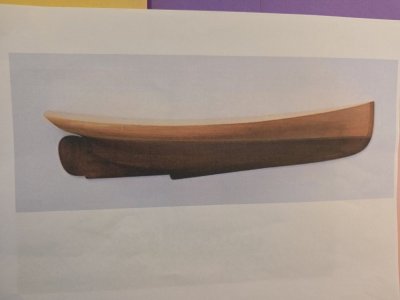
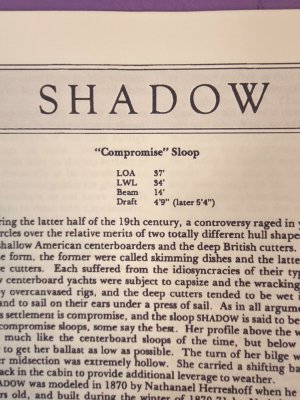
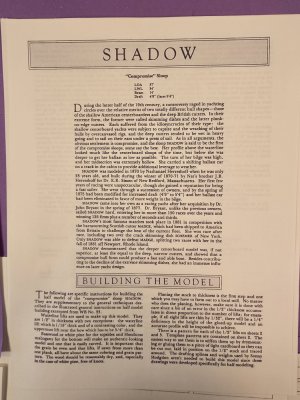
I'm starting this new project to build my first half-hull presentation model from scratch. I chose the plans from several yacht designs offered by The Wooden Boat Store, and the racing sloop "Shadow" looked a bit quirky compared to some other classic 1800's racing yachts.
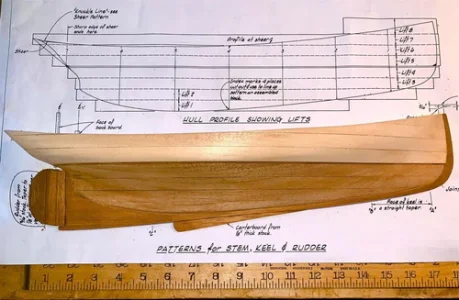
Shadow-by-Andy_Abrahamson_500x (1).webp

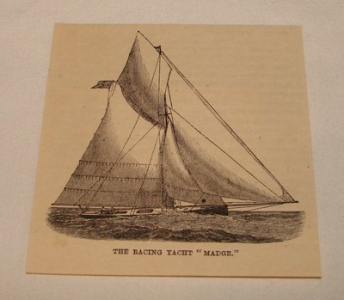
I soon learned that the "Shadow" has a fascinating backstory. Most people know of Nat Herreschoff for his mature yacht designs in the 1890's for America's Cup winners Vigilant, Reliance, Columbia I & II, and Resolute. Legend has it that he drew the plans for the "Shadow" when he was a 23-year old apprentice in a machine shop. He presented the plans to his brother J.B. Herreschoff, who had recently received an order for a custom yacht. Around 8 years later, under new ownership, the "Shadow" went on eventually to become a very successful racing yacht in the Newport, Rhode Island and New York City yacht clubs. Overall, the "Shadow" won over 150 out of 180 yacht races between the 1880's and 1900's. She beat the British champion yacht Madge in one of two time-trials in 1881. The design by Herreschoff includes a skeg-like center board keel that was an innovation for its time, which would then come to dominate yacht design until the early 1900's.
20260627_091643.jpg

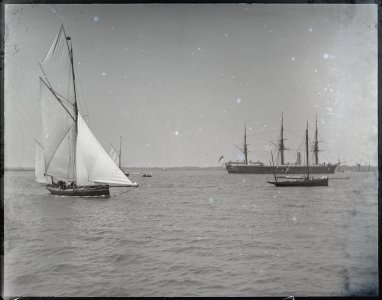
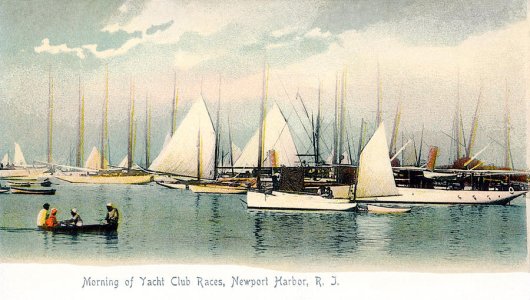
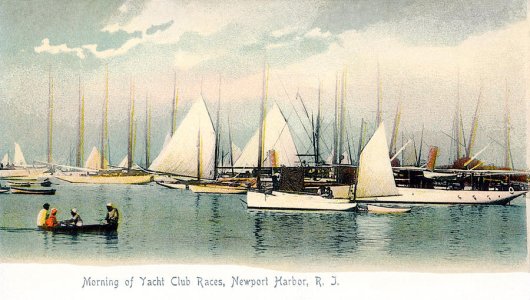
Here's a picture of Newport RI with a Shadow-like yacht (probably a 25-footer) from the 1890's:
1910-yachts-in-newport-harbor-historic-image.jpg

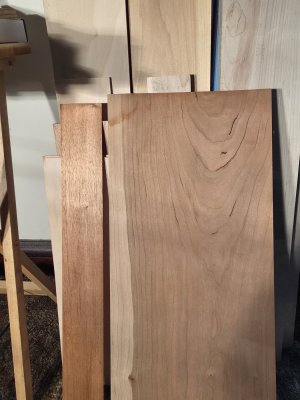
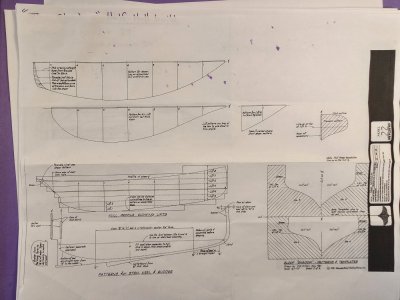
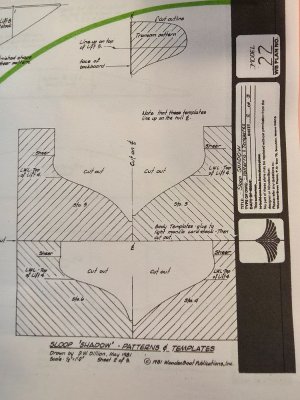
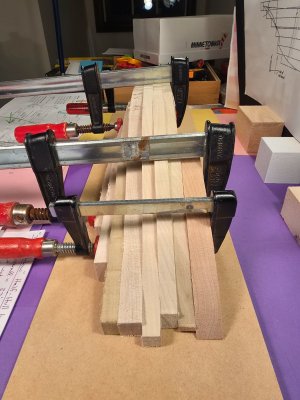
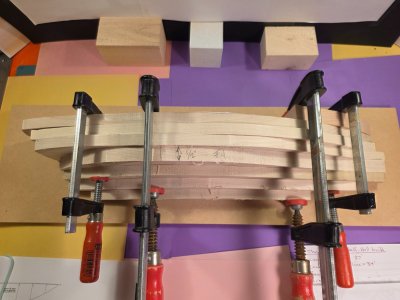
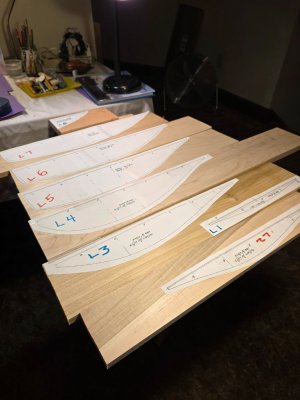
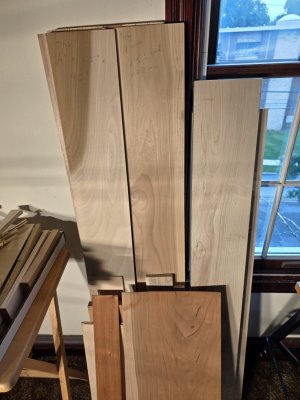
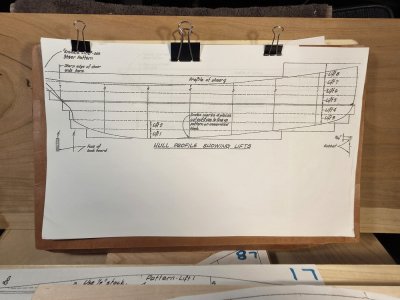
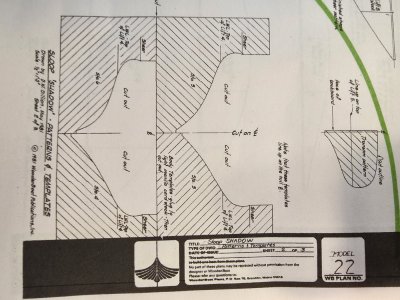
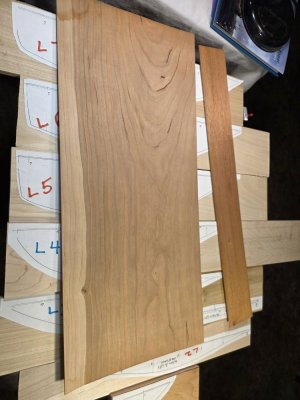
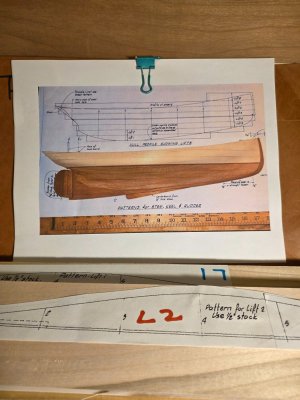
I have never built a wooden half-hull model and, after seeing some great builds of the NRG half-hull group build (esp. one built by SoS member JacquesCousteau). I decided to try. Here are some of my pre-build preparation, including selecting wood stock, enlarging drawings, preparing hull templates, and sourcing clamps (yes, a LOT of clamps).
20260627_091016.jpg

20260625_230624.jpg

20260627_090904.jpg


20260627_091415.jpg

20260627_091712.jpg

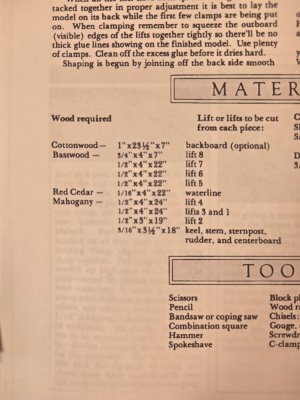
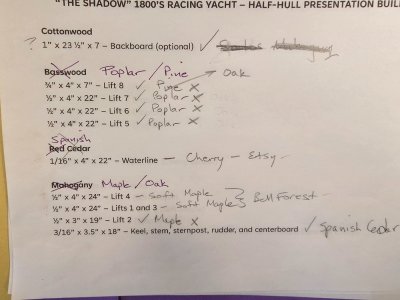
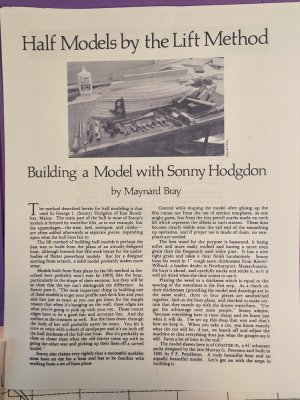
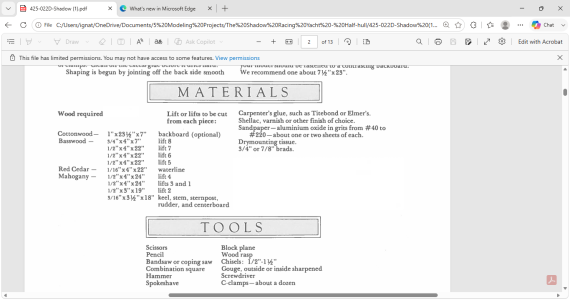
The instructions that came with The Wooden Boat Store drawings were somewhat basic, so I'm going to be following half-hull build logs on SoS to learn how to build this presentation model. Selecting the different wood stock -- poplar, soft maple, pine, cherry veneer and African mahogany -- was fun and I used my new wood veneer sample kit to mix and match different wood species for this project.
20260627_091538.jpg

Screenshot 2026-06-07 144349.png


I think this is going to be a fun project and I'm looking forward to my first half-hull presentation model!

20260627_091056.jpg

20260625_225119.jpg
 
Last edited:
2. Build Log: The "Shadow" 1871 Racing Yacht by Nathanael G. Herreschoff - Wooden Half-Hull Presentation model

Here's the story of the "Shadow"

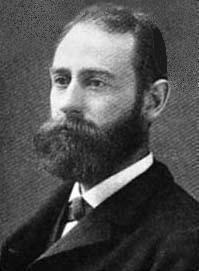
Shadow was the first sailing yacht designed by Nathanael Greene Herreshoff, conceived not at the Bristol, Rhode Island boatyard for which the Herreshoff name later became famous, but at his day job. In November 1870, while employed as a young engineer at the Corliss Steam Engine Company in Providence, Herreshoff made a study model for the boat in the company's pattern shop. His blind older brother, John Brown Herreshoff, who already ran a small boatbuilding business in Bristol, had received an order for a yacht of similar size and, with both John and their father approving of Nathanael's model, decided to build from it. The commissioning client was Dr. Edward R. Sisson, a New Bedford yachtsman. The relationship between designer and client did not start smoothly: when the yacht was finished, Sisson initially refused to accept her, objecting that the builders had departed so far from conventional practice that he felt he was "experimenting at his expense." The dispute was eventually resolved and Sisson took delivery as contracted, naming the boat Shadow.

1782574985453.png

Nathanael Greene Hereschoff

Structurally, Shadow broke sharply from the centerboard sloops of her day. Herreshoff described her as roughly 36 feet overall, 33 feet 6 inches on the waterline, 14 feet 3 inches in beam, and about 5 feet 6 inches deep, with hollow sections running nearly her full length and a bilge sitting almost entirely above the waterline. She is generally credited as one of the first American yachts built with a hollow floor, a feature that gave her an unusually slack, U-shaped midsection rather than the flat, beamy "skimming dish" hull then in fashion. Her centerboard measured 11 feet 6 inches, and she carried a sail plan totaling roughly 1,336 square feet across mainsail, jib, and club topsail. That unconventional hull form proved especially capable in heavy weather, and it set the template Herreshoff would return to repeatedly in his subsequent designs.

20260627_113446.jpg

Shadow passed through a succession of owners over her racing life, each adding to her reputation. After Sisson's relatively quiet first season, the yacht was sold to C.J. Randall of New Bedford, a member of the Eastern Yacht Club, who raced her in club regattas before she went to Casper Crowninshield, also of the Eastern Yacht Club, who took first prize in club regattas in both years of his ownership. In 1875 she passed to Tucker Daland of Boston, who raced her successfully, most notably in a 25-boat regatta at the Isles of Shoals. In 1874 Dr. John Bryant of Boston purchased Shadow and retained her for the remainder of her competitive career, sailing her with Aubrey Crocker of Cohasset as skipper and a picked amateur crew to what was reported as between 130 and 140 first-place finishes. Her single best-known result came in an international match: in 1882 she became the first American yacht to take a race from the English cutter Madge, a boat that had already defeated the fast American centerboarders Schemer and Wave. Shadow won the first race of the series decisively; Madge took the second after a wind shift, and her owner declined a deciding third race — a result made more notable by the fact that Shadow was five feet shorter on the waterline than Madge, a disadvantage now recognized as significant.

1782575470342.png
Beyond her racing record, Shadow's career was marked by a public dispute over authorship. A New Bedford newspaper article credited Dr. Sisson, rather than Herreshoff, with originating the boat's lines, prompting Herreshoff to write a rebuttal to the New Bedford Standard insisting that he had modeled "every particular" of the boat and had been developing her distinctive lines in his own mind for more than a year before he ever knew Sisson existed. The episode underscores how unusual and contested Shadow's hull form was for her era, and how closely Herreshoff guarded credit for the design even early in his career, decades before the America's Cup successes that made his name famous.

1782575587795.png
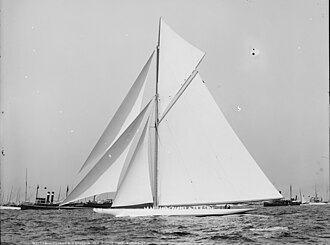
The Reliance by N.G. Herreschoff

By the standards of the day, Shadow enjoyed an exceptionally long competitive life: contemporary accounts from 1887 — sixteen to seventeen years after her launch — noted that she had "fully proved her superiority to all the centerboard boats of her class" and remained in racing even after the rest of the American centerboard sloop fleet had been retired in favor of more modern designs.

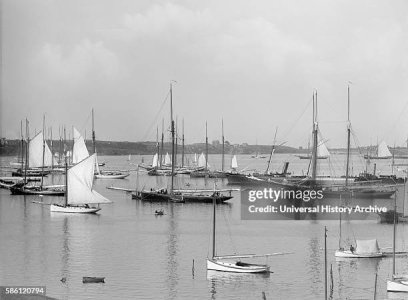
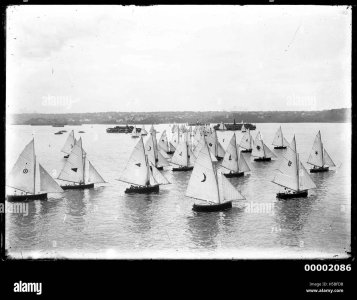
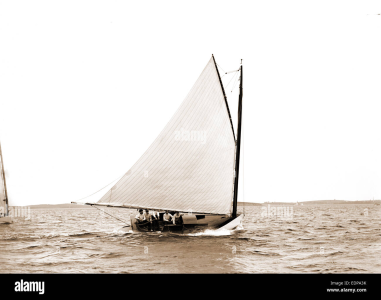
Some yacht pics with hulls inspired by the "Shadow:"


n19195.jpg

gettyimages-586120794-612x612.jpg

18-footers-sailing-on-sydney-harbour-H5BFDB.jpg

1910-yachts-in-newport-harbor-historic-image.jpg

1782575399168.png
 
3. Build Log: The "Shadow" 1871 Racing Yacht by Nathanael G. Herreschoff - Wooden Half-Hull Presentation model

First few days work on the Shadow.

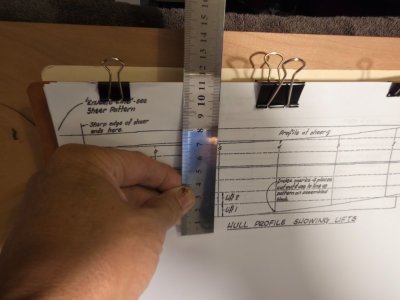
Recopying plans to 1"/.5' scale. For first timers at half-hull builds it was recommended to do a model that is 1:1 dimensional with the plans. So I blew up the plans from about 8+ inches to 18 inches from stem to stern. It will be a big model, but my plan will be to learn how to use the plane (better) and the spokeshave (first-time), and will mostly be removing wood from here on in.

Purchasing wood stock from Bell Forest (soft maple & pine), Etsy (cherry veneer for waterline lift), and the Lumberyard (oak for backboard & Spanish cedar for keel, rudder and centerboard).

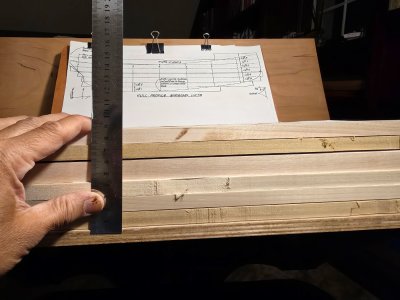
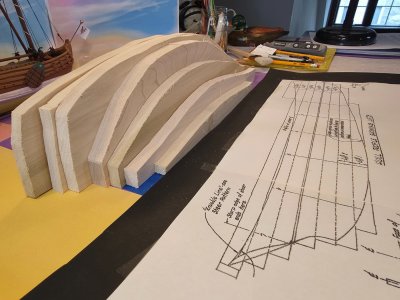
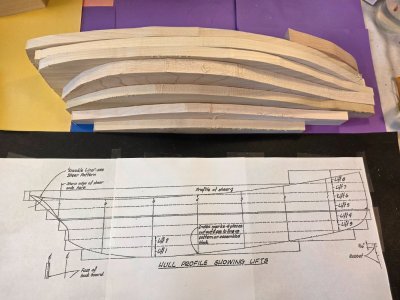
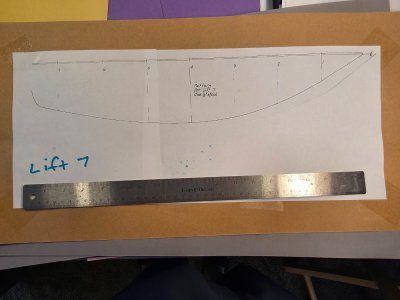
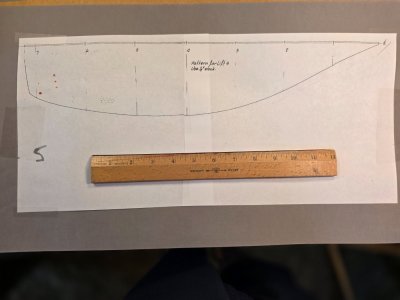
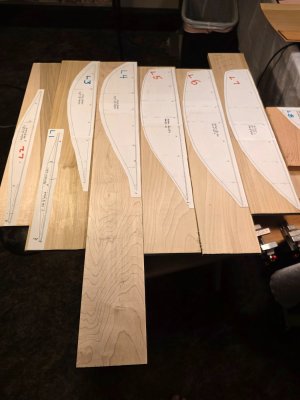
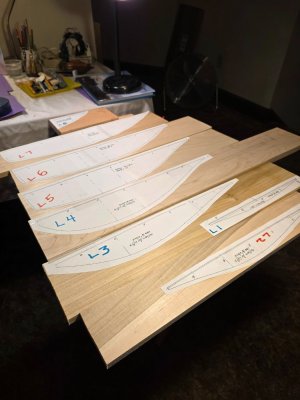
Rough cutting 8 lifts according to lift templates. I'm leaving between 3/8" and 5/8" of room around each template for planing and shaving.

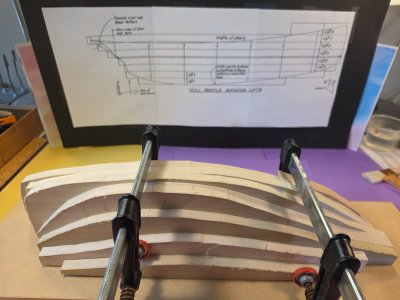
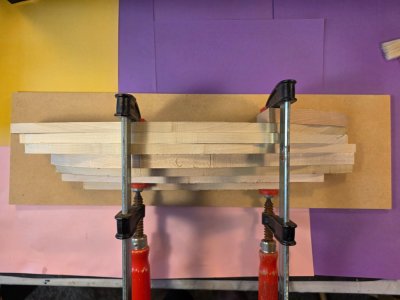
Instructions say to leave extra space at the bow and stern to allow for clamping. I will need at least 6 more 2-foot clamps.

There is an obvious mismatch at Lift 4. This was the last lift I needed to cut and I discovered that the only plank I had left was 3/4" inch thick instead 1/2" inch thick. I will either plane that lift down to 1/2" or just pick up another plank of maple at the Home Depot.

Forgot that I need to source 3/4 and 1/2 inch brads for temporary nailing of the lifts during the fairing process. Now I really need to go the Home Depot!


20260627_091245.jpg

20260627_091057.jpg

20260625_231142.jpg

20260625_231207.jpg

20260626_161804.jpg

20260626_161812.jpg

20260626_162625.jpg

20260626_162648.jpg

20260626_233713.jpg

20260627_113831.jpg

20260627_113807.jpg

20260627_113617.jpg

20260627_091638.jpg

20260626_233659.jpg

20260625_225319.jpg

20260625_225333.jpg

20260625_225319.jpg
 
Last edited:
4. Build Log: The "Shadow" 1871 Racing Yacht by Nathanael G. Herreschoff - Wooden Half-Hull Presentation model

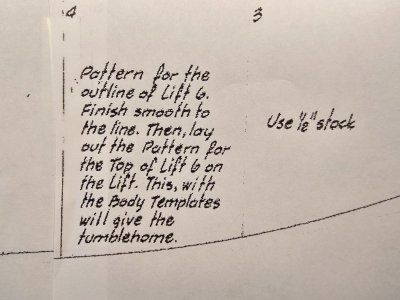
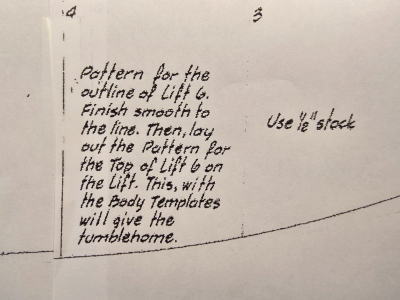
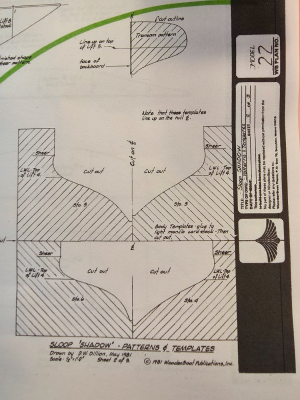
It looks like there will be some “tumblehome” between the top sheer line (above Lift 7) and the next 3 lifts, Lift 6, Lift 5 and Lift 4. That means that the area between the top sheer line and next three lifts (Lift 8 is not really a structural lift) bulge out slightly before the hull tapers sharply towards the keel. You can’t really make out from the side views how the tumblehome sits, but I will reference the sheer plan and body plan drawings to get a sense of how severe the outward bulge should be.


1782581608605.png

1782581727304.png

20260625_230346.jpg
 
Last edited:
Back
Top