

• Win a Free Custom Engraved Brass Coin!!!
    As a way to introduce our brass coins to the community, we will raffle off a free coin during the month of August. Follow link ABOVE for instructions for entering.

The two-masted caravel around 1450

Joined
May 13, 2019
Messages
72
Points
113

One of the most important moments in the history of mankind was the age of European expansion. It refers in particular to the African voyages of Henry the Navigator and BartolomeuDias, as well as the overseas voyages of Christopher Columbus, Ferdinand Magellan, Vasco da Gama. Which in a relatively short time are unusually expanded the size of the world known to man and discovered new continents, seas and oceans. The great role of these great geographical discoveries plays the development in shipbuilding and shipping. Fast and reliable ships with high seaworthiness were needed for the voyages to faraway places. That such a ship was a caravel. The origin of the term caravel comes from the French word caravelle, which in turn refers to the Portuguese word caravela or carav(o) à vela (roughly: small boat under sail/sailboat). The origin of the term can be traced to the late Latin carabus or the Greek karabos- small, leather-covered, woven boat. In another line of origin, the influence of the Arabs is referred to. From the Arabic qârib or carib, the Portuguese cáravo is derived, a term for a small fishing or coastal boat with a Latin sail.
Also, caravel is readily related to the name Kraweel (The name for a smooth planked type of ship), as caravels had smooth hull planking. The 15th century caravel was a two- to four-masted sailing ship type with only one continuous deck and an aft quarter. These ships had a length of about 20-25 m, relatively shallow draft with a carrying capacity of about 40-60 toneladas with up to 20 men crew and could be moved with oars in calm conditions. Without a doubt, the most famous in the history of discovery are the two caravels of the first voyage to America (1492) by Christopher Columbus Ninaand Pinta. Other famous caravels are São Cristóvão and São Pantaleão, which under Bartolomeu Dias (1487/88) were involved in the first circumnavigation of the southern tip of Africa.
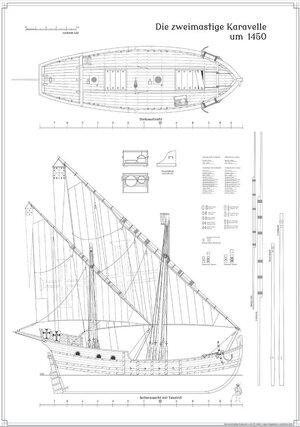
My construction plan is a relatively simple reconstruction attempt and shows a Portuguese caravel, from the even earlier times, exactly seen from the middle of the 15th century. With a length of about 20 m, a width of about 6.4 m and a draft of a little over 1.7 m. The hull has a length-to-width ratio of 3.12 :1, has a continuous main deck and is equipped with two lateen rigged masts. The drop of the sternpost defined to an angle of 18 degrees, the bow shape or shaped front part of the hull chosen from the book A Caravela Portuguesa Fig.90. The outer planking reinforced by five outer fenders, between fenders to the deck height are openings through which the water drains from the deck to the outboard.
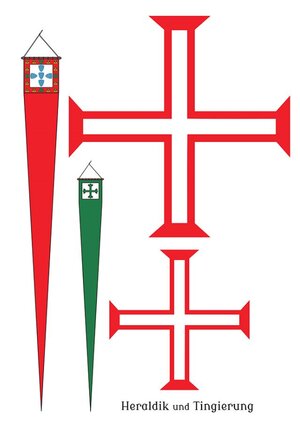
A qualitatively built hull is the foundation for a highly finished ship model, but its real value lies in details of the equipment. The equipment of this model includes several small parts such as anchor, pump, hatches, lantern, servants, cleats, fireplace, etc., especially in my reconstruction attempt the Betingsbalke instead of Brattspiel in the forecastle. A special touch for the model gives the cult the heraldry from 15 century, unfortunately the construction plan is a black and white print and I would like to show here a colored representation.
Here I presented my construction plan

PK-2A1.jpg

PK-3A4.jpg
 
Last edited:
One of the most important moments in the history of mankind was the age of European expansion. It refers in particular to the African voyages of Henry the Navigator and BartolomeuDias, as well as the overseas voyages of Christopher Columbus, Ferdinand Magellan, Vasco da Gama. Which in a relatively short time are unusually expanded the size of the world known to man and discovered new continents, seas and oceans. The great role of these great geographical discoveries plays the development in shipbuilding and shipping. Fast and reliable ships with high seaworthiness were needed for the voyages to faraway places. That such a ship was a caravel. The origin of the term caravel comes from the French word caravelle, which in turn refers to the Portuguese word caravela or carav(o) à vela (roughly: small boat under sail/sailboat). The origin of the term can be traced to the late Latin carabus or the Greek karabos- small, leather-covered, woven boat. In another line of origin, the influence of the Arabs is referred to. From the Arabic qârib or carib, the Portuguese cáravo is derived, a term for a small fishing or coastal boat with a Latin sail.
Also, caravel is readily related to the name Kraweel (The name for a smooth planked type of ship), as caravels had smooth hull planking. The 15th century caravel was a two- to four-masted sailing ship type with only one continuous deck and an aft quarter. These ships had a length of about 20-25 m, relatively shallow draft with a carrying capacity of about 40-60 toneladas with up to 20 men crew and could be moved with oars in calm conditions. Without a doubt, the most famous in the history of discovery are the two caravels of the first voyage to America (1492) by Christopher Columbus Ninaand Pinta. Other famous caravels are São Cristóvão and São Pantaleão, which under Bartolomeu Dias (1487/88) were involved in the first circumnavigation of the southern tip of Africa.
My construction plan is a relatively simple reconstruction attempt and shows a Portuguese caravel, from the even earlier times, exactly seen from the middle of the 15th century. With a length of about 20 m, a width of about 6.4 m and a draft of a little over 1.7 m. The hull has a length-to-width ratio of 3.12 :1, has a continuous main deck and is equipped with two lateen rigged masts. The drop of the sternpost defined to an angle of 18 degrees, the bow shape or shaped front part of the hull chosen from the book A Caravela Portuguesa Fig.90. The outer planking reinforced by five outer fenders, between fenders to the deck height are openings through which the water drains from the deck to the outboard.
A qualitatively built hull is the foundation for a highly finished ship model, but its real value lies in details of the equipment. The equipment of this model includes several small parts such as anchor, pump, hatches, lantern, servants, cleats, fireplace, etc., especially in my reconstruction attempt the Betingsbalke instead of Brattspiel in the forecastle. A special touch for the model gives the cult the heraldry from 15 century, unfortunately the construction plan is a black and white print and I would like to show here a colored representation.
Here I presented my construction plan

View attachment 308459

View attachment 308460

View attachment 308461
Hallo Eugen my friend, Hallo @eugen.t
we wish you all the BEST and a HAPPY BIRTHDAY
Birthday-Cake
Enjoy your special day
 
Eugene, I have just returned from Portugal and was intrigued by how a small country in the 15th century could have accomplished all that they did in ships this size. Upon returning home I looked to see if there was a build log of a Caravel/Carack and your post came up. Your plans have nailed this ship design down to the crosses and shields of the Knights Templar - well done. I look forward to your continued posts and seeing the progress of your build.
 
Thanks, but mostly I just draw the plans and rarely build models, but maybe this plan will serve as the basis for the kit.
 
hard to imagine a 65 footer w/5 ft draft seeing today’s sail powered designs.

“...as well as the overseas voyages of Christopher Columbus..."
I no he had 3 ships on the 1st sail (2 of 1 design; 1 bigger, of another) and at some point
(later voyage?) I believe the timbers were stripped for a fort or other dry land project
after running aground. May B the bigger ship? Anyway...
Here we R a few yrs later.

Whqat can you tell us abt the model now...
 
Hello chrlsful,
The phrase “…as well as the overseas voyages of Christopher Columbus…” has been taken out of context, as Columbus was only born around 1450. The actual point here is the crucial role that caravels played as a ship type, significantly contributing to exploration voyages from the time of Henry the Navigator to the expeditions of the Nodal brothers. Specifically, this refers to a small, two-masted Portuguese caravel—see heraldry.
For more information on Columbus’s caravel replicas, please check my other posts.
 
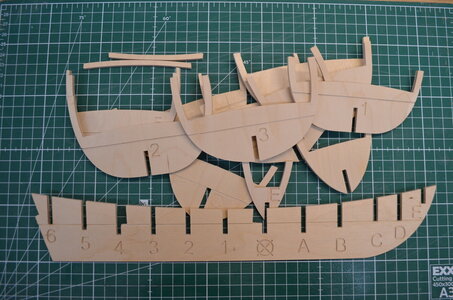
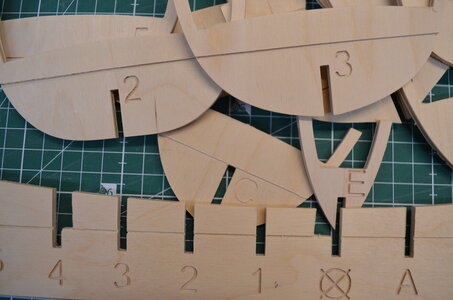
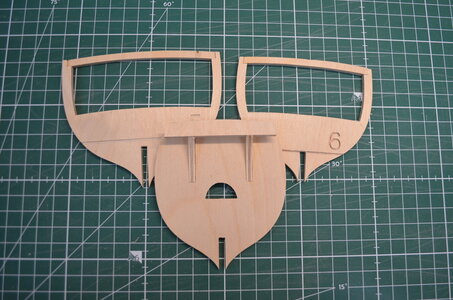
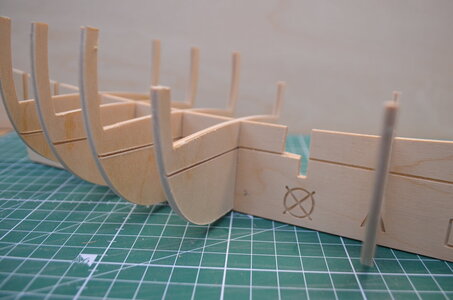
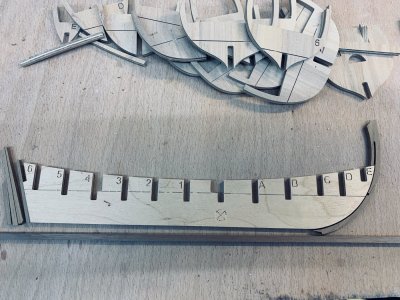
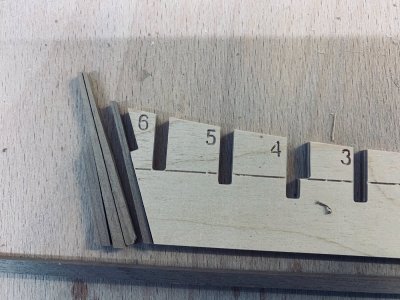
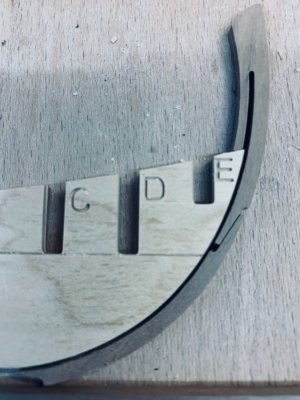
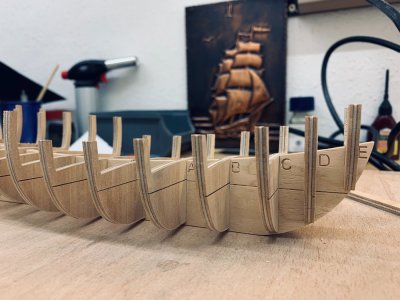
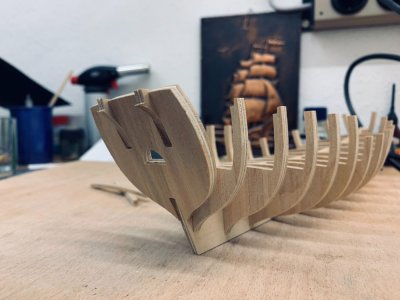
Unfortunately, progress on the models has been slow for me, as I am currently focusing more on creating construction plans. However, I can still share a few pictures.
Whqat can you tell us abt the model now...
Unfortunately, progress on the models has been slow for me, as I am currently focusing more on creating construction plans. However, I can still share a few pictures.

IMG_E6619.JPG

IMG_E6620.JPG

IMG_E6621.JPG
 
thnx! I lub da pic !
(sorry, I’ll do it again - seeking clarity):

“...the crucial role that caravels played as a ship type, significantly contributing to exploration..."
one of the two models he sailed to N.A. (well, ’the Carribean’) was the caravel. As posted I no ‘1 big one, 2 lill which were the same design as each other, but not of the bigger” - The 2 lill were caravels, no? I wonder the bigger’s design?
Again, thnx for your info and pic

“...For more information on Columbus’s caravel... (see) my other posts."
(specific ones?) Love to. Any link(s) as a search is tough ?
(BTW: ur above model is just how I build [pretty much] fiberglass full sz, down to the bulkheads being made of plywood
[stainless screws & glue]). In the day I believe they sought out full tree forms (trunks for lrg,; branches for smaller) for needed shapes.
 
Great start. Don't worry about slow progress. We often get mental blocks as to what to do next, or family life takes all our time, leaving little time for modeling. Ships like this take months to years to complete. Keep photo of your journey because they are fun to look at when the model is finished.
 
thnx! I lub da pic !
(sorry, I’ll do it again - seeking clarity):

“...the crucial role that caravels played as a ship type, significantly contributing to exploration..."
one of the two models he sailed to N.A. (well, ’the Carribean’) was the caravel. As posted I no ‘1 big one, 2 lill which were the same design as each other, but not of the bigger” - The 2 lill were caravels, no? I wonder the bigger’s design?
Again, thnx for your info and pic

“...For more information on Columbus’s caravel... (see) my other posts."
(specific ones?) Love to. Any link(s) as a search is tough ?
(BTW: ur above model is just how I build [pretty much] fiberglass full sz, down to the bulkheads being made of plywood
[stainless screws & glue]). In the day I believe they sought out full tree forms (trunks for lrg,; branches for smaller) for needed shapes.
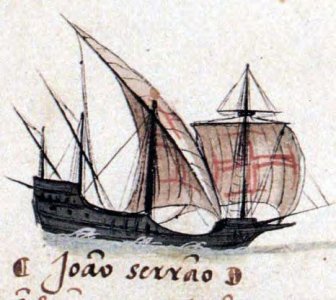
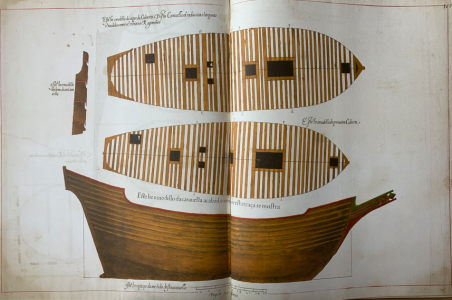
Caravels were used for many decades and evolved over time. They were modernized, their size and appearance adapted to meet various needs. Illustrations of such caravels can be found in the Livro das Armadas or the later Livro de Traças de Carpintaria.
Caravela_de_armada_of_Joao_Serrao.jpgScreenshot 2025-02-17 175840.png
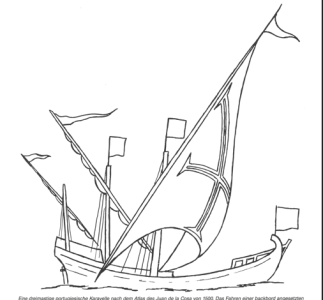
As for Columbus' caravels and what they might have looked like… Well, first of all, they were by no means new ships. The Niña, for example, was originally named Santa Clara and accompanied Columbus on several voyages to the New World. A possible clue to their appearance can be found in the world map of Juan de la Cosa – the owner of the Santa Maria, Columbus' flagship.
Screenshot 2025-02-17 181211.png
 
Back
Top