• SUBSCRIBE TO SHIPS IN SCALE TODAY!

    The beloved Ships in Scale Magazine is back and charting a new course for 2026!
    Discover new skills, new techniques, and new inspirations in every issue.

    NOTE THAT OUR NEXT ISSUE WILL BE July/August 2026
  • Win a Free Custom Engraved Brass Coin!!!
    As a way to introduce our brass coins to the community, we will raffle off a free coin during the month of August. Follow link ABOVE for instructions for entering.

Tinted Varnish

Hi. My experience from furniture restoration is that it does not age well and can end up looking patchy and a bit tatty.
Much better to stain (oil based) and then lacquer. In what application are you thinking of using tinted varnish? Cheers.
 
Hi. My experience from furniture restoration is that it does not age well and can end up looking patchy and a bit tatty.
Much better to stain (oil based) and then lacquer. In what application are you thinking of using tinted varnish? Cheers.
For any wood that is bare on the ship. For example the deck. I have not had much luck using stain on my deck as it turned out patchy and uneven so I had to redo the deck and then add a coat of varnish. I am thinking now that I can put a coat of tinted varnish over it. I will have to test before doing it.
 
My own woodworking experience ,not just ship model building, is that wood staining is highly dependent on the properties of the wood. Woods associated with quality model shipbuilding; pear, Holly, boxwood, and more readily available substitutes like hard maple have very tight grain structures that do not accept the oil based stains commonly available. These woods are better colored with wood dyes. Other woods, for example teak, have internal oils that can also interfere with finishes.

Buying wood from a reputable lumber dealer allows you to select species that can accept your preferred finishes. On the other hand, kits often include exotic species with made up trade names; for example “walnut” which is a different species from our easily stained American Black Walnut. The solution: try your finishes on scrap before hand.

Roger

 
My own woodworking experience ,not just ship model building, is that wood staining is highly dependent on the properties of the wood. Woods associated with quality model shipbuilding; pear, Holly, boxwood, and more readily available substitutes like hard maple have very tight grain structures that do not accept the oil based stains commonly available. These woods are better colored with wood dyes. Other woods, for example teak, have internal oils that can also interfere with finishes.

Buying wood from a reputable lumber dealer allows you to select species that can accept your preferred finishes. On the other hand, kits often include exotic species with made up trade names; for example “walnut” which is a different species from our easily stained American Black Walnut. The solution: try your finishes on scrap before hand.

Roger
I have no idea where the wood I got from my kit is sourced from but the manufacturer calls it a mix of basswood and limewood.
 
the manufacturer calls it a mix of basswood and limewood
Both are Tilia sp.
Limewood is Linden - It is twice as dense as its much poorer quality North American cousin Basswood.
Basswood is soft - easy to carve but tears more easily.

It is better primed with shellac and painted.

Clear Birch is easy to source and is better for show - two or three sizes of wooden tongue depressors and much smaller -Temu coffee stirrers.
 
Jumping in on this thread. Many wooden aspects of a ship have a "bright" finish, which I believe just means natural wood with varnish. This type of finish, within just a year or so takes on a light "honey" color. I have yet to find a stain that really emulates this honey color. Most are either too brown or too red in color. Does anyone here have a good suggestion for this "aged varnish" color other than using varnish and waiting?
 
I would correct this last post to read “many wooden parts of some ship models are sometimes given a bright finish”. Except for some yachts real ships are not bright finished. Bright finishes are notoriously hard to maintain. Exposure to sunlight quickly destroys clear finishes like varnish. Ships have been and are painted. Even wooden decks are not bright finished. Sailors cannot work on a slippery surface. Decks are either allowed to weather of if the crews are large enough they are abrasively cleaned daily. Realistic ship models are painted.

Roger
 
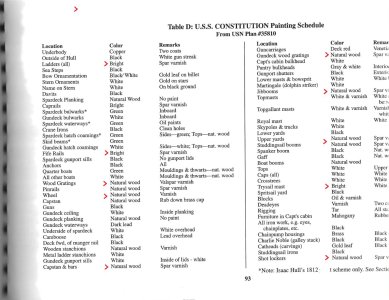
Roger, thanks for the education. I must admit that my knowledge of sailing ships is extremely limited. My comment was based mostly on the ship I was working on, the USS Constitution, and the painting scheme supplied in Navy plan #35810, which list many components as bright or natural wood (spar varnish, or just varnish)

BJ color guide 2.jpg
Although I realize that the Constitution is not really a working ship anymore and doubtful that she looks anything like she did when in real service, still, there are certain components that must look somewhat as they did. Anyway, my main question is not so much what is historically accurate, but what can be used to emulate the look of that honey color that natural wood finishes acquire with age
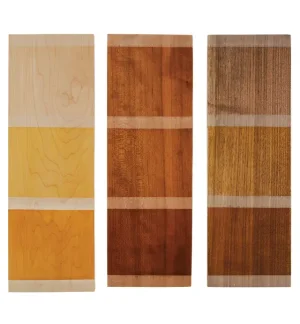
 
what can be used to emulate the look of that honey color that natural wood finishes acquire with age
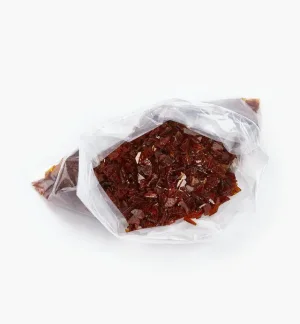
Check out the several shades of shellac flakes,

https://www.leevalley.com/en-us/shop/tools/supplies/finishing/finishes/76311-shellacs?item=56Z4028

https_assets.webp Maple + Cherry + Walnut
https_assets. 2webp.webpDark auburn

Shellac.net https://shellac.net/collections/dewaxed-shellac-flake

And AliExpress https://www.aliexpress.us/item/3256809928273308

1lb cut is essential a 10% solution an electronic coin balance for 10g and a 100ml graduated cylinder for the 100ml of denatured ethanol/shellac thinner
a rag or a piece of dense foam packing stuff Duco bonded to a round tooth pick or two makes a mini foam brush.
 
Last edited:
I always wanted to learn more about shellac, I see it used for restorations and high quality models.

As for the job at hand, I would be careful regarding what you stain or color with basswood/limewood. They are well known for leading to a blotchy finish. Maybe ok for a main rail or something, but anything with real area to it is probably going to look funky. Even on planking, you start seeing the blotches.

This isn't theoretical, I've done it myself. If I am building a model with basswood, I already plan to paint and maybe leave behind a few bright features. And even for the bright features, I decide between bright and painting buff. If it's too late and you are already committed, I recommend you use two coats of pre-stain, available by many manufacturers, give it a little time between coats, and then get the stain on there in the next 15min-2hr.
 
I have used a pecan tinted varnish many times. But only after a coat of clear varnish to seal the wood.. It then appears as an aged varnish finish. I never put a tinted varnish on bare wood as it often takes up unevenly.
 
I have used a pecan tinted varnish many times. But only after a coat of clear varnish to seal the wood.. It then appears as an aged varnish finish. I never put a tinted varnish on bare wood as it often takes up unevenly.
great. That's exactly what I want to do. I already have applied a couple of coats of clear varnish on the deck and now I want to apply some tinted varnish just to add some color. I know varnish darnkens with time, but I don't want to wait...
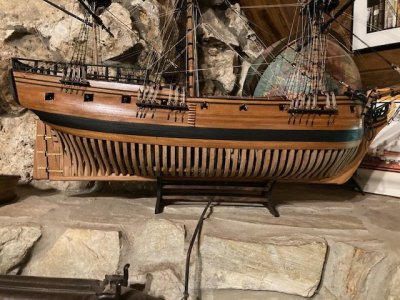
 
great. That's exactly what I want to do. I already have applied a couple of coats of clear varnish on the deck and now I want to apply some tinted varnish just to add some color. I know varnish darnkens with time, but I don't want to wait...
try a sample. I use a polyshades satin and like the way it looks. More coats equals older looking varnish.

IMG_2223.jpeg
 
Jumping in on this thread. Many wooden aspects of a ship have a "bright" finish, which I believe just means natural wood with varnish. This type of finish, within just a year or so takes on a light "honey" color. I have yet to find a stain that really emulates this honey color. Most are either too brown or too red in color. Does anyone here have a good suggestion for this "aged varnish" color other than using varnish and waiting?
Get the regular varnish and wait a year or so to see the color you wanted in the first place.
 
:) no doubt. Sadly, I have a bit of ADD, and patience is not one of my greatest virtues. I'm sure it would probably produce the best result (eventually)
 
I have done alot of modeling and model painting over the years i used to use shelac but then found out about poly shade. This is a great product that youcan alter the depth ofcolour by the amount of coats you apply
I alwajys use a sample stick towork out the amount of coats needed. In NZ wecan get poly shade that is aqua and aĺso oil based. If you want toage i would suggest that you use the aqua lightyly
I havefound that Walnut colour ìs the best on thehull and Maple for everything else.
I hope this is helpful and remember to test onsomething else first then you wont gave regrets that you can not undo
 
Back
Top