
-

Win a Free Custom Engraved Brass Coin!!!
As a way to introduce our brass coins to the community, we will raffle off a free coin during the month of August. Follow link ABOVE for instructions for entering. -

SUBSCRIBE TO SHIPS IN SCALE TODAY!
The beloved Ships in Scale Magazine is back and charting a new course for 2026!
Discover new skills, new techniques, and new inspirations in every issue.
NOTE THAT OUR NEXT ISSUE WILL BE MARCH/APRIL 2026
You are using an out of date browser. It may not display this or other websites correctly.
You should upgrade or use an alternative browser.
You should upgrade or use an alternative browser.
Tutorial Upgrading the Proxxon Micro Compound Table KT 70


- Joined
- Aug 8, 2019
- Messages
- 5,672
- Points
- 738

@Jimsky with the upgrade of these bearings is the backlash also gone?
Some video to the subject of the subject
The first video need to be start from the beginning
And a wonderfull tutorial you have made. Love it.
I got the bearings in my stock, but I did on the z-axle only and when using the MF70 the z-axle is very loose and likes to go out of position now. How is this with the bearings in the table?
Some video to the subject of the subject
The first video need to be start from the beginning
And a wonderfull tutorial you have made. Love it.
I got the bearings in my stock, but I did on the z-axle only and when using the MF70 the z-axle is very loose and likes to go out of position now. How is this with the bearings in the table?
Last edited:

yes, the backlash is gone!!@Jimsky with the upgrade of these bearings is the backlash also gone?
Thanks for the additional video materials. As we like to say: It is better to see once than to hear many times.

- Joined
- Aug 8, 2019
- Messages
- 5,672
- Points
- 738
Then mine is the next one to upgrade.yes, the backlash is gone!!
I have knock-off version of this table, looks exactly the same. Probably Chinese. The back lash on the screws is terrible, if performing this upgrade would cure the problem I think I have to do it.


The backlash is a gap in carriage leadscrew thread teeth and the carriage nut thread teeth. Large backlash is not getting fixed by placing some thrust bearings on the lead screw handle. This just reduces friction in leadscrew system and makes turning of leadscrew easier. Nothing to do with reducing a backlash. Sorry to discourage some people.
- Joined
- Aug 8, 2019
- Messages
- 5,672
- Points
- 738
Sorry, but I don't agree with that. In this case, the backlash is caused by deformation of the plastic parts Caused by friction. This deformation has been virtually eliminated by these bearings, which reduce friction considerably. After replacement, the backlash is less than 1 unit on the rotary knob for me. This corresponds to 0.035 mm. Previously, it was at least 0.15 mm. (3 to 4 units on the knob). And I think that even if I install the bearings better by positioning the nuts more accurately so that the friction is reduced to zero (without the carrying nut fixed), that last bit of backlash will also disappear. But I can very well live with an inaccuracy of 0.035 mm.The backlash is a gap in carriage leadscrew thread teeth and the carriage nut thread teeth. Large backlash is not getting fixed by placing some thrust bearings on the lead screw handle. This just reduces friction in leadscrew system and makes turning of leadscrew easier. Nothing to do with reducing a backlash. Sorry to discourage some people.
There is no play between the screw thread and the carrying nut.
In fact, the xy table does not move much more easily after installing the bearings, because the carrying nut moves very tightly over the screw thread.
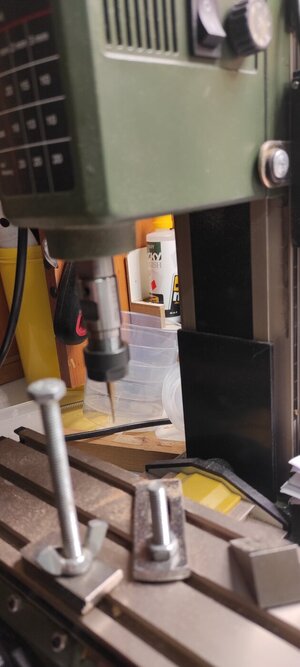
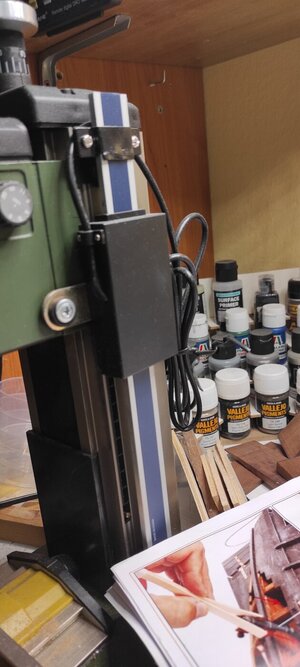
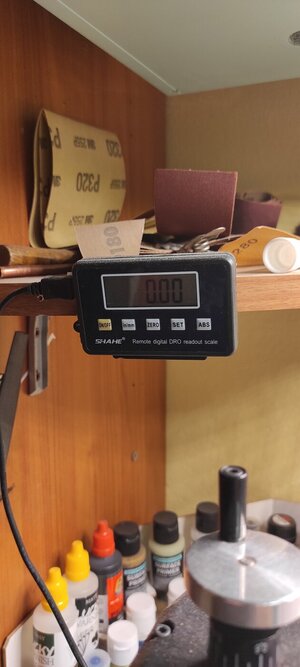
The Z-axis is a slightly different story; it rotates much more easily and the backlash has decreased slightly. But I don't see that as a problem because I have mounted a digital caliper on it that indicates the exact upward and downward movement.

Everything Stephan said...
The term backlash is ONLY the play between leadscrew thread and the carriage nut. If you don’t have this play you don’t have a backlash (which still must be there to some amount as otherwise you could not rotate a handle). The rest of carriage movement is just loose lead screw. This is being adjusted with or without thrust bearings. Just with thrust bearings it is easier to rotate a handle.There is no play between the screw thread and the carrying nut.


Will you share how you attached a DRO?But I don't see that as a problem because I have mounted a digital caliper on it that indicates the exact upward and downward movement.
- Joined
- Aug 8, 2019
- Messages
- 5,672
- Points
- 738
Sure, I will look if I post it somewhere or I make a few picture of it.Will you share how you attached a DRO?
This is the video I used for it
Last edited:
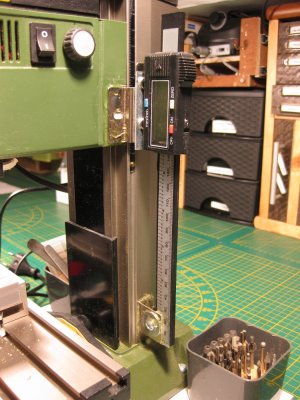
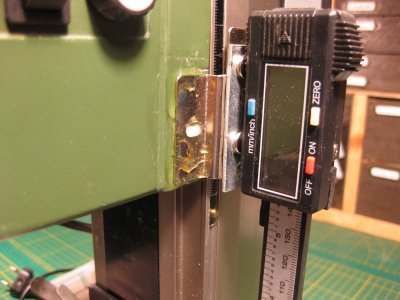
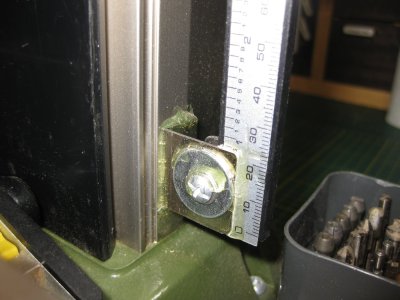
Thanks Stephan for sharing your method to attach a DRO to the Z-axis. I copied your method with a $7.00 digital caliper.
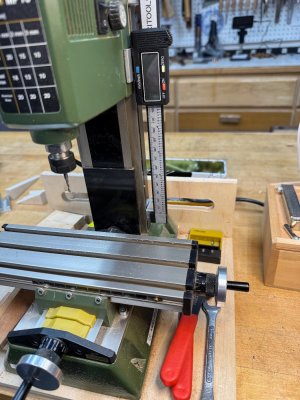
At the moment it’s attached with 2-sided tape as a proof of concept. I ordered some M3 machine screws and will tap some holes to attach the brackets. In the meantime this solves the backlash issues.
At the moment it’s attached with 2-sided tape as a proof of concept. I ordered some M3 machine screws and will tap some holes to attach the brackets. In the meantime this solves the backlash issues.
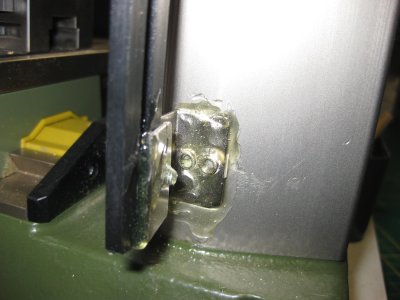
I purchased some countersink bolts then tapped the mill head and frame as well as the brackets. I then attached the caliper rails to side of the mill.
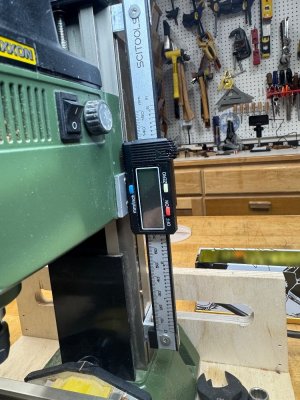
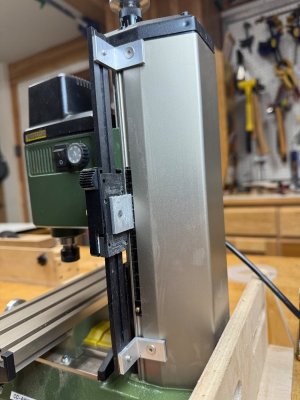
After installing the bracket to the mill head I discovered that the bracket rubbed on the frame.
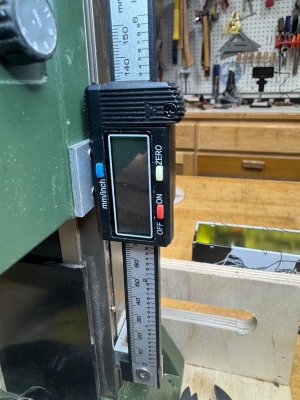
So I disassembled everything and had to mill about a 2mm slot in the bracket.
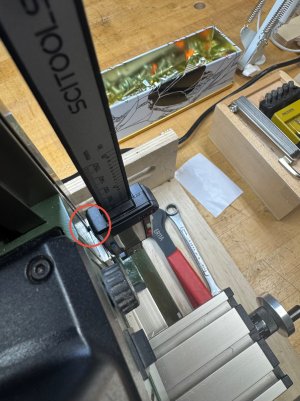
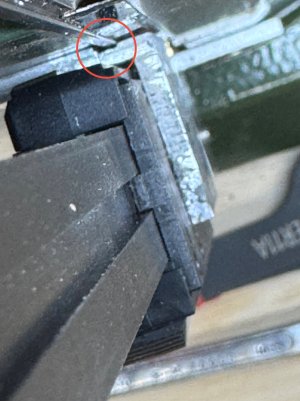
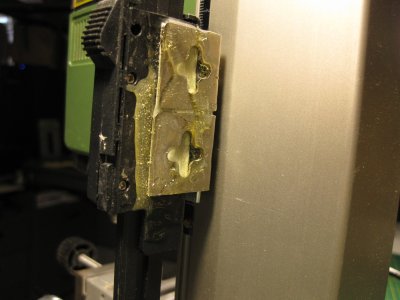
I then epoxy glued the caliper head to the bracket.
No more backlash calculations needed! Yippie!
After installing the bracket to the mill head I discovered that the bracket rubbed on the frame.
So I disassembled everything and had to mill about a 2mm slot in the bracket.
I then epoxy glued the caliper head to the bracket.
No more backlash calculations needed! Yippie!