

• Win a Free Custom Engraved Brass Coin!!!
    As a way to introduce our brass coins to the community, we will raffle off a free coin during the month of August. Follow link ABOVE for instructions for entering.

Using Boiled Linseed Oil

Joined
Jun 7, 2025
Messages
161
Points
113

Location
New Castle, Indiana, USA
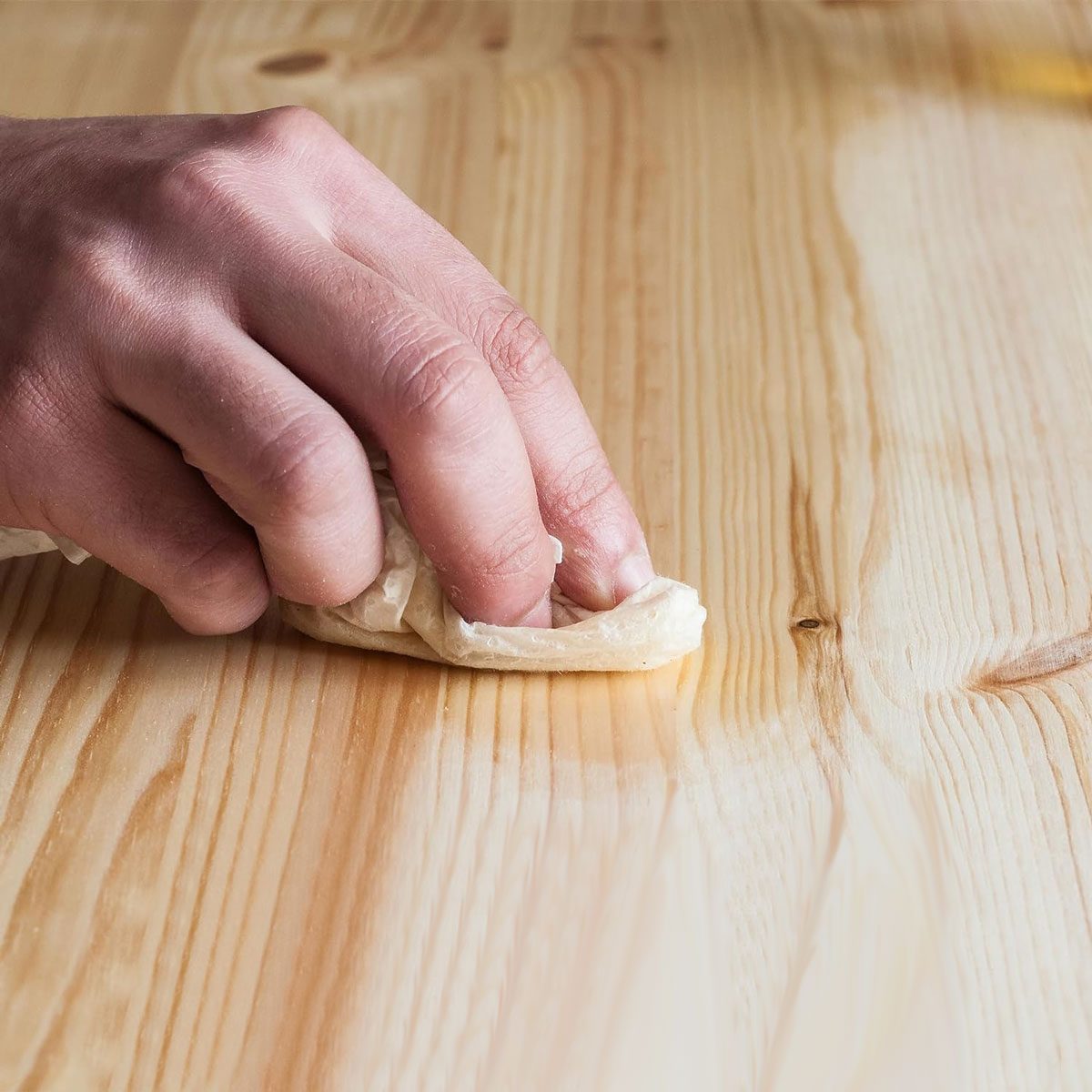
I'm using boiled linseed oil for the first time as a finish on a hull I am building. The planking is walnut. I was wondering if there is any sanding or finishing that needs to be done between coats. It says to let each coat dry 24 hours so I have applied the first coat yesterday and am ready to do the second coat. is any sanding or the like necessary before applying the second and third coat?
 
I've never used it on a model but on furniture you would let it dry them lightly sand with the highest grit you used before applying the first coat.
 
I'm using boiled linseed oil for the first time as a finish on a hull I am building. The planking is walnut. I was wondering if there is any sanding or finishing that needs to be done between coats. It says to let each coat dry 24 hours so I have applied the first coat yesterday and am ready to do the second coat. is any sanding or the like necessary before applying the second and third coat?

I applied the layers on the pear wood of my Bluenose with a cloth, let each layer dry for a few hours, buffed it with a dry cloth and then repeated. I did no sanding anymore after the first layer. Just rubbing with a cloth.
Regards, Peter
 
I have used boiled linseed oil to finish gunstocks on muzzle loading rifles. I have not used it on ship models.

Linseed oil is the active ingredient used for old time paint finishes. It’s what made the paint dry. It is not fast curing. It may feel dry to the touch but that doesn’t mean that it’s completely cured. Give it plenty of time to dry before rubbing it down and recoating.

Roger
 
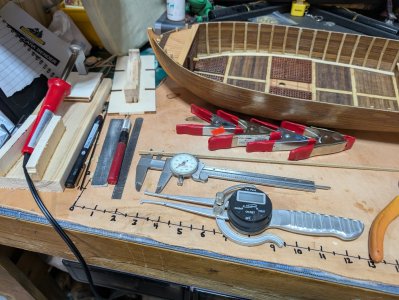
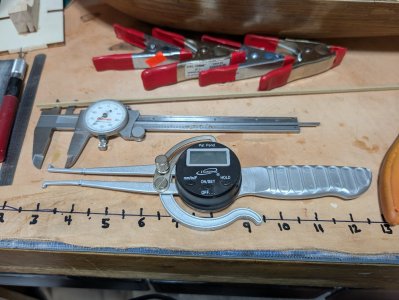
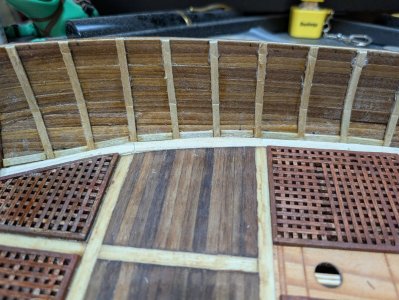
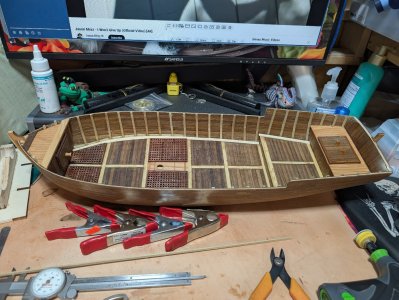
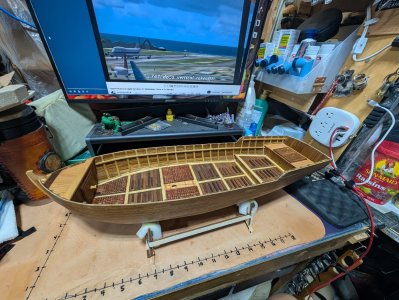
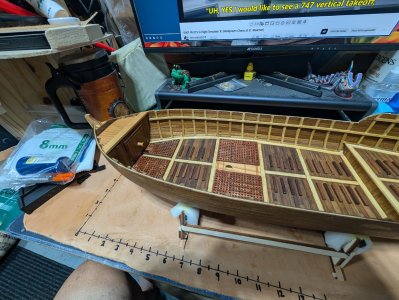
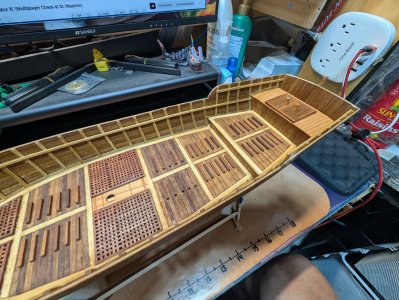
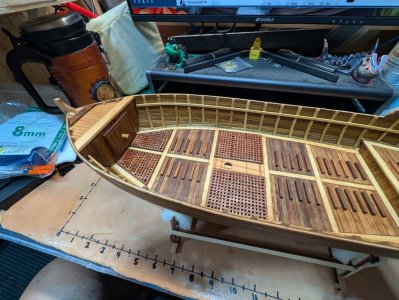
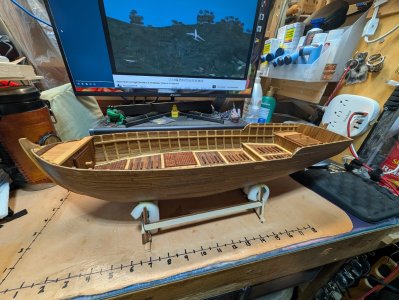
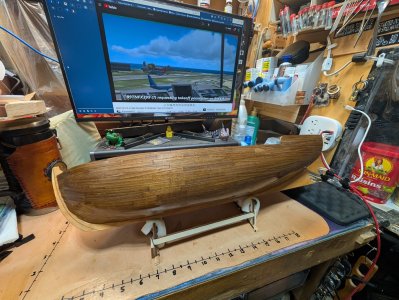
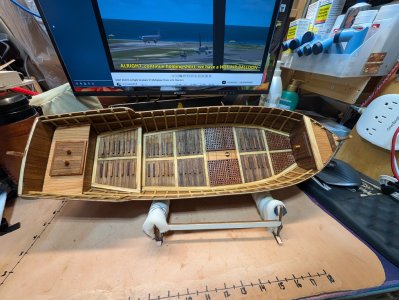
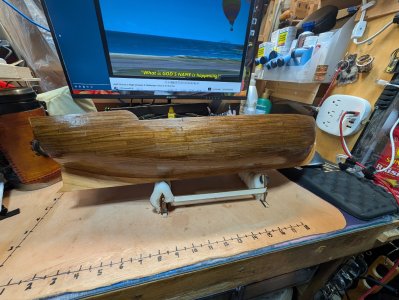
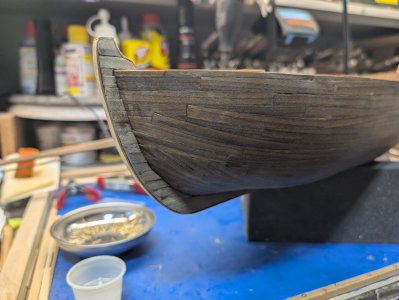
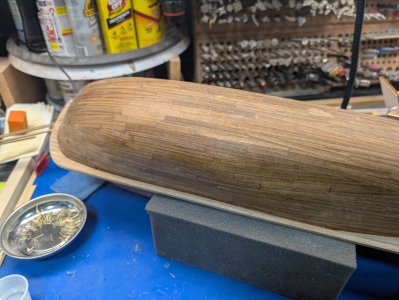
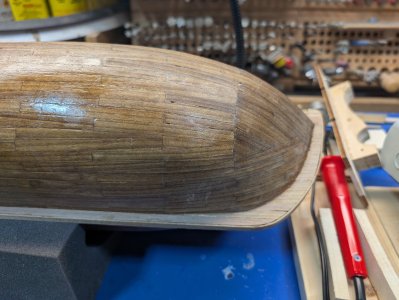
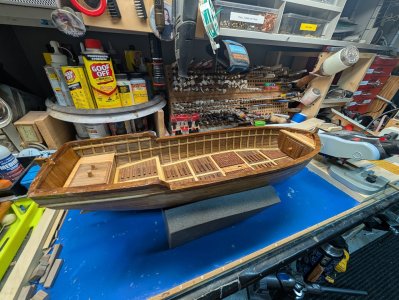
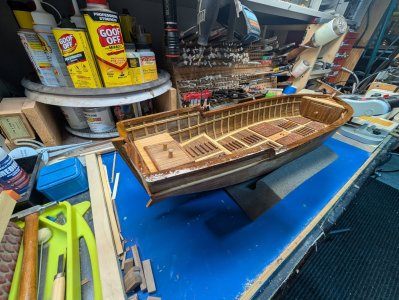
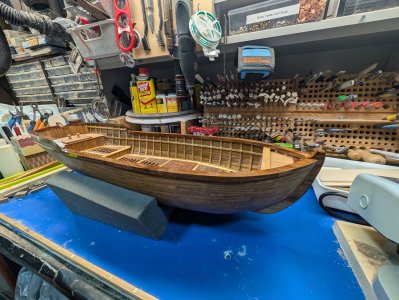
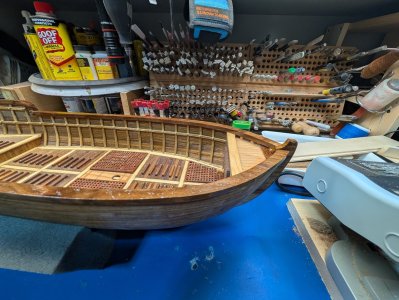
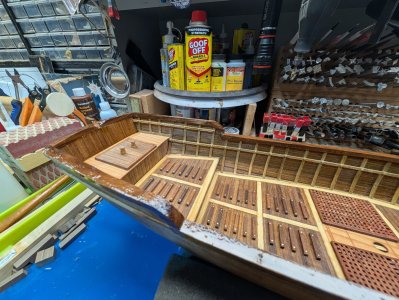
Working on the ribs and stringers right now. Have found my Starrett micrometer and my i-Gauging inside diameter feelers are coming in handy to fit cut and fit the smaller pieces. Forgive the dust on the hull as I haven't cleaned it off while I'm working on the ribs. Wiped off the last application of linseed oil and will reappply after I get my Japan Dryer to mix with it. This is going slowly as I'm having to adjust more to my hand shake as I work. I'm going to talk to doctor about if he can help with this so I can continue to build!!

PXL_20250922_182349592.jpg

PXL_20250922_182351811.jpg

PXL_20250922_182358923.jpg

PXL_20250922_182406173.jpg
 
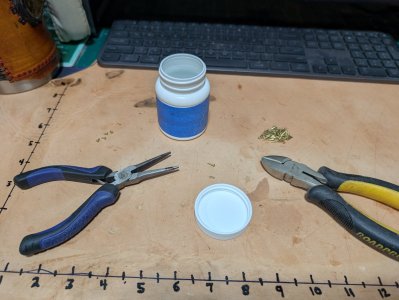
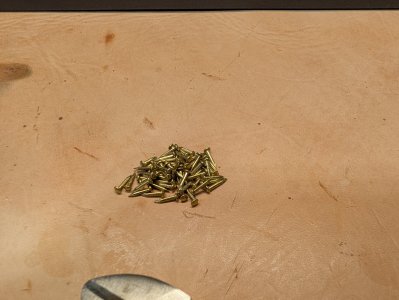
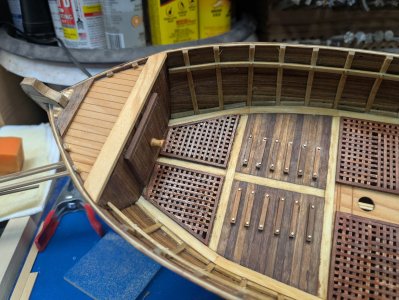
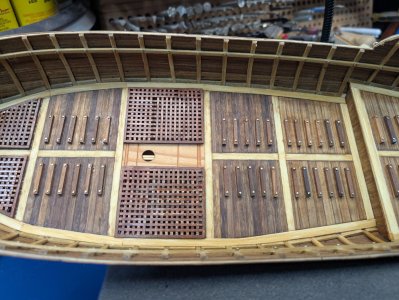
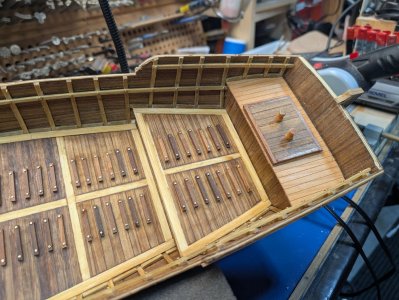
OK, progress being made. I've got all shutters in place. For those of you who are imagining that I planked over the forward lower deck instead of putting the grating in, you're imaging things... OK, I did slip up there but caught it and made a correction. The advantages of working in wood! I also put in the anti-slip strips, and the finished the ribs and stringers. I also installed the infill blocks between the ribs at deck level. Next, after the current coat of linseed oil dries toughly, I'll have to drill pilot holes where the ribs and stringers cross and then cutoff some small brass brad nails to install. I think I don't have any nails short enough and still the right size that would work and not go thru the hull so I'll cut them off and install them. After that I need to cut and shape rubbing strakes along each side of the hull.

PXL_20250926_053459977.MP.jpg

PXL_20250926_053503021.MP.jpg

PXL_20250926_053510051.jpg

PXL_20250926_053512147.jpg

PXL_20250926_053516781.jpg

PXL_20250926_053529354.jpg

PXL_20250926_053543592.jpg

PXL_20250926_053552498.jpg
 
some interesting reading on linseed oil...


All good reading!! Thank you! I have some Japan dry on the way. Right now it looks like my drying time between coats will be 5 to 7 days based on the temps and humidity in my work shop so I’m anxious to try it. I have calculated out a mix for 2 ounces of linseed oil at a time with 3.8ML of Japan Dry so I don’t introduce the Japan dry to an entire bottle of boiled linseed oil.
 
Well, a small break. I've discovered that trying to hold tiny parts like that to put them in the holes is kind of like drinking 5 energy drinks, give it 15 minutes and then try it. Ordered some small parts holders (grabbers). I think they will come in handy going forward!!
 
Just curious, The spars and ribs , where they intersect shows a small brad nail as a fastener for the boards. I'm assuming this would have been a normal way to join these elements in real shipbuilding? In thinking about this. I was wondering if I should use the same nails , one on each end, of the anti slip boards that are attached to the lower deck? Seems like it would be a proper place to use said nails and it would also improve presentation of the ship I think. Anyone got and input or suggestions on this idea?
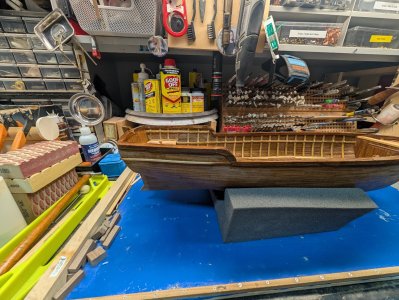
 
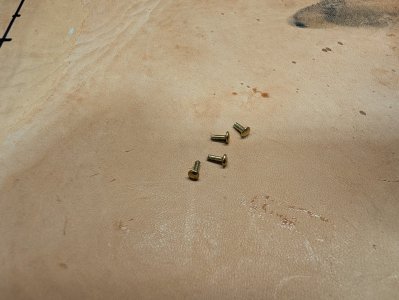
A little update. I got my Japan Drier, have mixed up 1ml of it with 2 ounces of boiled linseed oil for the next application. I finished the ribs and stringers along the hull. I also got all of the anti slip slats in place. I also have planked the keel and deadwood sections. After I finished putting the small brass nails in the ribs I thought it would look good to also put smaller ones in the anti slip slats. I had some brass nails that were half the size of the ones I used in the ribs so I counted and found I needed 96 of them for this change in detail. I drilled out hole son each end of the 48 anti slip slats and then got out some clear Gorilla glue. The stuff takes a couple of hours to harden and 24 hours to dry all the way but I needed something I could pour into a little cup and dip the points of each nail in so I could make sure they stayed in place once I set them in. Went off like a charm. I dipped each in, slid it into the drilled hole and then carefully wiped off the head of each nail.

In about an hour I'm going to do a light wipe down with a damp cloth and then after 15 minutes I'm going to apply another coat of linseed oil to the inside of the hull. I don't know if you can see it, but there are a couple of places on the exterior of the hull that are still not completely cured from the last coat after 10 days. I'm hoping the Japan Dryer works and solves this problem. I really like the ;linseed oil but the drying time sucks without help!!

Before I do the outside of the hull I am going to put the strakes on and some other small trim pieces and then do the outside of the hull.

When I have those things done it's time to read and study before the next steps. I've got a build log from someone who did a great job of documenting their build and about 30 good photos from other builds. Between the prints, the instructions, the photos and the build log I feel like I can muddle my way thru this!!

Again, any suggestions are more than welcome!!!

PXL_20251004_221339311.jpg

PXL_20251004_221341305.MP.jpg

PXL_20251004_221343202.jpg

PXL_20251004_221352991.jpg

PXL_20251004_221403072.jpg

PXL_20251004_221405164.jpg

PXL_20251004_221432337.jpg

PXL_20251004_221435278.jpg
 
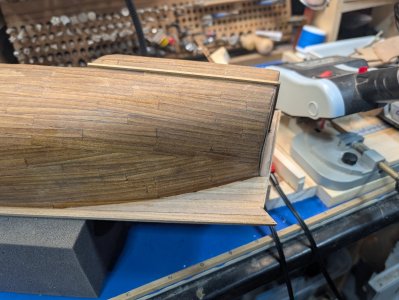
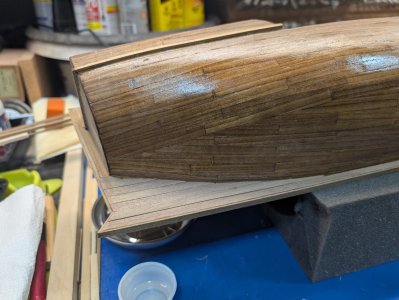
Got my top rail done. I cheated a little bit. I bought a piece of walnut sheet about 10" x 35" and traced the hull pattern on the wood. I then measured and added 4mm on the inboard side and 3 mm on the outboard side. I also allowed for 3mm for the hull thickness. After cutting it out. I split the stern portion just before the small arc begins and then sanded both sections to a nice finish. I then cut the port and starboard sides apart on the bow and stern sections and fitted them to the top edge of the hull. After a little more sanding I used some thick CA and attached the four pieces one at a time. Once they were all in place I used a brown tint titebond glue to edge the bottom of each piece to the hull for a clean finish. It all turned out nice. I then measured and glued some short blocks together and traced the curve of the arc on each side. I rough cut them and the sanded and fitted slowly until they both matched up to the hull, bottom of the already mounted top rail and top of the top rail. After a little light sanding they matched up perfectly. I applied a single coat of linseed oil pre-mixed with the Japan Dryer. ( I used a new glue bottle and added 1ml of Japan Dryer and 2 ounces of linseed oil). The mix has worked perfectly as it dries overnight very uniformly. In the attached photos I've just applied a second coat of linseed oil.

PXL_20251010_233016917.jpg

PXL_20251010_233020042.jpg

PXL_20251010_233022020.jpg

PXL_20251010_233025920.jpg

PXL_20251010_233028169.jpg

PXL_20251010_233031029.jpg
 
Back
Top