



Well, it has been nearly a month since I actually posted any work on the ship, so I am long overdue for an update. Despite my lack of posts, I have actually been busy. After languishing a bit over the placement of eyebolts around the masts, I finally decided to just go with what Olaf had on his belaying plans. I also included all the ring bolts for the outhaul tackle, even though I do not plan on installing the tackle. Whether used or not, they should be there and it gives the deck some visual interest. Once all the eyebolts had been glued in and I was satisfied that there was nothing more to add to the deck itself, I took the plunge and permanently glued down the spar deck
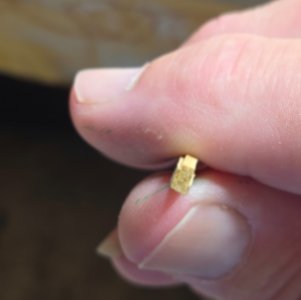
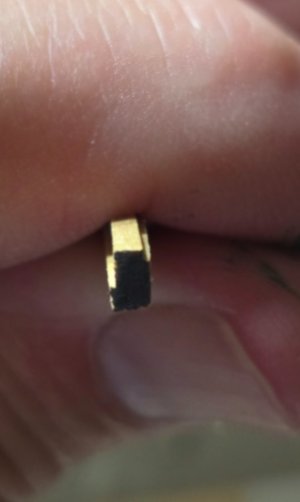
With that done, next up were the hatch coamings. Like the gun deck, I used the Persimmon wood I harvested form my property. I started with the main hatch and first had the brilliant idea to use my Byrnes saw to cut the inside and outside profiles. The Byrnes is a great machine, and is very precise. here's a view of the result. In the second photo, I colored the end to give some contrast and show the profile a little better
After doing this with the main hatch, I realized it would be much easier to just glue thin strips to the inside and outside of the coaming, which is what I did for the rest of the hatches. In 1812, the hatch coamings were painted green. I didn't want to completely cover up the wood since I really like the way it looks, so I compromised and painted just the sides, which is pretty much how they are today (only black). Here tey are just laid in place
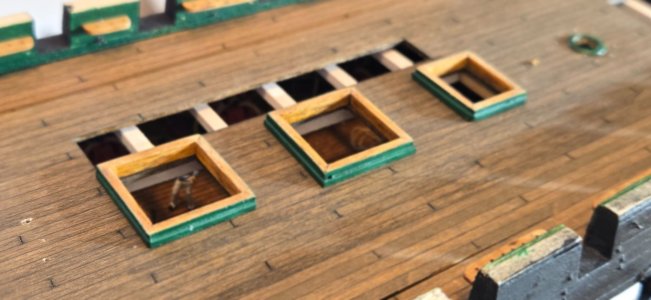
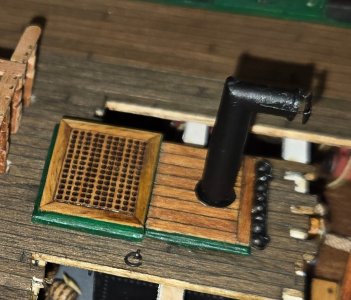
If you zoom in on the photo, you can get a good look of the base molding and the grain of the persimmon, which is very fine and tight, and at least IMO looks good at scale. You can also see that all the joints are 45's. According to the BJ manual and everything else I've read, the shot lockers in 1812 were mounted on the bulwarks. I decided to take some liberty here make the shot lockers as they are now, mounted on the hatch coamings. For one thing, there is not a lot of room on the bulwarks and I thing it will just look cluttered, and two, I like the look on the coamings. To make them, I used fish hooks for eyebolts and 26 ga. wire for the bars. The dimensions were taken from the Navy plans found on the museum website.
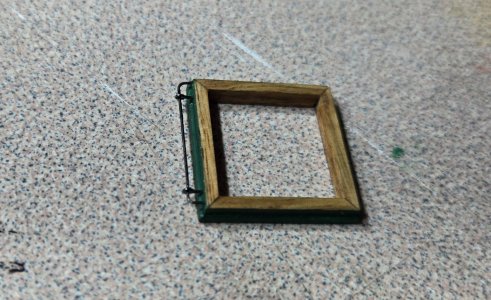
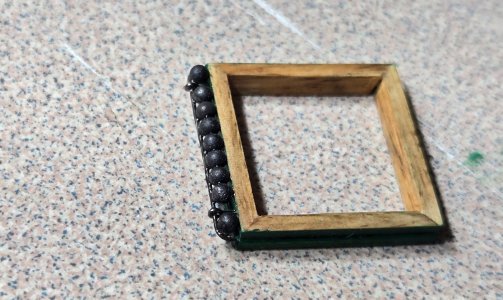
For the shot, I used 2mm SS ball bearings purchased on amazon, painted black.
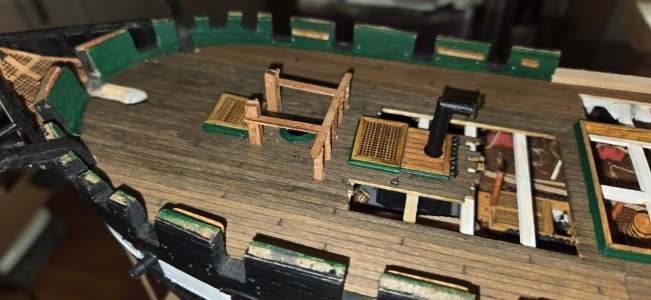
And here they all are finished and permanently glued down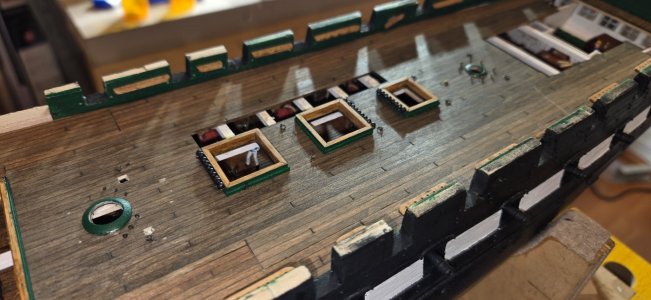
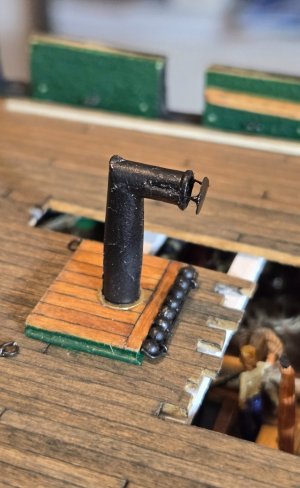
Next up, the forward hatches and the Charlie Noble
With that done, next up were the hatch coamings. Like the gun deck, I used the Persimmon wood I harvested form my property. I started with the main hatch and first had the brilliant idea to use my Byrnes saw to cut the inside and outside profiles. The Byrnes is a great machine, and is very precise. here's a view of the result. In the second photo, I colored the end to give some contrast and show the profile a little better
After doing this with the main hatch, I realized it would be much easier to just glue thin strips to the inside and outside of the coaming, which is what I did for the rest of the hatches. In 1812, the hatch coamings were painted green. I didn't want to completely cover up the wood since I really like the way it looks, so I compromised and painted just the sides, which is pretty much how they are today (only black). Here tey are just laid in place
If you zoom in on the photo, you can get a good look of the base molding and the grain of the persimmon, which is very fine and tight, and at least IMO looks good at scale. You can also see that all the joints are 45's. According to the BJ manual and everything else I've read, the shot lockers in 1812 were mounted on the bulwarks. I decided to take some liberty here make the shot lockers as they are now, mounted on the hatch coamings. For one thing, there is not a lot of room on the bulwarks and I thing it will just look cluttered, and two, I like the look on the coamings. To make them, I used fish hooks for eyebolts and 26 ga. wire for the bars. The dimensions were taken from the Navy plans found on the museum website.
For the shot, I used 2mm SS ball bearings purchased on amazon, painted black.
And here they all are finished and permanently glued down
Next up, the forward hatches and the Charlie Noble


 Right tools for the right job!