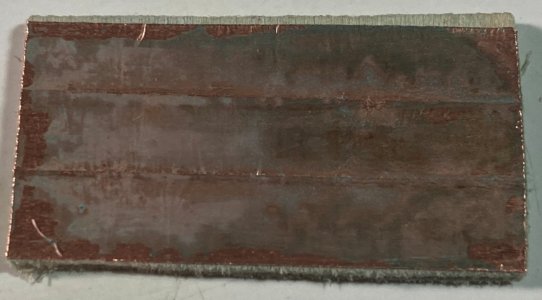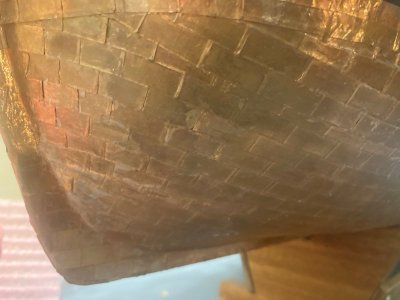


I could use this method to patina the copper. I let it do so naturally. The 4th picture is 5 years old.. The tar browns with age and foot rope tarring is thinner than usually used on the other standing rigging. Foot traffic also wears it away.BBB,
Excellent job on replicating Ohio. But then, you did a similarly excellent job recreating the whole U.S. sailing navy.
You are probably not going to like me saying this.
I am willing to delete should you wish - but
I do not think that the individual copper sheathing plates would have been new penny bright even before they were tacked to the hull. High humidity, oxygen, carbonic acid rain and then when launched - sea water. Probably more verdigris than brown where air hit. Ohio did not sail enough for moving water to affect the plates' surface oxidation?
I was at first put off by the deck being sun bleached. Because of RN influence, I thought of what the admiral would say about no holy stoned decks. Then it dawned on me, Ohio was never used. It was a white elephant - too big and too expensive to use. No admiral, only a maintenance crew, no holy stoning. Sun bleached is probably correct.
About the black standing rigging - Drake's well was 1859. Was there enough asphalt seep on the east coast before then to take the place of Carolina or Georgia Pine tar?
As for running rigging: For how much of Ohio's life were the yards even crossed? I am thinking bare poles for most of it?
Your next step - the backstay foot ropes - ratlines - if I had to climb them barefoot I do not think that I would like for any tar coating the surface. A hot sticky mess in the Summer. No quick way off the burn - unlike a gravel and tar road when I was a kid.
https://military-history.fandom.com/wiki/USS_Ohio_(1820) Check out this site. She actually had something of a career.