• SUBSCRIBE TO SHIPS IN SCALE TODAY!

    The beloved Ships in Scale Magazine is back and charting a new course for 2026!
    Discover new skills, new techniques, and new inspirations in every issue.

    NOTE THAT OUR NEXT ISSUE WILL BE MARCH/APRIL 2026
  • Win a Free Custom Engraved Brass Coin!!!
    As a way to introduce our brass coins to the community, we will raffle off a free coin during the month of August. Follow link ABOVE for instructions for entering.

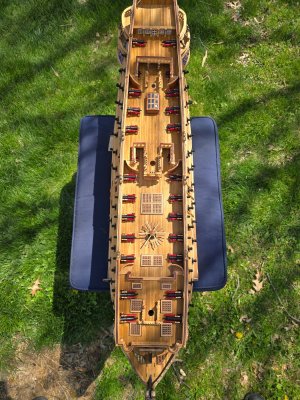
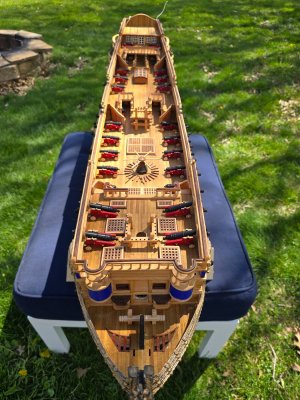
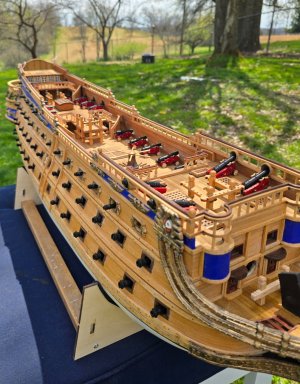
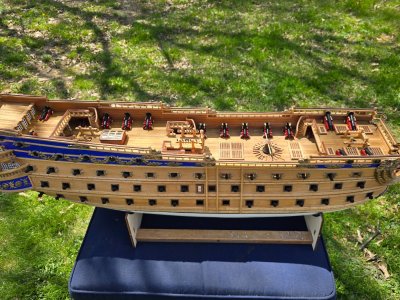
ZHL San Felipe - JM

Thank you Ted, I see you're starting an Occre HMS Beagle. I'm a bit jealous; the kit and instructions will probably be far superior than what came with the San Felipe. You have a follow from me!
Thank you. It's due to arrive on Friday. My building fingers are getting itchy
 
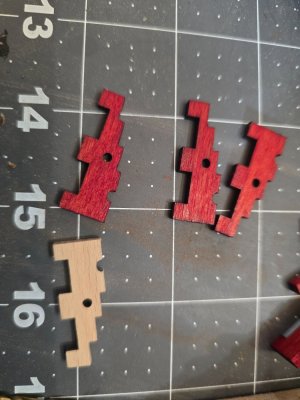
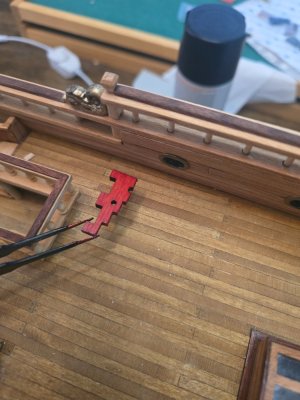
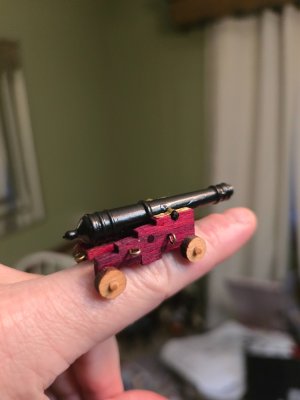
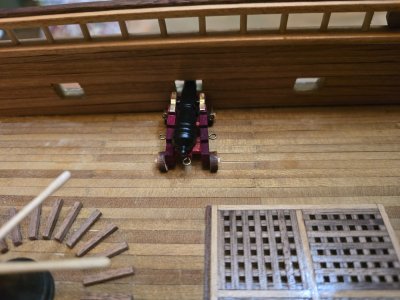
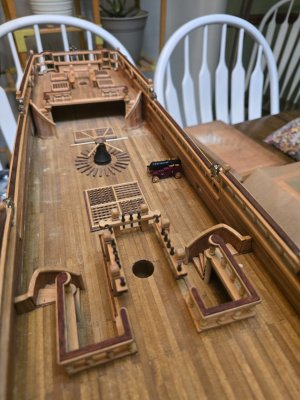
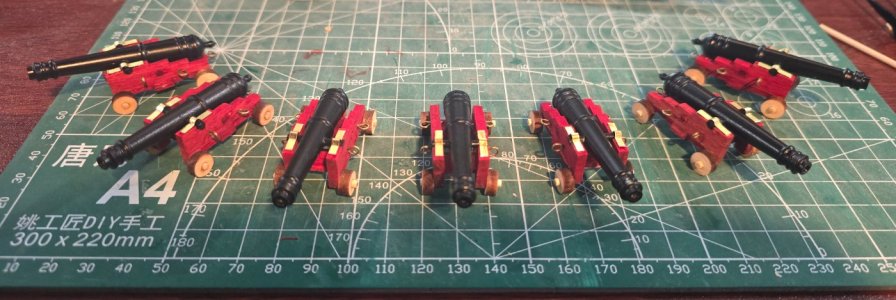
I love the way this color turned out on the gun carriage pieces. This is one pack of the old formula (pre 2010) crimson rit dye I had laying around, plus half a cup of acetone. I strained the mix through a coffee filter to remove the dye crystals and added half a cup of oil based polyurethane.

It's just dark enough for my taste and will be a fantastic contrast to the rest of the deck.

20260318_130425.jpg

20260318_131618.jpg
 
I love the way this color turned out on the gun carriage pieces. This is one pack of the old formula (pre 2010) crimson rit dye I had laying around, plus half a cup of acetone. I strained the mix through a coffee filter to remove the dye crystals and added half a cup of oil based polyurethane.

It's just dark enough for my taste and will be a fantastic contrast to the rest of the deck.

View attachment 585150

View attachment 585151
That's nice. I love the wood grain showing through and the color is perfect.
This whole dye with acetone procedure is new to me. You said it was ore 2010 dye. Would this work with the current dyes on the market? Is the mixing with the oil based poly necessary or could it be poly coated later so that glue would still work?
 
That's nice. I love the wood grain showing through and the color is perfect.
This whole dye with acetone procedure is new to me. You said it was ore 2010 dye. Would this work with the current dyes on the market? Is the mixing with the oil based poly necessary or could it be poly coated later so that glue would still work?
I don't see why you couldn't do this after assembly. Rit still makes this color, but I think it needs to be dissolved in mineral spirits or paint thinner, I can't remember which one. Honestly, the poly is so thin in this mix, you could probably just do acetone and dye and get the same look. I've been using CA glue for this build and it sticks to anything and everything.
 
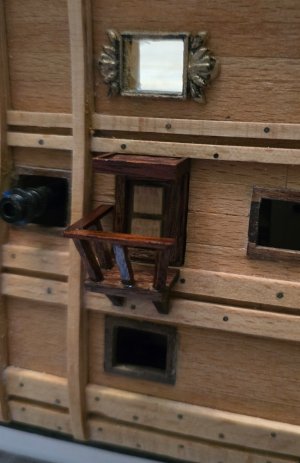
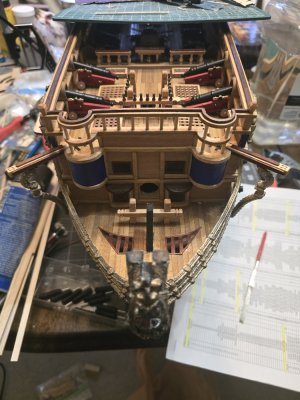
I installed the pilot doors(?) on both sides, and the small deck/roof combo on one side. Hopefully I can replicate it on the other side, these tiny railings are difficult.

20260415_201003.jpg
 
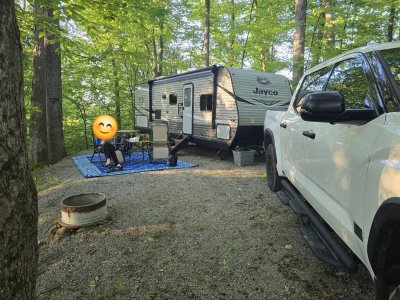
It's been a busy summer! My family took our new camper out for the first time and it turns out my wife likes the outdoors.....as long as she has electricity, hot running water, flushing toilet... you get the idea. Still had a blast.
1000028550.jpg

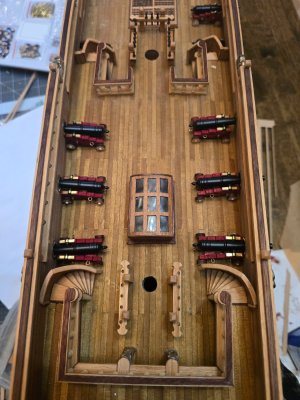
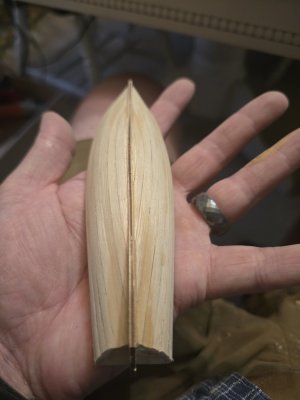
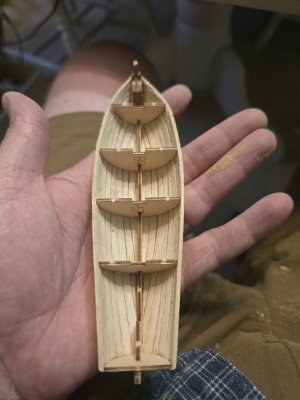
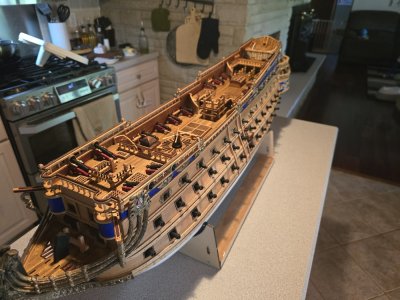
San Felipe progress has slowed but not stopped. The deck is almost complete and I planked on of the small skiffs. These small ones are a different type of challenge to plank than the main ship.
1000029088.jpg
1000029089.jpg

I also installed the catheads (had to look that one up!)
1000029091.jpg
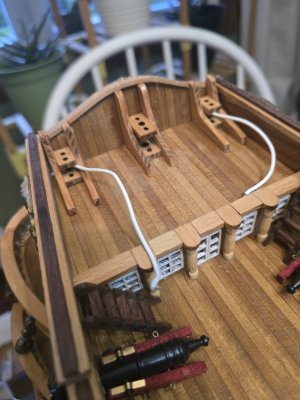
I also installed the bases for the lamps on the back of the ship. I'm still not sure how Im going to hide/camouflage the wiring, but I'll figure something out.
1000029090.jpg
1000029071.jpg
 
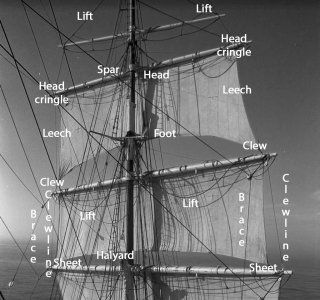
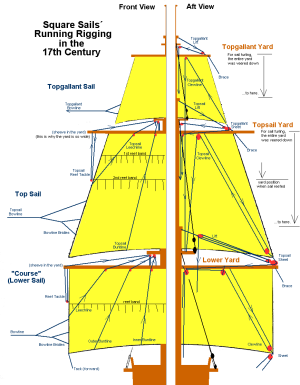
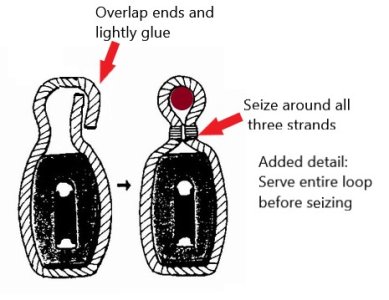
Most excellent work on your San Felipe. Rigging is intimidating on the first model UNTIL you obtain a good book on rigging and break it down line by line, learning the name of each line as you go, and routing them one at a time. It gets easier with some help from tutorial diagrams like those below, and a belaying plan that shows where each line is tied to, which should already be in your kit.

Square_rigged_sail_parts_and_running_rigging.jpg

Sail Running Rigging.png

Tying Blocks.jpg

Stropping a Block to a Yard.jpg
 
Most excellent work on your San Felipe. Rigging is intimidating on the first model UNTIL you obtain a good book on rigging and break it down line by line, learning the name of each line as you go, and routing them one at a time. It gets easier with some help from tutorial diagrams like those below, and a belaying plan that shows where each line is tied to, which should already be in your kit.

View attachment 612890

View attachment 612887

View attachment 612888

View attachment 612889
Thank you very much for the reference material! Once I finish the rest of the ship, I plan on taking a deep dive into rigging before I get started. This ship deserves to have really nice rigging considering the effort so far. I also plan to upgrade to blocks from HiSModel.
 
Thank you very much for the reference material! Once I finish the rest of the ship, I plan on taking a deep dive into rigging before I get started. This ship deserves to have really nice rigging considering the effort so far. I also plan to upgrade to blocks from HiSModel.
The pictures I provided above were for 17th century vessels, so some of the lines will be rigged differently, and that is worth noting. Your research will pick out the differences as you learn about each line.

Excellent plan on the block upgrades. They really do make a difference in the model's appearance. Are you planning on rigging with sails, or without? It really makes a difference in figuring out how the running rigging is routed. For myself, rigging with sails is actually easier because all the rigging references and books show where the lines are run and it is much eaier to know what the lines do because they are rigged in the configuration of being in use.

When the sails are taken off the yards and stored in the holds, the running rigging is still on the yards, but it is arranged in a configuration that is for in-place storage, and in that configuration, it is VERY confusing to know what is tied where and to what. I have yet to make a ship without sails. It is difficult to locate a description of how sheets and clew lines are routed when they are not attached to the clews of the sail. Other members here have experience with that method of rigging and can help.

The kit instructions typically describne how to rig a ship without sails, but as many know, the kit instructions could have errors or simplifications. This can even affect a ship like San Felipe which did not really exist in history, but is modelled after a typical 1st rate 1740's Spanish warship. So, there is very little historical documentation to draw from. Spanish ships of that period have much less historical information which survived when compared to ships from other nations. Making educated guesses can be tough on any elements of a Spanish 1st rate ship. Please post any questions you have in your build log and we will help provide answers.

 
Last edited:
Back
Top