• Win a Free Custom Engraved Brass Coin!!!
    As a way to introduce our brass coins to the community, we will raffle off a free coin during the month of August. Follow link ABOVE for instructions for entering.
  • SUBSCRIBE TO SHIPS IN SCALE TODAY!

    The beloved Ships in Scale Magazine is back and charting a new course for 2026!
    Discover new skills, new techniques, and new inspirations in every issue.

    NOTE THAT OUR NEXT ISSUE WILL BE MARCH/APRIL 2026

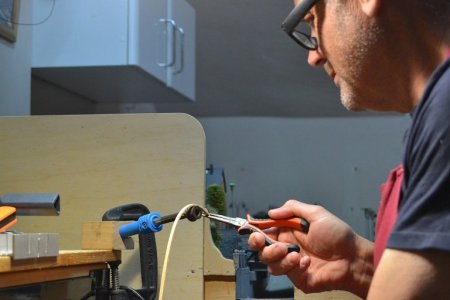
Plank bender

Really? I hadn’t realised that. Useful to know, thanks.
Hi Smithy
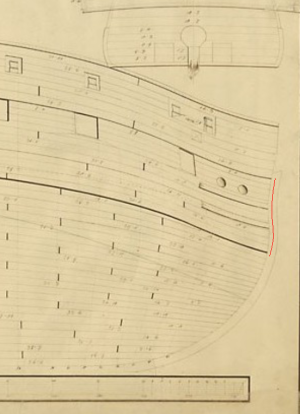
This has been brought up a few times here as it seems to be something that very few know about. I only learned about it after a very well known modeler/author pointed it out to me quite a few years ago and it makes sense. It is pretty clear on contemporary models and plank expansion drawings. From a practical side, it makes sense. Cutting the ends of overly thick planks would be a nightmare to get them to sit properly in the rabbet.
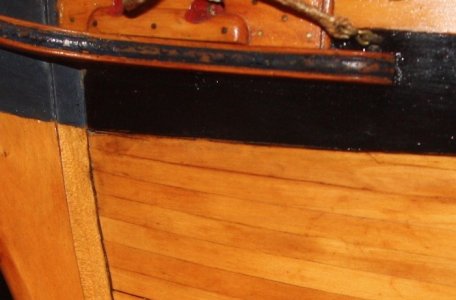
In the drawing I drew a red line parallel to the ends of the planks at the rabbet. You can see no planks, including the wales or thick stuff above and below the wales protrude above the rabbet. In the photo of the contemporary model you can see that the end of the wales strakes are flush with the surrounding planking as well.
1733756190643.png
1733756365666.jpeg
 
In the photo of the contemporary model you can see that the end of the wales strakes are flush with the surrounding planking as well.

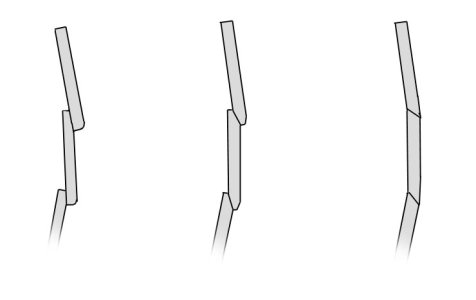
It reminds me of the way clinker planking sort of flattens out at the ends into something like carvel. I’ve never understood the geometry of that.

My first reaction to wales (and thick stuff too - another little known thing), tapering to the stem was disbelief. Surely, I thought, they are there to add strength so they should get thicker, if they change at all, towards their attachment points in the structure.

Now though, I believe these thick timbers add strength from frame to frame along the hull as well as ‘armouring’ the hull sides against impact of shot. Their attachment to the prow was relatively weak and unimportant and to the stern, tenuous!

Ships were notoriously weak at the ends, which is why they fought broadside to broadside so much.

I’m jotting this down as I think about it and hoping that you will correct and expand on my ponderings.
 
Yessir, what you are describing is called gain and is used as the strakes approach the bow.
Allan
1733777876037.jpeg

I’ve never understood the geometry of that.

Until now!

Thanks Allan.

Now let me have a quick look at the clinker built planking on my Alert...

Oh well, better luck next time. ;)
 
Question? I have several irons (one large 4”x6” and 1 small 1”x2”) used to shrink coverings on RC planes. Both have temperatures adjustable from 180~500℃ (356℉-932℉), are they usable for plank bending, or are they too hot?
 
I don't know how to do any of that so would you recommend I get the plank bender and would you use sanding blocks instead of the belt sander ?
For sanding blocks I use foam board which you can pick up almost anywhere. Staples, Michaels etc.


You can cut it to any shape you want. I put rubber cement on one side and then rubber cement on the piece of sandpaper. They stick together. If you need a new piece of sandpaper or a different grit, the old piece peels off and a new piece can be attached. The reason I like foam board is because it is a bit flexible and cushiony and works well for shaping wood, especially if you are sanding a hull.

If you want some kind of power sanding, you may want to look into getting a sand drill


It is amazingly inexpensive, small and compact. I have also used it for drilling holes and with small burrs for carving. It fits easily in your hand. Perfect for working on small models.

Rob
 
Back
Top