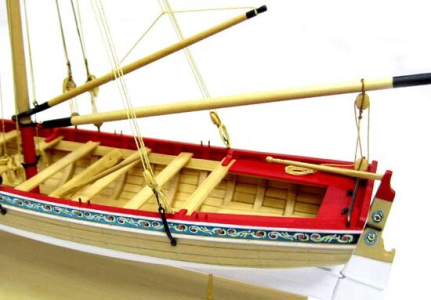
Sensible advice from Bob, the kind of thoughtful information that is all too lacking in the world today.
If we were all able to physically get together in a room with tools and benches, we’d be having this conversation withe starting point being an understanding of whereabouts on the range of beginner you may be.
I was involved with a build a few years back with a group which included a Naval Architect and a fisherman in the team. We’re talking 1:1 scale here.
The two used to fall out regularly, both having professional knowledge o& the subject so to speak - a 24 foot skiff, built over moulds.
One day I realised what was happening. The architect was working to the design. Nil tolerances. Parts had to fit to optimum glue lines (which means a fit of something like twenty thou for the glue, to give maximum strength, and over the full area.
The fisherman was working too ‘good enough to be ready for the next tide’ which meant just that - good enough. He would build to be good enough to stake his life on it, but he had a living to earn. His skill set with the tools he had produced adequate work. Given a tool intended for more precise work he was a bit lost. The architect wasn’t good with tools, but he knew what he expected them to produce, and that was where the friction emerged,
Desire outran capability in his case, and he was frustrated as a result. The fisherman was happy enough with the result, as his expectation was low from the start.
The point is that it comes down to your own aims. Are you aiming for museum quality, where by dtail is true to full size original? Or are you aiming for presentation quality - a neat looking item of interior decoration. Or maybe just a creative way to pass some time, and the end result, in itself, doesn’t have much value?
If we were chatting about it we’d also be talking about what knowledge and skill you have at the moment. And whether you need a bit of learning in a non risk situation.
Even today, if I’m undertaking a joint or an assembly I’ve not used, I may make a test piece, or a maquette to to find out how to do something or get the result in fact that I have seen in my head.
I just wish that run of training kits was based over more attractive models, but I see their value.
To the extent that it is all just shaping wood and fixing the bits together, all we need is the ability to shape small bits of wood - saw, drill, chisel, plane, gouges, scalpel, clamps. And a plan, and knowledge.
Back in my mythical meeting, we’d pull out some wood, hand across some tool or other and say “here, make the shape on this plan” and with a few hints about how wood behaves and why that bit split and how to persuade that bend we’d have an enjoyable day of it, and the newest apprentice goes away with a huge pocketful of knowledge and confidence, and a feeling that a gang of white haired old bearded blokes have his back.
Well, this forum is the nearest we’ve got. As I believe they say in Oz “don’t be a stranger “
We’ll all be looking at your logs and offering different advice,
Enjoy!
Jim
.














 Ship model kits are a good thing in concept, but the "novice" consumer must recognize that in addition to the fact that in large measure, profitability is dependent upon keeping production costs as low as possible, the more kits are sold to a customer, the less likely the customer will be to buy another one, so in order to remain profitable, new customers who lack the experience and skills to build the kits must be continually recruited. In short, the ship model kit business depends a lot more on the "sizzle" than it does the "steak."