• Win a Free Custom Engraved Brass Coin!!!
    As a way to introduce our brass coins to the community, we will raffle off a free coin during the month of August. Follow link ABOVE for instructions for entering.
  • PRE-ORDER SHIPS IN SCALE TODAY!

    The beloved Ships in Scale Magazine is back and charting a new course for 2026!
    Discover new skills, new techniques, and new inspirations in every issue.

    NOTE THAT OUR FIRST ISSUE WILL BE JAN/FEB 2026

Cristobal Colon caravel, Santa María

  • Thread starter Thread starter Adry
  • Start date Start date
  • Watchers Watchers 10
Building a replica or scale model of any of Columbus' vessels of discovery is a lot like building a replica or scale model of a dinosaur without any bones in hand. And then there's the problem of what color the dinosaur replica is supposed to be. It never ceases to amaze me that there are still ship model kit manufacturers selling kits for building scale models of Columbus' vessels when there's no way of knowing what they actually looked like. I guess trying to sell a kit to build a model named "Somebody's Best Guess of What the Santa Maria Maybe Looked Like" didn't sell so well.
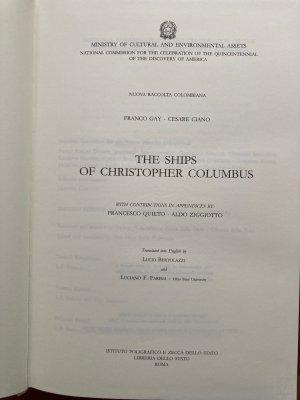
True. However, it can be fun researching what they were likely to have looked like. I think that there would be no need to apologize for a model labeled "15th century vessel of the type that Columbus sailed." Photo is of one book on the subject published in 1996. There certainly may have been more good research conducted since then. Fair winds!

columbus.jpeg
 
Hola Adry. Nadie sabe con certeza cómo era la Santa María. Para averiguarlo, podríamos organizar una sesión de ouija e invocar a Cristóbal (el de Génova, no el de Jaca) :pag. Bromas aparte, si yo la hiciera me decantaría por la de OcCre. Me la imagino con la barriga abultada, como la nao ballenera San Juan que se encontró en Red Bay, Canadá.

Hi Adry. Nobody knows for sure what the Santa María looked like. To find out, we could organize a Ouija board session and summon Cristobal (the one from Genoa, not the one from Jaca). Joking aside, if I were to do it, I'd go with the one from OcCre. I imagine him with a bulging belly, like the San Juan ship that was found in Red Bay, Canada.
 
Last edited:
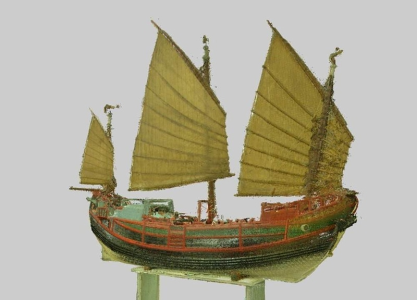
Seriously :rolleyes:, no one knows what the real 'Santa Maria' was like, but we can quite safely assume that she didn't look anything like this:
1770475115012.png
That saying, good old Christopher might have dreamed about making his retour jouney with one of those. :D
 
Mmmmm..... dunno. Maybe you might ask your local marine archaeologist about that.
Point taken. Mr. Batchvarov believes that no model of the Santa Maria should ever be built because of paucity of information about the vessel. I understand and sympathize with that position. However, it does assume the modeler's intention is to build an accurate model of an historic vessel. In literature, there are genres such as science fiction or speculative fiction and historical fiction. There is no expectation on the part of readers that books of this type are completely accurate. When it comes to model ships, accuracy are usually assumed. As modelers, perhaps we need better ways to describe the purpose of a project, our intentions in its creation, and the level of accuracy. Fair winds!

 
The OCCRE version comes close to the official 1892-version. A bit basic and somewhat lacking in detail, but it's up to you to arrange that to your liking. And the Dusek version isn't that bad, at least she has a rounded stern. She's not more unlikely than any other. Pavel Nikitin has a really beautiful, if maybe somewhat pricey version of the "Santa Maria". But just forget about 'authenticity', no one knows what she has looked like in reality, so just chose the one that appeals the most to you.

The OCCRE version comes close to the official 1892-version. A bit basic and somewhat lacking in detail, but it's up to you to arrange that to your liking. And the Dusek version isn't that bad, at least she has a rounded stern. She's not more unlikely than any other. Pavel Nikitin has a really beautiful, if maybe somewhat pricey version of the "Santa Maria". But just forget about 'authenticity', no one knows what she has looked like in reality, so just chose the one that appeals the most to you.
and why would you think that a rounded stern would be appropriate?
 
and why would you think that a rounded stern would be appropriate?
As far as i know, up until the early 16th century, as well in the northern as mediterraenian ship building tradition, all seagoing ships were build round sterned (double enderd with almost symmetrical lines fore/aft). The earliest known (to me) square sterned seagoing vessels were caravels (from +/- 1400) and galions from +/- 1500. And as the Santa Maria reportedly was not a caravel ...
 
Last edited:
However, it does assume the modeler's intention is to build an accurate model of an historic vessel.

When you sell a model kit in a box that says, "Museum Quality Scale Ship Model Kit of Columbus' Santa Maria" for a couple of hundred bucks, it's no assumption that the manufacturer's intention is to sell a model which is "an accurate model of an historic vessel." It is a fraud upon the consumer who buys a model so advertised when, in fact, as is the case with many models on the market today, it isn't remotely possible to build a scale ship model of the quality the seller advertises from the kit that's being sold.

As modelers, perhaps we need better ways to describe the purpose of a project, our intentions in its creation, and the level of accuracy. Fair winds!


It is in the nature of the thing that any representational work must be evaluated on its own merits alone. If its creator must "describe the purpose of a project, (his) intentions in its creation, and the level of accuracy," to enable the viewer to appreciate the work, then the artist has simply failed to create a work that serves its communicative purpose regardless of the intentions of its creator which are irrelevant.
Serious scale ship modelers have long had a recognized and accepted objective definition of a "high-quality scale ship model:"


"A high-quality scale ship model provides a compelling impression of an actual vessel within the constraints of historical accuracy."

Rob Napier, Caring for Ship Models - A Narrative of Thought and Application
(2022) Seawatch Books.
See: https://seawatchbooks.com/products/...tive-of-thought-and-application-by-rob-napier
If a model ship, regardless of who made it, or how, does not "provide a compelling impression of an actual vessel within the constraints of historical accuracy" when the knowledgeable viewer examines it, then it simply isn't a high-quality scale ship model. It may be a less-than-high-quality scale ship model (which is just another way of saying a "low quality scale ship model,") a decorative item, a toy, or even a work of high-quality folk art, but it's not a high-quality scale ship model, which is what building scale ship models is about, and all that it is about.

This is what Chapelle, Batchvarov, Napier, Lauria, and all the rest of the "experts" over the last fifty years or so have been trying to teach us: The model must speak for itself.

As Ron Napier explained in greater detail:


"Historical accuracy" encompasses all the objective, or measurable, standards of technical exactness that might apply to a ship model. These embrace the obvious hull shape and fairness; precision in fittings, rigging, and colors; lack of anachronisms; and so forth. But it also encompasses all aspects of craftsmanship because the lack of craftsmanship creates unrealistic and, therefore, historically inaccurate blemishes on a model. ... The phrase "historically accurate" alone effectively replaces the intention of the now-vapid "museum quality."

"... (A "compelling impression") allows and encourages aesthetic interpretation of a vessel that will help propel the viewers to make the leap of faith that allows a model to work or to willingly suspend the disbelief that keeps a model from working. Both processes help viewers accept the invitation to visit a ship instead of a model. Compelling impression is the result of applying artistic and interpretive decision-making processes... to amplify a model beyond being a mere assemblage of parts.

"It is important to recognize that neither arm of our definition considers how a model was made. There is no assessment of whether entire models or components of them are built from scratch, built from kits, or built by teams of modelers. The main thing is the appearance of the finished model. The ends justify the means.

"
One could argue that it is more important and more difficult to teach inexperienced modelers how to tell if their model yields a compelling impression than it is to teach them how to put the thing together. If they are only interested in being satisfied with the latter, then the former is even tougher."
 
Last edited:
As far as i know, up until the early 16th century, as well in the northern as mediterraenian ship building tradition, all seagoing ships were build round sterned (double enderd with almost symmetrical lines fore/aft). The earliest known square sterned seagoing vessels were caravels (from +/- 1400) and galions from +/- 1500. And as the Santa Maria reportedly was not a caravel ...
probably the only thing that could be counted on is that the ships of columbus were the cheapest that could be had
 
Point taken. Mr. Batchvarov believes that no model of the Santa Maria should ever be built because of paucity of information about the vessel. I understand and sympathize with that position. However, it does assume the modeler's intention is to build an accurate model of an historic vessel. In literature, there are genres such as science fiction or speculative fiction and historical fiction. There is no expectation on the part of readers that books of this type are completely accurate. When it comes to model ships, accuracy are usually assumed. As modelers, perhaps we need better ways to describe the purpose of a project, our intentions in its creation, and the level of accuracy. Fair winds!

 
Back
Top