• Win a Free Custom Engraved Brass Coin!!!
    As a way to introduce our brass coins to the community, we will raffle off a free coin during the month of August. Follow link ABOVE for instructions for entering.
  • PRE-ORDER SHIPS IN SCALE TODAY!

    The beloved Ships in Scale Magazine is back and charting a new course for 2026!
    Discover new skills, new techniques, and new inspirations in every issue.

    NOTE THAT OUR FIRST ISSUE WILL BE JAN/FEB 2026

Making your own Ropes

I’m still waiting on the Rope Walker to arrive. It’s probably going to be two weeks before it arrives.

Lots of testing will follow as soon it arrives. In the mean time I been looking to see what’s available locally here in regards to the thread and trying to work out what thread I need to make apx 1.5mm rope on the PL4-4 I’ve ordered.
 
no os compliques tanto la cabeza, haceros la máquina, y hacer unos cuantos metros de cabo, que irá a la basura, hasta que entendáis como funciona, y pilleis la práctica, yo ahora hago cabos de 6 m de longitud en mi salón, cuando monto la máquina, uso todo el día y hago muchos m de diferentes calibres. Práctica error, y al final premio, hay gente que tiene tabla hasta de los pesos a poner, yo a ojo y salen perfectos. De verdad, no es tan difícil. Un saludo al mundo
I think that’s great advice. Yes. I’m complicating it. I guess I’m trying to find the thread needed for what I want to make.

Once the rope walker arrives I will try threads that’s available here, till I achieve my end goal. Which is 1.5mm rope for the main rigging for this ship I built.

IMG_1218.jpeg

IMG_1217.jpeg

IMG_1130.jpeg

IMG_1007.jpeg

IMG_0935.jpeg
 
nope, the first number is for the strands and the second number is for the count of yarns in one strand.
3 strand rope is the most common rope you make. 4 strands is difficult. because it could collapse without core.
2 strands? I make that only when I need very thin rope. It doesn't look good on thicker rope, like 0,4 mm diameter.
so 3x1, 3x2, 3x3, 3x4, 3x5.........3x20 are all 3 strands and the second number is how many yarns there are in one strand.
Now I am more confused. I thought I worked it out. lol.
 
Ahora estoy más confundido. Creí que lo había resuelto. Jajaja.
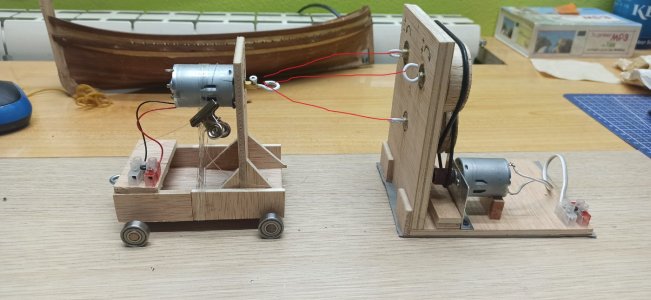
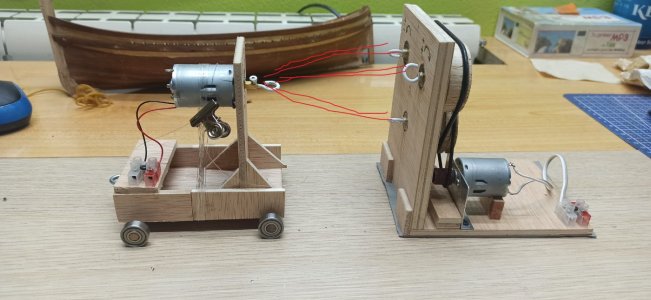
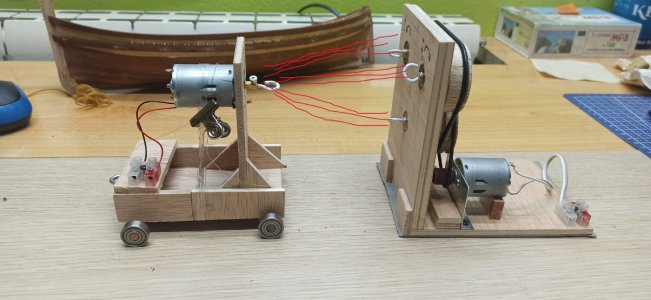
Hola Phillipsart...el segundo nº despues de la "x" es los hilos de Gütterman Mara a120 que pones en cada gancho de la maquina...lo dicho, una imagen, creo que ahora estará más claro...los hilos van desde el carro fijo que es el que da el giro a los "cordones" al carro movil, el de la izquierda, las lineas rojas serian los hilos por cordon. Las fotos estan renombradas, 3x1, 3x2, 3x3...


3 x 1.jpg

3 x 2.jpg

3 x 3.jpg
 
Hola Phillipsart...el segundo nº despues de la "x" es los hilos de Gütterman Mara a120 que pones en cada gancho de la maquina...lo dicho, una imagen, creo que ahora estará más claro...los hilos van desde el carro fijo que es el que da el giro a los "cordones" al carro movil, el de la izquierda, las lineas rojas serian los hilos por cordon. Las fotos estan renombradas, 3x1, 3x2, 3x3...


View attachment 576181

View attachment 576182

View attachment 576183
I don’t think i can do that with the PL4-4 rope walker from ship work shop.

Thanks for the explanation and the images. This explains a lot. I think I get it now.

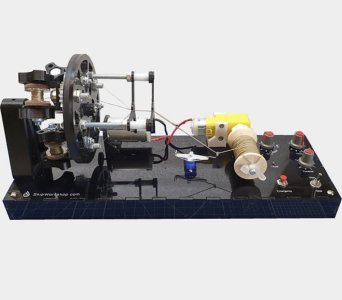
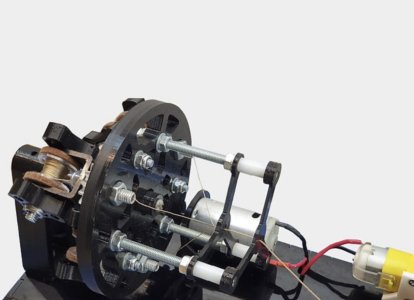
The PL4-4 I ordered feeds of bobbins that are used in some sewing machines and appears does not have the ability to do what you shown with the separate threads in each hock.

I would probably have to make each strand separately and wind those onto a bobbin and go from there. Which is no issue really.

But it appears for that reason these rope walkers like yours appear to be the one to use.

I don’t really have the room for a setup like that. So the pl4 for me was a better purchase as it don’t take up any room.

Which means with the PL4. I will only be able to do 2x1 3x1 4x1 or 4x1 with a core. This was something I was not aware off when I ordered the PL4.
Knowing this now. Would I have purchased the PL4? Probably not.

Although I do like how I will be able to make longer runs of rope and how little room it takes up.


IMG_1244.jpeg

IMG_1243.jpeg
 
Last edited:
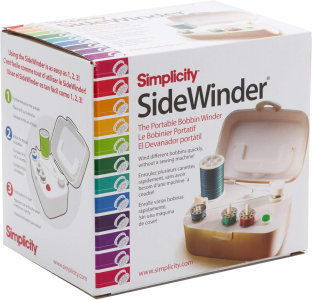
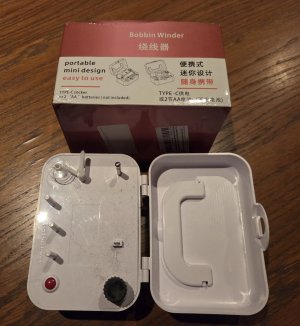
By the way, since nobody's mentioned it so far, anybody who's going to be using a planetary gear rope making machine tht uses standard sewing machine bobbins will want to get a "bobbin winder." These not only make winding bobbins fast, but they also ensure even tension on the thread as it is loaded on the bobbin, another "essential" for good results. They're not expensive. See: https://www.amazon.com/Simplicity-S...&hvlocphy=&hvtargid=pla-4584345020110551&th=1

1770399366180.png
 
No creo que pueda hacer eso con el andador de cuerda PL4-4 del taller naval.

Gracias por la explicación y las imágenes. Esto explica muchas cosas. Creo que ya lo entiendo.

El PL4-4 que pedí alimenta las bobinas que se usan en algunas máquinas de coser y parece que no tiene la capacidad de hacer lo que usted muestra con los hilos separados en cada corvejón.

Probablemente tendría que tejer cada hebra por separado, enrollarlas en una bobina y empezar a partir de ahí. Lo cual no supone ningún problema.

Pero parece que por esa razón estos caminantes de cuerda como el suyo parecen ser los que hay que utilizar.

Realmente no tengo espacio para una configuración así. Así que el PL4 me pareció una mejor opción, ya que no ocupa espacio.

Lo que significa que con el PL4 solo podré hacer 2x1, 3x1, 4x1 o 4x1 con un núcleo. Esto era algo que desconocía cuando pedí el PL4.
Sabiéndolo ahora, ¿habría comprado el PL4? Probablemente no.

Aunque me gusta poder hacer tiradas más largas de cuerda y el poco espacio que ocupa.


View attachment 576196

View attachment 576197
Quizás, puedas poner en doble cada bobina, y asi poder hacer por lo menos de 3x2 o 4x2, es cuestión de probar. Por cierto, buena maquina, esa no necesita espacio, yo uso mi comedor cada vez que hago cabos, hehehehehe...
 
that pl4 looks awsome. i watched the videos (no sound was dissapointing) the planetary system simplifies the process but you are limited to whatever amount of thread on the bobbins... thats not a real game changer though. i doubt youll need 1000' of rope.

i saw another planetary system that allows you to use the original spools of thread, so no need for making bobbins.

then there is crisjaca's machine, very simple and straight forward, an easy diy project. ill be making a similar machine, as i have done in the past with my cub scouts after visiting mystic seaport (30 years ago).

i have an old norelco tripple head shaver im going to make into my motorized ropewalk. i have to make a seperator trolly and an end hook winder, thats this week's project. meantime, shopping for threads tomorrow. i really wont need the ropes till next year but this gives me a head start to get ready for re rigging my old ships.... ive got a clipper half rigged on the bench at the moment. too late to use custom ropes at this point.

thanks everyone. i bookmarked this conversation for future reference... lots of good info from the experts. luv this site!
 
that pl4 looks awsome. i watched the videos (no sound was dissapointing) the planetary system simplifies the process but you are limited to whatever amount of thread on the bobbins... thats not a real game changer though. i doubt youll need 1000' of rope.

i saw another planetary system that allows you to use the original spools of thread, so no need for making bobbins.

then there is crisjaca's machine, very simple and straight forward, an easy diy project. ill be making a similar machine, as i have done in the past with my cub scouts after visiting mystic seaport (30 years ago).

i have an old norelco tripple head shaver im going to make into my motorized ropewalk. i have to make a seperator trolly and an end hook winder, thats this week's project. meantime, shopping for threads tomorrow. i really wont need the ropes till next year but this gives me a head start to get ready for re rigging my old ships.... ive got a clipper half rigged on the bench at the moment. too late to use custom ropes at this point.

thanks everyone. i bookmarked this conversation for future reference... lots of good info from the experts. luv this site!
PL4 + bobbin winder = endless rope
Video in attachment ;)

20260206_193504.jpg

View attachment 20260206_193209.mp4
 
Which means with the PL4. I will only be able to do 2x1 3x1 4x1 or 4x1 with a core. This was something I was not aware off when I ordered the PL4.
Knowing this now. Would I have purchased the PL4? Probably not.

Not exactly. You can make multiple yarns on the PL4, but you have to load the bobbins with however many yarns you wish to use simultaneously so that the multiple yarns (threads) come off the bobbin together with equal tension on each. In theory, at least, and I've never done this, so I expect it's a lot easier said than done. Another possible method would be to simply twist parallel lengths of thread together and load that onto the bobbins. Finally, and this will definitely work, you can make up thinner three-strand rope and then wind that on the bobbins and lay that rope up as if each thin rope was a strand of the larger desired diameter rope. This is a common method for making large-diameter four-strand anchor cable.

The foregoing discussion is somewhat academic, though, since you can make just about any scale rope size you'd need up to 1.30mm diameter using three single strands of an easily sourced standard thread size (i.e., a "1x3" or "1x4" rope.) At 1:96 scale that's almost a 5" diameter rope, at 1:48 scale almost a 2.5" diameter rope, and at 1:24 scale almost a 1.25" diameter rope. That pretty much covers the necessary size range short of anchor cable which is made up of "three strands of three strand rope." There are, of course, also thicker thread available which will yield thicker three- or four-strand rope, as well.

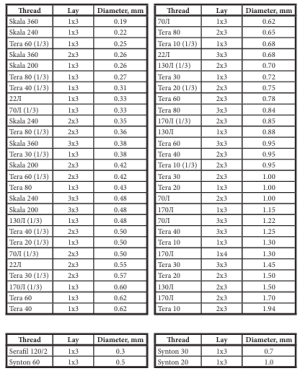
Below is a copy of the "rope recipe" Alexey Domanoff provides in the PL4 planetary rope machine instructions.


1770400223131.png

Note:
• 1/3 means that the thread was untwisted into plies, which then were used to wind the rope.
• 1х, 2х, 3х - number of plies in a strand.
• х3, х4 - number of strands in the rope.
• The real rope is measured by circumference. Here the diameters are given.

The differences between Gutermann Mara, Tera, and Skala threads lie in their construction, applications, and intended uses. Mara threads are MicroCore Spun Polyester threads, ideal for construction and decorative stitching on apparel, leather, and accessories. Tera threads are Continuous Filament polyester threads known for their silky, shiny surface and strong abrasion resistance, commonly used for upholstery and leather stitching. Skala threads are semi-transparent polyester threads used for blind hemming and stitching, blending into the fabric for an almost invisible seam. Skala is available in smaller sizes than Mara or Tera.

For more detail on Gutermann threads, see: https://blog.wawak.com/post/guide-to-gutermann-threads

Now, to add yet another level of confusion, be aware that there are two sources of Gutermann thread: the "retail division" and the "industrial division" and some sizes ("weights,") colors, and/or amounts may be available from one division and not the other. Here is how Gutermann explains the difference between Mara from the Retail segment of Gutermann compared to the Industrial segment of Gutermann:

Most fabric stores carry Gutermann Sew All which is a Mara thread and the most common size is Tex 30. Mara is a MicroCore Spun Polyester thread and Tex 30 is the most popular Tex size sold in the home-sewing market. The spool sizes are smaller, have a different 'weight' per cone and are more suited to domestic machines.

Mara from the Industrial division is the same thread construction, MicroCore Polyester, but the Industrial segment has Tex 19, 25, 30, 40, 60, 100, 200 265 and 400. The spool is different and the Tex sizes are produced for various fabric weights, stitch types and seaming requirements. The Industrial products are made for use on Industrial machines and often the cones will not run correctly on a domestic or home machine. Industrial Distributors are set up to service small manufacturers, designers, and workrooms who buy a variety of thread types and need a variety of colors - while the Industrial Division of Gutermann sells only by the box of a color or in larger cone sizes compared to the Retail Division.

In some cases there are similar products available from both divisions but in general, the Industrial Division is supplying the manufacturing segment of the business.


It's easier to just order online from WAWAK than to try to find what you are looking for in your local sewing store. Buying in bulk is also a lot less costly. The local sewing stores carry thread on spools made for home sewing machines. The industrial suppliers like WAWAK sell thread in larger spools and even monster-size "cones" at substantial savings.

Oh yes, and another thing to keep in mind: Not every color of thread is always available in every weight (size) of the same type of thread! Yep. So when you pick your color(s) keep in mind that you may want to pick a color that is available in all the sizes, you are going to want to use if you want your rigging to be the same color regardless of its size. (See: https://blog.wawak.com/post/gutermann-mara-thread-color-chart and https://www.bing.com/ck/a?!&&p=7414...3N0L2d1aWRlLXRvLWd1dGVybWFubi10aHJlYWRz&ntb=1 or just use what the experts use as discussed in the linked forum discussions.)
 
Last edited:
Like Bob said, you can wind 2 or more yarns on a bobbin at one time. But you need to be presize in what you do, make sure you don't mess up the yarn on the bobbin. Make sure the yarns are turn up the bobin with the same strenght and together at once.
 
By the way, since nobody's mentioned it so far, anybody who's going to be using a planetary gear rope making machine tht uses standard sewing machine bobbins will want to get a "bobbin winder." These not only make winding bobbins fast, but they also ensure even tension on the thread as it is loaded on the bobbin, another "essential" for good results. They're not expensive. See: https://www.amazon.com/Simplicity-S...&hvlocphy=&hvtargid=pla-4584345020110551&th=1

View attachment 576203
This is amazing. I just so happening to be watching reviews on this very product half hour ago.

The thing I’m trying to work out is can I use the supplied spool on the PL4 on this winder.

IMG_1245.jpeg
 
This is amazing. I just so happening to be watching reviews on this very product half hour ago.

The thing I’m trying to work out is can I use the supplied spool on the PL4 on this winder.

View attachment 576269
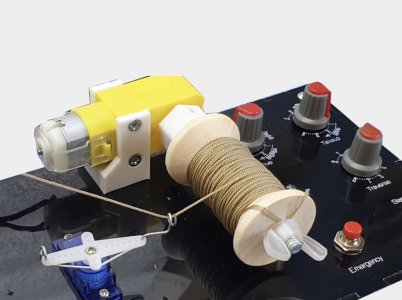
The spool pictured is the take-up spool that holds finished rope. I believe that's a part that goes with the machine and isn't a generic item. That said, if you wanted to store your line on a spool like that, it would be easy enough to turn a bunch of them on a lathe. Of course, I think most people store their made up rope in larger coils in plastic bags or the like because it has to come off the spool to be heat-treated anyway.

The planetary wheel itself holds standard sewing machine bobbins that can be bought for very little at any sewing store or on line. I got a bunch so I could store different sized thread on them and only make as much as I needed at a time. At least that was the plan. I still haven't had occasion to do that as yet!
 
Last edited:
The spool pictured is the take-up spool that holds finished rope. I believe that's a part that goes with the machine and isn't a generic item. That said, if you wanted to store your line on a spool like that, it would be easy enough to turn a bunch of them on a lathe. Of course, I think most people store their made up rope in larger coils in plastic bags or the like because it has to come off the spool to the heat-treated anyway.

The planetary wheel itself holds standard sewing machine bobbins that can be bought for very little at any sewing store or on line. I got a bunch so I could store different sized thread on them and only make as much as I needed at a time. At least that was the plan. I still haven't had occasion to do that as yet!
What is the heat treatment you mentioned please
 
What is the heat treatment you mentioned please
When rope is twisted up it has a tendency to unravel at the ends unless it's whipped, taped, or whatever to keep it from unraveling. This is particularly so with polyester thread which is made of relatively stiff, smooth, plastic extruded filaments. The twist in rope made with polyester thread can be "relaxed" by heating the rope until the fibers are softened and the tension in the rope is dissipated. When the rope cools and hardens, it will "take a set" with the tension relaxed. Such heat-treated rope can be cut anywhere along its length and it will not unravel. This makes using it in rigging applications much, much easier. The trick is to subject the rope to just enough heat, but not too much for just enough time, but not too much. Too little heat and/or time and the rope will not relax and will still unravel when cut. Too much heat and your rope will melt and be ruined.

Here again, read the posts in this forum and in the MSW forum. The techniques for heat-treating, whether in an oven or using an electric hair dryer, are discussed at length therein. They give temperatures and times. See: https://modelshipworld.com/topic/27...t-to-know-how-see-these-tutorials-and-topics/ and https://modelshipworld.com/topic/19706-gutermann-polyester-thread-for-making-rope/page/2/ at post #54.

Read the rope-making tutorial in SoS linked previously as well. All the questions anybody could have are answerered in those posts. Read, study, learn.
 
When rope is twisted up it has a tendency to unravel at the ends unless it's whipped, taped, or whatever to keep it from unraveling. This is particularly so with polyester thread which is made of relatively stiff, smooth, plastic extruded filaments. The twist in rope made with polyester thread can be "relaxed" by heating the rope until the fibers are softened and the tension in the rope is dissipated. When the rope cools and hardens, it will "take a set" with the tension relaxed. Such heat-treated rope can be cut anywhere along its length and it will not unravel. This makes using it in rigging applications much, much easier. The trick is to subject the rope to just enough heat, but not too much for just enough time, but not too much. Too little heat and/or time and the rope will not relax and will still unravel when cut. Too much heat and your rope will melt and be ruined.

Here again, read the posts in this forum and in the MSW forum. The techniques for heat-treating, whether in an oven or using an electric hair dryer, are discussed at length therein. They give temperatures and times. See: https://modelshipworld.com/topic/27...t-to-know-how-see-these-tutorials-and-topics/ and https://modelshipworld.com/topic/19706-gutermann-polyester-thread-for-making-rope/page/2/ at post #54.

Read the rope-making tutorial in SoS linked previously as well. All the questions anybody could have are answerered in those posts. Read, study, learn.
Thank you, always something interesting to research
 
I hear you. I am very fortunate that I live close by to this company in Canada. A bag of line is around $8.00 CDN plus shipping. Shipping in Canada is costly. We call Canada Post the Postal Mafia. I have used Syren in the past but the exchange rate at 30 percent plus shipping US makes these products crazy expensive. However I look at the quality of the product and does it meet my expectations. It's truly unfortunate that after spending hundreds of dollars on a ship kit you now have to spend half of much again on a bunch of string to get it right.
 
Not the smoothest start… but progress is progress.

My journey into making my own scale rope definitely didn’t start perfectly
Like most new tools and processes, there’s a learning curve — and I found it pretty quickly.

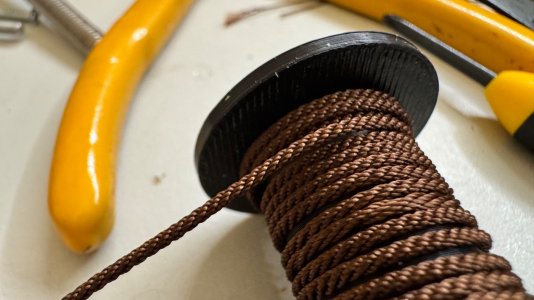
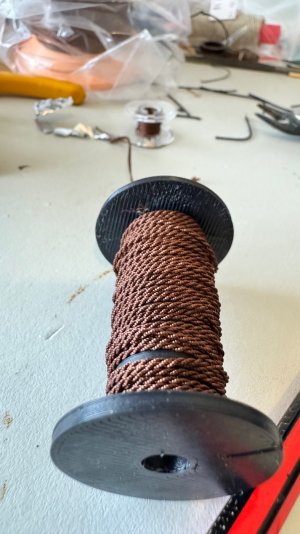
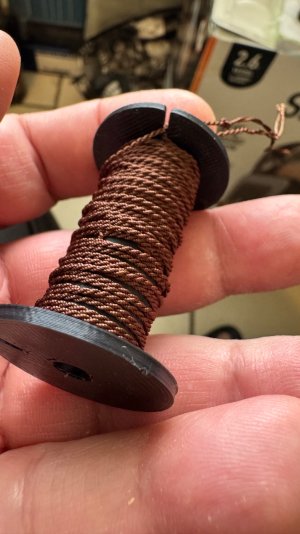
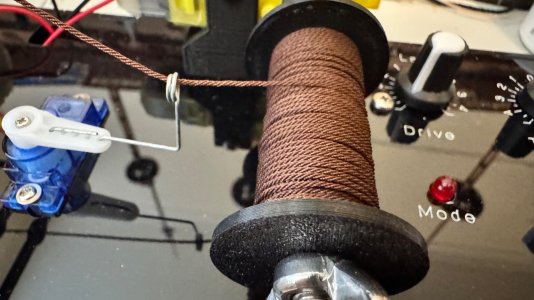
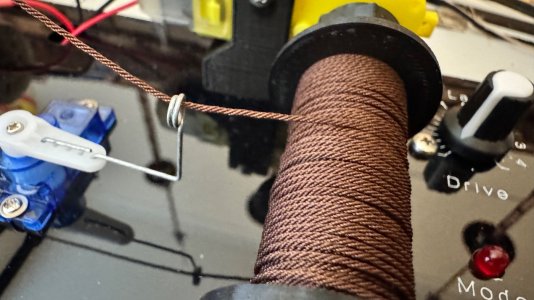
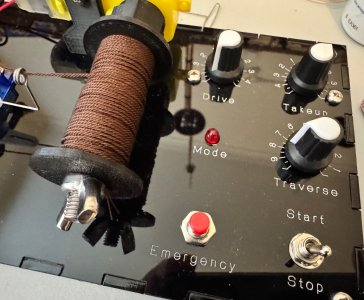
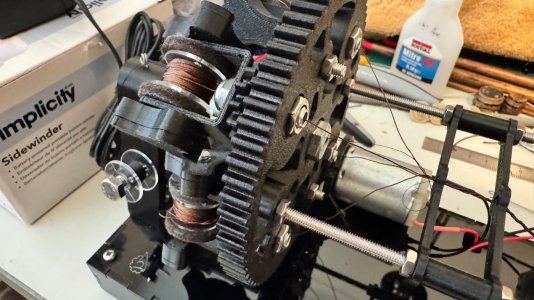
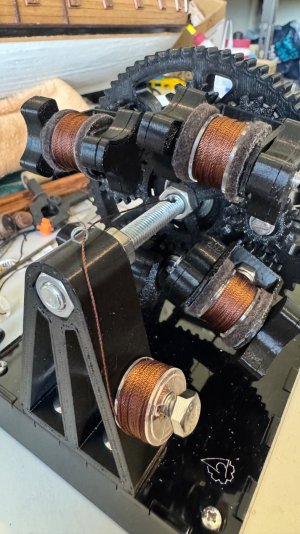
I purchased the PL4-4 rope maker from Ship Work Shop, because of its ability to produce fine, consistent rope with a correct lay for scale ship modelling. And to be fair to the machine — when everything was working as it should, it produced some very nice looking rope. The twist, consistency, and colour you can see in the photos are exactly what I’ve been chasing for my builds.

However… things came to a sudden stop.

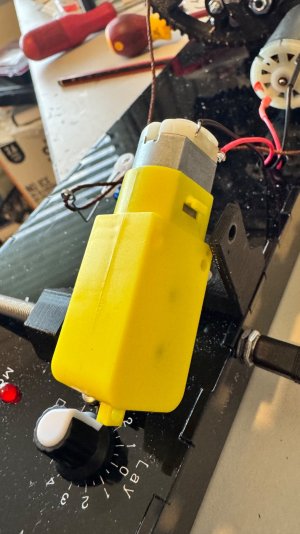
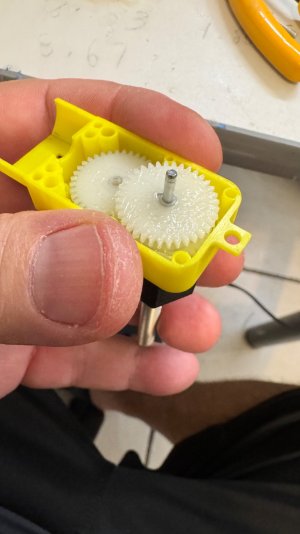
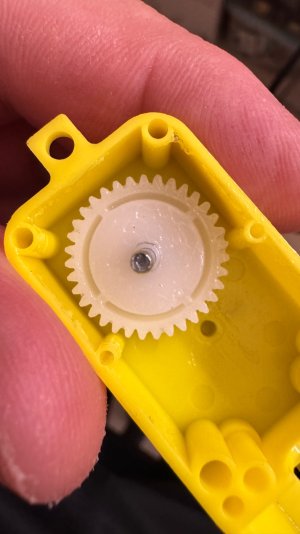
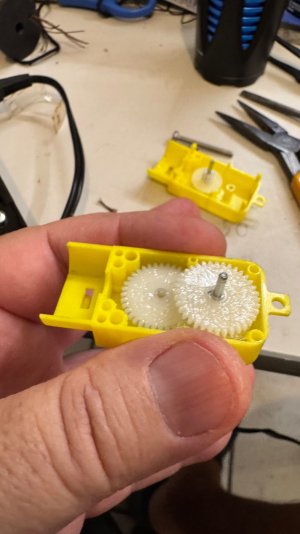
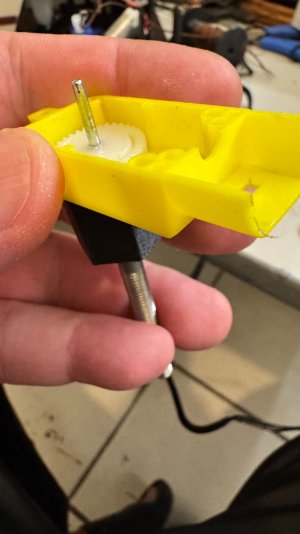
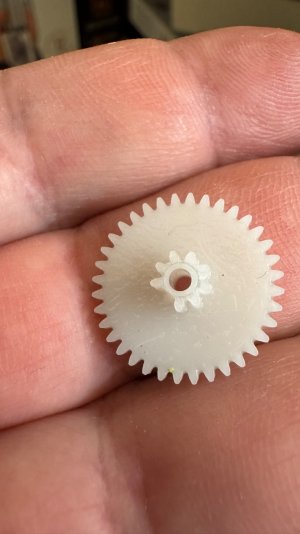
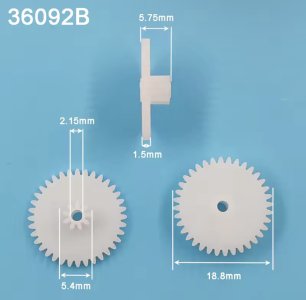
As I started running longer lengths, one of the bobbins began to over-run. The thread came off faster than it should have, jammed, and something had to give — unfortunately it was the gear inside the take-up spool that stripped.

After pulling it apart and having a proper look, I’m confident this one is on me, not the PL4-4.

Two key mistakes on my part:
1. I overfilled the bobbins, which added unnecessary mass and momentum
2. I had the bobbins clamped too tightly in the holder, so instead of slipping smoothly it built up torque

So just to be clear — don’t blame the machine. This was classic user error while learning a new setup.

I located the damaged gear, took precise measurements, and managed to find an exact replacement on AliExpress. The parts are now ordered, which unfortunately means another delay while I wait for them to arrive.

Frustrating? Absolutely.
Unexpected? Not really.

The upside is that I now know:
• how sensitive the take-up system is to bobbin tension
• why correct bobbin fill levels matter
• and just how good the finished rope can look when everything is dialled in

Once the replacement gears arrive, I’ll be adjusting the bobbin tension and fill levels properly and adding smoother take-up control so this doesn’t happen again.

Setbacks aside, I’m still very excited about this path. Making my own rope with the PL4-4 is going to be a huge step forward in accuracy, consistency, and realism for my ship builds.

More updates soon — once AliExpress and the postman do their thing! ⚙️⚓

IMG_1367.jpeg

IMG_1355.jpeg

IMG_1356.jpeg

IMG_1322.jpeg

IMG_1325.jpeg

IMG_1328.jpeg

IMG_1323.jpeg

IMG_1357.jpeg

IMG_1358.jpeg

IMG_1359.jpeg

IMG_1361.jpeg

IMG_1360.jpeg

IMG_1362.jpeg

IMG_1364.jpeg

IMG_1365.jpeg
 
Not the smoothest start… but progress is progress.

My journey into making my own scale rope definitely didn’t start perfectly
Like most new tools and processes, there’s a learning curve — and I found it pretty quickly.

I purchased the PL4-4 rope maker from Ship Work Shop, because of its ability to produce fine, consistent rope with a correct lay for scale ship modelling. And to be fair to the machine — when everything was working as it should, it produced some very nice looking rope. The twist, consistency, and colour you can see in the photos are exactly what I’ve been chasing for my builds.

However… things came to a sudden stop.

As I started running longer lengths, one of the bobbins began to over-run. The thread came off faster than it should have, jammed, and something had to give — unfortunately it was the gear inside the take-up spool that stripped.

After pulling it apart and having a proper look, I’m confident this one is on me, not the PL4-4.

Two key mistakes on my part:
1. I overfilled the bobbins, which added unnecessary mass and momentum
2. I had the bobbins clamped too tightly in the holder, so instead of slipping smoothly it built up torque

So just to be clear — don’t blame the machine. This was classic user error while learning a new setup.

I located the damaged gear, took precise measurements, and managed to find an exact replacement on AliExpress. The parts are now ordered, which unfortunately means another delay while I wait for them to arrive.

Frustrating? Absolutely.
Unexpected? Not really.

The upside is that I now know:
• how sensitive the take-up system is to bobbin tension
• why correct bobbin fill levels matter
• and just how good the finished rope can look when everything is dialled in

Once the replacement gears arrive, I’ll be adjusting the bobbin tension and fill levels properly and adding smoother take-up control so this doesn’t happen again.

Setbacks aside, I’m still very excited about this path. Making my own rope with the PL4-4 is going to be a huge step forward in accuracy, consistency, and realism for my ship builds.

More updates soon — once AliExpress and the postman do their thing! ⚙️⚓

View attachment 579148

View attachment 579149

View attachment 579150

View attachment 579151

View attachment 579152

View attachment 579153

View attachment 579154

View attachment 579155

View attachment 579156

View attachment 579157

View attachment 579158

View attachment 579159

View attachment 579160

View attachment 579161

View attachment 579162

That kinda sucks. I feel your frustration. I glad you got a sample of some beautiful scale rope done prior to the machine having a problem. Please keep us posted once your back into making rope again.
 
Back
Top