• Win a Free Custom Engraved Brass Coin!!!
    As a way to introduce our brass coins to the community, we will raffle off a free coin during the month of August. Follow link ABOVE for instructions for entering.
  • SUBSCRIBE TO SHIPS IN SCALE TODAY!

    The beloved Ships in Scale Magazine is back and charting a new course for 2026!
    Discover new skills, new techniques, and new inspirations in every issue.

    NOTE THAT OUR NEXT ISSUE WILL BE MARCH/APRIL 2026

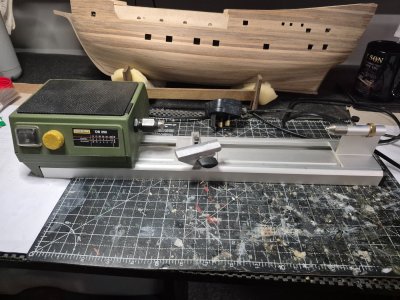
New tool for my collection: Proxxon DB250 Lathe

Joined
Jul 14, 2024
Messages
35
Points
48

I never win anything or have much luck in general, but I was chatting and playing with a friend on PlayStation, and we didn't even know each other's real names. Got chatting about woodwork, he said he had an old lathe he didn't use and sent it to me for free, My faith in humanity has been restored. I've ordered the three-jaw chuck; this is going to be a game changer, especially for masts.

20260306_040941.jpg
 
It’s useful for modeling for many different tasks but as for masts there are more efficient and historical accurate ways to make them.
I enjoy using the lathe for turning down the masts. What more efficient ways were you thinking of?
 
Many masts and spars (yards) aside of round tapering sections also have octagon sections. Octagon spars are first made of square stock dowels with small plane. Tapering of the spar is also achieved with the wood plane. To make a round sections on this spar I simply secure one end of dowel into my electric drill chuck. Holding drill in right hand I take a piece of sandpaper in the other hand and shape the spar as required. I use different grits of sandpaper finishing with finer ones. Portions of a spar where I want to keep an octagon section profile I tape with masking tape. I have caliper handy to check diameters as work progresses. I do not see how a wood late can be useful to do this work.
 
Many masts and spars (yards) aside of round tapering sections also have octagon sections. Octagon spars are first made of square stock dowels with small plane. Tapering of the spar is also achieved with the wood plane. To make a round sections on this spar I simply secure one end of dowel into my electric drill chuck. Holding drill in right hand I take a piece of sandpaper in the other hand and shape the spar as required. I use different grits of sandpaper finishing with finer ones. Portions of a spar where I want to keep an octagon section profile I tape with masking tape. I have caliper handy to check diameters as work progresses. I do not see how a wood late can be useful to do this work.

Thanks for the info.
 
I have the same lathe, but haven't made any masts or spars since then. I wish I could rationalize getting the Proxon PD 250 lathe, a metal lathe, but at almost $2,000, I just can't do it. The main difference between a metal and wood lather, to me, is the tool is controlled by precision screws, not a shaky hand against a support. ;-)
 
I have the same lathe, but haven't made any masts or spars since then. I wish I could rationalize getting the Proxon PD 250 lathe, a metal lathe, but at almost $2,000, I just can't do it. The main difference between a metal and wood lather, to me, is the tool is controlled by precision screws, not a shaky hand against a support. ;-)
You don’t want to cut wood on a metal cutting lathe…the wood dust etc gets into the ways and is not good in the long term…now if you don’t care, have at it. I have 2 knee mills and 2 lathes…all for metals/plastics….but a cheap wood lathe for the purpose of cutting wood.
 
I never win anything or have much luck in general, but I was chatting and playing with a friend on PlayStation, and we didn't even know each other's real names. Got chatting about woodwork, he said he had an old lathe he didn't use and sent it to me for free, My faith in humanity has been restored. I've ordered the three-jaw chuck; this is going to be a game changer, especially for masts.

View attachment 583469
A 4-jaw chuck is also very useful, especialy when holding square or octagonal sections. If the motor head is unscrewed from the bed, then re-mounted using just the forrard 2 screws, then mounting on a base board, an extra 80 mm bed length will be gained.
 
You don’t want to cut wood on a metal cutting lathe…the wood dust etc gets into the ways and is not good in the long term…now if you don’t care, have at it. I have 2 knee mills and 2 lathes…all for metals/plastics….but a cheap wood lathe for the purpose of cutting wood.

I have two machinists' lathes, a 12" Atlas/Craftsman and a 3" Unimat DB/SL (as well as a full-size wood turning lathe.) I use nothing but my machinist's lathes for wood turning small parts to exact tolerances. I simply wrap tinfoil around the vulnerable areas of the lathe before turning wood and run a vacuum with a shop vac. Routine cleaning of the machines takes care of any oily dust that gets past that. Particular attention should be paid to the air-cooling intakes of the motors, though.

Accurate long taper turnings on a wood lathe in the sizes common to scale modeling generally requires an extremely sharp tool and a very steady hand to avoid breaking long thin pieces. Workpiece "whip" can be a problem, as can a tool "catch." Due to the delicacy of scale spars of less that 3/16" diameter, both in their fabrication, as well as for archival considerations, the better practice in such cases is to turn the light spars from metal, as is actually required by the U.S. Navy's Curator of Navy Ship Models" mil spec contract standards. (https://www.navsea.navy.mil/Home/Wa...ications-for-Building-Exhibition-Ship-Models/)

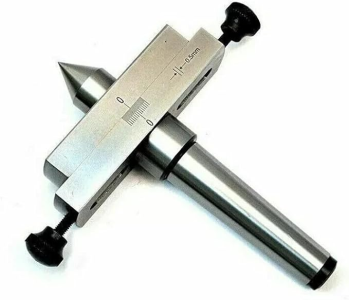
Wood lathes generally requiring "freehand" cutting, lack the machining capabilities of a machinist's lathe and aren't suitable for turning metal of any kind. Of particular note is the fact that wood lathes have no provision for machining accurate high tolerance taper turnings. Machinist's lathes have provision for tapering jig attachments and offsetting the tailstock or tailstock center. Tapering jig attachments are great, but expensive. Because accurately offsetting the tailstock is a tedious trial and error exercise and usually only offers a rather limited range of taper, an adjustable tailstock center is the best option. It is indexed so the difference in diameter between the ends of the taper can be measured and half that distance set on the adjustable tailstock center scale to quickly set up the workpiece at an accurate angle to the cutting tool's travel to cut a perfectly straight and accurate taper. Taper turning attachments are available in various sizes relative to their Morse taper shanks and have integral live centers.

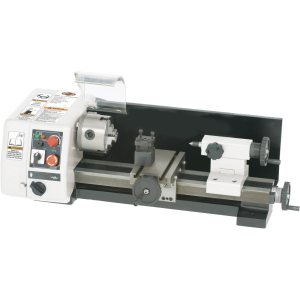
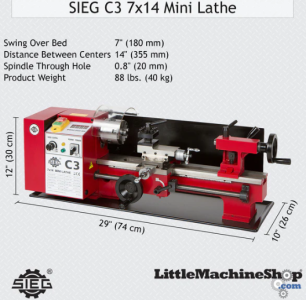
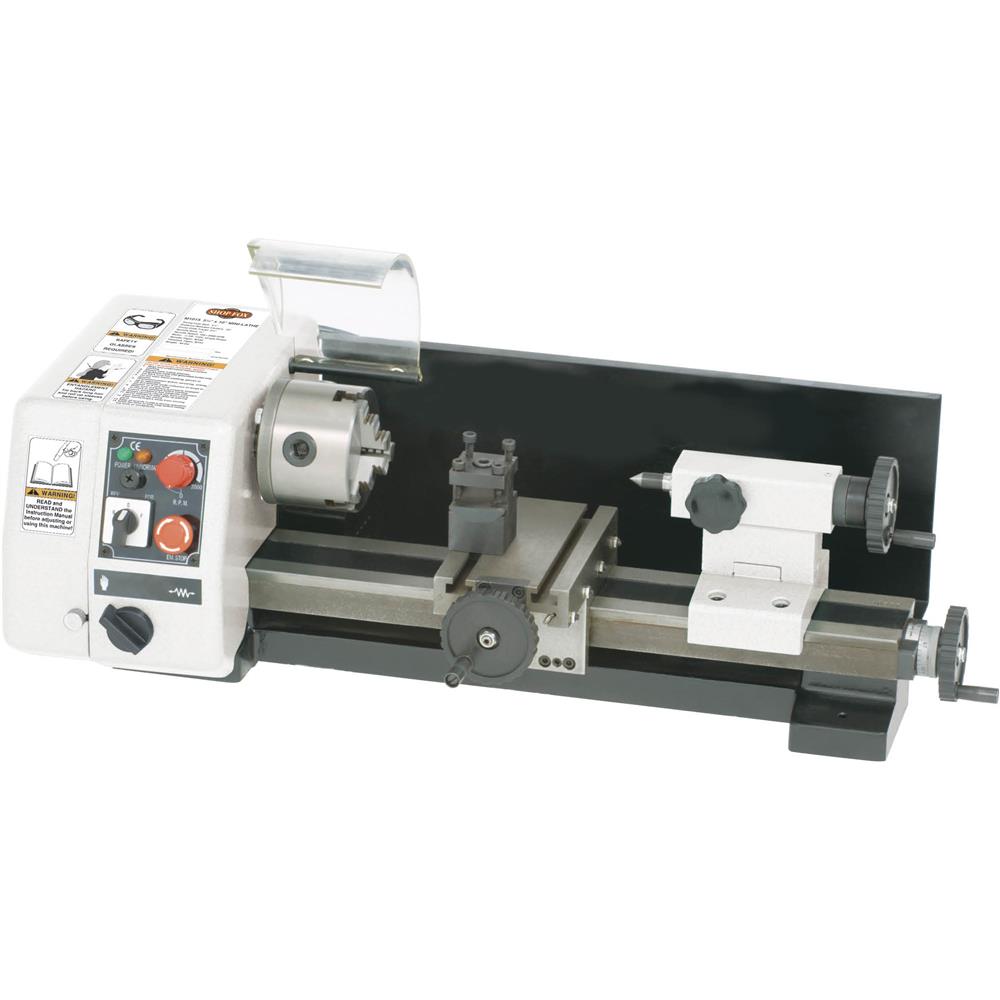
While wood turning lathes are far less expensive than machinists' lathes, it's my opinion that for the fine work required by modeling, and where the additional money can possibly be made available, it is better spent on a machinists' lathe than on a wood turning lathe because the machinists' lathe is far more capable and versatile for modeling by orders of magnitude. The ubiquitous Chinese Sieg manufactured "7 by" mini-lathes (sold in many different colors under many brand names) can often be found used in decent shape with a decent amount of tooling for as much as, if not less, that a new Proxxon wood lathe.


1773609565360.png

1773608884316.png
 
Last edited:
While wood turning lathes are far less expensive than machinists' lathes, it's my opinion that for the fine work required by modeling, and where the additional money can possibly be made available, it is better spent on a machinists' lathe than on a wood turning lathe because the machinists' lathe is far more capable and versatile for modeling by orders of magnitude. The ubiquitous Chinese Sieg manufactured "7 by" mini-lathes (sold in many different colors under many brand names) can often be found used in decent shape with a decent amount of tooling for as much as, if not less, that a new Proxxon wood lathe.
I agree with everything you said. But the only place I have to place a lathe is my 30" x 72" workbench, and all tools must be removed from that when not in use. I can pick up the best Proxxon metal lathe. I can't pick up the cheapest 7x lathe.
 
Last edited:
I agree with everything you said. But the only place I have to place a lathe is my 3" x 72" workbench, and all tools must be removed from that when not in use. I can pick up the best Proxxon metal lathe. I can't pick up the cheapest 7x lathe.

As Dirty Harry said, "A man's gotta know his limitations." :D

In all machine tools, weight equals accuracy. There's just no way around that. Maybe someday you'll have more room or find a small rolling cart to serve the purpose. Beyond that, your space constraints do seem insurmountable. :confused:
 
As Dirty Harry said, "A man's gotta know his limitations." :D
And they are many.
In all machine tools, weight equals accuracy. There's just no way around that. Maybe someday you'll have more room or find a small rolling cart to serve the purpose. Beyond that, your space constraints do seem insurmountable. :confused:
Well, yeah, but I don't need a 7" diameter lathe. The Proxxon PD250, the equivalent of your Unimat, will do everything I need. I have a DB250, but but it won't. As you've said, a metal-turning lathe's features make it much better at turning wood than a wood lathe do.

Oh, my workbench is 30" x 72", not 3" x 72", as I originally said.
 
Last edited:
And they are many.

Well, yeah, but I don't need a 7" diameter lathe. The Proxxon PD250, the equivalent of your Unimat, will do everything I need. I have a DB250, but but it won't. As you've said, a metal-turning lathe's features make it much better at turning wood than a wood lathe do.

Oh, my workbench is 30" x 72", not 3" x 72", as I originally said.

I've never laid hands on one, but the Proxxon PD250 looks like a very sweet lathe, but... Two grand for a DC powered 2.75" x 10" basic lathe with no more tooling than a basic tool post and a three-jaw chuck that is (IIRC) metric only (so no imperial thread cutting, etc.) is way too rich for my blood. I took a quick look at the Proxxon Amazon page and it appears as if a lot of the tooling is proprietary (Proxxon's stuff only) and it's expensive. I don't doubt it's good quality, for sure, but you won't get this lathe and the tooling that you'll probably want for less than $3,000..

I love my Unimat, but I wouldn't recommend them these days. They're not made anymore and all their tooling is proprietary and priced like jewelry on eBay, when you can find what you want. (The Chinese copy everything. Why they haven't copied the Unimats is beyond me.)

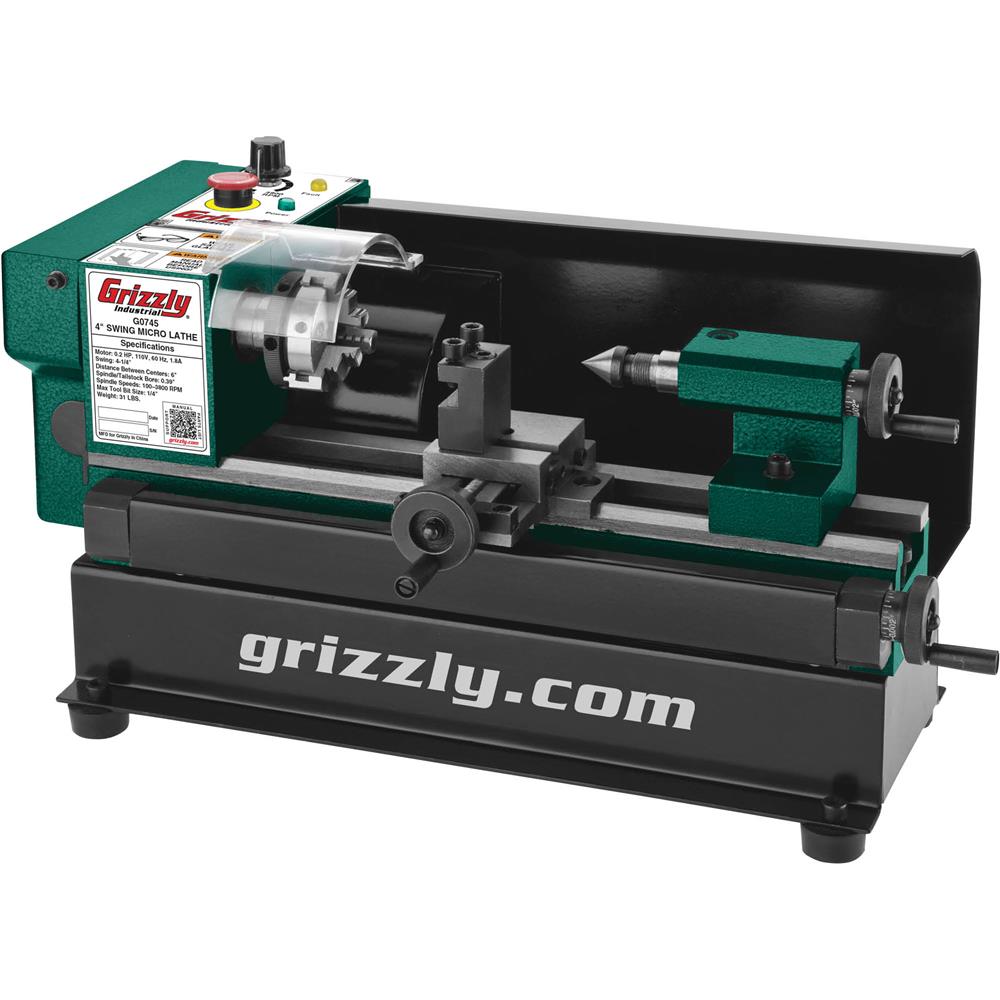
If I were you, given your space constraints, and the fact that you only are going to make small stuff on it (famous last words of every lathe owner,) I'd be looking to find a nice used jeweler's lathe with tooling. I know modelers who swear by their old jewelers' lathes. Or, you can check out Grizzly's 4" and 6" table top lathes. The 6" (below) is similar to the Proxxon, I believe, but runs less than $850 similarly equipped to the Proxxon and cheap standard tooling is available everywhere. (Grizzly/s stuff, like most all else these days, is Chinese made, but Grizzly pays for the top of the line quality control and fully warrants their labeled products, so that's why the Grizzly products are a bit more in price that what may look like the same machine elsewhere.) Of course, if the Proxxon's price doesn't make you hesitate, then go with Sherline! :D


1773626560777.png
 
Or, you can check out Grizzly's 4" and 6" table top lathes. The 6" (below) is similar to the Proxxon, I believe, but runs less than $850 similarly equipped to the Proxxon and cheap standard tooling is available everywhere.
Yeah, I've looked at the Grizzly's 4x6, but why don't they make it longer? 6" minus chuck width is just SO confining. I've also looked at the Sherline 4400 which is 3.5" x 17" size, but it weighs 40 pounds and I'm not supposed to lift over 20 (I cheat, but double?). Their 4000 3.5" x 6" is only 24 pounds, but again - 6". (Grizzly 6" is 36 pounds, but 6" is 78 pounds - way too much.)

Oh, the reason I keep harping on weight so much is that the I'm full-up in space for equipment, so the lathe will have to be stored under the workbench, lifted onto the workbench when used. Nothing else comes close to Proxxon's 27 pounds for the PD 250/E.
 
There is another way to go:
https://www.vanda-layindustries.com/index.htmlhttps://www.vanda-layindustries.com/index.html

The Acra Mill Plus can be supplemented with a 11" wood lathe attachment.
There is a much better option than the demonstrated Dremel as the driver.
A torque based flex shaft machine with a MasterCarver 1/4" H30 style handpiece with a Jacobs chuck.
https://mastercarver.com/stealth-ha...astercarver.com/stealth-handpiece-0-14-chuck/
A H30 handpiece mount is available from Vanda-Lay.
When you get the wood lathe, a mill automatically comes with it.

Not a high precision jeweler's lathe or a metal mill to be sure, but if you do not intend to make machines it is close enough for shipyard work,

I am not saying that you should, just that there is the option. It is not of significant weight.

Once the 1/4" H30 is in your toolbox - a World of 1/4" burrs is open to you: Kutzall, Saburr Tooth
Once you have a quality flex shaft MasterCarver also has a Recipro-Carver that is sealed lube.
https://mastercarver.com/recipro-carver-pro/

FlexCut has a wide selection of chisel blades that fit the carver and they sell handles that hold the same blades for hand carving.

All kinds of stuff to spend your money on!
 
I have two machinists' lathes, a 12" Atlas/Craftsman and a 3" Unimat DB/SL (as well as a full-size wood turning lathe.) I use nothing but my machinist's lathes for wood turning small parts to exact tolerances. I simply wrap tinfoil around the vulnerable areas of the lathe before turning wood and run a vacuum with a shop vac. Routine cleaning of the machines takes care of any oily dust that gets past that. Particular attention should be paid to the air-cooling intakes of the motors, though.

Accurate long taper turnings on a wood lathe in the sizes common to scale modeling generally requires an extremely sharp tool and a very steady hand to avoid breaking long thin pieces. Workpiece "whip" can be a problem, as can a tool "catch." Due to the delicacy of scale spars of less that 3/16" diameter, both in their fabrication, as well as for archival considerations, the better practice in such cases is to turn the light spars from metal, as is actually required by the U.S. Navy's Curator of Navy Ship Models" mil spec contract standards. (https://www.navsea.navy.mil/Home/Wa...ications-for-Building-Exhibition-Ship-Models/)

Wood lathes generally requiring "freehand" cutting, lack the machining capabilities of a machinist's lathe and aren't suitable for turning metal of any kind. Of particular note is the fact that wood lathes have no provision for machining accurate high tolerance taper turnings. Machinist's lathes have provision for tapering jig attachments and offsetting the tailstock or tailstock center. Tapering jig attachments are great, but expensive. Because accurately offsetting the tailstock is a tedious trial and error exercise and usually only offers a rather limited range of taper, an adjustable tailstock center is the best option. It is indexed so the difference in diameter between the ends of the taper can be measured and half that distance set on the adjustable tailstock center scale to quickly set up the workpiece at an accurate angle to the cutting tool's travel to cut a perfectly straight and accurate taper. Taper turning attachments are available in various sizes relative to their Morse taper shanks and have integral live centers.

While wood turning lathes are far less expensive than machinists' lathes, it's my opinion that for the fine work required by modeling, and where the additional money can possibly be made available, it is better spent on a machinists' lathe than on a wood turning lathe because the machinists' lathe is far more capable and versatile for modeling by orders of magnitude. The ubiquitous Chinese Sieg manufactured "7 by" mini-lathes (sold in many different colors under many brand names) can often be found used in decent shape with a decent amount of tooling for as much as, if not less, that a new Proxxon wood lathe.


View attachment 584534

View attachment 584532
I have the same lathe, but under a different name, which I use as you do. A good ''blow-job' with the airline & vac cleans up. I also have a Proxxon mini & a Model Power mid range, for bigger scales. If I didn't spend me money 'our' Tax-Grabbing Bitch would find a way to get 'er slimy paws on it! :mad::mad:ROTF
 
I have the same lathe, but under a different name, which I use as you do. A good ''blow-job' with the airline & vac cleans up. I also have a Proxxon mini & a Model Power mid range, for bigger scales. If I didn't spend me money 'our' Tax-Grabbing Bitch would find a way to get 'er slimy paws on it! :mad::mad:ROTF

The majority of my power tools were purchased used or scrounged for free. They are all pre-1960's "old 'arn." They'll last several times longer than I will. When I see what guys are paying for Proxxon and Sherline micro-lathes, I'm almost embarrassed to admit I was given my Unimat SL/DB with a lot of tooling for free. (I did, however, spend another six hundred or so on additional tooling and rebuild parts, so I don't consider it a big bargain.) I picked up my 12" Atlas/Craftsman along with just about all the tooling anybody could possibly want (even including a Dumore tool post grinder!) in great shape from a master machinists' widow about fifteen years ago for $750! That was a bargain. The old used stuff, if in decent shape, is almost always better than what you can buy new these days.
 
There is another way to go:
https://www.vanda-layindustries.com/index.htmlhttps://www.vanda-layindustries.com/index.html

The Acra Mill Plus can be supplemented with a 11" wood lathe attachment.
There is a much better option than the demonstrated Dremel as the driver.
A torque based flex shaft machine with a MasterCarver 1/4" H30 style handpiece with a Jacobs chuck.
https://mastercarver.com/stealth-ha...astercarver.com/stealth-handpiece-0-14-chuck/
A H30 handpiece mount is available from Vanda-Lay.
When you get the wood lathe, a mill automatically comes with it.

Not a high precision jeweler's lathe or a metal mill to be sure, but if you do not intend to make machines it is close enough for shipyard work,

I am not saying that you should, just that there is the option. It is not of significant weight.

Once the 1/4" H30 is in your toolbox - a World of 1/4" burrs is open to you: Kutzall, Saburr Tooth
Once you have a quality flex shaft MasterCarver also has a Recipro-Carver that is sealed lube.
https://mastercarver.com/recipro-carver-pro/

FlexCut has a wide selection of chisel blades that fit the carver and they sell handles that hold the same blades for hand carving.

All kinds of stuff to spend your money on!

Oh yeah! In my post above talking about lathe options, I completely forgot about Vanda-Lay Industries machine tools! Musta been a brain-fart. My elderitis has been acting up lately.

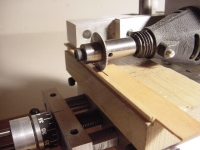
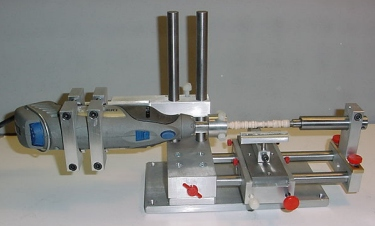
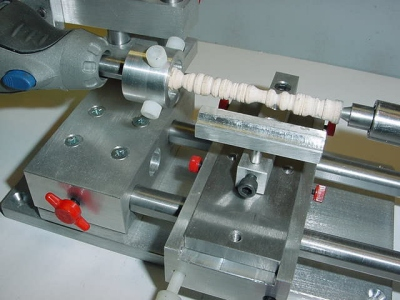
Anybody with space or pocketbook limitations should definitely out the Vanda-Lay line. It's a system of CNC-milled aluminum plate basic machines: a drill press, mill, lathe, table saw, router table, and a thickness planer. All but the thickness planer, which is "stand alone," are part of a "system" that can be expanded or supplemented with tooling to do just about anything a modeler might want. The system is powered by a Dremel rotary tool or a Foredom flex shaft handpiece (or the equivalent.) Without question, the Foredom flex shaft machine is the far better option. (Foredom's high-torque power at low speeds and ergonomic handpieces trump clunky Dremel's high-speed, "no-torque" at low speed performance every time, especially at speeds required for a lot of modeling applications. Definitely get the Foredom flex shaft to power your Vanda-Lay tools.)

These tools are very well made. They aren't as accurate or powerful as a dedicated machinist's lathe or a Byrnes table saw, but they'll do anything a modeler might need for a reasonable price. Considering what dedicated machine tools cost these days, the versitile Vanda-Lay stuff is a real bargain. Vanda-Lay is a small family-owned business in California. Customer service is tops. If you need something custom, they can make it for you.

No "multi-tool" does the job as well as a dedicated purpose-built tool, but in their size and weight class, I don't think the Vanda-Lay tools have any competition in terms of bang for the buck.

Check it out: https://vanda-layindustries.com/

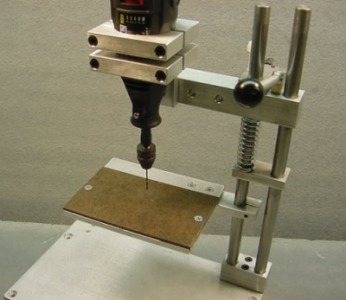
Basic sensitive drill press and table - $165.00
1773777971585.png

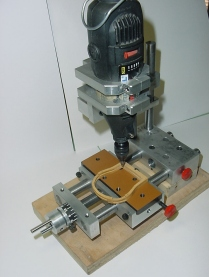
Basic Acura-mill (incorporating sensitive drill press) $195.00:
1773778428596.png

Acura-mill table saw setup:
1773778530121.png


Micro-lathe Acura-mill attachment: $60.00.
1773778597120.png

1773778636346.png

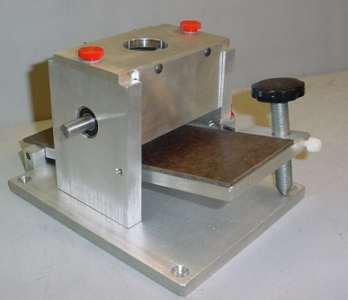
Thickness sander (motor separate) $212.00:
1773779464335.png
 
Last edited:
Oh yeah! In my post above talking about lathe options, I completely forgot about Vanda-Lay Industries machine tools! Musta been a brain-fart. My elderitis has been acting up lately.

Anybody with space or pocketbook limitations should definitely out the Vanda-Lay line. It's a system of CNC-milled aluminum plate basic machines: a drill press, mill, lathe, table saw, router table, and a thickness planer. All but the thickness planer, which is "stand alone," are part of a "system" that can be expanded or supplemented with tooling to do just about anything a modeler might want. The system is powered by a Dremel rotary tool or a Foredom flex shaft handpiece (or the equivalent.) Without question, the Foredom flex shaft machine is the far better option. (Foredom's high-torque power at low speeds and ergonomic handpieces trump clunky Dremel's high-speed, "no-torque" at low speed performance every time, especially at speeds required for a lot of modeling applications. Definitely get the Foredom flex shaft to power your Vanda-Lay tools.)

These tools are very well made. They aren't as accurate or powerful as a dedicated machinist's lathe or a Byrnes table saw, but they'll do anything a modeler might need for a reasonable price. Considering what dedicated machine tools cost these days, the versitile Vanda-Lay stuff is a real bargain. Vanda-Lay is a small family-owned business in California. Customer service is tops. If you need something custom, they can make it for you.

No "multi-tool" does the job as well as a dedicated purpose-built tool, but in their size and weight class, I don't think the Vanda-Lay tools have any competition in terms of bang for the buck.

Check it out: https://vanda-layindustries.com/

Basic sensitive drill press and table - $165.00
View attachment 584887

Basic Acura-mill (incorporating sensitive drill press) $195.00:
View attachment 584890

Acura-mill table saw setup:
View attachment 584891


Micro-lathe Acura-mill attachment: $60.00.
View attachment 584892

View attachment 584893

Thickness sander (motor separate) $212.00:
View attachment 584895
I wonder how long a Dremel motor would last constantly running, based on my past experience with one?
 
Back
Top