• Win a Free Custom Engraved Brass Coin!!!
    As a way to introduce our brass coins to the community, we will raffle off a free coin during the month of August. Follow link ABOVE for instructions for entering.
  • SUBSCRIBE TO SHIPS IN SCALE TODAY!

    The beloved Ships in Scale Magazine is back and charting a new course for 2026!
    Discover new skills, new techniques, and new inspirations in every issue.

    NOTE THAT OUR NEXT ISSUE WILL BE MARCH/APRIL 2026

HMS Bellona Corel 1:100

Joined
Apr 2, 2026
Messages
18
Points
48

Location
Moscow, Russia
Hello everyone
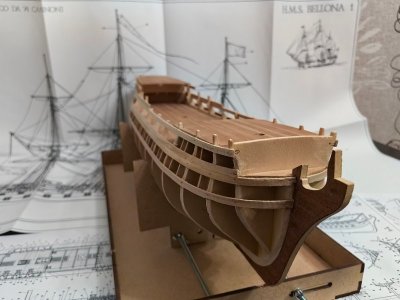
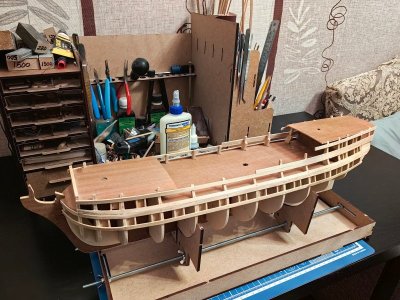
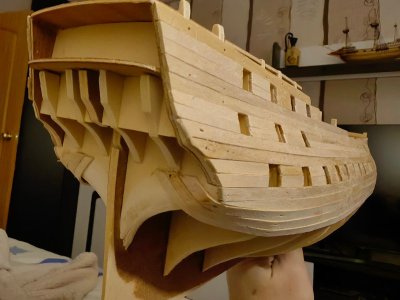
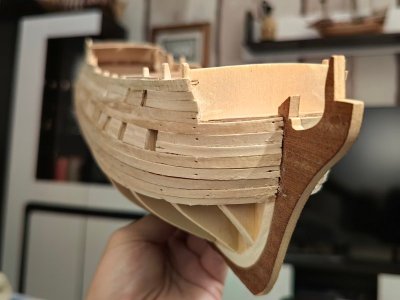
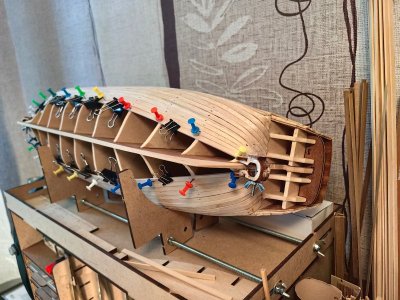
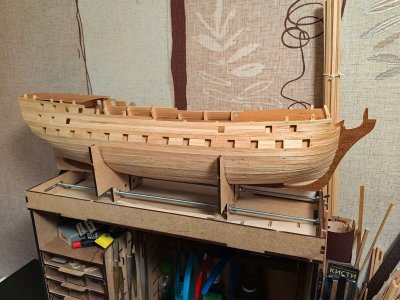
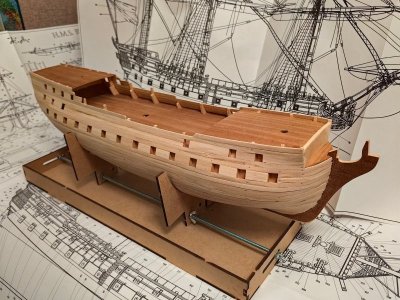
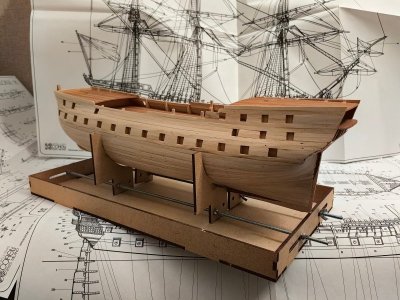
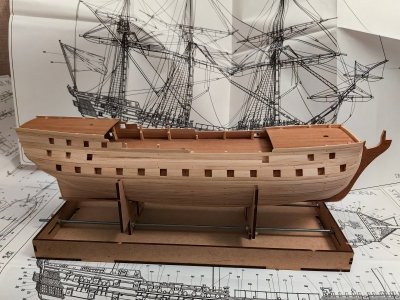
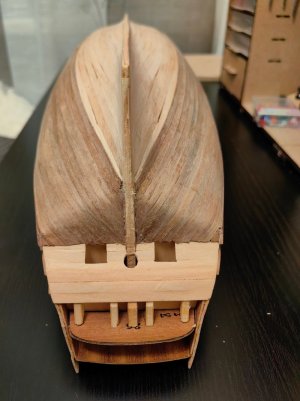
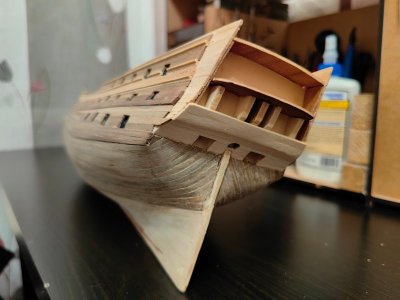
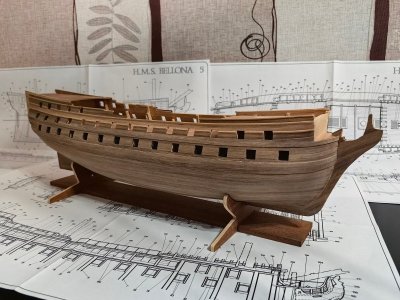
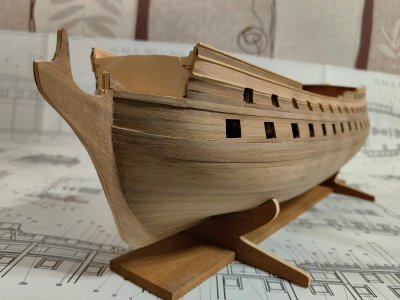
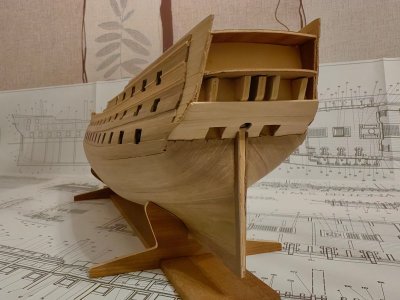
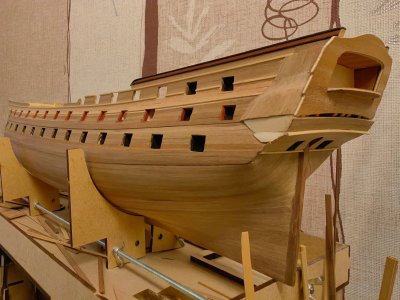
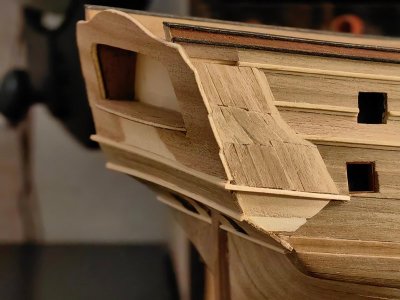
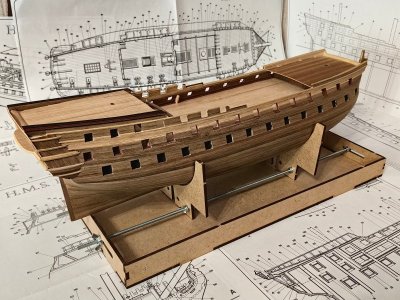
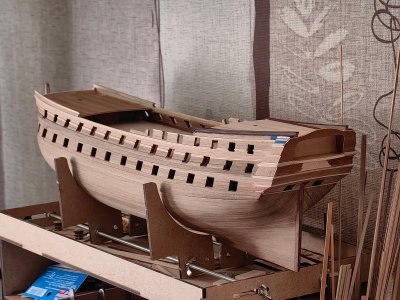
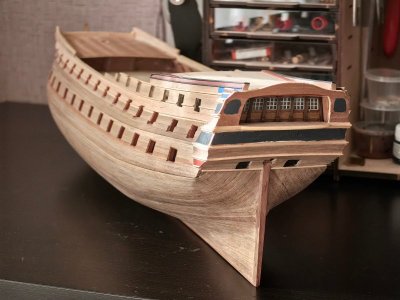
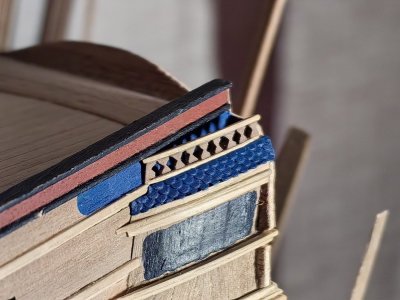
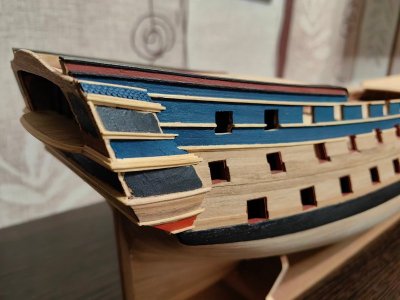
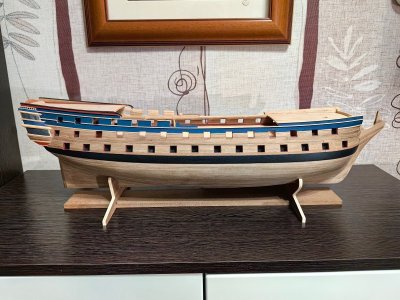
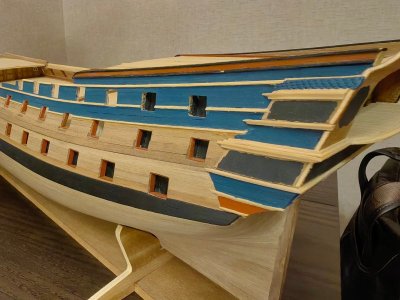
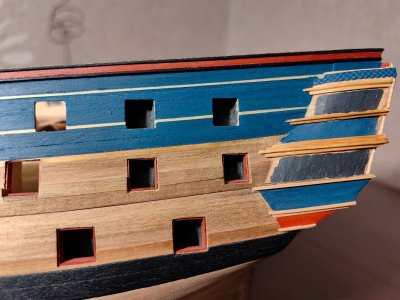
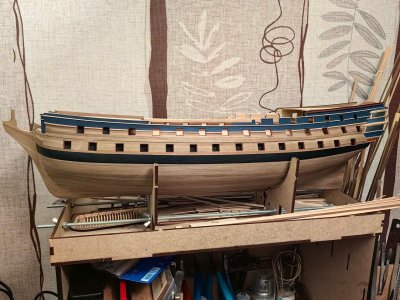
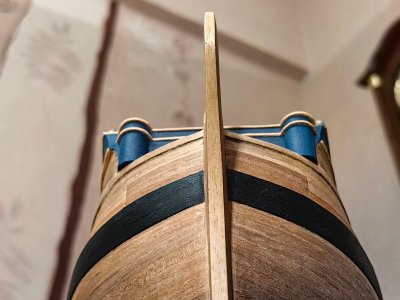
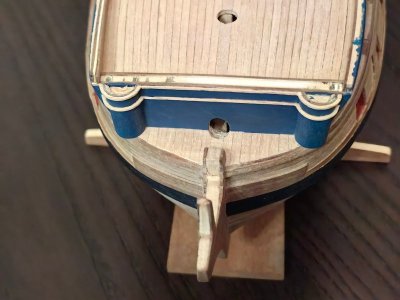
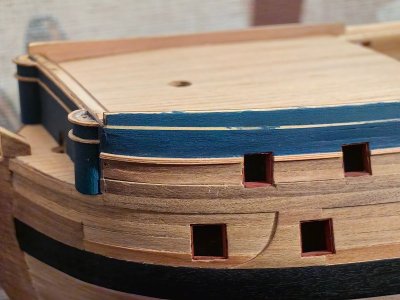
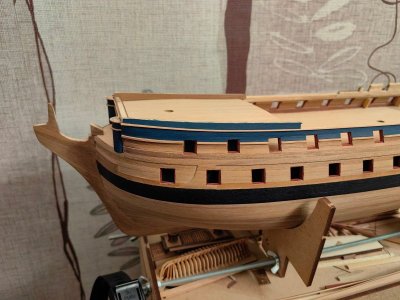
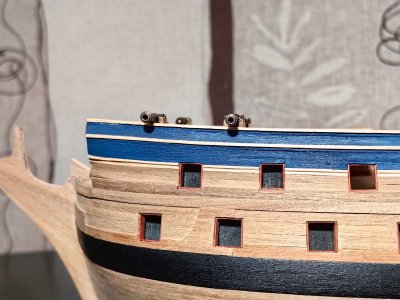
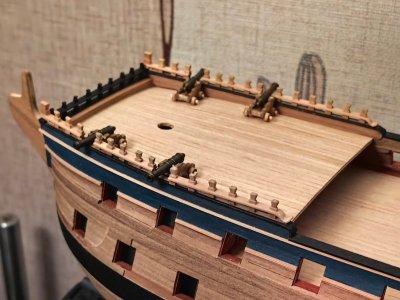
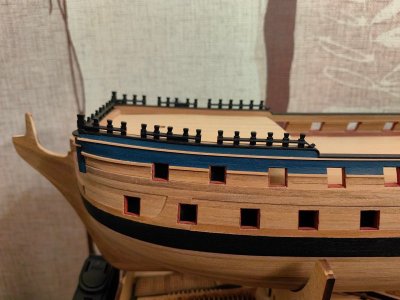
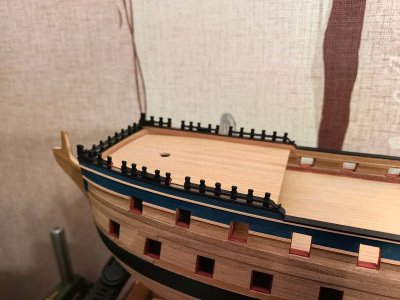
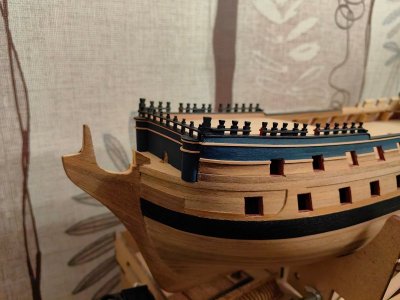
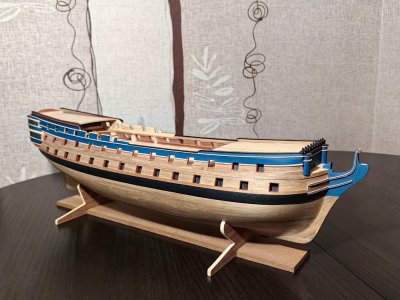
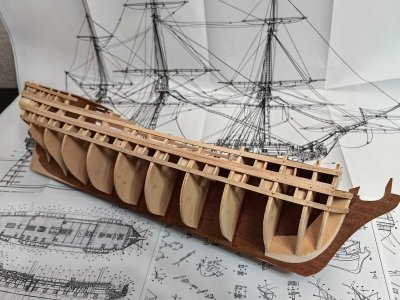
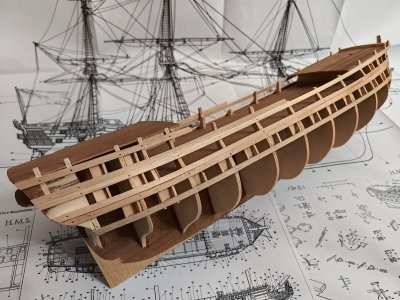
About a year and a half ago, I started building the HMS Bellona model from Corel. During this time, we managed to do quite a lot, so in a few posts I want to illustrate what happened, and then post the information in real time. During the hull plating process, it was not possible to avoid errors with the location of the gun ports. I was too hasty, cutting through them ahead of time. The port line turned out to be understated, but so far I don't see it)
1111.jpg

1112.jpg

1113.jpg

1114.jpg

1115.jpg

1116.jpg

1117.jpg

1118.jpg

1119.jpg

1120.jpg

1121.jpg

1122.jpg

1123.jpg

1124.jpg

1125.jpg

1126.jpg
 
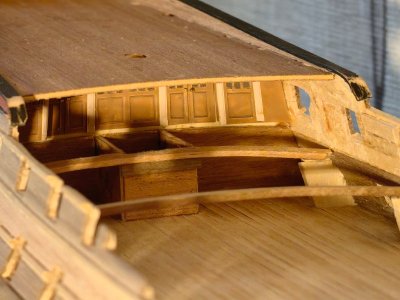
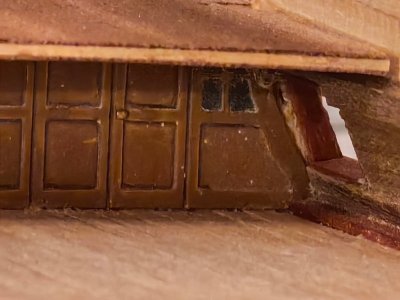
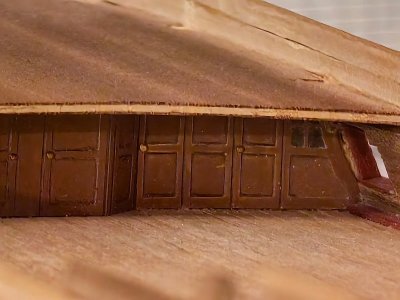
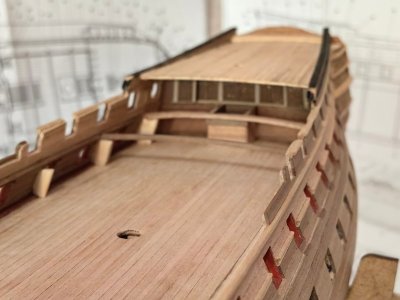
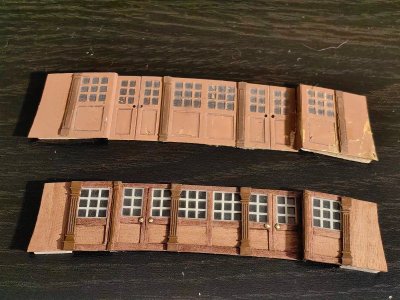
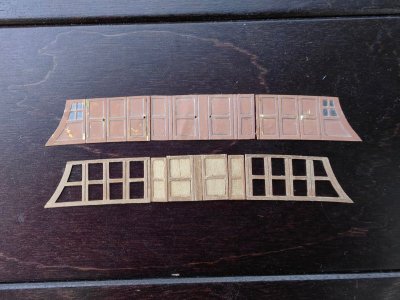
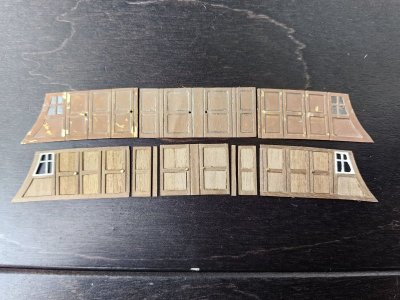
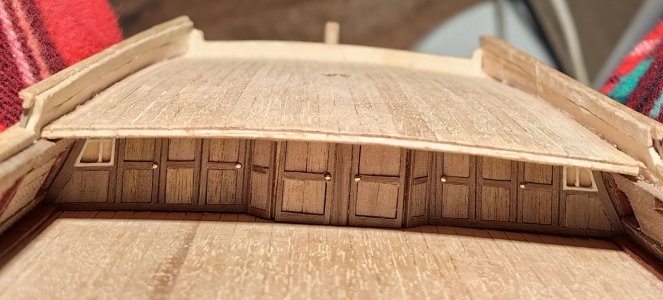
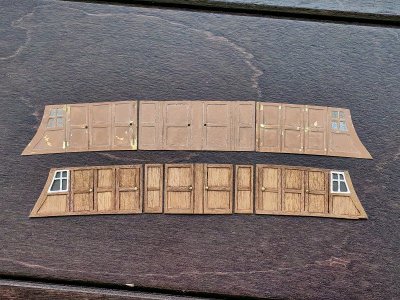
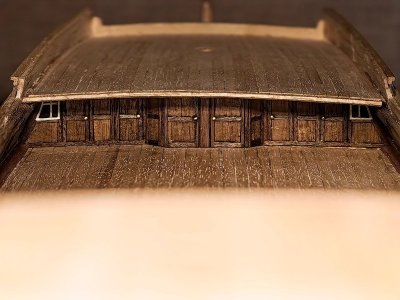
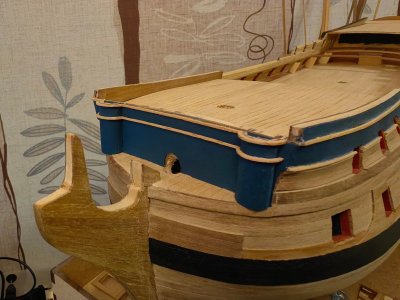
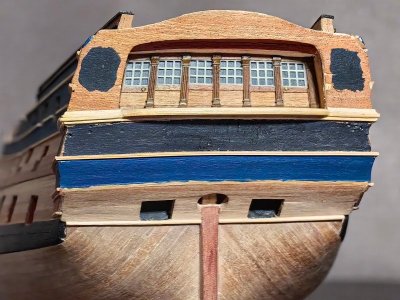
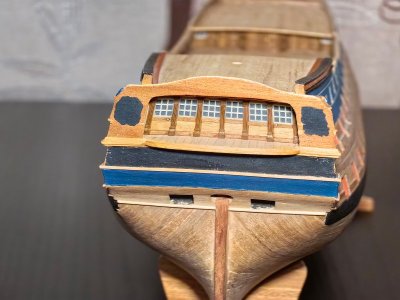
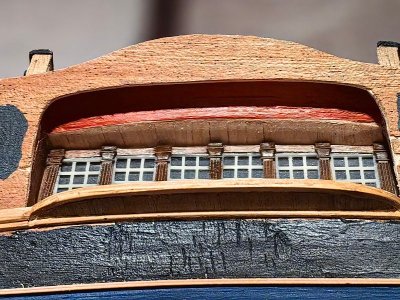
As I started working on the details, I became increasingly dissatisfied with the quality of the Corel set. I wanted to redesign many aspects of the project. For example, I was unhappy with the results of installing the stock bulkheads for the foredeck and quarterdeck. I decided to redesign the bulkhead for the aft gallery in my own way. I then removed the existing bulkheads for the foredeck and quarterdeck and redesigned them in a similar style.

1127.jpg

1128.jpg

1129.jpg

1130.jpg

1131.jpg

1133.jpg

1134.jpg

1135.jpg

1136.jpg

1137.jpg

1139.jpg

1141.jpg

1142.jpg

1143.jpg

1144.jpg

1145.jpg

1146.jpg

1147.jpg

1148.jpg

1151.jpg

1152.jpg

1153.jpg

1154.jpg

1155.jpg
 
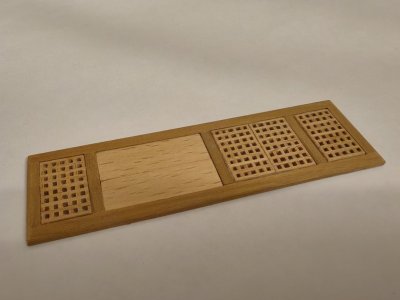
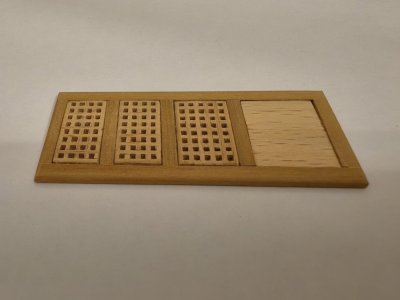
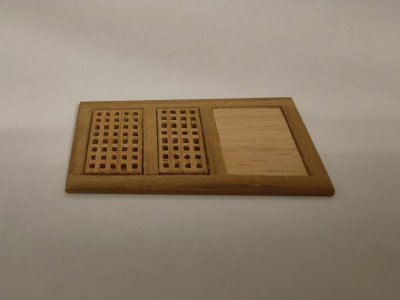
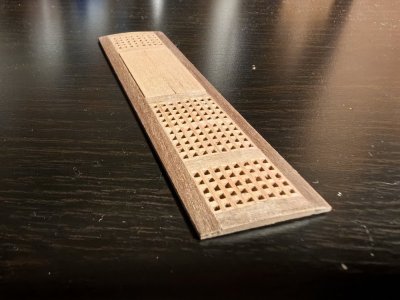
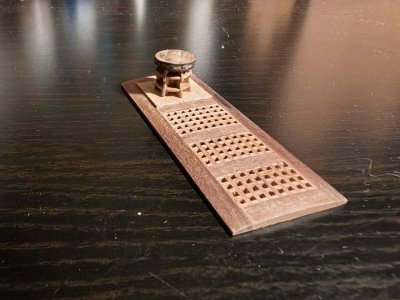
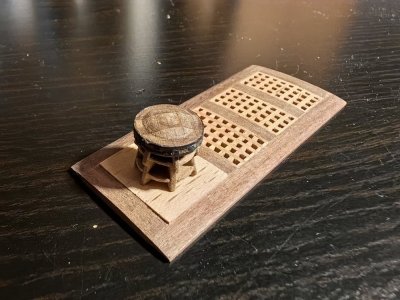
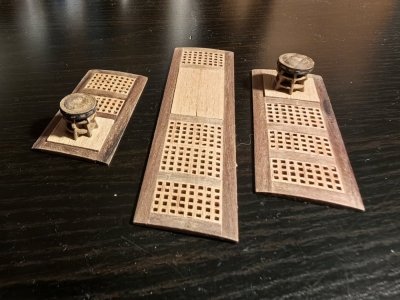
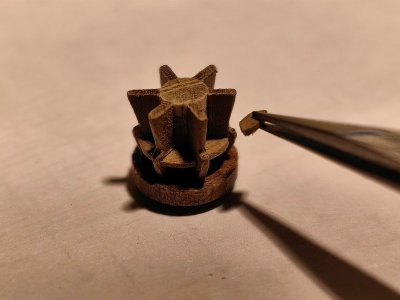
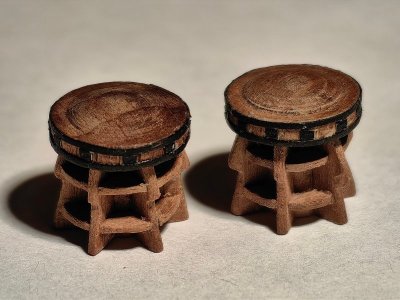
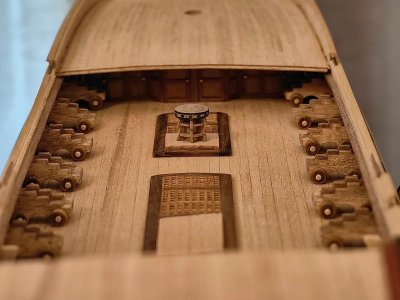
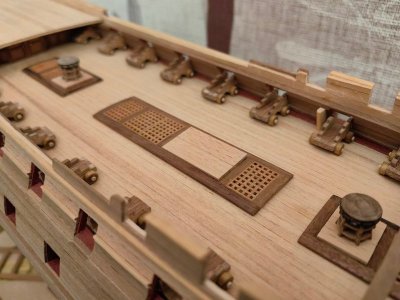
When the decking was installed, I wanted to see what the model would look like with the decking equipment and cannons installed. I made the gratings on the main deck. rectangular, as in the Corel drawing, but when I looked at photos of museum models, I noticed that they had a rounded shape. This is also the case with Brian Lavery's ship anatomy. I redesigned them. Additionally, the Corel capstans do not resemble the ones found in museums. I created them myself, and here is what they look like.

0987.jpg

0988.jpg

0989.jpg

1183.jpg

1184.jpg

1185.jpg

1186.jpg

1158.jpg

1159.jpg

1160.jpg

1161.jpg
 
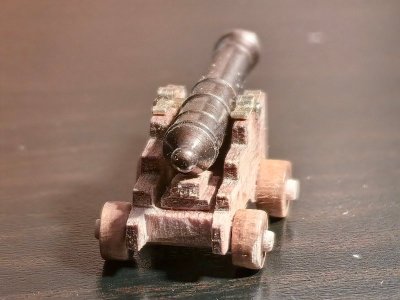
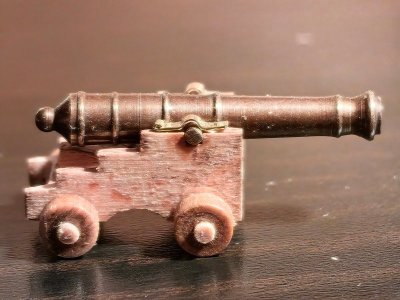
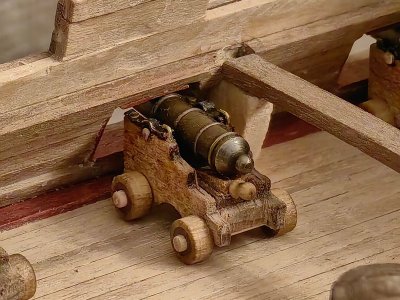
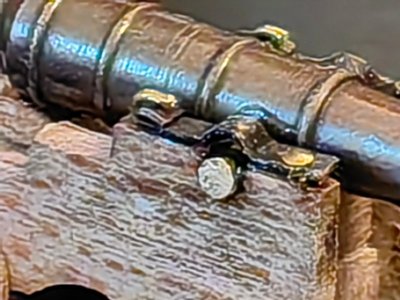
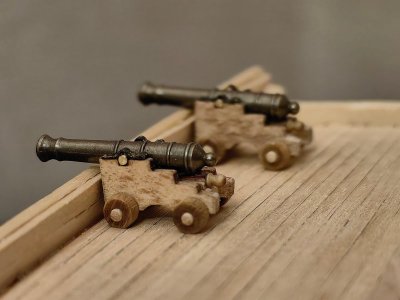
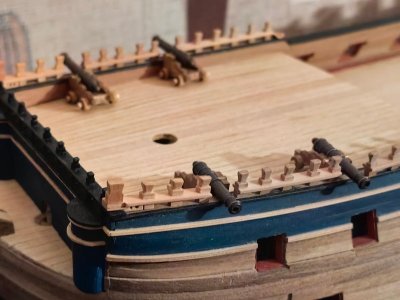
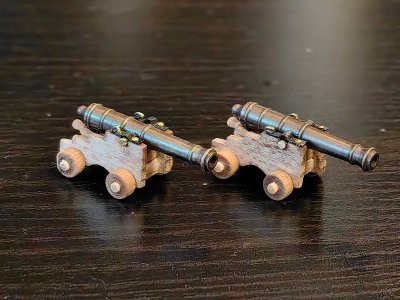
The cannons in the set are great, but the carriages aren't made very well. On such a small scale, it's not a big deal, but I'll probably redesign them as well. For now, I've assembled them as they are to see how they look on the deck.

1164.jpg

1165.jpg

1166.jpg

1167.jpg

1168.jpg

1162.jpg

1163.jpg
 
Nice job. You did great with the walnut II layer. That's awsome! Plus... Corel's plans have always been my fav... I remember their neat drawning compared to Mamoli's fuzzy pen stroke.
Kind Regards
 
Nice job. You did great with the walnut II layer. That's awsome! Plus... Corel's plans have always been my fav... I remember their neat drawning compared to Mamoli's fuzzy pen stroke.
Kind Regards
Thanks, Albert! To be honest, I don't use Corel drawings much at this stage. I only use them to understand the layout and dimensions of the main parts of the model. For details and design, I use photos and drawings of models and prototypes found online.
Kind Regards
 
The cannons in the set are great, but the carriages aren't made very well.

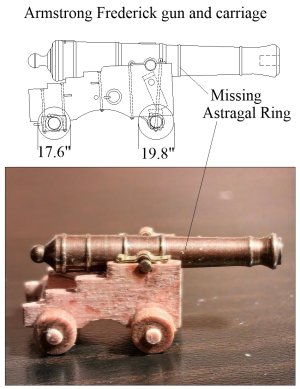
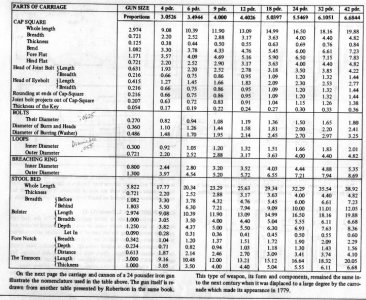
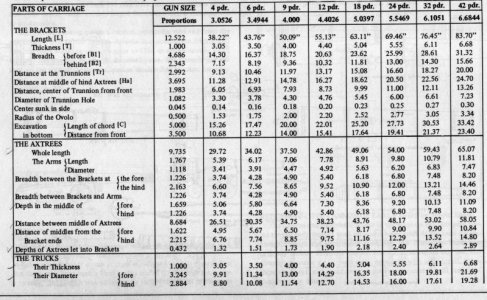
You make a great point about the carriages. As you may be replacing the carriages, the below may be helpful to you. I used the dimensions for the trucks for a 32 pounder in this case, but the dimensions for whatever Bellona carried should be close to those on the chart below.

I would bet very few folks would notice but just in case this kind of thing is important to you, just as an FYI, The cannons do look nice but they look very much like the Bogard pattern guns which were used from 1716-1724 rather than the Armstrong Fredericks that came into use in 1760, same year as Bellona. I have 2D and 3D drawings that I can email to you if this is of interest to you. Please feel free to PM me if this is of interest.

Allan
1775558502688.jpeg
Page 1
1775558133024.jpeg
Page 2
1775558152242.jpeg

There were no doubt variations throughout the fleet, but lacking more precise information for Bellona specifically, the charts should be useful.
 
Last edited:
You make a great point about the carriages. As you may be replacing the carriages, the below may be helpful to you. I used the dimensions for the trucks for a 32 pounder in this case, but the dimensions for whatever Bellona carried should be close to those on the chart below.

I would bet very few folks would notice but just in case this kind of thing is important to you, just as an FYI, The cannons do look nice but they look very much like the Bogard pattern guns which were used from 1716-1724 rather than the Armstrong Fredericks that came into use in 1760, same year as Bellona. I have 2D and 3D drawings that I can email to you if this is of interest to you. Please feel free to PM me if this is of interest.

Allan
View attachment 590411
Page 1
View attachment 590409
Page 2
View attachment 590410

There were no doubt variations throughout the fleet, but lacking more precise information for Bellona specifically, the charts should be useful.
Thank you, Allan!
I hadn't even considered that cannons might not be historically accurate! Your information is very valuable! I've looked at images of cannons in the Anatomy of the Ship, but I've only focused on the carriages. However, since I haven't delved into cannons extensively, I'll definitely consider this!) You mention having 3D files. What format are they in? Can they be printed on a 3D printer?
Regards, FriCap.
 
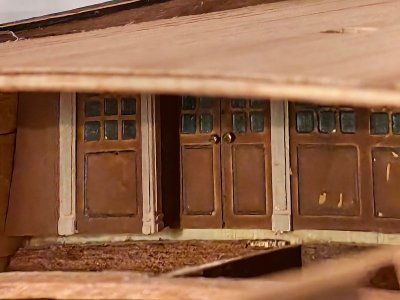
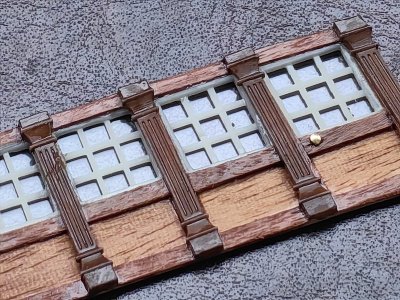
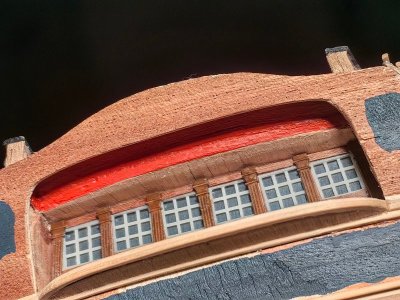
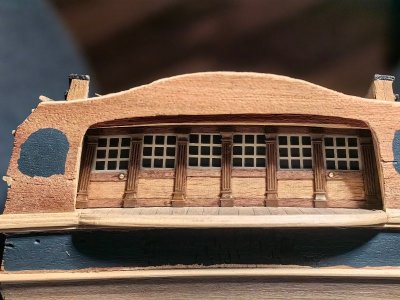
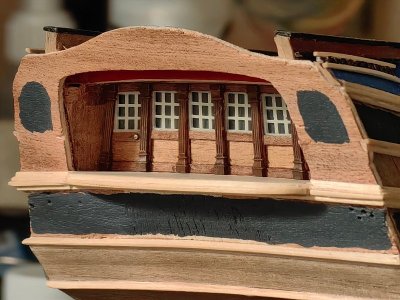
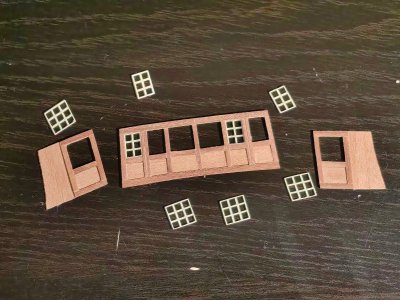
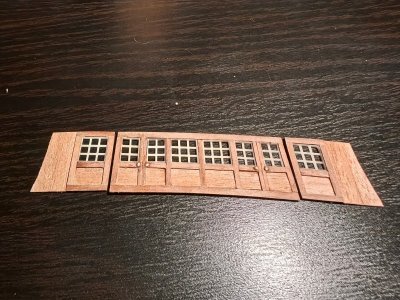
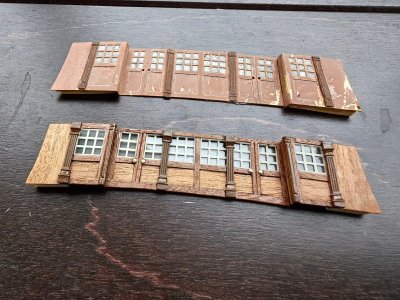
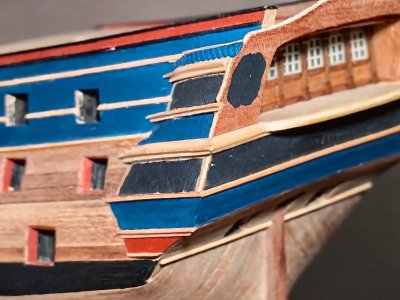
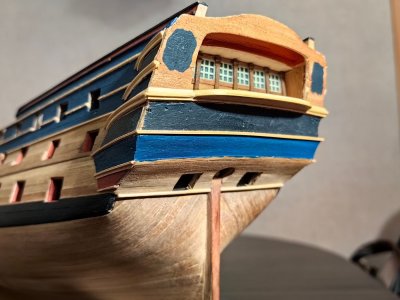
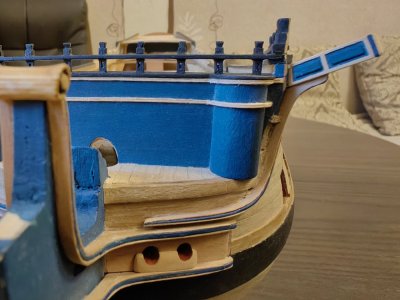
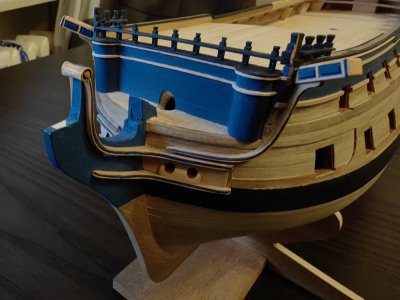
The windows and columns of the back gallery are supposed to be made of brass photo-etched parts. I don't like the look of shiny brass in the aft, and the paint doesn't hold well on this material. Therefore, I will make these structures myself using wood and plastic, using 3D printing, similar to the bulkheads. In the meantime, I have prepared the frame and attached the rails. I spent a long time thinking about how to create a beautiful curved roof for the side balconies. In the end, I used thick paperboard, which I glued together in four layers and painted. In my opinion, it turned out pretty well. At first, I wanted to make the curly railing of the upper balconies as an appliqué, but I didn't like it, so I carved it out of wood. It was a very detailed job, and it didn't turn out very neatly. To avoid getting the hinged parts dirty with paint, I decided to start painting the body while it was still being assembled.

1169.jpg

1170.jpg

1171.jpg

1172.jpg

1173.jpg

1174.jpg

1175.jpg

1176.jpg

1177.jpg

1178.jpg

1179.jpg

1180.jpg

1181.jpg

1182.jpg
 
Thanks, Albert! To be honest, I don't use Corel drawings much at this stage. I only use them to understand the layout and dimensions of the main parts of the model. For details and design, I use photos and drawings of models and prototypes found online.
Kind Regards
Just like you, I never buit models out of the box, but I liked those drawnings all the same.
 
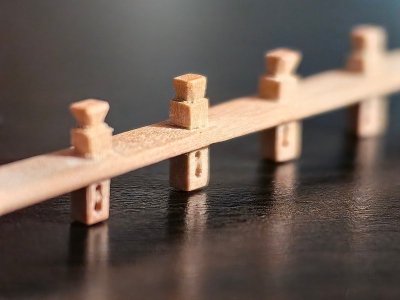
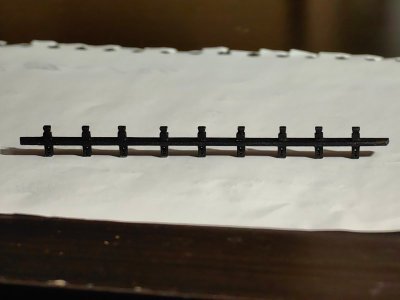
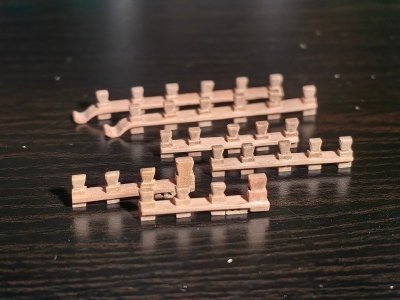
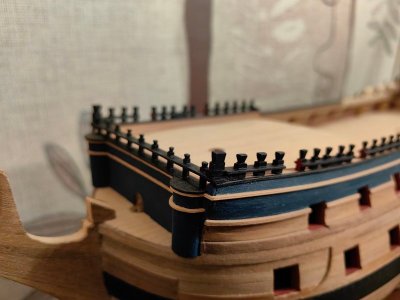
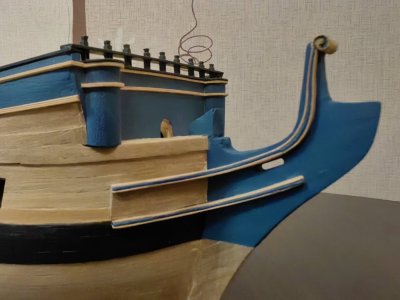
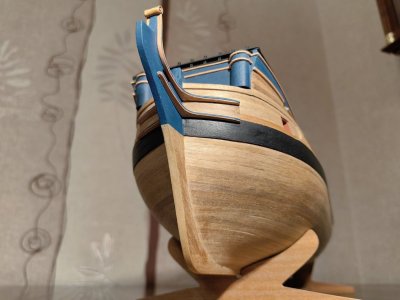
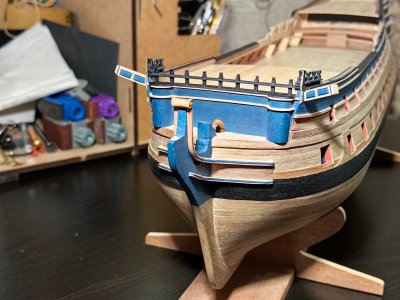
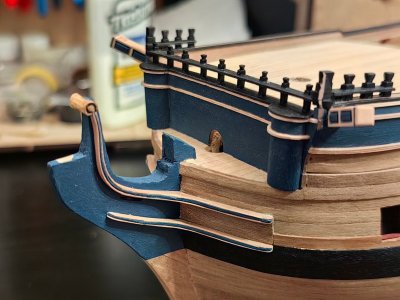
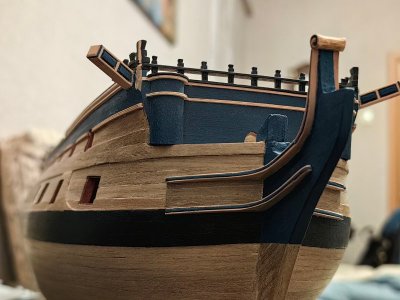
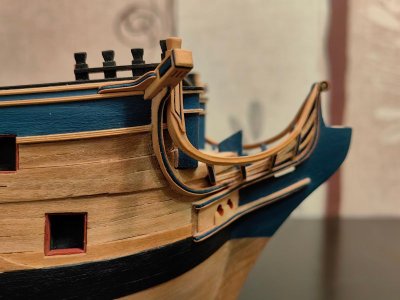
In the process of covering the hull with a second layer, an L-shaped rail was used as a rail. The rail in the kit was of very poor quality, and despite my best efforts, it was not very well attached in the areas of the greatest curvature (in the bow), with cracks and chips. Additionally, during the painting process, the presence of the protruding rail made it impossible to apply protective tape, so I had to paint the sides without it. The paint ended up on the rail, and I was unable to clean it properly. In addition, after installing the roundhouses, it turned out that the bulwarks in the bow were not symmetrical. This can be seen in the photo. Also, the bulwarks of the forecastle were too high, which made it difficult to install the cannons. As a result, I decided to cut off all the rails, clean the paint, and trim the right side of the bow and the bulwarks. All this took some time and it was very unpleasant to see the disfigured hull, after holding the already painted product in my hands. But it was worth it! As a result, I was able to carefully paint the sides using masking tape, and then attach new rails made of pearwood, giving them a profile. I also cleaned up the bulwarks in the bow. After that, I made top timbers and fife-rails on the bulkhead of the beakhead and bulwarks of the forecastle.

1188.jpg

1189.jpg

1190.jpg

1191.jpg

1192.jpg

1193.jpg

1194.jpg

1195.jpg

1196.jpg

1197.jpg

1198.jpg

1199.jpg

1200.jpg

1201.jpg

1202.jpg

1204.jpg

1203.jpg
 
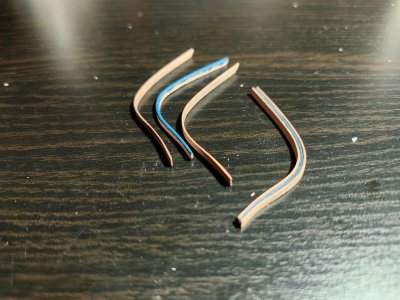
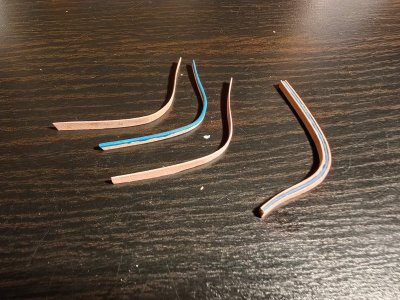
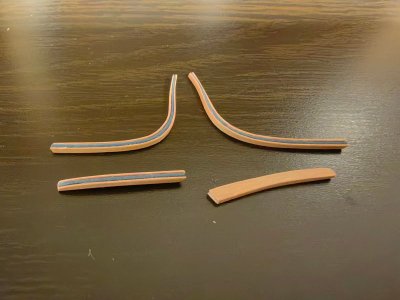
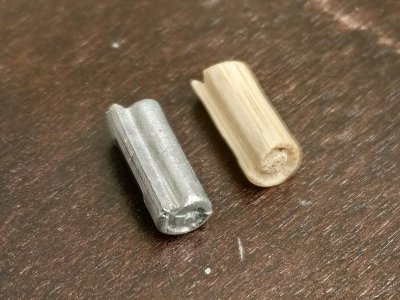
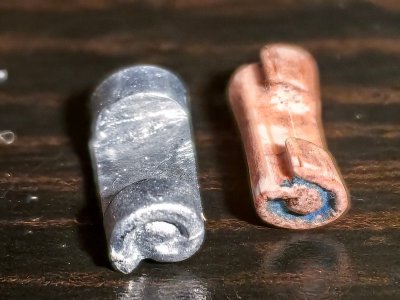
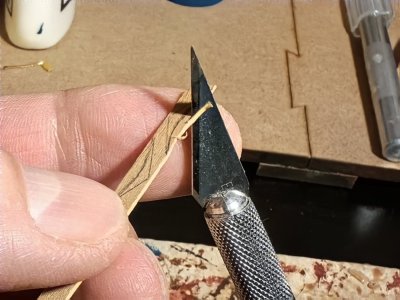
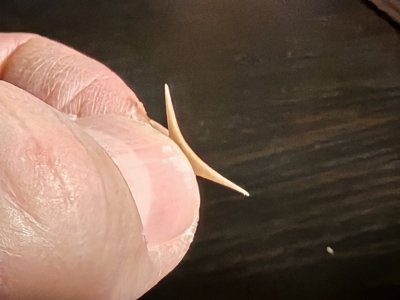
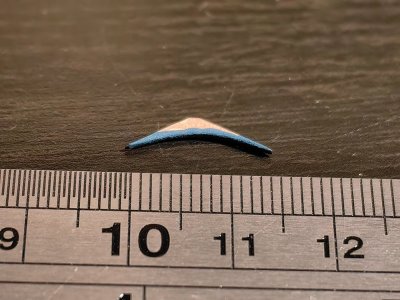
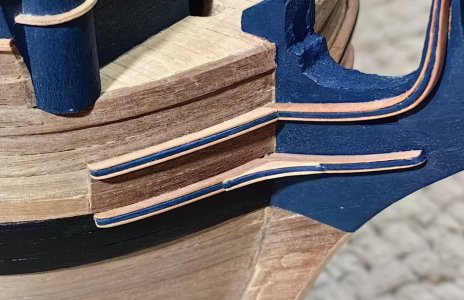
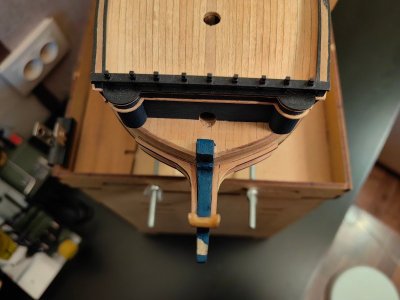
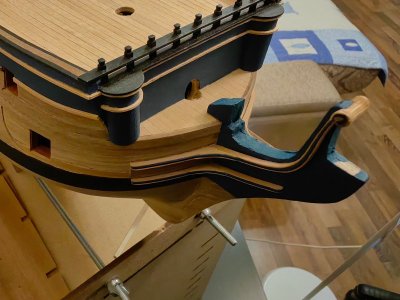
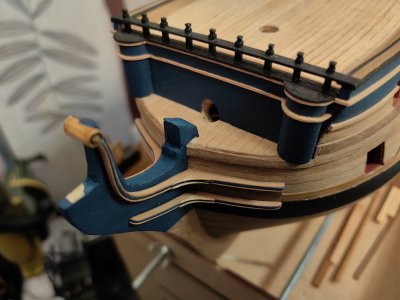
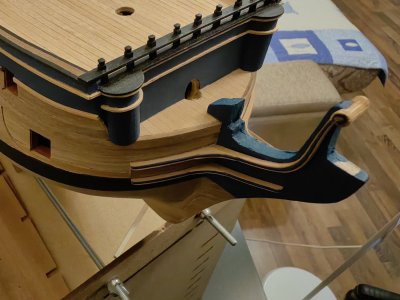
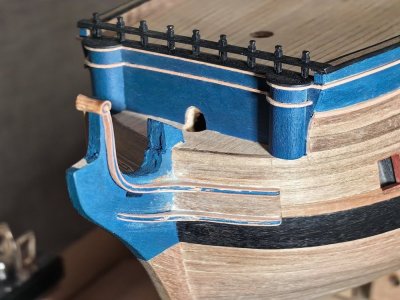
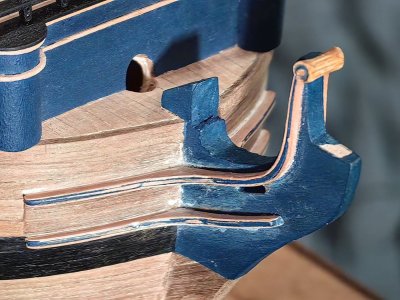
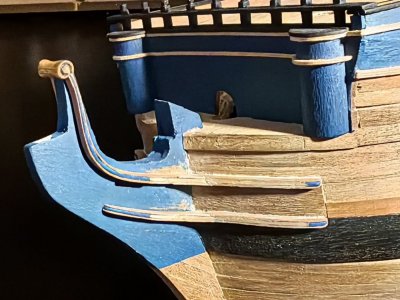
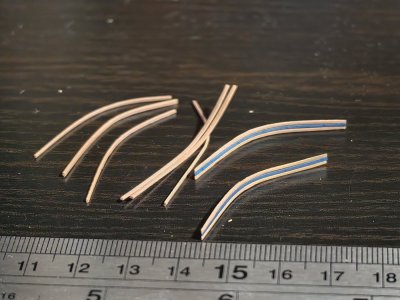
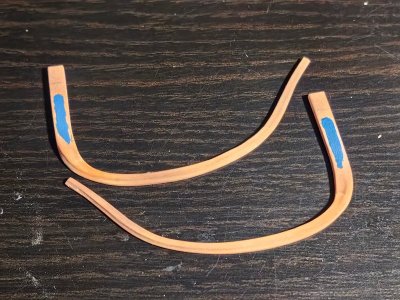
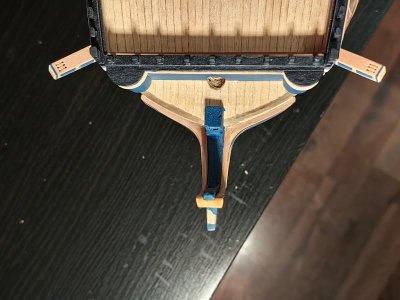
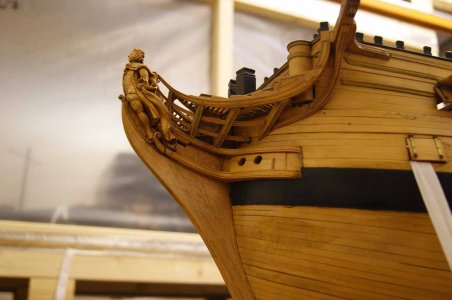
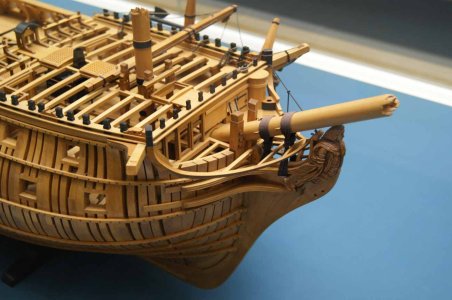
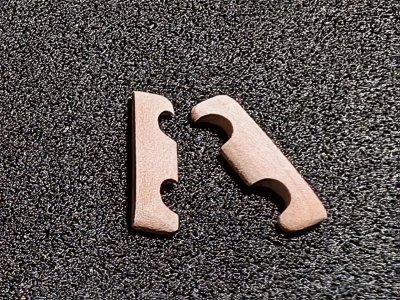
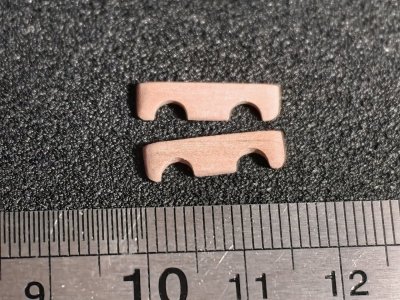
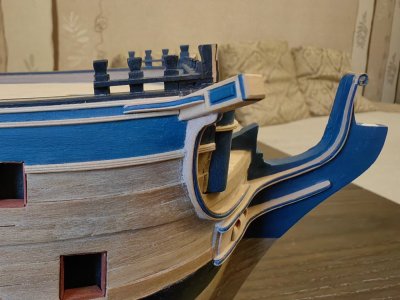
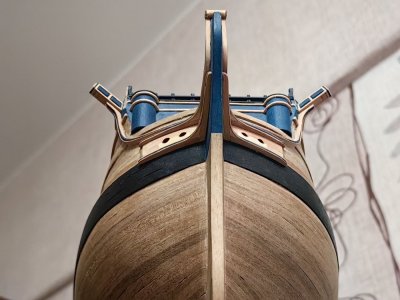
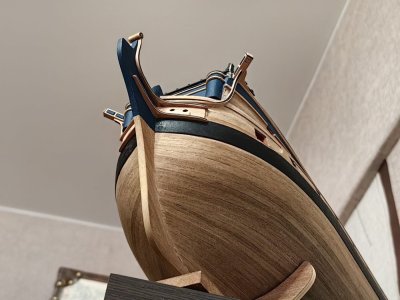
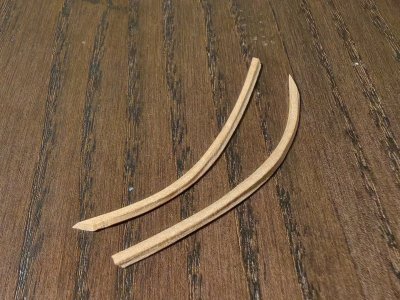
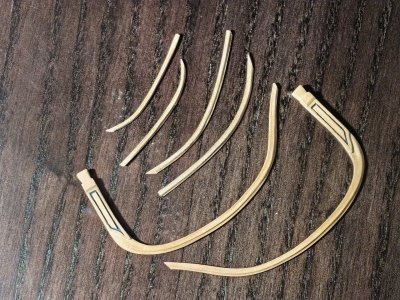
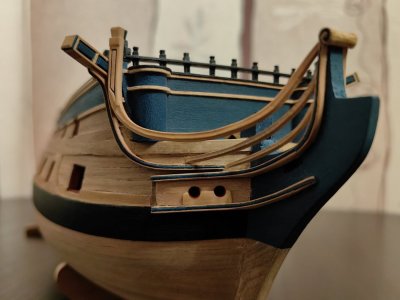
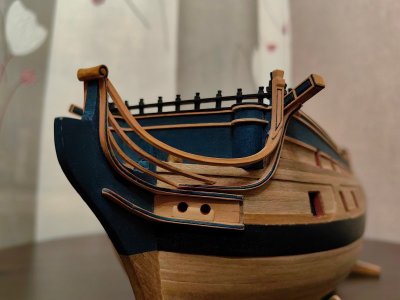
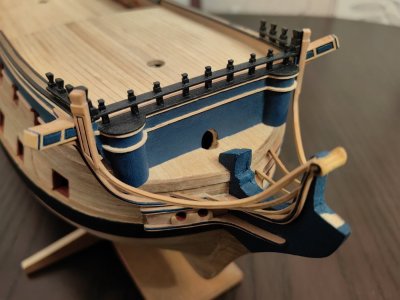
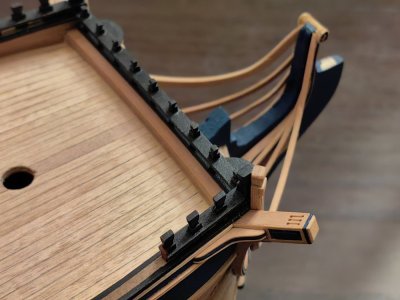
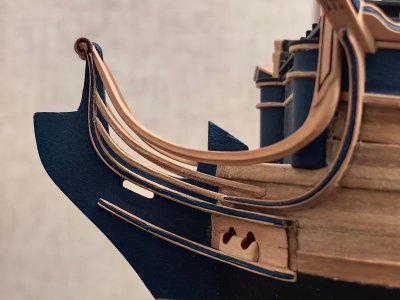
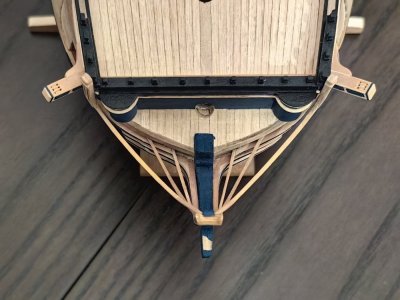
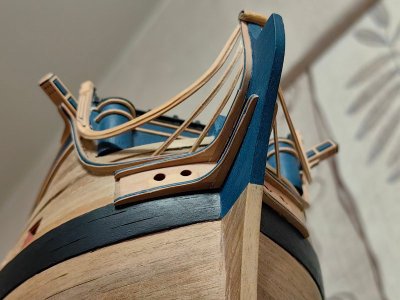
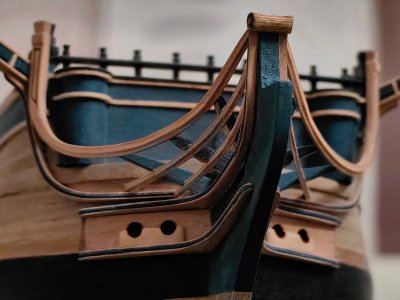
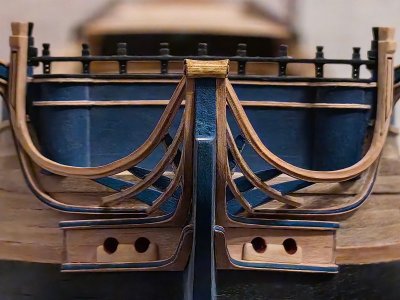
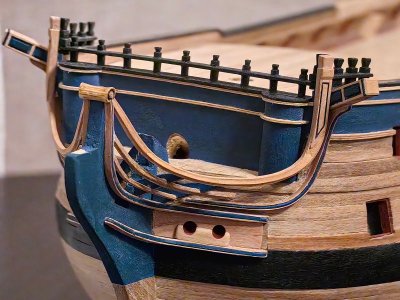
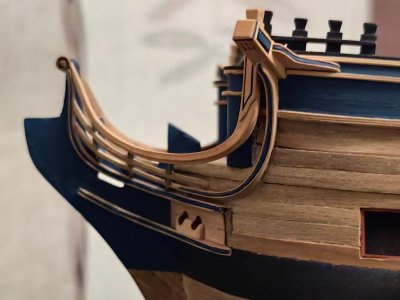
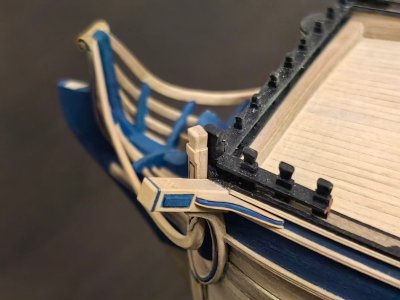
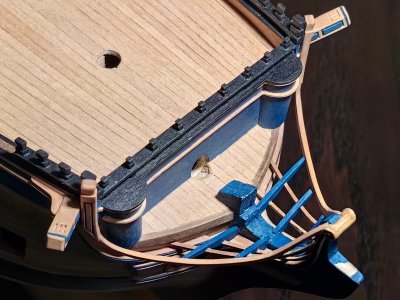
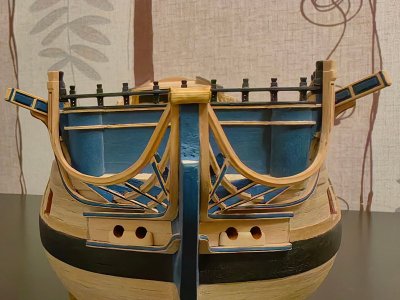
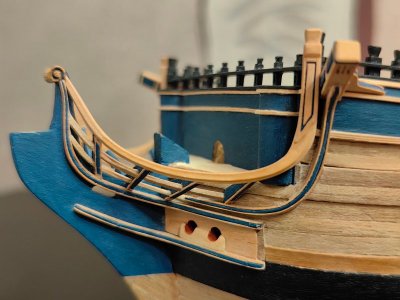
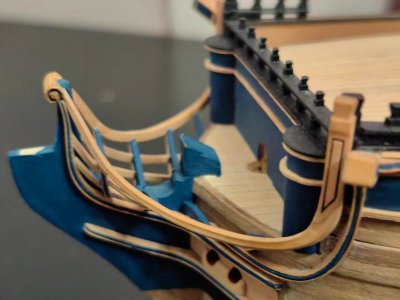
I started assembling the beakhead. I need to make a lot of thin, openwork parts. I started with the chееks. The Corel set doesn't have any laser-cut, ready-made parts, but the chееks need to have a distinct profile and the inside of the profile needs to be painted. While I can still give the rake a profile using a special tool, I won't be able to paint such a small part accurately. Therefore, I'm making the chееks out of three parts. The central part is made of a 1 mm rail, and the side parts are made of a 0.5 mm rail. All the rails are made of pearwood. By the way, it is easier to bend thinner rails. Then I gave the front edges of all the rails a semi-circular profile, painted the front part of the central rail, and glued on the side rails. The long upper cheek should taper towards the end, so I sharpened all three rails. The upper cheeks converge at the top and rest against the volute of the herbroket. Corel's volute is made in the form of a cast tin part, which I absolutely do not like, as well as most of the metal decor parts. I decided to make it myself. I did not have a pear rail of the appropriate cross-section, so I used a sushi stick. It is made of bamboo, which is quite hard and perfectly processed with a linography cutter. However, it is lighter than pear and speckled. But a little mordant has more or less evened out the colors, and since the piece is very small, I hope that the specks on the model won't be too noticeable. The assembly of cheeks from several parts did not take much time. Unexpectedly, a lot of it was spent on fitting and mounting them on the hull. Since the cheeks are essentially the knees, I decided to make a thickening at their junction in the form of a separate part. And since the cheeks are glued together each of the three parts, then the details had to be made in the same way. And here I faced difficulties. The outer slats are only half a millimeter thick, and even with the most careful processing, they easily break. In addition, I tried to make the joint as invisible as possible and for this it was necessary to sharpen the tips almost to zero. In general, I broke an uncountable number of them. Although the joints were still visible. This would have been the end of it. But after that, I decided to fill the gaps where the cheeks were attached to the body with wood-colored acrylic putty, which I had purchased specifically for this purpose. However, I made a mistake. I was not careful enough when applying the putty, and it ended up covering the entire nose of the model. When the putty dried, it turned out to be almost white, and it got trapped between the three parts of the cheeks, making it impossible to remove. I managed to remove the putty from the smooth surfaces, but I couldn't remove it from the cheeks without removing the paint from the middle rail. After that, I couldn't paint it without getting the adjacent areas dirty. I didn't want to redo the cheeks, so I decided to make a compromise. I cut off the damaged part, made a 0.5 mm thick edge from three pieces of wood, and glued it to the cheeks. It wasn't as beautiful as it was before the putty, but it was still passable. Then I had to touch up the head knee and cheeks

1205.jpg

1206.jpg

1207.jpg

1208.jpg

1209.jpg

1211.jpg

1212.jpg

1213.jpg

1213_1.jpg

1213_2.jpg

1213_3.jpg

1213_4.jpg

1214.jpg

1215.jpg

1215_1.jpg

1215_2.jpg

1215_3.jpg

1215_4.jpg

1215_5.jpg

1215_6.jpg

1216.jpg

1217.jpg
 
Last edited:
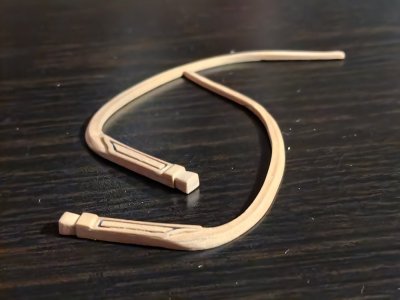
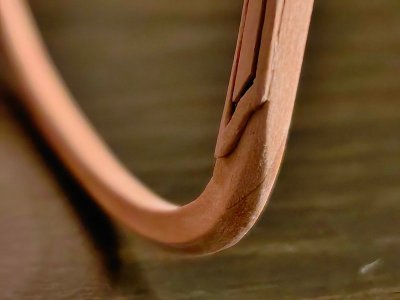
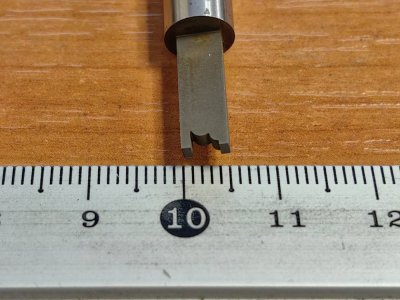
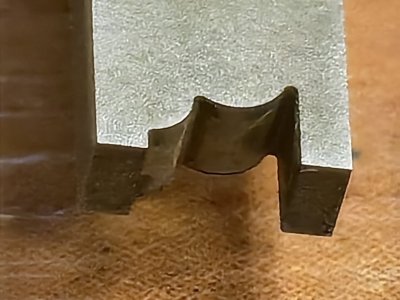
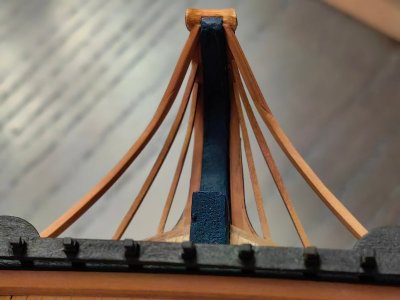
The next step was to make the main rail. I cut the central part of the main rail from a 20 mm wide rail and glued the ends. On prototypes and museum models, these rails have a beautiful carved profile. To give the rails a similar profile, I made a tool similar to the one used to profile the rails along the sides. However, the main rail gradually narrows from 4 to 2 mm, while the tool's profile width is 3 mm. Additionally, since the part was cut from a wide rail, the tool sometimes cuts across the layers, resulting in poor initial quality of the profile. A round file and sandpaper solved this issue. This is what I ended up with.

1227_3.jpg

1227_4.jpg

1227_5.jpg

1227_1.jpg

1227_2.jpg
 
The top timbers on the main rail should fit snugly against the top timbers on the bulkhead of the beakhead, which is painted black. It might be a good idea to paint it black as well, but on the Charles Middleton’s model, represented in the museum it's painted by wood color and looks good. I decided not to paint it yet and see how it looks when assembled. If there are any issues, I can always color it up later. I'm not entirely sure about the best order to assemble the beakhead. I think that I will first make all its parts and then assemble the whole structure. In the meantime, as a reference point, I decided to use the cathead, which I made from a beech 4x4 mm rail, pasted with a 0.5 mm rail from a pear tree and installed them on the body.

1218.jpg

1219.jpg

1220.jpg

1222.jpg

1223.jpg

1224.jpg

1225.jpg
 
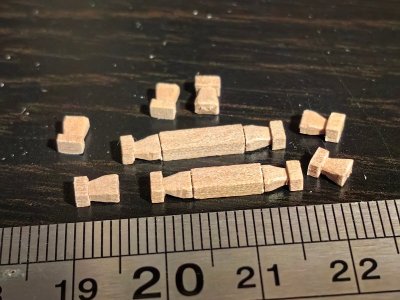
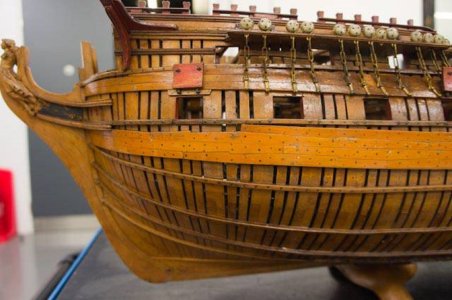
... Looking at the photos of the museum models, I noticed that Thomas Slade's model has catheads supported not only by the saportus, but also by a knitsa pointing towards the stern.
However, this detail is not present on Charles Middleton's model, in Lavery's anatomy, and certainly not on Corel's drawings. Since I am building a Bellona model, I believe it is necessary to include this element. Unfortunately, I have already installed the catheads on the model. It's not difficult to make a knees, but I don't want to remove the catheads, so I'll have to carefully cut off the back of the decoration to attach the knees to a flat surface.

Bellona_20110.jpg

gallery_10197_919_70102.jpg

gallery_10197_919_70182.jpg

gallery_10197_920_94856.jpg

med_gallery_10197_919_80174.jpg
 
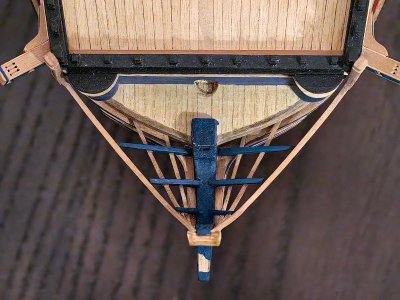
I didn't understand the assembly sequence for the head. In the drawings from Corel, there's only a template for the Main head rail and the head timbers. I had to draw the lower and middle head rails roughly based on the available projections and model images. The assembly sequence is also unclear. Logically, you should start with the head timbers with the slots cut out and then try to fit the rails. However, I didn't think it would work out that way. I won't be able to accurately match the location of the grooves. Therefore, I did the opposite. I glued the rails, trying to maintain symmetry on the top view and relative parallelism on the side view. Now, I will attempt to incorporate the head timbers into this structure.

1227_6.jpg

1227_7.jpg

1228.jpg

1228_1.jpg

1229.jpg

1229_1.jpg

1230.jpg

1230_1.jpg

1231.jpg

1231_2.jpg

1232.jpg
 
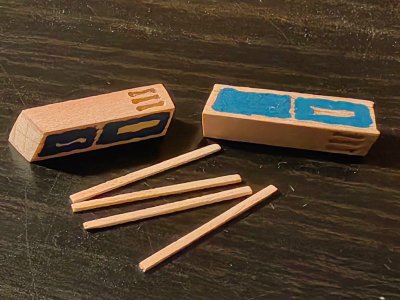
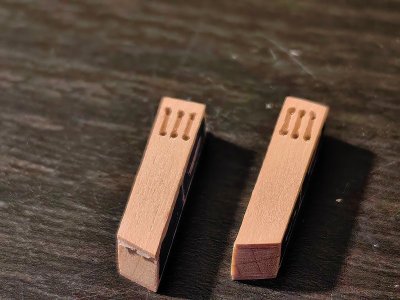
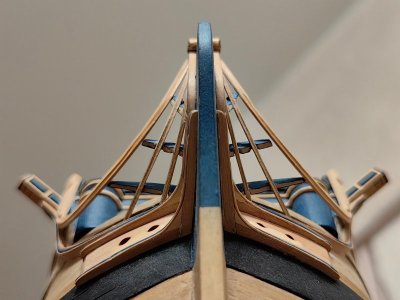
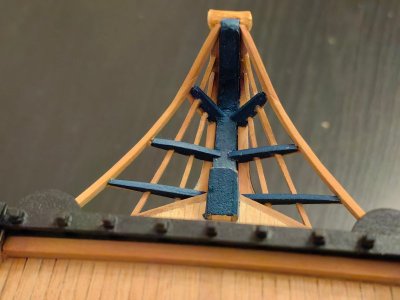
This step shows the extremely exciting process of making head timbers. The details are small, and they only look simple on the drawing. In reality, I had to make chamfers in different projections and cut grooves for the regels.. All of this was done on the spot, and some of them didn't turn out the first time. Since these elements are painted, I didn't bother and made them from a walnut rail. Here's what I got. There is no fourth pair of head timbers yet, they have yet to be made. As well as the slats that cover the grooves with the regels passing through them. Now I need to make the slats that cover the grooves with the regels.

0001.jpg.f864dd09d4aea436e9de0fefc1914261.jpg

1233.jpg

1234.jpg

1237.jpg

0012.jpg

0013.jpg

0014.jpg

0015.jpg

0016.jpg

0017.jpg

0018.jpg

0019.jpg
 
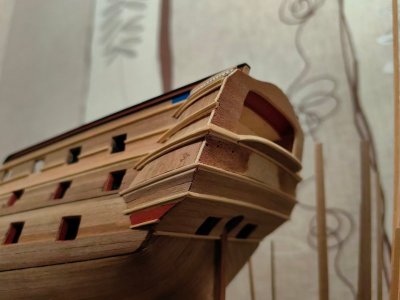
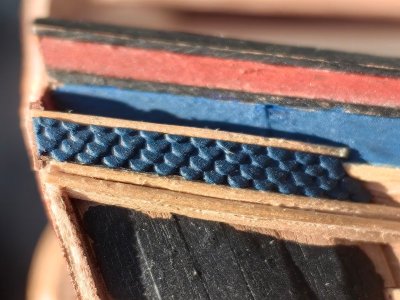
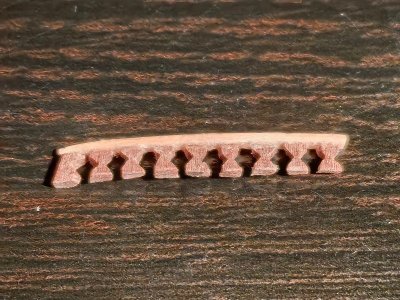
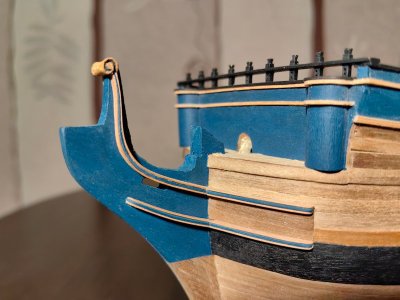
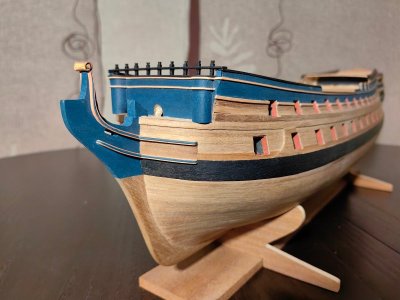
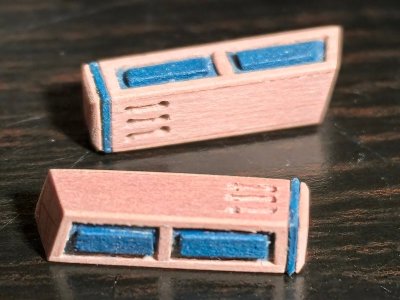
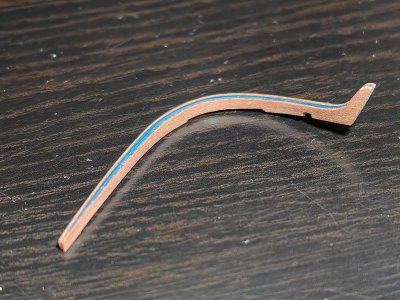
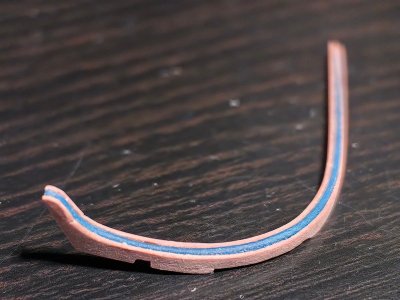
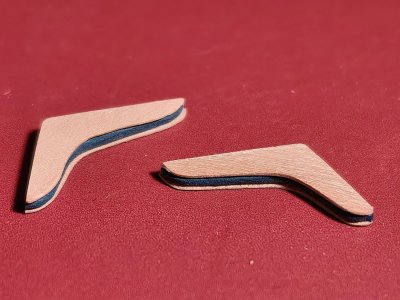
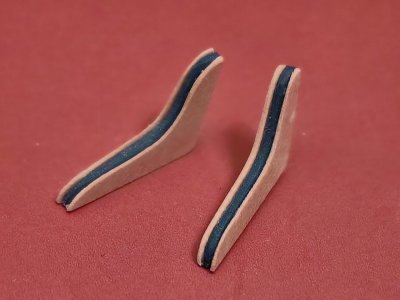
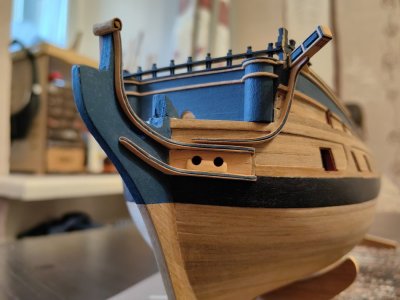
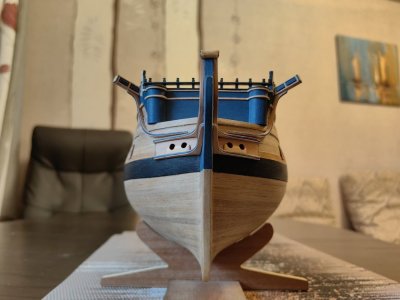
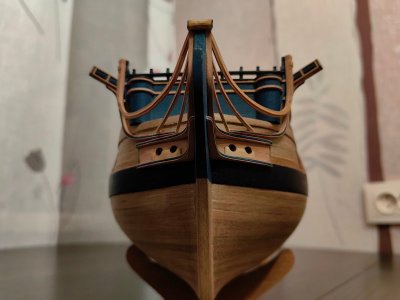
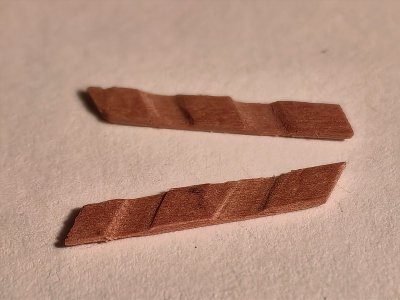
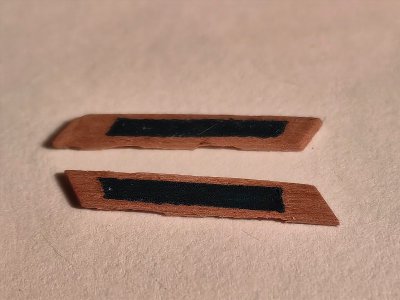
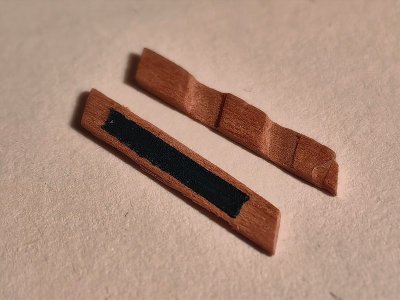
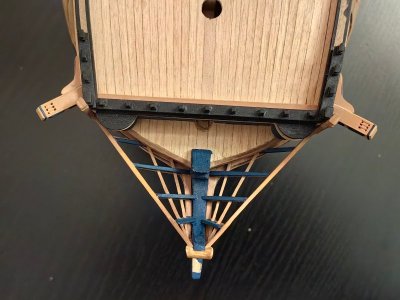
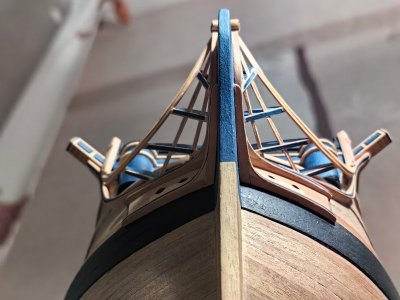
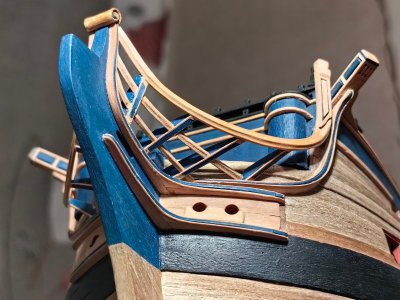
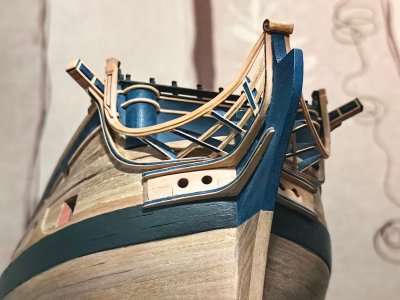
I have installed a fourth pair of head timbers and overlays on them, which close the grooves with regels. The overlays are made of a pear rail 0.5 mm thick. On the inside, in the overlays, I had to make small grooves, as the regels protrude a little beyond the head timbers. I like the combination of the color of natural wood and blue decor, for example, on the Charles Middleton model, and I try to use this scheme at home. On that model, these overlays are profiled and the middle part is blue. But on my model, the width of these overlays is less than two millimeters, and it's difficult to attach the tape to the edges. The paint job isn't very neat, and I'm thinking about applying thin strips around the perimeter, leaving the middle part blue. This will add extra volume and hide any imperfections at the color boundary. However, on such a small scale, it might be better to leave it as it is, especially since there's still a lot of work to be done.

803.jpg

849.jpg

924.jpg

0001.jpg

0002.jpg

0003.jpg

0004.jpg

0005.jpg

0006.jpg

0007.jpg

0009.jpg

0011.jpg
 
The top timbers on the main rail
The step down on the main rails looks terrific! Nicely done.
The assembly of the rails and cheeks is a challenge, but yours look to be very well done. The taper of the knee of the head is so nice to see for a change as this is usually ignored in kit instructions and in most builds.
Allan
 
Back
Top