
-

SUBSCRIBE TO SHIPS IN SCALE TODAY!
The beloved Ships in Scale Magazine is back and charting a new course for 2026!
Discover new skills, new techniques, and new inspirations in every issue.
NOTE THAT OUR NEXT ISSUE WILL BE MARCH/APRIL 2026 -

Win a Free Custom Engraved Brass Coin!!!
As a way to introduce our brass coins to the community, we will raffle off a free coin during the month of August. Follow link ABOVE for instructions for entering.
You are using an out of date browser. It may not display this or other websites correctly.
You should upgrade or use an alternative browser.
You should upgrade or use an alternative browser.

I would guess most folks that want working sheaves make their own blocks in pieces same as an actual block with tail piece, crown, etc. They look great on the largest blocks but maybe not worth the effort on smaller blocks as the line running through the block obscures most of the view of the sheave in most cases.
Allan
Allan

- Joined
- Mar 28, 2024
- Messages
- 295
- Points
- 138

The dead eyes, I can make, but the single blocks are tiny, on a block only 73 thou wide, not achievable with the sheave, nor the double sheave block either, so I will make a mock-up and try to make them as real as I can.I would guess most folks that want working sheaves make their own blocks in pieces same as an actual block with tail piece, crown, etc. They look great on the largest blocks but maybe not worth the effort on smaller blocks as the line running through the block obscures most of the view of the sheave in most cases.
Allan

Do you have a small mill, Gary? If so, here is how Ondras makes blocks:The dead eyes, I can make, but the single blocks are tiny, on a block only 73 thou wide, not achievable with the sheave, nor the double sheave block either, so I will make a mock-up and try to make them as real as I can.
Roter Löwe 1597 by Ondras71 - scala 1/60
Witaj Ondras wygląda jak prawdziwy, świetne wykonanie .Pozdrawiam Mirek
shipsofscale.com
Roter Löwe 1597 by Ondras71 - scala 1/60
Thank you very much Paul and Mirek.Coffee-Cup All five Stays Mouse done.. Shrouds and Stay Mouse are strung..Explosion
shipsofscale.com
There are several others but it would take some hunting down.
I am not aware of anyone putting working sheaves in miniature blocks.
- Joined
- Mar 28, 2024
- Messages
- 295
- Points
- 138
Wow, that blew me away. I have a small and very old lathe that I use like a Milling machine. I will give it a go once I get a chance to do so. BTW, what a modeller he is!Do you have a small mill, Gary? If so, here is how Ondras makes blocks:
Roter Löwe 1597 by Ondras71 - scala 1/60
Witaj Ondras wygląda jak prawdziwy, świetne wykonanie .Pozdrawiam Mirekshipsofscale.com
Roter Löwe 1597 by Ondras71 - scala 1/60
Thank you very much Paul and Mirek.Coffee-Cup All five Stays Mouse done.. Shrouds and Stay Mouse are strung..Explosionshipsofscale.com
There are several others but it would take some hunting down.
I am not aware of anyone putting working sheaves in miniature blocks.
You know, I put in a search on SOS, but I did not dig up Ondras's page. Got it now though.



Some people don't make them, but buy them. There are many merchants out there and there are a number that are on these forums.
of course, there are MANY different sizes on a single ship, so there is not one that is 1/48 scale. Most merchants will sell several different sizes and types.
of course, there are MANY different sizes on a single ship, so there is not one that is 1/48 scale. Most merchants will sell several different sizes and types.
- Joined
- Jun 29, 2024
- Messages
- 1,848
- Points
- 488

There are many different ways to make blocks depending on scale and available tooling. For the relatively large blocks required for 1:48 scale, the “stick” method works fine if you have a Byrnes or, other miniature table saw and a way to accurately drill small holes.
Using the table saw:
1. Rip a stick of hard close grained wood to the cross sectional dimensions of the block.
2. Cut one or more deep grooves in the both the top and bottom of the stick.
3. Cut one shallow grooves in in each side of the stick.
Using the drill:
1. Drill a pair of holes spaced the diameter the sheave through the deep grooves of the stick. The result will be a row of pairs of holes along the stick.
2. With a tiny burr, soften the inside edges of the each hole to replicate the circular shape of the sheave.
With your favorite hand tools, carve but do nor separate from the stick each end of each block. Files or better yet emery boards can be used to smooth sharp corners.
Using a razor hand saw, cut each block from the stick. A needle file should be used to extend the shallow groove to hold the strop across the top and bottom of the block. I have a collection of simple homemade wooden miter boxes that I use for cutting multiple small pieces to exact lengths. I don’t like the aluminum miter boxes that come with razor saw kits.
Roger
Using the table saw:
1. Rip a stick of hard close grained wood to the cross sectional dimensions of the block.
2. Cut one or more deep grooves in the both the top and bottom of the stick.
3. Cut one shallow grooves in in each side of the stick.
Using the drill:
1. Drill a pair of holes spaced the diameter the sheave through the deep grooves of the stick. The result will be a row of pairs of holes along the stick.
2. With a tiny burr, soften the inside edges of the each hole to replicate the circular shape of the sheave.
With your favorite hand tools, carve but do nor separate from the stick each end of each block. Files or better yet emery boards can be used to smooth sharp corners.
Using a razor hand saw, cut each block from the stick. A needle file should be used to extend the shallow groove to hold the strop across the top and bottom of the block. I have a collection of simple homemade wooden miter boxes that I use for cutting multiple small pieces to exact lengths. I don’t like the aluminum miter boxes that come with razor saw kits.
Roger
Last edited:
- Joined
- Jun 29, 2024
- Messages
- 1,848
- Points
- 488
Some of my homemade blocks; 1:32 scale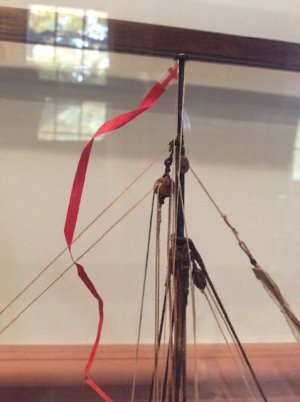
This is pretty much what I have done for block making but added one more step. Sand them in a block sander with a drill. Hand held drill works great. See Tricks of the Trade https://shipsofscale.com/sosforums/threads/tricks-of-the-trade.15492/ post #3 Check every 20 or 30 seconds to be sure it is not too much. Good wood like box or castello will take a will longer than bass or other soft woods.Using a razor hand saw, cut each block from the stick. A needle file should be used to extend the shallow groove to hold the strop across the top and bottom of the block.
Allan
Last edited:

Here are some helpful videos
Rob
Rob
There were several long articles published in the NRJ about a dozen years ago that covered this precise subject in exhausting detail. I think they would cover any questions you could invent. I have constructed thousands of blocks over the years using these techniques. You can make any block, any size, any style - no problem. Boxwood would be the preferred wood.Hi everybody,
I am wondering what modellers do to craft the different types of Blocks and Sheaves for their models, built at 1:48 scale?
- Joined
- Mar 28, 2024
- Messages
- 295
- Points
- 138
No pics, Roger, as to how detailed you can get these pulleys to be? I can also look at a pulley but it means nothing to me unless I can scale it to somethingThere are many different ways to make blocks depending on scale and available tooling. For the relatively large blocks required for 1:48 scale, the “stick” method works fine if you have a Byrnes or, other miniature table saw and a way to accurately drill small holes.
Using the table saw:
1. Rip a stick of hard close grained wood to the cross sectional dimensions of the block.
2. Cut one or more deep grooves in the both the top and bottom of the stick.
3. Cut one shallow grooves in in each side of the stick.
Using the drill:
1. Drill a pair of holes spaced the diameter of the sheave through the deep grooves of the stick. The result will be a row of pairs of holes along the stick.
2. With a tiny burr, soften the inside edges of the each hole to replicate the circular shape of the sheave.
With your favorite hand tools, carve but do nor separate from the stick each end of each block. Files or better yet emery boards can be used to smooth sharp corners.
Using a razor hand saw, cut each block from the stick. A needle file should be used to extend the shallow groove to hold the strop across the top and bottom of the block. I have a collection of simple homemade wooden miter boxes that I use for cutting multiple small pieces to exact lengths. I don’t like the aluminum miter boxes that come with razor saw kits.
Roger
- Joined
- Mar 28, 2024
- Messages
- 295
- Points
- 138
Hi Bill, what is the NRJ?There were several long articles published in the NRJ about a dozen years ago that covered this precise subject in exhausting detail. I think they would cover any questions you could invent. I have constructed thousands of blocks over the years using these techniques. You can make any block, any size, any style - no problem. Boxwood would be the preferred wood.
- Joined
- Jun 29, 2024
- Messages
- 1,848
- Points
- 488
Sorry Gary, what I posted is the best that I can do. The model that I am currently building will eventually require blocks (for the cargo gear) but that’s way down the road and at the scale that I’m working to (1:96) they’ll probably be machined from brass using a technique that the late master modeler Gerald Wingrove wrote about.
The NRJ is the Nautical Research Journal once the pre-eminent quarterly maritime research and ship modeling Journal. Back issues are a treasure trove of information. Sadly the Journal “ain’t what it used to be.”
Roger
The NRJ is the Nautical Research Journal once the pre-eminent quarterly maritime research and ship modeling Journal. Back issues are a treasure trove of information. Sadly the Journal “ain’t what it used to be.”
Roger
Last edited:
- Joined
- Mar 28, 2024
- Messages
- 295
- Points
- 138
Thanks Mate. Actually, come across a bloke making them on YouTube. He was using a Proxxon Milling machine and looked ok, but a lot of hand work to create one. I actually bought a router jig for my Dremel, and I could probably give that a go, when the time comes. Dremel has a few carbide cutters that I also bought.Sorry Gary, what I posted is the best that I can do. The model that I am currently building will eventually require blocks (for the cargo gear) but that’s way down the road and at the scale that I’m working to (1:96) they’ll probably be machined from brass using a technique that the late master modeler Gerald Wingrove wrote about.
The NRJ is the Nautical Research Journal once the pre-eminent quarterly maritime research and ship modeling Journal. Back issues are a treasure trove of information. Sadly the Journal “ain’t what it used to be.”
Roger
In my book I have, Anatomy of a ship, The Armed Transport Bounty does have details of the pullies used and very good detail, but I may have to ask people here about a couple pulleys that I am scratching my head over. Also, in the details of what type of pulley to be used, seems to be a little sketchy to me also.
Do you have the book?

- Joined
- May 11, 2020
- Messages
- 121
- Points
- 113

This is what AI search says….Hi Bill, what is the NRJ?
AI Overview
The Nautical Research Journal (NRJ), published by the Nautical Research Guild (NRG), is a renowned quarterly publication for maritime researchers and ship modelers. It features in-depth articles on ship designs, naval history, and modeling techniques, serving as a key resource for enthusiasts interested in maritime history and high-quality research. [1, 2, 3, 4]
- Joined
- Mar 28, 2024
- Messages
- 295
- Points
- 138
I can see that many people are very interested in this topic about making Pulleys. Maybe lots of people want to find out, as the scale gets smaller, how to make a decent Block that looks real to the eye, maybe.
I would say I could build a 3 sheaved Block that was pretty convincing at 1:48 scale as shown in the Bounty book, but the single sheave block is a bit daunting as there are many on the Model. Double sheave block, maybe. Just need to have a crack at it.
I would say I could build a 3 sheaved Block that was pretty convincing at 1:48 scale as shown in the Bounty book, but the single sheave block is a bit daunting as there are many on the Model. Double sheave block, maybe. Just need to have a crack at it.
- Joined
- Jul 18, 2025
- Messages
- 22
- Points
- 8

I make all my own blocks etc they are not hard to make but it requires alot of time and will give you satisfaction when done .the reply about ripping sticks to make them is very similar to my methode except i made a jig for drilling the holes with my drill press and a pin chuck to hold thesmall drills.
- Joined
- Jun 29, 2024
- Messages
- 1,848
- Points
- 488
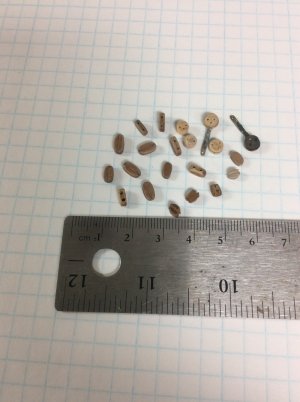
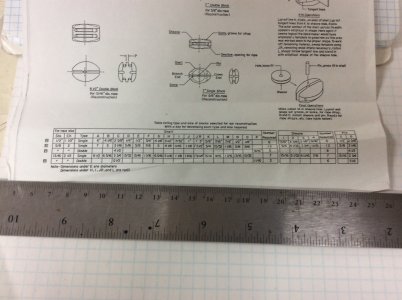
I did find some homemade blocks made for but surplus, for my 1:32 scale Rigged longboat model (masthead photo posted above). All single blocks and possibly narrower than usual but dimensions are based on blocks recovered from the wreckage of the American Revolution Gundalow Philadelphia. Dimensions were published by the Smithsonian in a past issue of the Nautical Research Journal. Photos:

- Joined
- Nov 13, 2025
- Messages
- 4
- Points
- 3
I build blocks and deadeyes at 1:50 scale.Hi everybody,
I am wondering what modellers do to craft the different types of Blocks and Sheaves for their models, built at 1:48 scale?
I use maple dowels for blocks and black walnut dowels for deadeyes.
For my blocks, I sand two opposite sides of the maple dowels flat (on a belt sander) to establish the general shape. Then I hand sand with 250 grit to smooth and round the edges of the flat sides. Then I tack the dowels to the honeycomb of my laser cutter. I cut thin slices (about 1/32") like cutting a salami sausage on a meat slicer. Then, one by one, I drill a 1/32" hole at the ends of each oblong slice. Then I drill another hole at dead center. I use 1/8" round maple dowels cut into 1/16" slices on my laser cutter to create the circular "pulleys", then drill a center hole in each pulley. I slip a 1/32" dowel into to the top and bottom holes. I slide a 1/16" dowel through the center hole, slide on a pulley, slide on another oblong wafer, hit it with thin CA on the outside of the wafer where the dowels are protruding through. I slip a 1" square piece of wax paper through the protruding dowels. Then slide on: oblong wafer + pulley + wafer + thin CA + wax paper. Over and over and over until the 8" long dowels are filled with complete blocks. Then I cut them apart with a razor saw, sand both sides (rounded). Voila. Blocks. Done. To make double sheath blocks, Slide on: wafer + pulley + wafer + pulley + wafer + thin CA + wax paper....
For deadeyes, I turn the black walnut (about 4" lengths) dowel on my small table lathe, you get about 24 out of a 4" long dowel. Then drill the three holes on each one with my drill press. You have to hold them with something, so I drill out consecutive holes on a 2" x 1/2" piece of cherry 12" long - I cut the holes about an 1/8" deep and 1/2" apart l using a facing bit just slightly larger than the deadeye blanks. I mark the hole locations with a triangular open stencil and a .05mm white ink pen. I insert a blank into each jig hole, light a pipe, crack open a cold beer and drill drill drill drill. Then I pop them out with a dental pick. I've made bags of them.