
• SUBSCRIBE TO SHIPS IN SCALE TODAY!

    The beloved Ships in Scale Magazine is back and charting a new course for 2026!
    Discover new skills, new techniques, and new inspirations in every issue.

    NOTE THAT OUR NEXT ISSUE WILL BE MARCH/APRIL 2026
  • Win a Free Custom Engraved Brass Coin!!!
    As a way to introduce our brass coins to the community, we will raffle off a free coin during the month of August. Follow link ABOVE for instructions for entering.

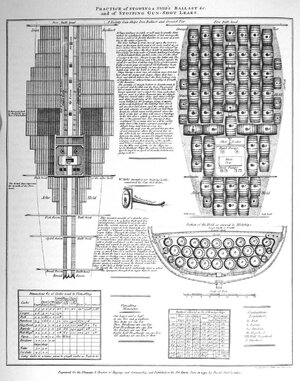
Method of stowage - ballast and ground tier in the hold etc.

  • Thread starter Thread starter Uwek
  • Start date Start date
  • Watchers Watchers 5
Iron Ballast

View attachment 61877 View attachment 61878
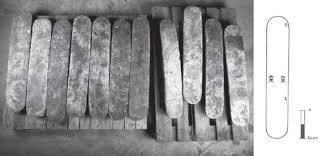
A shaped piece of iron ore, probably used as ballast on H.M. Armed Vessel 'Bounty'. For online access text please see the 'Notebook' field within the 'Mail' icon.
Read more at http://collections.rmg.co.uk/collections/objects/63330.html#GsXYtXkSwYOHhMO9.99

Interestingly the Brit RN also used large lumps of Flint as ballast, here in Australia it can be found along our East coast beaches sometimes, although nowadays rounded into Sugar Loaf like configuration (probably from the tide and sand wear over a couple of hundred years). I've collected some of them and can provide images if anyones interested.
 
Interestingly the Brit RN also used large lumps of Flint as ballast, here in Australia it can be found along our East coast beaches sometimes, although nowadays rounded into Sugar Loaf like configuration (probably from the tide and sand wear over a couple of hundred years). I've collected some of them and can provide images if anyones interested.

Yes please - would be interesting to see
 
Yes please - would be interesting to see

Please forgive my absents, I'll dig through my shed here and find them, I still have a few in a canvas bag.
I build Flintlock Rifles and Smoothbores as well, so Flint is an ongoing interest of mine.
 
Hello. I was wondering about ballast. Some of my “regulars” may know I am currently building an 1835 English Packet Ship called Seagull.

I believe that it may be planked both internally as well as externally? If this is the case how do you prevent the stone ballast shifting fore and aft as well as riding up the sides during heeling etc? I guess there may be boards across the hull as well as laterally along the sides to compartmentalising the ballast and prevent shifting.

If the planking internally is incomplete then the stones can be placed between the frames assuming there is space. Does this then impact the bilge water capacity and drainage to the pump sump?

Any input, sketches or photos gratefully received. Thanks in advanced Seagull Shipwright.
 
the stone ballast shifting fore and aft
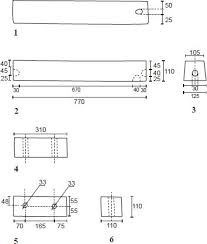
I am pretty sure stone ballast was much earlier. Kentledge came into use in the early 18th century and would have been more common in your time frame. These bars would not shift in the hull. There are contemporary pieces in museums around the world and you can find photos on the internet. The approximate amount was typically 30 tons of ballast per 100 tons of rated ship tonnage
Allan
Approximate typical size
1778441875876.png

1778441904768.png
 
Back
Top