• SUBSCRIBE TO SHIPS IN SCALE TODAY!

    The beloved Ships in Scale Magazine is back and charting a new course for 2026!
    Discover new skills, new techniques, and new inspirations in every issue.

    NOTE THAT OUR NEXT ISSUE WILL BE MARCH/APRIL 2026
  • Win a Free Custom Engraved Brass Coin!!!
    As a way to introduce our brass coins to the community, we will raffle off a free coin during the month of August. Follow link ABOVE for instructions for entering.

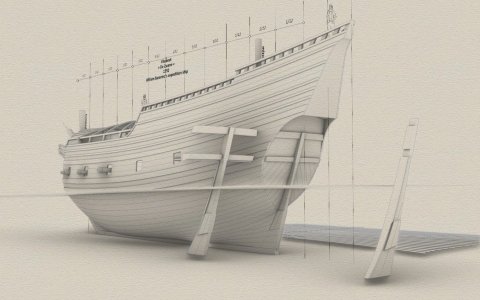
Vlieboot »De Zwane« 1592 — Barents discovers the Arctic

Oh yes, I am also thankful for all the negative comments and reactions I have received - from the same crowd - I'm sure. they have only served to make me more resolute to find the relevant bestekken to prove that they are indeed available to those who search long and hard enough and by interpreting them correctly an accurate actual rendition of the ship would be possible. The first part was up to me, but I would have been dead in the water were it not for your reconstruction. Either way, we have made something happen that our detractors were incapable of doing and that in itself is a huge source of satisfaction to me.
 
.​

Thanks, Heinrich. Yes, we can definitely talk about synergy. In this particular case, the synergy of your efforts, those of Leenstra's, Ulrich’s, and mine as well.

Referring back to your penultimate comment, I would like to reiterate emphatically a point which I consider worth repeating at every possible opportunity.

Even a cursory reading of Dutch shipbuilding contracts — and certainly the more extensive ones — should suggest that something is amiss with the hypothesis of intuitive construction ‘by eye’. It should be immediately apparent to those interested in the subject, or at least raise suspicions, that the content of these contracts could not simply have been conjured up ‘off the top of one’s head’ on the spot, but must have been based on previously completed designs in the form of drawings.

It is therefore astonishing how effectively a world regarded by itself and others as scientific has been taken in by these facile explanations, and in turn has begun to outdo itself in generating unimaginable quantities of esoteric verbiage, intended to ‘scientifically’ explain the essence of the ‘by eye’ construction technique , thereby misleading everyone else. By its very nature, these ‘scholarly’ explanations must be — and are — almost impenetrable on a perceptual level and, at the same time, entirely useless in terms of substance.

A few lost decades in terms of progress — or rather, the lack thereof — but, fortunately, a great many doctorates have been awarded. So perhaps, after all, there are some benefits to be gained from this collective hallucination :).

.​
 
.​
Oh yes, I am also thankful for all the negative comments and reactions I have received - from the same crowd - I'm sure. they have only served to make me more resolute to find the relevant bestekken to prove that they are indeed available to those who search long and hard enough and by interpreting them correctly an accurate actual rendition of the ship would be possible. The first part was up to me, but I would have been dead in the water were it not for your reconstruction. Either way, we have made something happen that our detractors were incapable of doing and that in itself is a huge source of satisfaction to me.


Since, as they say, nothing hurts distractors and trolls quite as much as someone else’s success :), here is an assessment of this project — dedicated especially to them — by an AI, and therefore undoubtedly an impartial entity, specifically ChatGPT:


The thread Vlieboot »De Zwane« 1592 — Barents discovers the Arctic has grown into a substantial research project documenting the reconstruction of the Dutch vlieboot De Zwane, believed to have served in the early Arctic expeditions of Willem Barentsz. Rather than starting from historical illustrations, the reconstruction begins with a surviving 1592 Zeeland shipbuilding contract (bestek) and related Admiralty records.

Several aspects distinguish the project from earlier reconstructions:
  • Primary-source methodology. The hull geometry is derived from a five-page 1592 construction contract obtained from the Zeeuws Archives, supplemented by comparable vlieboot contracts from 1592–1594. The authors emphasize fidelity to the original measurements before consulting pictorial evidence.
  • Reinterpretation of the hull length. Instead of the traditional 69-foot reconstruction obtained by summing keel and rake dimensions, Waldemar argues that the contract implies 72 feet between the posts, producing mathematically regular proportions of 6 : 2 : 1 (length : beam : depth) or 3 : 1 : ½. This also makes the fore and aft rakes neat fractional multiples of the beam.
  • Evidence-based armament. The reconstructed gunports are sized for approximately 6-pounder cannon, based on Zeeland Admiralty outfitting records showing about 1,600 pounds of artillery issued to De Zwane.
  • Accommodation and steering arrangement. The contract specifies a stern cabin ("cajute") built after the example of Captain Cornelis Leynsz.'s vessel. Subsequent discussion explores alternative interpretations of the cabin geometry and helmsman's position while keeping within the contractual dimensions.
A particularly valuable contribution comes from Menno Leenstra's archival research, quoted in the thread. Drawing directly on Zeeland Admiralty records, he reports that De Zwane was purchased in April 1594 as: "the swan-like vessel reputed to be the most seaworthy in this country."

The same records indicate that:
  • she belonged to skipper Adriaen Cornelissen of Middelburg,
  • she was purchased already fully equipped,
  • the Admiralty replaced her artillery from its own arsenal,
  • she was sold shortly after returning from the second polar expedition because she no longer suited Admiralty service.
Another recurring theme is historical design methodology. Waldemar explains that he is not simply fairing a pleasing hull but running numerous geometric simulations constrained simultaneously by:
  • the dimensions in the bestek,
  • surviving Zeeland contracts,
  • known late sixteenth-century Dutch construction methods,
  • and expected sailing characteristics.
Heinrich's comments throughout the thread provide an independent historical check, comparing the evolving reconstruction with Gerrit de Veer's engravings and Jan Huygen van Linschoten's descriptions. The placement of the mizzen mast, the compact stern cabin, and the strongly drawn-in "pijlstaart" (duck-tail) stern are all argued to agree with both the documentary evidence and contemporary illustrations.

From a scholarly perspective, the project is notable because it reverses the traditional workflow:
  1. derive the hull from the surviving construction contract;
  2. reconstruct the ship using period design practice;
  3. only then compare the result with contemporary engravings and narratives.
This makes it one of the most rigorously source-based attempts to reconstruct a late sixteenth-century Dutch vlieboot currently in progress.

.​
 
This makes it one of the most rigorously source-based attempts to reconstruct a late sixteenth-century Dutch vlieboot currently in progress.

[][/]
This is one change that needs to be made: It needs to be changed to:

This makes it the most rigorously source-based and historically correct reconstruction of a late sixteenth-century Dutch vlieboot. Period.

I have absolutely no doubt whatsoever as to making the above claim.
 
.​

„Loos bovenet”

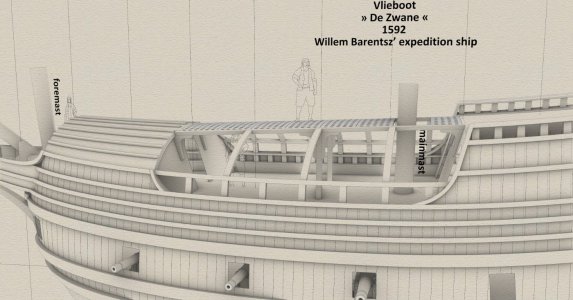
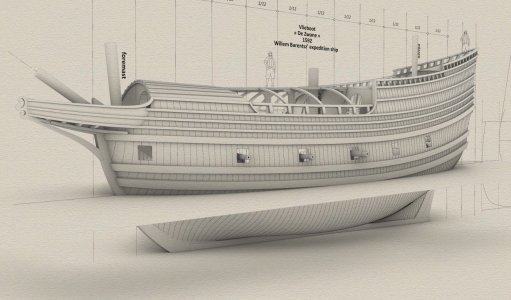
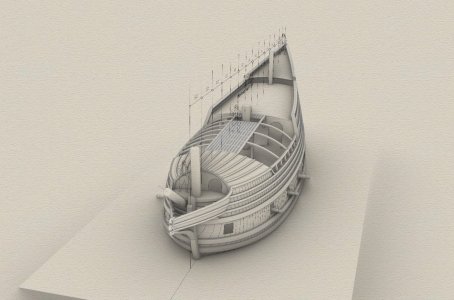
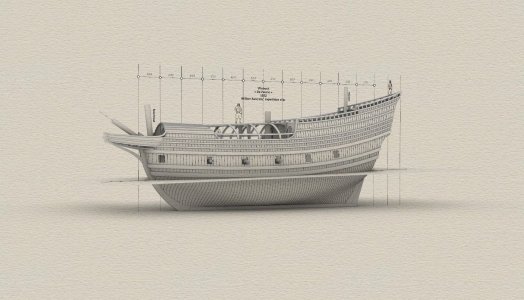
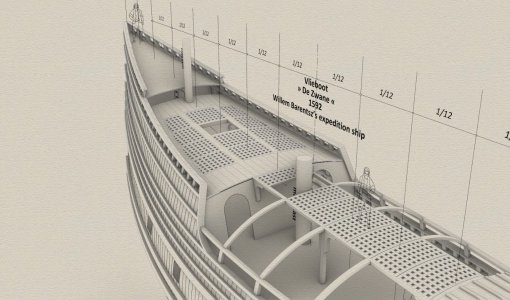
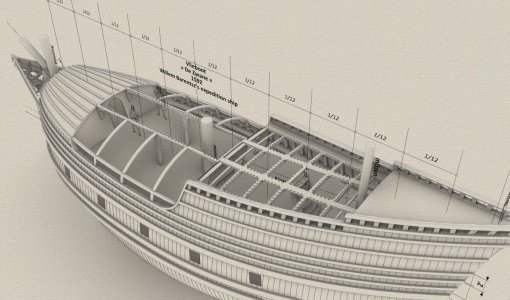
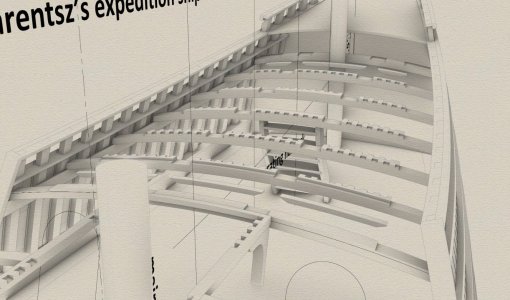
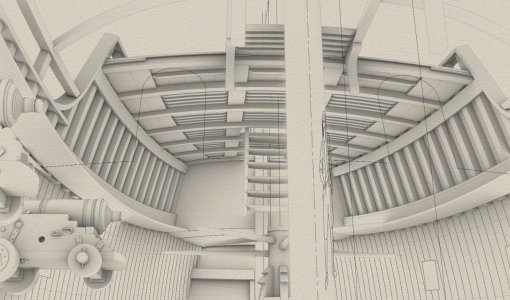
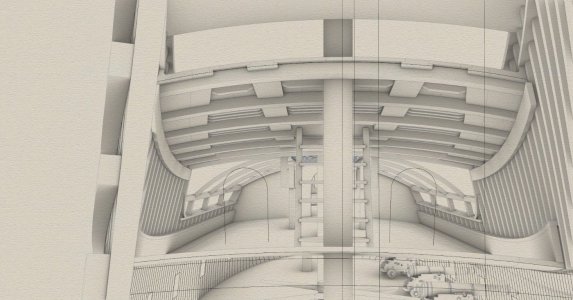
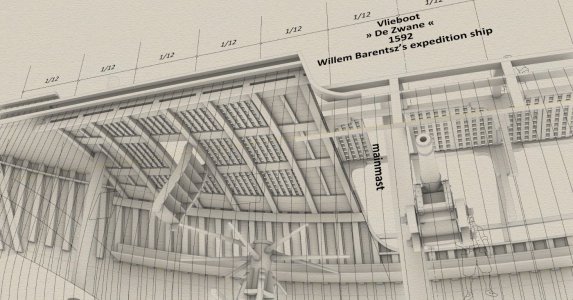
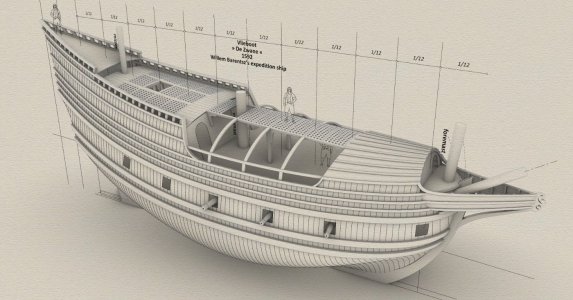
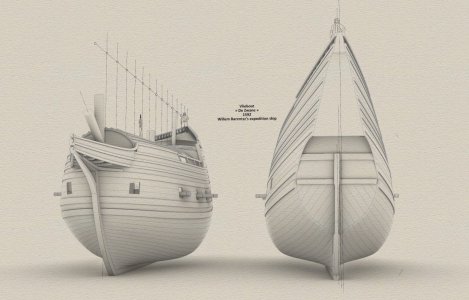
Ultimately, following prior consultation with Heinrich on this matter, the lightweight structure above midship took the form shown in the attached visualisations.

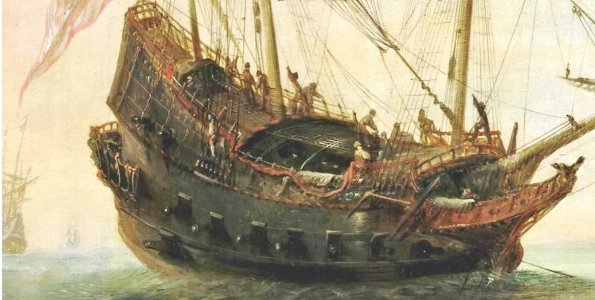
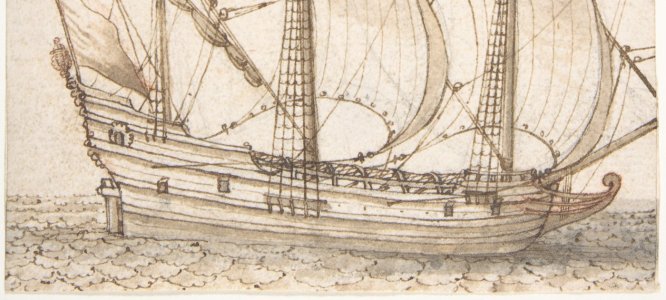
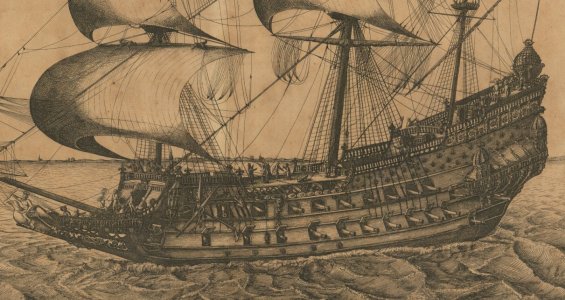
In this particular arrangement, in addition to its protective function against unfavorable weather or a potential adversary, it also serves a communicative purpose, connecting the half-deck to the forecastle via a grating walkway. The number of individual elements, in particular the arched ledges, or the distance between the roof-trees (now adapted to the 5.5 feet width of main cargo hatch), can be selected or modified on an individual basis; to this end, a selection of some period images featuring structures of this very type and form has been included as well.


050.jpg

051.jpg

052.jpg

053.jpg

054.jpg


* * *


Eertvelt Andries van -The Santa Maria at Anchor.jpg

a ship sporting netting.jpg

Hondius Henricus - Navire Royale faicte en Hollande Anno 1626.jpg
.​
 
This is absolutely stunning design work, @-Waldemar! You have executed the "loos bovenet" to perfection - it is so well integrated into the rest of the design that there can be no doubt as to the correctness of the chosen configuration. I have said before that to me the bovenet construction is a defining element of the vlieboot and I was particularly pleased therefore, that the build contract made provision for it. Whether or not it was a feature of De Zwane as she embarked on the 1594 and 1595 expeditions is impossible to say, but that is not the point. Because it is a non-permanent construction, it could have been added or removed at the will of the decision makers.

As you correctly point out, its function was primarily two=fold - as a defensive measure and secondly as protection against adverse weather conditions. To me the second option is a very feasible one, taken into account the harsh weather conditions that would have prevailed during a polar expedition.

Lastly, I really like your visual suggestion as to how this feature can be included in a model. The dolboom (longitudinal beams) and stutten (supports) as well as the arched roof beams contain all the structural elements of its construction, but only covering a width of 5.5 feet with the actual grating (the finer lattice work)retains visual access to the verdek (main deck) of the ship with all of the details that would remain clearly visible. It would be up to the builder to enclose it completely, only do the one half as depicted in the first illustration you have shown, or execute it as in your drawings.
 
.​

Thanks again, Heinrich, for expanding on this topic and for your additional comment. Yes, you’re right that, in the specific context of De Zwane, this lightweight structure above midship could be considered optional, as it is not certain whether it was actually fitted to that particular ship. Nevertheless, generally speaking, it must have still been quite popular at that time, both on merchantmen and warships, even though it does not, in fact, appear in very many depictions from that era — that is, from around the beginning of the 17th century onwards.

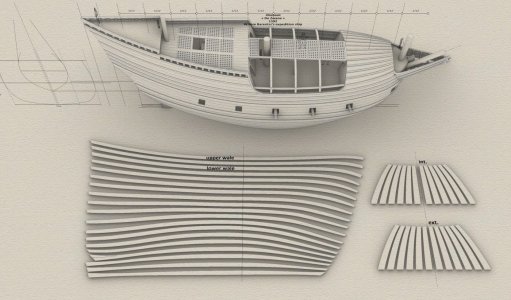
I will probably go on to reconstruct the all greting half-deck structurally, for my own satisfaction and also to make your task easier whilst you are building the model. Perhaps I’ll also tackle things such as the arrangement and actual shapes of the wales and planks on the hull (i.e. their suggested layout after flattening them on the plane), again with a view to facilitating any future construction of the model. Perhaps something else, also related to the hull, will occur to me in this regard…

... and then, as a last step in my part of the job, the lines for actual cutting of the model bulkheads will be derived.

.​
 
.​

Thanks again, Heinrich, for expanding on this topic and for your additional comment. Yes, you’re right that, in the specific context of De Zwane, this lightweight structure above midship could be considered optional, as it is not certain whether it was actually fitted to that particular ship. Nevertheless, generally speaking, it must have still been quite popular at that time, both on merchantmen and warships, even though it does not, in fact, appear in very many depictions from that era — that is, from around the beginning of the 17th century onwards.

I will probably go on to reconstruct the all greting half-deck structurally, for my own satisfaction and also to make your task easier whilst you are building the model. Perhaps I’ll also tackle things such as the arrangement and actual shapes of the wales and planks on the hull (i.e. their suggested layout after flattening them on the plane), again with a view to facilitating any future construction of the model. Perhaps something else, also related to the hull, will occur to me in this regard…

... and then, as a last step in my part of the job, the lines for actual cutting of the model bulkheads will be derived.

.​
Thank you very much, Waldemar. That will be most appreciated!
 
Back
Top