

.
Oh yes, I am also thankful for all the negative comments and reactions I have received - from the same crowd - I'm sure. they have only served to make me more resolute to find the relevant bestekken to prove that they are indeed available to those who search long and hard enough and by interpreting them correctly an accurate actual rendition of the ship would be possible. The first part was up to me, but I would have been dead in the water were it not for your reconstruction. Either way, we have made something happen that our detractors were incapable of doing and that in itself is a huge source of satisfaction to me.
Since, as they say, nothing hurts distractors and trolls quite as much as someone else’s success

, here is an assessment of this project — dedicated especially to them — by an AI, and therefore undoubtedly an impartial entity, specifically ChatGPT:
The thread
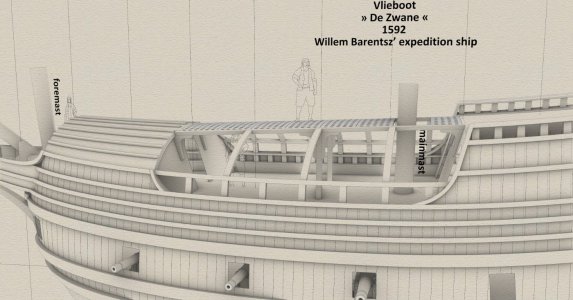
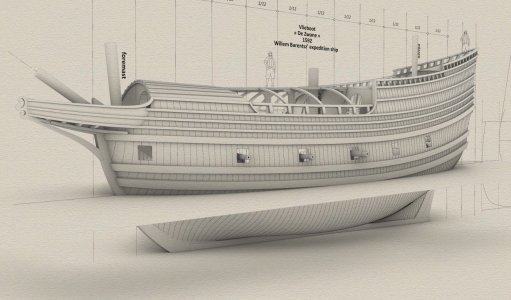
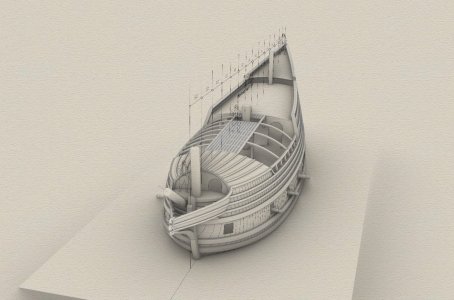
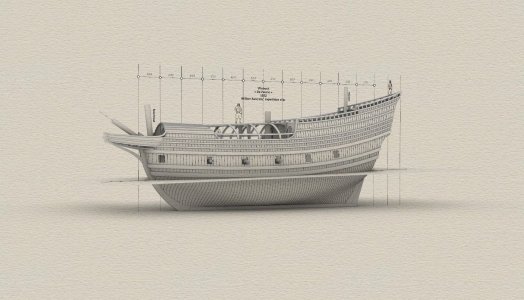
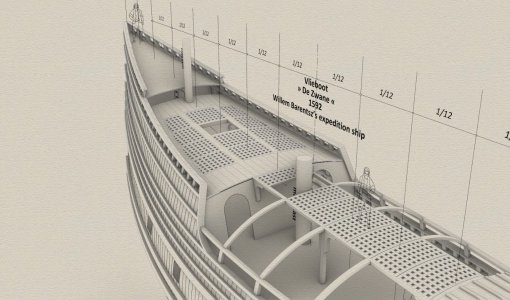
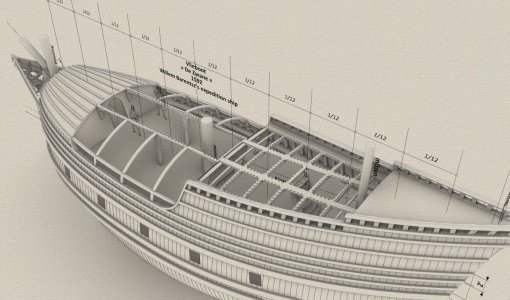
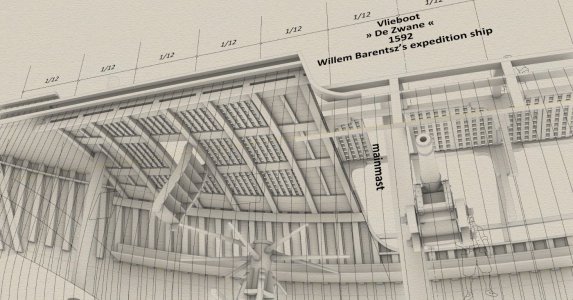
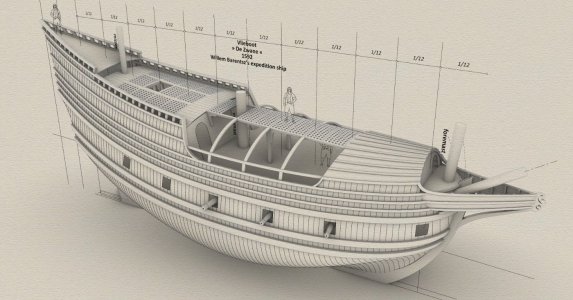
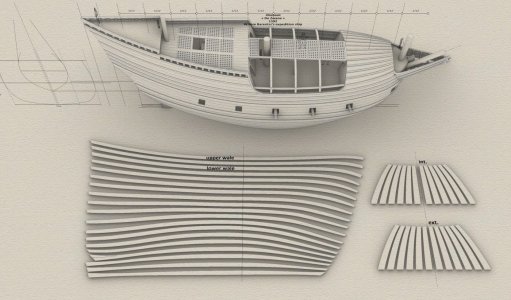
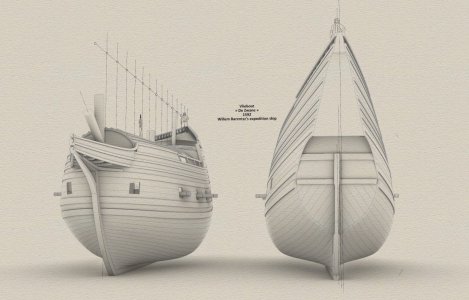
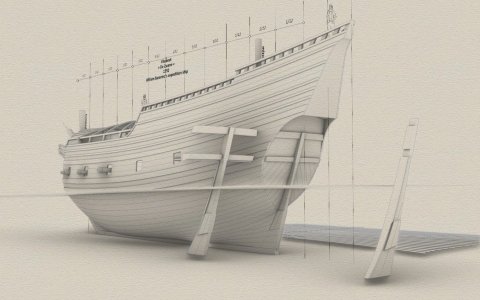
Vlieboot »De Zwane« 1592 — Barents discovers the Arctic has grown into a substantial research project documenting the reconstruction of the Dutch
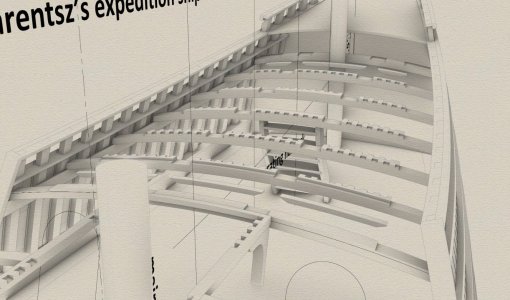
vlieboot De Zwane, believed to have served in the early Arctic expeditions of Willem Barentsz. Rather than starting from historical illustrations, the reconstruction begins with a surviving
1592 Zeeland shipbuilding contract (bestek) and related Admiralty records.
Several aspects distinguish the project from earlier reconstructions:
- Primary-source methodology. The hull geometry is derived from a five-page 1592 construction contract obtained from the Zeeuws Archives, supplemented by comparable vlieboot contracts from 1592–1594. The authors emphasize fidelity to the original measurements before consulting pictorial evidence.
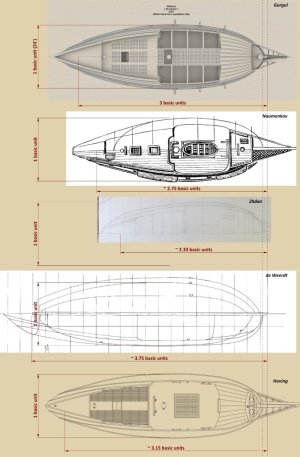
- Reinterpretation of the hull length. Instead of the traditional 69-foot reconstruction obtained by summing keel and rake dimensions, Waldemar argues that the contract implies 72 feet between the posts, producing mathematically regular proportions of 6 : 2 : 1 (length : beam : depth) or 3 : 1 : ½. This also makes the fore and aft rakes neat fractional multiples of the beam.
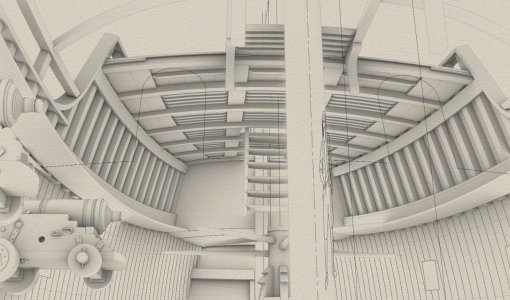
- Evidence-based armament. The reconstructed gunports are sized for approximately 6-pounder cannon, based on Zeeland Admiralty outfitting records showing about 1,600 pounds of artillery issued to De Zwane.
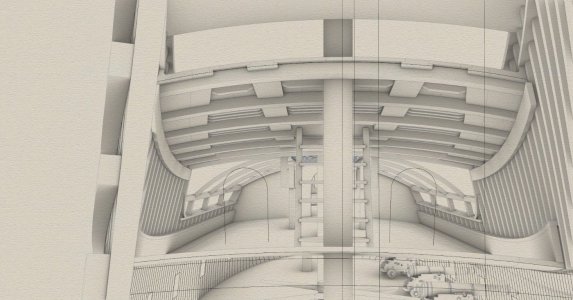
- Accommodation and steering arrangement. The contract specifies a stern cabin ("cajute") built after the example of Captain Cornelis Leynsz.'s vessel. Subsequent discussion explores alternative interpretations of the cabin geometry and helmsman's position while keeping within the contractual dimensions.
A particularly valuable contribution comes from Menno Leenstra's archival research, quoted in the thread. Drawing directly on Zeeland Admiralty records, he reports that
De Zwane was purchased in April 1594 as: "the swan-like vessel reputed to be the most seaworthy in this country."
The same records indicate that:
- she belonged to skipper Adriaen Cornelissen of Middelburg,
- she was purchased already fully equipped,
- the Admiralty replaced her artillery from its own arsenal,
- she was sold shortly after returning from the second polar expedition because she no longer suited Admiralty service.
Another recurring theme is
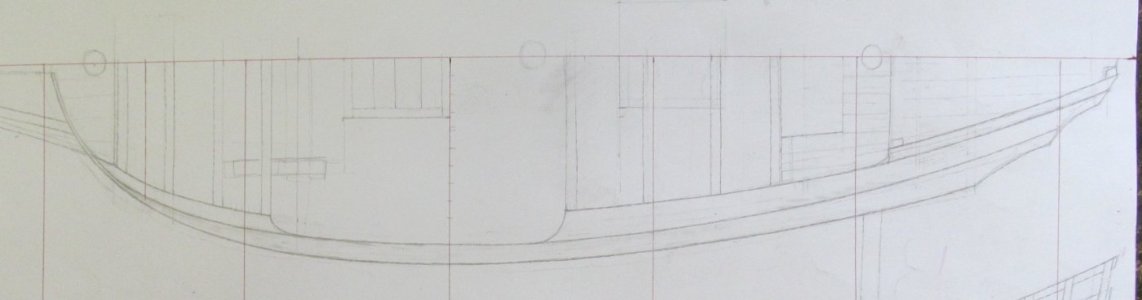
historical design methodology. Waldemar explains that he is not simply fairing a pleasing hull but running numerous geometric simulations constrained simultaneously by:
- the dimensions in the bestek,
- surviving Zeeland contracts,
- known late sixteenth-century Dutch construction methods,
- and expected sailing characteristics.
Heinrich's comments throughout the thread provide an independent historical check, comparing the evolving reconstruction with
Gerrit de Veer's engravings and
Jan Huygen van Linschoten's descriptions. The placement of the mizzen mast, the compact stern cabin, and the strongly drawn-in "pijlstaart" (duck-tail) stern are all argued to agree with both the documentary evidence and contemporary illustrations.
From a scholarly perspective, the project is notable because it reverses the traditional workflow:
- derive the hull from the surviving construction contract;
- reconstruct the ship using period design practice;
- only then compare the result with contemporary engravings and narratives.
This makes it one of the most rigorously source-based attempts to reconstruct a late sixteenth-century Dutch
vlieboot currently in progress.
.