• SUBSCRIBE TO SHIPS IN SCALE TODAY!

    The beloved Ships in Scale Magazine is back and charting a new course for 2026!
    Discover new skills, new techniques, and new inspirations in every issue.

    NOTE THAT OUR NEXT ISSUE WILL BE July/August 2026
  • Win a Free Custom Engraved Brass Coin!!!
    As a way to introduce our brass coins to the community, we will raffle off a free coin during the month of August. Follow link ABOVE for instructions for entering.

HMS Agamemnon by Caldercraft

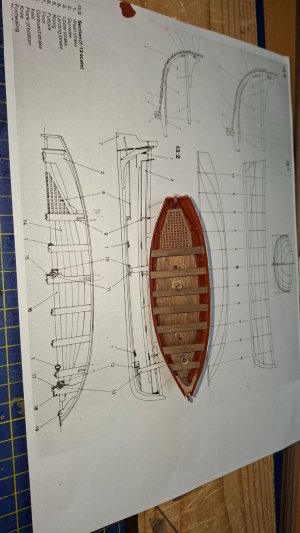
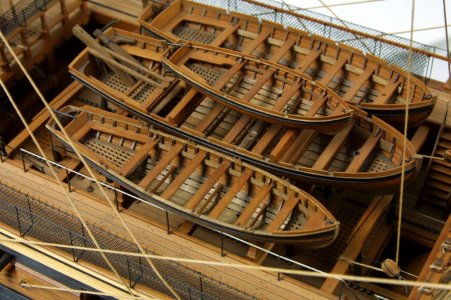
Now I just need to make the lifeboats... and the Agamemnon project will be finished.

I have been working on thinking about the next project for a while now. Here, I would like to follow the example of my friend Willy (see blog William 1961), who built a ship entirely from scratch. My ultimate goal.
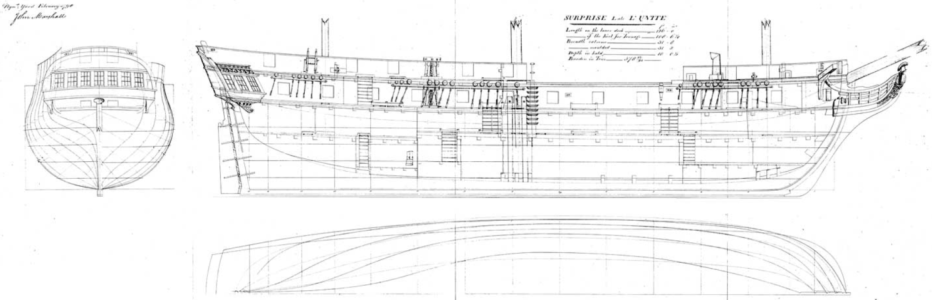
I actually dream of building the HMS Surprise, for example at 1/48 scale...
But I can't find any original blueprints. Willy visited the naval museum in Rochefort (France).
HMS Surprise was the name the Royal Navy gave to the French Navy's corvette Unité after its capture in 1796. Unité was launched on 16 January 1794. Surprise gained fame in 1799 for the recapture of HMS Hermione. In 1802 Surprise was sold out of the service.

Is there anyone who can help me? With the original building plans?

Both Artisania and Vanguard models are offering the Surprise.

So I assume there are plans they based this on?

Plan B would potentially involve purchasing, for example, the Artesania model and modifying it extensively using the techniques of that era. With that purchase, I would already have the hull and could work from there...

Comments welcome please.

Marc


1783267833553.png
 
But I can't find any original blueprints.
????????
It couldn't be simpler!
You need to use Karl-Heinz Marquardt's superb drawings.
  • The Frigate Surprise, Chapter 5: The Drawings pp. 64 – 71, Conway Maritime Press (2008) ISBN 978-1-84486-074-6
the Artesania model
It's garbage; stay as far away from this junk as possible.

Comments welcome please.
To create a truly detailed and accurate model of a frigate, take a look at the magnificent monographs published by Ancre.

La Renommee, 1744​

La Venus, 1782​

Le Gros Ventre, 1766​

La Creole, 1838​

La Belle-Poule (Fregate), 1765​

Egyptienne, 1799​

La Mahonesa, 1789​

Hermione frigate, 1779-1793​

 
????????
It couldn't be simpler!
You need to use Karl-Heinz Marquardt's superb drawings.
  • The Frigate Surprise, Chapter 5: The Drawings pp. 64 – 71, Conway Maritime Press (2008) ISBN 978-1-84486-074-6

It's garbage; stay as far away from this junk as possible.


To create a truly detailed and accurate model of a frigate, take a look at the magnificent monographs published by Ancre.

La Renommee, 1744​

La Venus, 1782​

Le Gros Ventre, 1766​

La Creole, 1838​

La Belle-Poule (Fregate), 1765​

Egyptienne, 1799​

La Mahonesa, 1789​

Hermione frigate, 1779-1793​

Jesus Igor,

Phantastic. Do you have a link for Ancre... I googled it but did not found.
 
Beautiful work!!!

Also, so nice of other members reaching out - such a positive place to spend time in our collective hobby.

Cheers,
 
Dear Mark! I don’t know about Belgium, but in Russia, for example, books from the ANCRE publishing house are sold at any shop catering to ship modelers—both brick-and-mortar and online stores. Try looking in your local ship modeling shops. There is also the publisher's official website.
 
to make the lifeboats.
I have no idea what ship's boats were on Agamemnon in real life, but W. E. May's book might be a help. He gives a general list of English ships' boats by rate and year. While Agamemnon may have been different, he gives the following on the six boats for a 64 in 1781, compiled from the appropriate boat Establishment.
30 foot launch, 32 foot pinnace, 28 foot pinnace, two 25 foot cutters, and one 18 foot cutter. How does that compare with the Caldercraft version? You can contact Buckler's Hard and they may have more or better information for her.

In addition to the Marquardt drawings (I am guessing they are based on the contemporary drawings) there are drawings of Surprise/Unite at the RMG Collections website from June, July, and October 1796. The Marquardt drawings are probably more clear as they are modern renditions.

Allan
 
Yes, I already replied. I was just out walking around the city with my family, and we also stopped by a nice little restaurant. That’s why I was offline.
 
Dear Mark! Please check. I think you made a slight mistake.
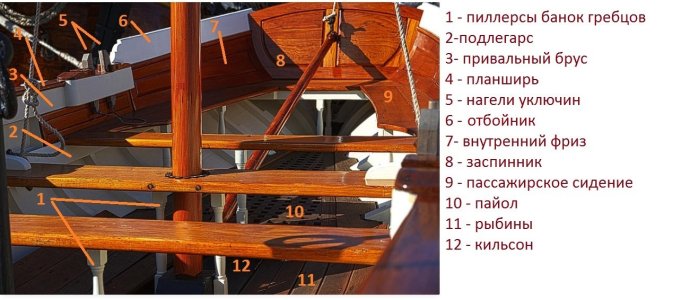
The average width of the rowing seats was 7 1/2 inches. The average thickness was 1 1/2 inches. Oversized seats always spoil the look of a boat.


For some reason, the passenger seats and the backrest for the rear passenger seat are missing from the stern of your boat. That backrest—like the back of an armchair—separated the passengers from the person at the helm.
The passenger seats in the stern will be one and a half times wider than the rowers' seats.

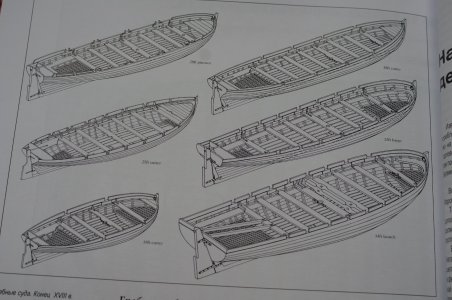
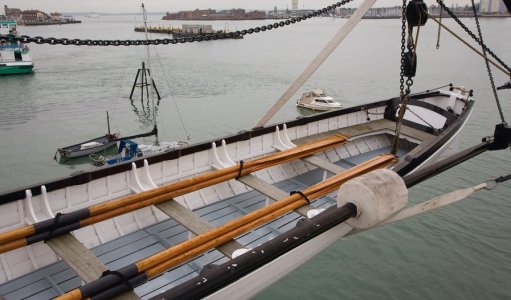
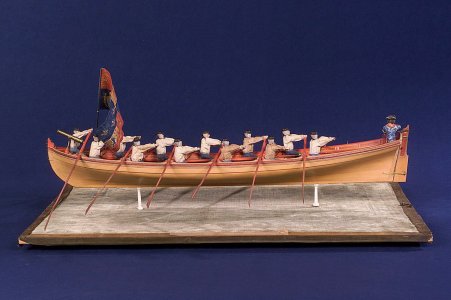
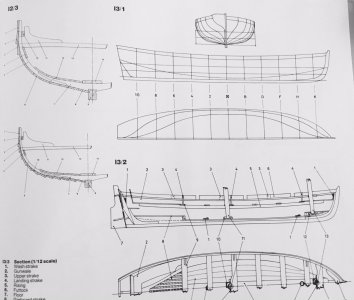
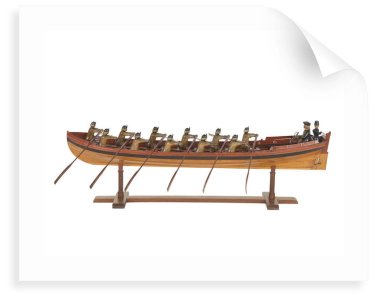
This is what the main English ship's boats looked like at the turn of the century.
0084f2086a4b02e7b5f216e91885cb4bd8993c73 - копия - копия.jpg
19.jpg 92172447.jpg Admiral’s Barge (1830); Small craft 1.jpg admiral's barge 1.jpg admiral's barge 2.jpg admiral's barge 3.jpg admiral's barge.jpgimage (2).jpeg MUS-FAPC1114_850.jpg pinnace 1 - копия.jpgService vessel; Pinnace; 32-foot pinnace 1.jpg Service vessel; Pinnace; 32-foot pinnace 2.jpg Service vessel; Pinnace; 32-foot pinnace 3.jpg
 
Last edited:
Dear Mark! Please check. I think you made a slight mistake.
The average width of the rowing seats was 7 1/2 inches. The average thickness was 1 1/2 inches. Oversized seats always spoil the look of a boat.


For some reason, the passenger seats and the backrest for the rear passenger seat are missing from the stern of your boat. That backrest—like the back of an armchair—separated the passengers from the person at the helm.
The passenger seats in the stern will be one and a half times wider than the rowers' seats.

This is what the main English ship's boats looked like at the turn of the century.
View attachment 619025
View attachment 619031 View attachment 619032 View attachment 619033 View attachment 619034 View attachment 619035 View attachment 619036 View attachment 619037View attachment 619038 View attachment 619039 View attachment 619040View attachment 619041 View attachment 619042 View attachment 619043


Damn Igor, you have excellent eyesight! ;)

The width is indeed actually 7.5 inches = 19 cm. At a scale of 1/64, this means a width of 3 mm.

The thickness is 1.5 inches = 38 mm at a scale of 1/64 = 0.6 mm.

And you are right. I see that I used a width of 4 mm and a thickness of 0.5 mm. My mistake.

I am going to try to correct them.

Thanks for your comments!
 
Thanks for your comments!

I’m always happy to help, my friend! It’s especially gratifying that you take my words in stride and don’t think I’m pressuring you or trying to offend or insult you. After all, some authors of other blogs perceive my entirely friendly attempts to help as aggression.:)

Damn Igor, you have excellent eyesight!

It’s just that a few years ago I wrote a short study on English and Russian ship's boats, and my eye has become trained to spot the slightest extra millimeters.:)

I am going to try to correct them.

Nevertheless, I am firmly convinced—and try to convey this to my friends—that even an excellent ship model can easily be ruined by the ship's boats. This is because modelers often work on them last; they get tired, start cutting corners, and make crude errors. Yet, ironically, it is the ship's boats that catch the viewer's eye first, with all the other details of the ship's hull coming into view only later. And the crude workmanship ruins the entire impression.

It is not without reason that the Russian Navy had an old saying: "The ship's boat is the face of the ship" (or, in modern terms, the ship's calling card).
This turned out to be relevant for the ship model as well.:)
 
If you want to use contemporary information you have choices. I measured the breadth of the thwarts on cutter drawings from RMG and they are actually slightly less than seven inches. By the same token, the information in David Steel's 1805 scantlings for cutters (see below)has them much wider, I was surprised the thwarts are not called out in the couple boat contracts I found. An example of a 23 foot yawl contract is below. The Steel scantlings are also below.
Allan

Spelling is as in the orginal contract


Contracted this 24th July 90 with the Honoble Thomas Willshaw, Esqre one of the Principall Officers & Commrs of their Majties Navy, for & behalf of their Majties, by me Robert Smith of Langstone Shipwrts and doe hereby oblidge myselfe to build & deliver into their Majties Stores at Portso: free of all charge by the latter and on Augst next ensueing the two Yawles undermentioned of the Dimensions and Scantlins & each fitted with the particulars folling (viz)

Long Broad Deepe

Yawles of 23ft: ----- 5ft: 7:ins ------ 2ft: 5ins ------- Two

Railes of the upper streakes to be made out of the wholewood up and downe Gunnels stuck, Thwarts bound with Iron Knees and ye Transome wth two Iron Knees, the Stateroom stuck an O:G. & planshier for the Gunnwales with two pannells on each side of the backboard, a locker under the after bench and lynings under the bench, Keel, thwartships 4 ins. up and down 4½ ins. & 4 ins. Keelson 6: ins. broade of 1½ inch planks, timbers of 1½ inch wth 13 ins room and Space, & 10: in. Scarphs, the floor timberheads to naile to the lower Edge of the binding Strake with bottome boards & Scarr Boards Keelbands & Iron bolts & Rings for Stem and Sterne to row wth 6: oars each to be grav’d and primed to the Waterline and pid in stuff in the inside to the rising at ye rate of 12 s per foot I doe oblidge myself that these boats shall be wrought wth good dry well seasoned oak board of inch thick in workmanlike manner for wch I am to be paid readdy money at Portsmouth when a bill is made out and signed by the Officers at ye yard as useable.


Steel scantlings

Cutter 21 foot long 25 foot long
Main thwart 8" X 1.5" 9" X 1.5"
After thwart 8" X 1.325" 8" X 1.325"
Fore thwart 10" X 2" 10" X 2"
Loose thwarts 8" X 1.5" 8" X 1.5"
Benches 11" X 1.25" 11" X 1.25"

Scantlings from 1705 in W. E. May's book Boats of Men of War does not give the width of any thwarts, only the thicknesses. Take note of the first drawing of boats Igor posted as it is a great representation. You can see that the tholes in a cutter alternate as there is only one thole for each thwart. I cannot tell if you cut these yet in your model so thought to point it out before you started cutting in case you were unaware.

I agree with Igor, small looks better than too large. If it was clear cut I would go with the scantlings, but as it is not, I would go with the smaller breadth of about 7" or 7.5"


Allan
 
Last edited:
I’m always happy to help, my friend! It’s especially gratifying that you take my words in stride and don’t think I’m pressuring you or trying to offend or insult you. After all, some authors of other blogs perceive my entirely friendly attempts to help as aggression.:)


It’s just that a few years ago I wrote a short study on English and Russian ship's boats, and my eye has become trained to spot the slightest extra millimeters.:)


Nevertheless, I am firmly convinced—and try to convey this to my friends—that even an excellent ship model can easily be ruined by the ship's boats. This is because modelers often work on them last; they get tired, start cutting corners, and make crude errors. Yet, ironically, it is the ship's boats that catch the viewer's eye first, with all the other details of the ship's hull coming into view only later. And the crude workmanship ruins the entire impression.

It is not without reason that the Russian Navy had an old saying: "The ship's boat is the face of the ship" (or, in modern terms, the ship's calling card).
This turned out to be relevant for the ship model as well.:)
Hello Igor,

Very nice feedback. We are all highly motivated, and as for myself, I don't have all the answers...

I am learning a great deal, and your info is very accurate.... Thanks
 
If you want to use contemporary information you have choices. I measured the breadth of the thwarts on cutter drawings from RMG and they are actually slightly less than seven inches. By the same token, the information in David Steel's 1805 scantlings for cutters (see below)has them much wider, I was surprised the thwarts are not called out in the couple boat contracts I found. An example of a 23 foot yawl contract is below. The Steel scantlings are also below.
Allan

Spelling is as in the orginal contract


Contracted this 24th July 90 with the Honoble Thomas Willshaw, Esqre one of the Principall Officers & Commrs of their Majties Navy, for & behalf of their Majties, by me Robert Smith of Langstone Shipwrts and doe hereby oblidge myselfe to build & deliver into their Majties Stores at Portso: free of all charge by the latter and on Augst next ensueing the two Yawles undermentioned of the Dimensions and Scantlins & each fitted with the particulars folling (viz)

Long Broad Deepe

Yawles of 23ft: ----- 5ft: 7:ins ------ 2ft: 5ins ------- Two

Railes of the upper streakes to be made out of the wholewood up and downe Gunnels stuck, Thwarts bound with Iron Knees and ye Transome wth two Iron Knees, the Stateroom stuck an O:G. & planshier for the Gunnwales with two pannells on each side of the backboard, a locker under the after bench and lynings under the bench, Keel, thwartships 4 ins. up and down 4½ ins. & 4 ins. Keelson 6: ins. broade of 1½ inch planks, timbers of 1½ inch wth 13 ins room and Space, & 10: in. Scarphs, the floor timberheads to naile to the lower Edge of the binding Strake with bottome boards & Scarr Boards Keelbands & Iron bolts & Rings for Stem and Sterne to row wth 6: oars each to be grav’d and primed to the Waterline and pid in stuff in the inside to the rising at ye rate of 12 s per foot I doe oblidge myself that these boats shall be wrought wth good dry well seasoned oak board of inch thick in workmanlike manner for wch I am to be paid readdy money at Portsmouth when a bill is made out and signed by the Officers at ye yard as useable.


Steel scantlings

Cutter 21 foot long 25 foot long
Main thwart 8" X 1.5" 9" X 1.5"
After thwart 8" X 1.325" 8" X 1.325"
Fore thwart 10" X 2" 10" X 2"
Loose thwarts 8" X 1.5" 8" X 1.5"
Benches 11" X 1.25" 11" X 1.25"

Scantlings from 1705 in W. E. May's book Boats of Men of War does not give the width of any thwarts, only the thicknesses. Take note of the first drawing of boats Igor posted as it is a great representation. You can see that the tholes in a cutter alternate as there is only one thole for each thwart. I cannot tell if you cut these yet in your model so thought to point it out before you started cutting in case you were unaware.

I agree with Igor, small looks better than too large. If it was clear cut I would go with the scantlings, but as it is not, I would go with the smaller breadth of about 7" or 7.5"


Allan
Wow Allan... you surprise me every time... in a positive way... ;) Where in God's name did you find this info?

I have to agree with Igor. Originally, I considered crafting the Pinnace and Cutter a burden... and I don't plan on placing them on the Agamemnon since you hide the nice open space of the gun deck....
But, in the meantime, you have motivated me to realize them as realistically as possible. I am going to make a plexiglass enclosure for the Agamemnon, and there will certainly be room for the little boats...
As you and Igor know, I am preparing the next project. I had the plans printed in A0 format so that all the details are visible. Currently, I am drawing up a cost estimate (budget) and checking whether I can purchase the items that I cannot make myself.
And it ends up being an extremely high amount... currently I am in a dilemma. Is it cheaper to buy a kit for the accessories but still build the project from scratch myself, or...?
 
Back
Top