• Ships of Scale has incorportated an extra level of security when you log In. Please follow on-screen prompts to acknowledge that you are not a robot via a "Check Box" or a "Pictorial Check Box Puzzle". This is needed due to higher level of AI Activity Security.
  • SUBSCRIBE TO SHIPS IN SCALE TODAY!

    The beloved Ships in Scale Magazine is back and charting a new course for 2026!
    Discover new skills, new techniques, and new inspirations in every issue.

    NOTE THAT OUR NEXT ISSUE WILL BE July/August 2026
  • Win a Free Custom Engraved Brass Coin!!!
    As a way to introduce our brass coins to the community, we will raffle off a free coin during the month of August. Follow link ABOVE for instructions for entering.

AI Reconstructed Pictures

Joined
May 15, 2026
Messages
78
Points
78

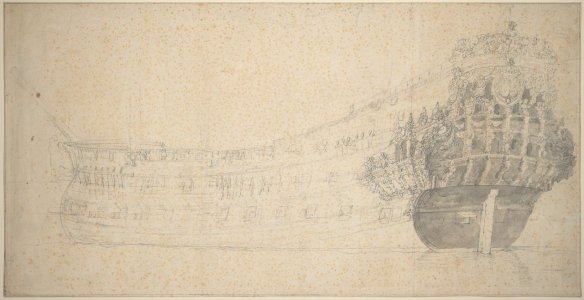
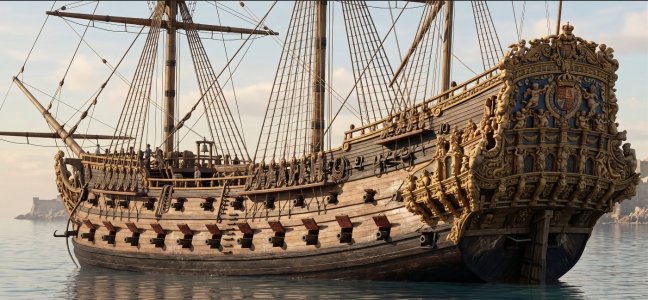
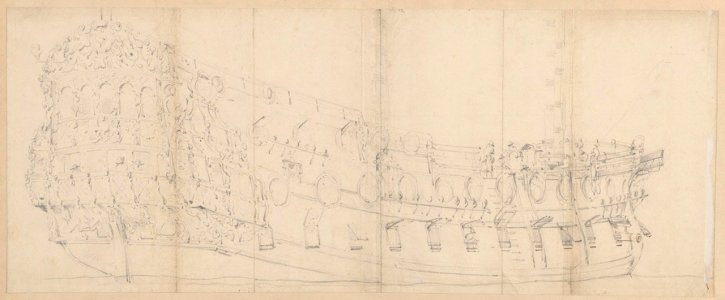
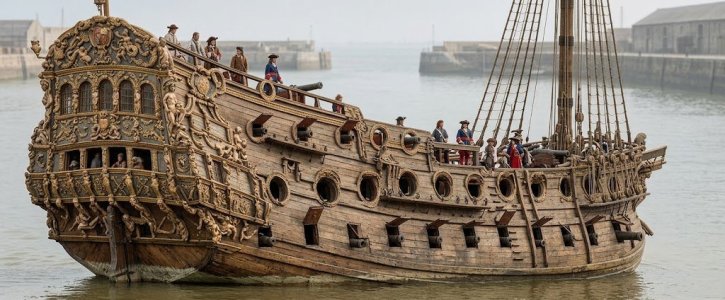
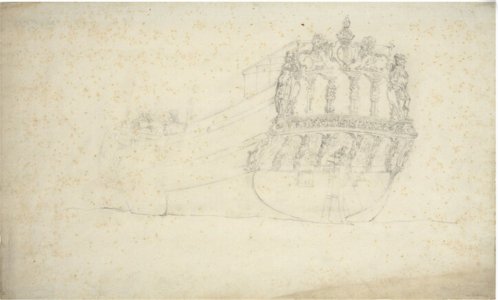
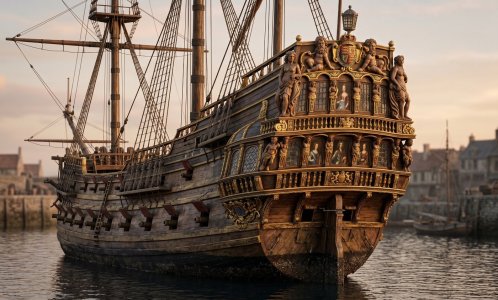
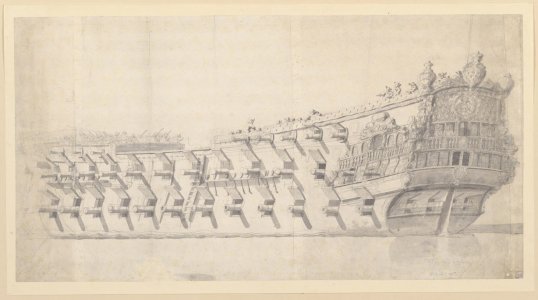
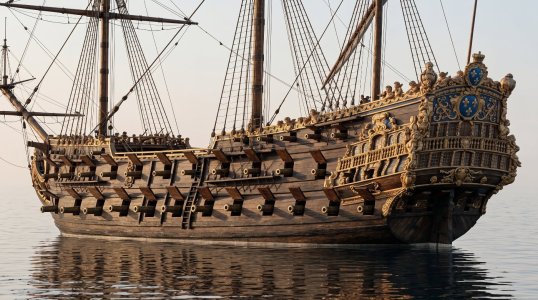
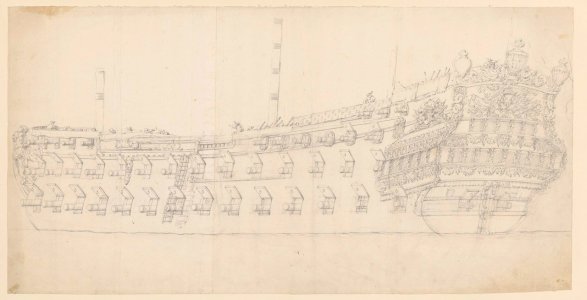
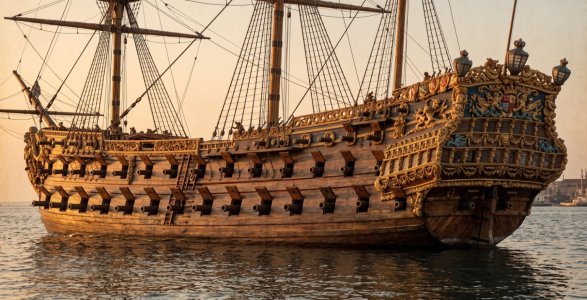
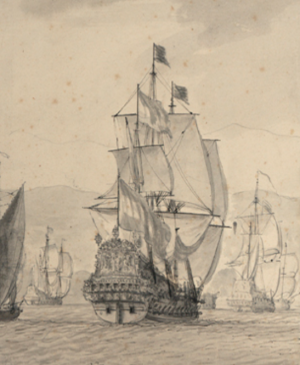
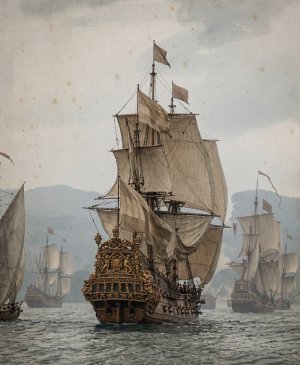
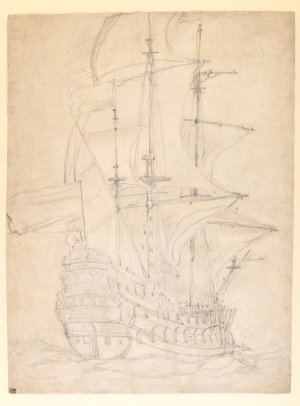
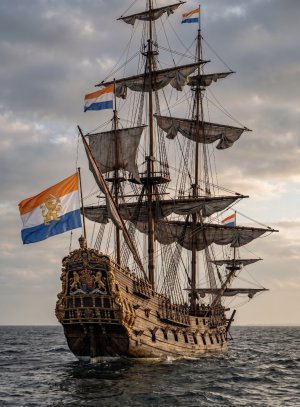
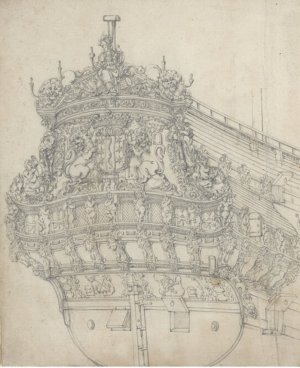
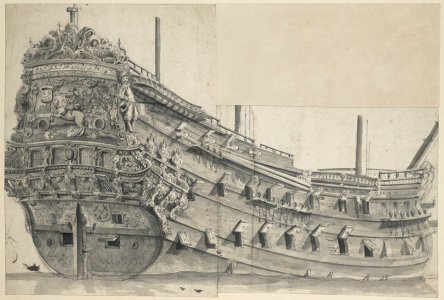
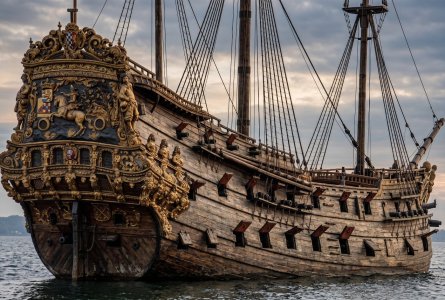
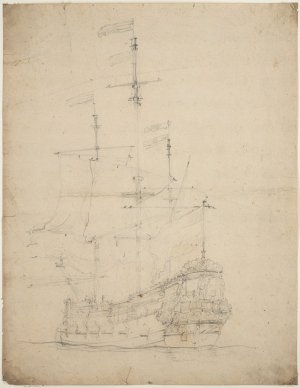
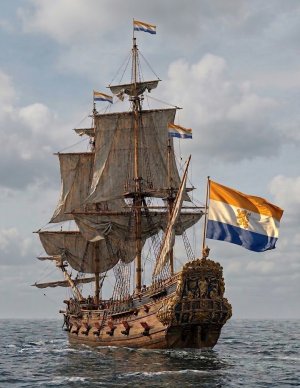
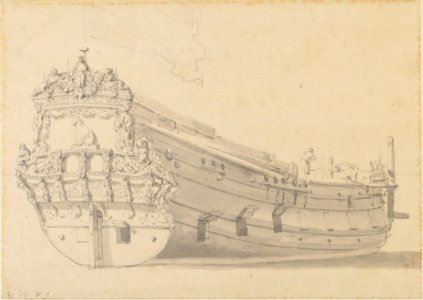
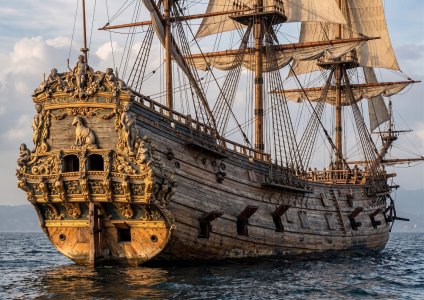
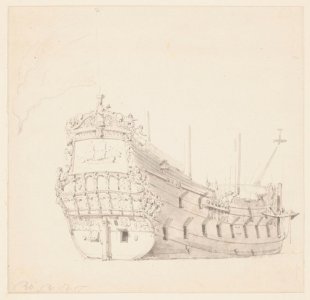
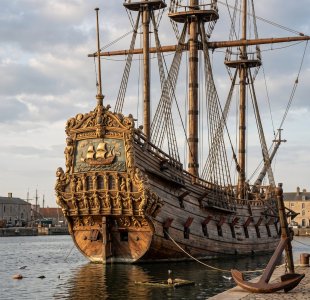
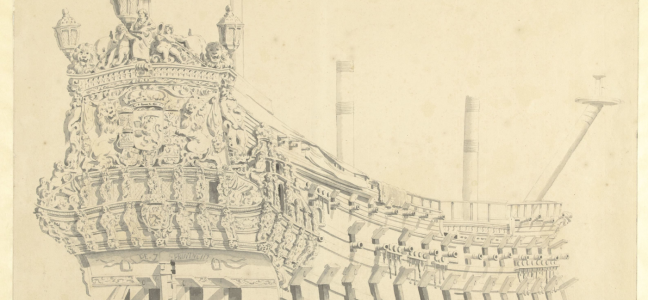
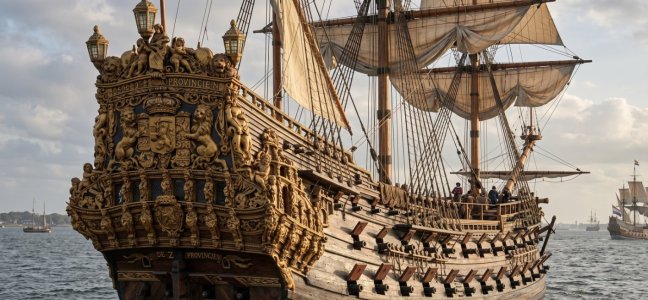
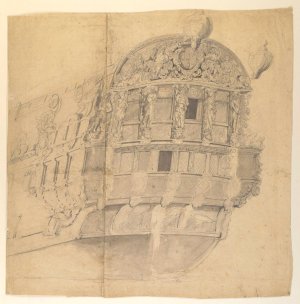
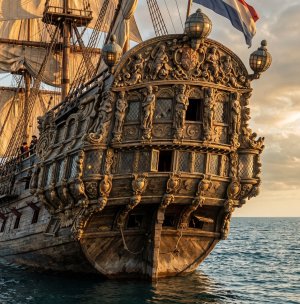
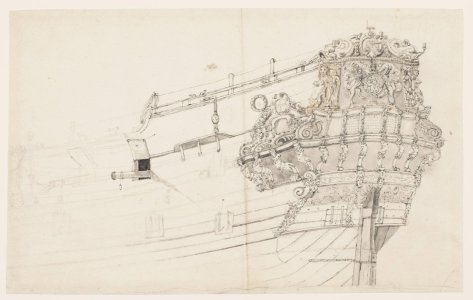
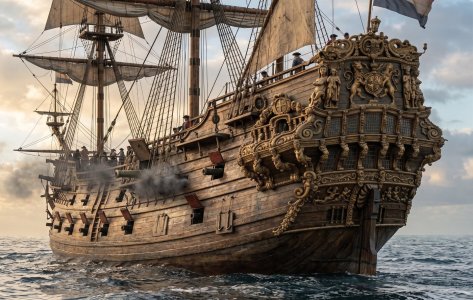
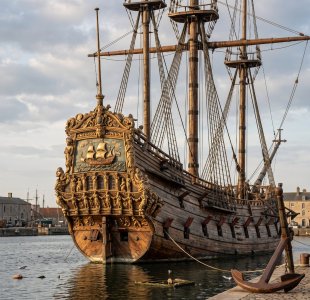
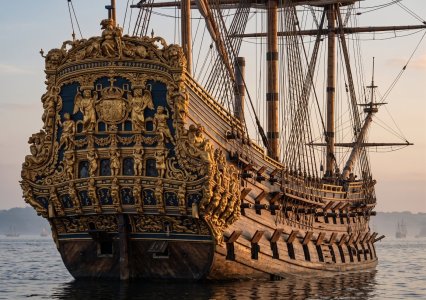
Hello In my search for references throught AI deep dives and AI reconstructions I come across some nice pictures reconstructions from original paintings. I am not an expert so I cannot jusge well the reconstructions but to my opinion they give a pretty clearer vision of what was the ship like out of the drawings or paintings .

Here some :

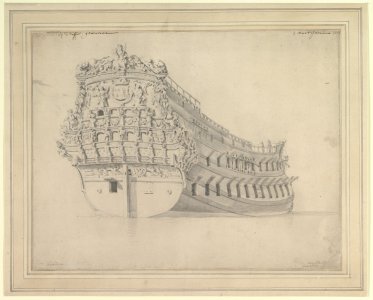
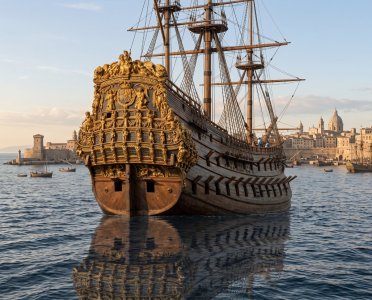
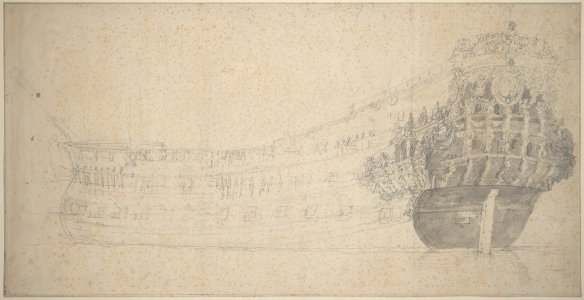
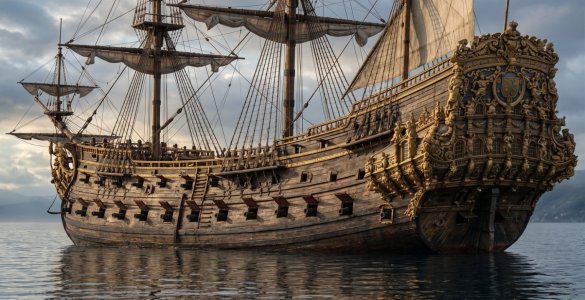
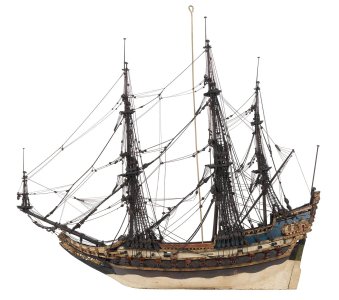
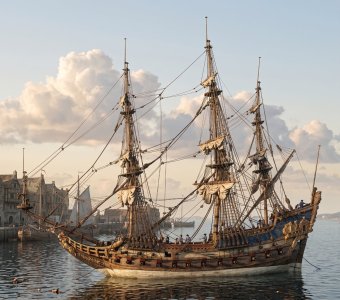
French Dutch-built 1666–67

pt2423.jpg pt2423_Rec.jpg

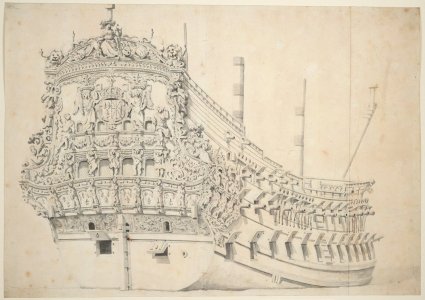
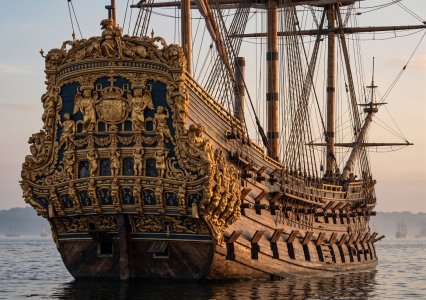
English third-rate c.1680

t2844_001.jpgt2844_001_Rec.jpg

States Yacht Willem van de Velde the Elder

statesyatch.jpgstatesyatch_Rec.jpg

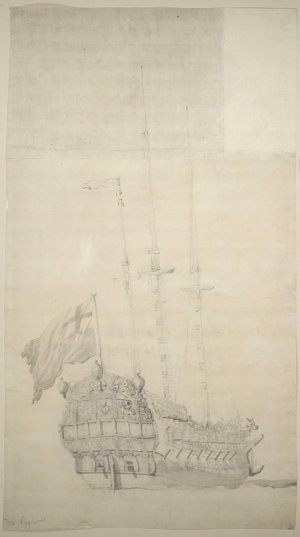
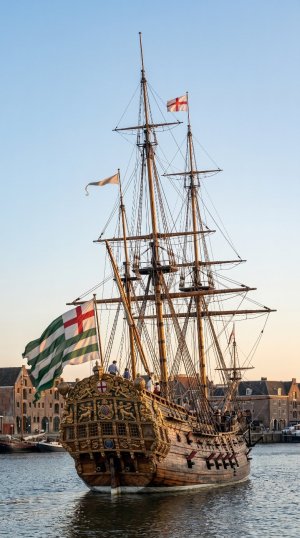
Tiger

tiger.jpgtiger_Rec.jpg

Curtisan

curtisan.jpgCurtisan_Rec.jpg

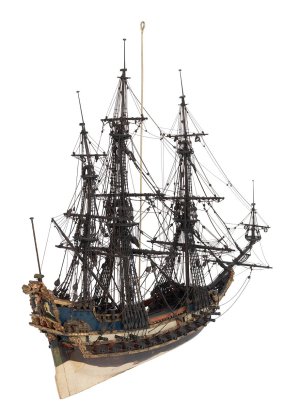
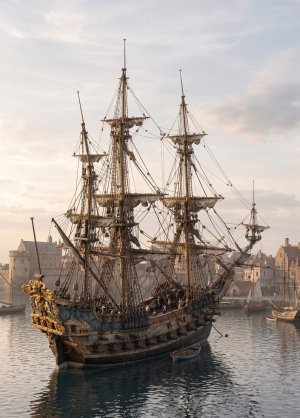
French-Dutch 2 Decker

FrenchDuthc2Deck.jpgFrenchDuthc2Deck_Rec.jpg

French 2 Decker

French2Decker.jpgFrench2Decker_Rec.jpg

Superbe Van der Velde

superbe.jpgsuperbe_Rec.jpg


Royal Therese


RoyalTherese.jpgRoyalTherese_Rec.jpg

Dutch Indiaman


DutchIndiaman.pngDutchIndiaman_Rec.jpg

French 2 Decker built in Holland

FrenchDutchBuilt2Decker.jpgFrenchDutchBuilt2Decker_Rec.jpg

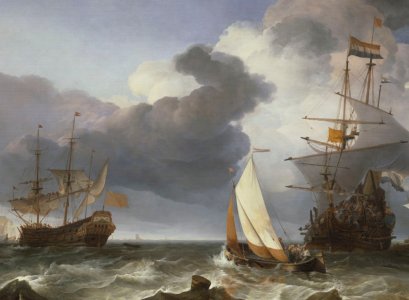
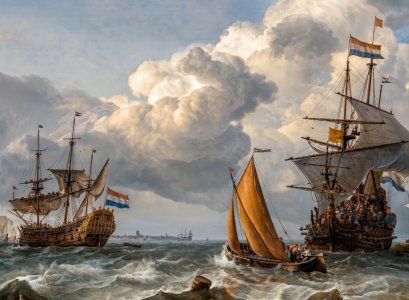
Smallship and two Indiaman


Smallship&2Indiaman.jpgSmallShip&2Indiaman_Rec.jpg
 
I use AI as a start for many things but not the final answer without further research as it is not always correct in its interpretations. For example, the Tiger drawing is from her 1681 rebuild and she probably flew a red ensign unless assigned to a white or blue squadron. The striped ensign in the AI version above fell out of official use about 1630, I may be wrong but I have found AI is not always accurate. Another example is that AI threw in the mast tops and they are the wrong shape for the era of most, if not all, the ships in the drawings.
Allan
 
I use AI as a start for many things but not the final answer without further research as it is not always correct in its interpretations. For example, the Tiger drawing is from her 1681 rebuild and she probably flew a red ensign unless assigned to a white or blue squadron. The striped ensign in the AI version above fell out of official use about 1630, I may be wrong but I have found AI is not always accurate. Another example is that AI threw in the mast tops and they are the wrong shape for the era of most, if not all, the ships in the drawings.
Allan
Well yes, for a precise reconstruction you need to research more on the specific ship , but this serves me mostly for "Vibe" style capture, so I can see better how may have looked like the ship , mostly to check the stern .
 
I believe that AI missed the mark with the Dutch State Yacht (first set of drawings). There is what appears to be a leeboard in the Van de Velda sketch that AI missed. If I’m correct this is a much different vessel than the heavily armed warship that it created.

Roger
 
I believe that AI missed the mark with the Dutch State Yacht (first set of drawings). There is what appears to be a leeboard in the Van de Velda sketch that AI missed. If I’m correct this is a much different vessel than the heavily armed warship that it created.

Roger
YEs unless you create a specific harness for the AI generated images, it will inevitably implement some historical errors or even unrealistic features, this is only to have a better look at barely visible sterns for me , but I thought could be usefull for others too , if then someone wants to investigate further a proper reconstruction then he needs to implement specific harnesses in the prompts.
 
I suspect that AI will become another of those ship model topics for endless debate but missing the leeboards on the Dutch Yacht is not a detail. Presence (or omission) of leeboards for one of the vessels is a major feature. Leeboards mean a hull designed to sail in shallow waters. A vessel without indicates a deep water vessel.

Roger
 
Placeholder
I really appreciate you sharing this with us. May I ask what AI program you are using? As someone whose interests lie two centuries down the road "Dreadnaughts and later", the ability to sharpen faded, spindled, or badly stained photographs allowing one to pick out fine detail would be a Godsend. While I know not everything is perfect, AI will only get better with individuals like yourself providing feedback to the large language models themselves. Thank you again, Mark
 
Perhaps I'm at risk of becoming an old Luddite but I'm pretty well all over AI interpretations. Several ship modelling groups I follow on Facebook are becoming cluttered with individuals posting AI pictures of totally fanciful ships. I think of it as AI sludge or slop. The other day I saw an image of the HMB Endeavour sailing complete with a row of gun ports half way up the hull. We all use a bit of creative license when building. Let's face it nobody knows what a Mayflower or Pinta really looked like but some AI is just an insult to intelligence. And don't get me started on YouTube.
I would add that I'm curious to know why this image of a French 2 Decker has a spare mast seemingly growing out of the deck behind the mainmast.

FrenchDuthc2Deck_Rec.jpg
 
It is hard for me to imagine that gun decks would be dead flat instead of following the wales and shear lines of the hull. How is it the way it's shown here? Would gun carriages be high on one side if the decks folllowed the wales? Do real models of these ships (admiralty) show this detail? Clue me in.
 
I really appreciate you sharing this with us. May I ask what AI program you are using? As someone whose interests lie two centuries down the road "Dreadnaughts and later", the ability to sharpen faded, spindled, or badly stained photographs allowing one to pick out fine detail would be a Godsend. While I know not everything is perfect, AI will only get better with individuals like yourself providing feedback to the large language models themselves. Thank you again, Mark
Hi simple subscription , with Gemini.
 
BTW, as I wrote earlier, these images were mostly an attempt to turn sketches and drawings that are difficult to interpret into something more immediately readable.

I am not an expert in historical ships. I was mainly looking for quick visualisations of different stern types, to understand their general character and get some inspiration for my own project. I did not mean to present the results as definitive historical reconstructions.

However, the errors identified here are real and useful: the incorrect ensign and mast tops on Tiger, the missing leeboard that completely changed the nature of the Dutch yacht, the additional mast and the questionable relationship between the gun decks, wales and sheer lines.

I think we should distinguish between two different uses of AI: creating an atmospheric visualisation and attempting a historically constrained reconstruction.

For the first purpose, a simple instruction such as “make this old drawing look realistic” may be sufficient. That is more or less what I did here. It can help us read a difficult image and understand the overall shape, but the details cannot be trusted.

The problem is that when the original drawing is unclear, the AI tries to complete it with whatever appears visually probable. It may mix features taken from different periods, types of ships, modern models, paintings or even fantasy imagery. The result can look very convincing while being completely wrong in important details.

A more serious reconstruction would require a separate procedure for each ship. First, we would need to identify the precise vessel, date, function and configuration, especially if it underwent a rebuild. The original drawing or plan should remain the main authority, while contemporary models, paintings and museum records could be used to clarify individual features.

We would then need to tell the AI exactly which elements must not be changed: hull proportions, sheer and wales, gunports, leeboards, deck levels, masts, galleries, windows, rigging, flags and so on. If something cannot be seen clearly, it would be better to leave it uncertain than allow the AI to invent it.

It would also be safer to work on one part at a time. If the flag is wrong, correct only the flag. If a mast top is wrong, mask and edit only that area. Regenerating the entire ship to fix a single detail often produces several new errors elsewhere.

More specialised workflows can also use line or edge controls, such as ControlNet, to keep the generated image closer to the original geometry. Negative instructions can help prevent extra masts, gunports, later-period fittings or fantasy “pirate ship” elements. Even these tools do not guarantee correctness, however; the final result still needs to be checked by someone who knows the subject.

So yes, AI may be capable of producing something much closer to a proper reconstruction, but not through a single prompt. Each ship would require research, references, constraints, trial and error, local inpainting and human verification. And sometimes good old Photoshop is still the quickest way to correct what the AI cannot get right.

The observations made in this thread are exactly the kind of expert feedback that could improve such workflow.

 
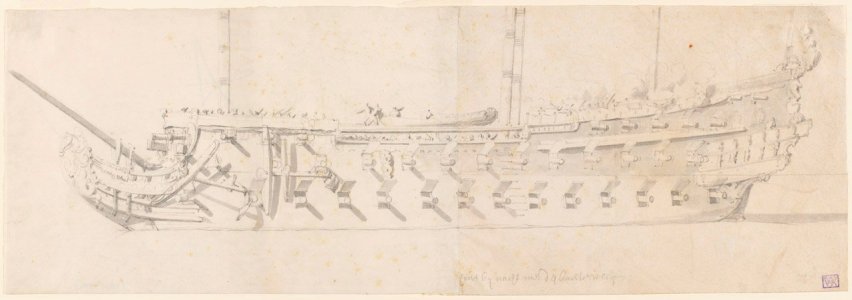
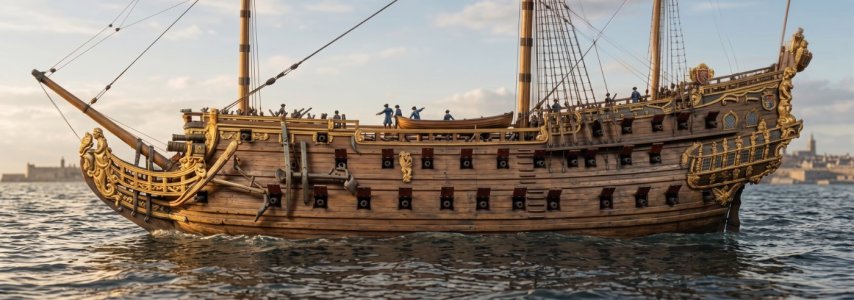
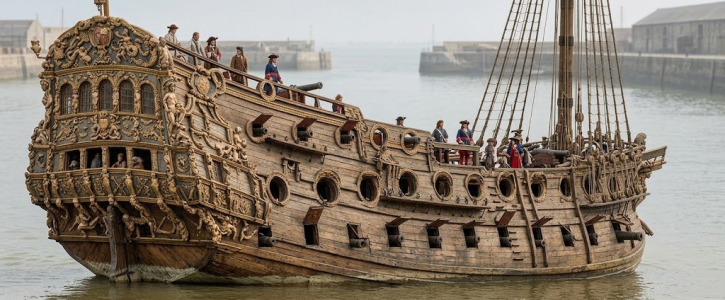
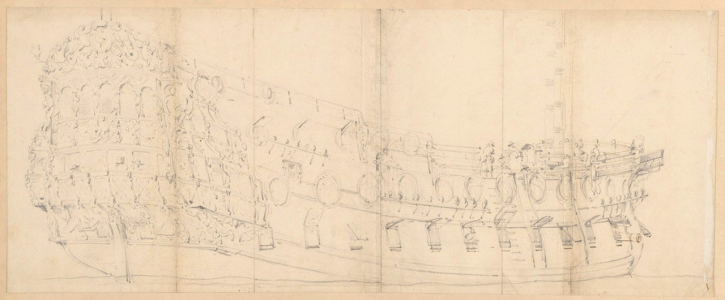
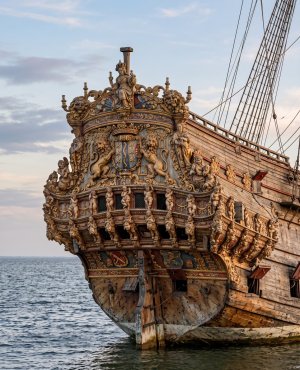
As an example , now I am not an expert as I wrote but if feels odd to me to have those straight holes on the side hull ....
1787508446425.png

but as you can see those holes are also in the sketch and it that weird direction so the AI simply reconstructed it and since I asked for realism and a proper environemnt background it fitted with some people, and a plausible place .

1787508433051.png
 
Wales were structural members that employed interlocking scarps to allow them to add longitudinal strength to the vessel’s hull. Cutting them to locate gunports would defeat their purpose.

Roger
 
Wales were structural members that employed interlocking scarps to allow them to add longitudinal strength to the vessel’s hull. Cutting them to locate gunports would defeat their purpose.

Roger
Indeed, but they come from the original sketch seems .
 
Indeed, but they come from the original sketch seems .
-That's why it's just a sketch. The folds probably were accomplished the same day it was drawn (the moment when the draught master started to walk by the drawing board).
 
Back
Top