



deleted duplicate post

 |
The beloved Ships in Scale Magazine is back and charting a new course for 2026! Discover new skills, new techniques, and new inspirations in every issue. NOTE THAT OUR NEXT ISSUE WILL BE July/August 2026 |
|
 |
As a way to introduce our brass coins to the community, we will raffle off a free coin during the month of August. Follow link ABOVE for instructions for entering. |
|


ever here of tool called loom a line? If yes, do you think it would be something that I should buy?I tried it both ways. While there's not much of a difference, it is still slightly easier to do the rigging off the ship. The clip Hackle pliers helped in both cases.
View attachment 643728
View attachment 643729
View attachment 643730
I did learn that trying to do four of these in one day is pushing it. I started to get antsy. As a consequence I'm not a hundred percent satisfied with some of the knot tying, but I'm going to live with the way it is.
I looked into them. I actually have one - inherited from a retired model builder, and sought advice on it's practicality. I was advised to pass. Search the topic here and you'll see for yourself. (My A/I agent sent me right back to SoS. So yours will likely to the same.) If you want mine, reach out to me in a direct message with mailing address and I'll gift it to you.ever here of tool called loom a line? If yes, do you think it would be something that I should buy?

ok. thanks. I was just thinking it would be easier to make the shrouds offline and then moving them to the boat. Maybe it's a gadget that doesn't work very well.I looked into them. I actually have one - inherited from a retired model builder, and sought advice on it's practicality. I was advised to pass. Search the topic here and you'll see for yourself. (My A/I agent sent me right back to SoS. So yours will likely to the same.) If you want mine, reach out to me in a direct message with mailing address and I'll gift it to you.


I’ve never used polyester thread, so I don’t really know how cotton and polyester would look on the same model. But if you decide to go with cotton thread, I recommend running it through beeswax. That way it won’t loosen or sag, and the fuzz on the thread won’t show. This is how I use cotton thread myself, but it has to be natural beeswax, synthetic waxes sold on the market don’t give the same results.To all of you rigging experts viewing this build, I could use your help..
As I mentioned in post 440 (page 22), I just ran out of the 1.1mm cable laid rope I've been using on the main shrouds and plan to use the same diameter rope (left handed to match the "S" pattern) for the remaining shrouds. What I didn't mention is that the replacement rope is cotton, whereas the cable laid rope is polyester. I was watching YouTube videos on rigging this past weekend, and saw several that mentioned that the disadvantage of cotton over polyester is that it is prone to stretching over time. I'd hate to switch to something that may end up sagging over time. But I also hate the idea of losing another week or so waiting for replacement polyester cable laid rope. Going forward, I have a mixed supply of poly and cotton rope in various diameters. When I purchased these, I was making sure I had ample supply of the same color and diameter, but I had thought that the material didn't matter except for perhaps the look - matte (cotton) vs shiny (poly).
Do any of you have strong opinions on the subject? If so, please share your thoughts.
Shall I stick with polyester for consistency's sake?
Does cotton really loosen up over time, leading to sagging?
Or can I use the materials interchangeably?
well i have a boat that is 4 years old and it's all cotton, the cheap stuff that is with the kit, and I don't find any sagging is occuring. I didn't really put any beeswax either. I don't know, maybe it takes longer than 4 years for that sagging to occur?Straight out of the packaging from ropes of scale, the two, polyester and cotton, side by side are almost indistinguishable. You can feel the difference by handling the cotton. I understand the business of using bees wax on the cotton. What I'm more concerned about is whether or not over time the cotton threads loosen up and begin to sag. Since you've built so many ships, and you have used cotton on all of them, I'm assuming you don't find this to be an issue. Is there some technique you use to prevent that from happening?

I have been told the sagging/tightening is a result of changes in seasonal humidity - with some locations experiencing this more than others.well i have a boat that is 4 years old and it's all cotton, the cheap stuff that is with the kit, and I don't find any sagging is occuring. I didn't really put any beeswax either. I don't know, maybe it takes longer than 4 years for that sagging to occur?
As you know, I make my own rope and run it through beeswax before using it. I firmly pull the rope between my fingers to work the wax into the fibers and remove any excess wax from the surface. That’s all I do.Straight out of the packaging from ropes of scale, the two, polyester and cotton, side by side are almost indistinguishable. You can feel the difference by handling the cotton. I understand the business of using bees wax on the cotton. What I'm more concerned about is whether or not over time the cotton threads loosen up and begin to sag. Since you've built so many ships, and you have used cotton on all of them, I'm assuming you don't find this to be an issue. Is there some technique you use to prevent that from happening?
Turns out that Ropes of Scale doesn't have any of the cable-laid or any polyester rope with the same twist and size in stock. All I have on hand is the cotton left hand (S twist) in the same diameter as the poly cable-laid. I'm either going to have to chance it with cotton, wait on Ropes of Scale to start making the poly cable-laid rope, or side track myself with building my own rope walker and making my own rope.I have been told the sagging/tightening is a result of changes in seasonal humidity - with some locations experiencing this more than others.
Peter, I have only used polyester ropes. The only downside I can claim is the ends need to be fixed with CA or something similar.
that's all you can do, really.Turns out that Ropes of Scale doesn't have any of the cable-laid or any polyester rope with the same twist and size in stock. All I have on hand is the cotton left hand (S twist) in the same diameter as the poly cable-laid. I'm either going to have to chance it with cotton, wait on Ropes of Scale to start making the poly cable-laid rope, or side track myself with building my own rope walker and making my own rope.
That last option is going to take a while as I'm still waiting on parts, which at this point are only guesses as to what I need to build the gear assembly.
Back to armchair ship building/rope walker making. but first, I'm making myself a Manhattan...
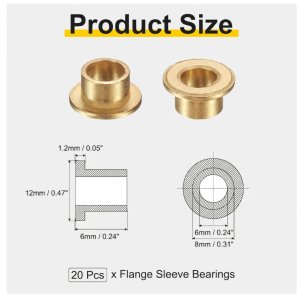
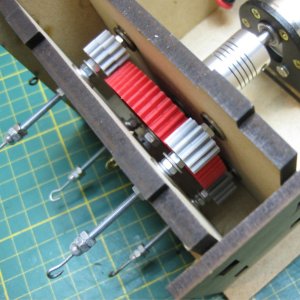
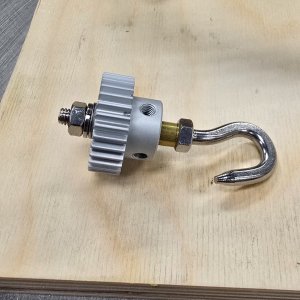
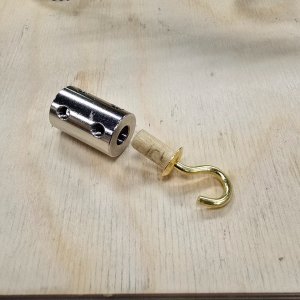
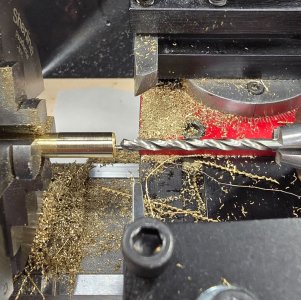
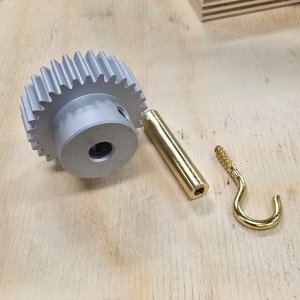
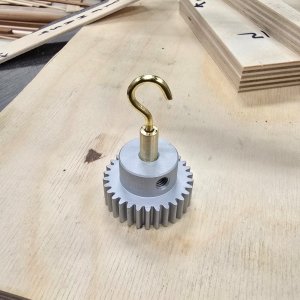
I bought the 300 RPM Motors and my controller will let me slow that down to whatever I might need to. The central gear will run at 300 RPM max, which in theory will drive the Spur Gears at 600 RPM, max.Did you determine at what rpm you will run your machine?
oh ok. so it's a 2:1 gear ratio. mine is 3:1. i don't really plan on going faster than 300 to 400 rpm on the main gear. It seems to be a good spot to run that thing. after that it looks scary.I bought the 300 RPM Motors and my controller will let me slow that down to whatever I might need to. The central gear will run at 300 RPM max, which in theory will drive the Spur Gears at 600 RPM, max.