
-

Win a Free Custom Engraved Brass Coin!!!
As a way to introduce our brass coins to the community, we will raffle off a free coin during the month of August. Follow link ABOVE for instructions for entering. -

SUBSCRIBE TO SHIPS IN SCALE TODAY!
The beloved Ships in Scale Magazine is back and charting a new course for 2026!
Discover new skills, new techniques, and new inspirations in every issue.
NOTE THAT OUR NEXT ISSUE WILL BE MARCH/APRIL 2026
You are using an out of date browser. It may not display this or other websites correctly.
You should upgrade or use an alternative browser.
You should upgrade or use an alternative browser.
A Dutch Fluyt in shell first, reconstructing the "Ghost ship" scale 1:36
- Thread starter Maarten
- Start date
- Watchers 75
-
- Tags
- dutch fluit


Not completely true. If a knee is wanted at a location where there is no wood to fix it to (through the ceiling) than a piece of wood is inserted (in Dutch called a 'kalf'). At such moments it is very helpful that there is no outer planking (huiddigt) yet.The knee is fitted to the ceiling planks only where there is a frame member to fit it, this determines if the knee is fitted fwd or aft of the deckbeam.
I find your knees a bit short. In my opinion they mostly reached up to the bilge stringers. But perhaps I am mistaken.
As always beautiful work Maarten.
Last edited:


Hi Ab,Not completely true. If a knee is wanted at a location where there is no wood to fix it to (through the ceiling) than a piece of wood is inserted (in Dutch called a 'kalf'). At such moments it is very helpful that there is no outer planking (huiddigt) yet.
I find your knees a bit short. In my opinion ion they mostly reached up to the bilge stringers. But perhaps I am mistaken.
As always beautiful work Maarten.
Thx for the comment about the kalf, again learned something.
Regarding the knees I rechecked the wrecks of Anna Maria and Samuel and have to agree with you. I used the drawing of Samuel where the knee was covering the two balkwegers and ended at the ceiling plank below that.
Allthough when measuring and recalculating scale the knee is 1,5 mtr high where mine were 1.1 mtr.
In Samuel it is a verdek knee as there is no overloop. If I put the 1,5 mtr knee height in the overloop of the fluyt it is reaching towards the bilge stringer.
I have directly started to modify, still work in progress.
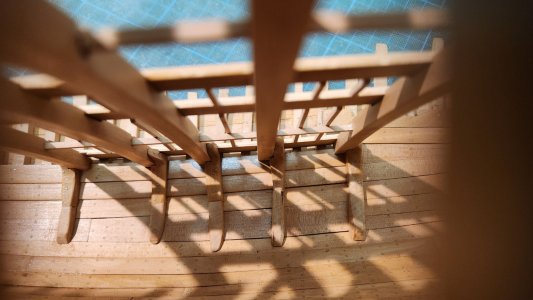
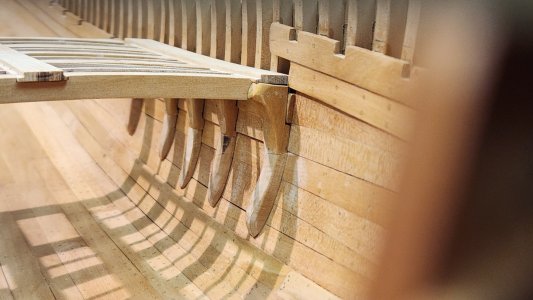
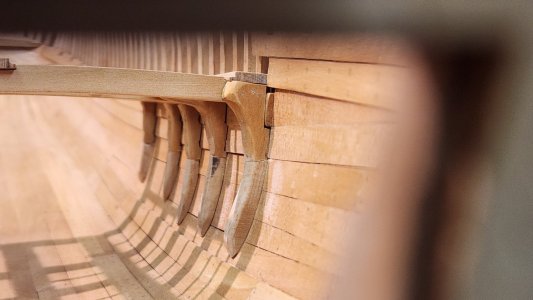
Slow progress on the deck but getting there.
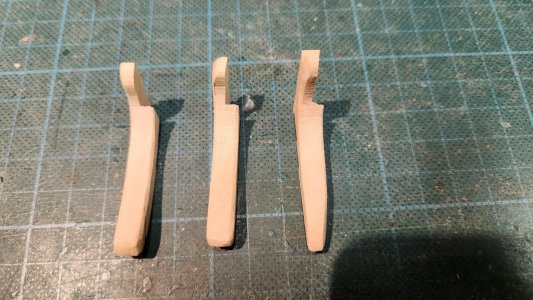
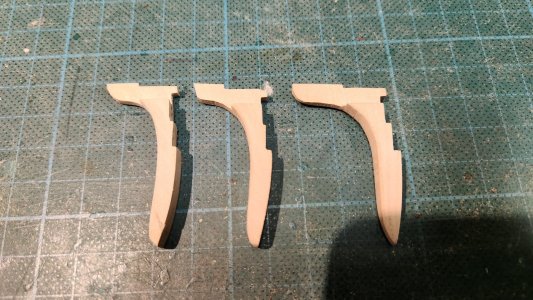
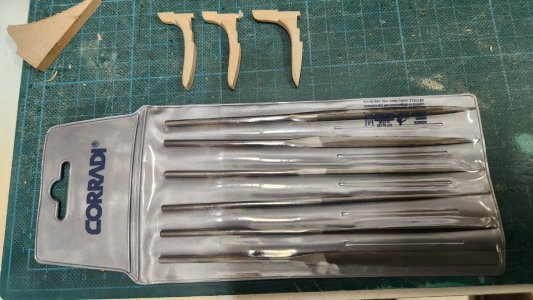
Knee production for which I also invested in some nice new files.
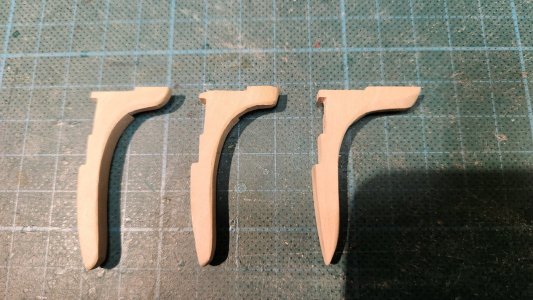
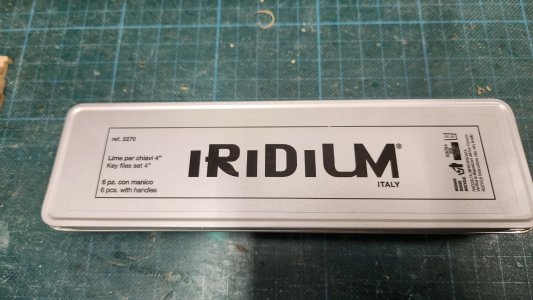
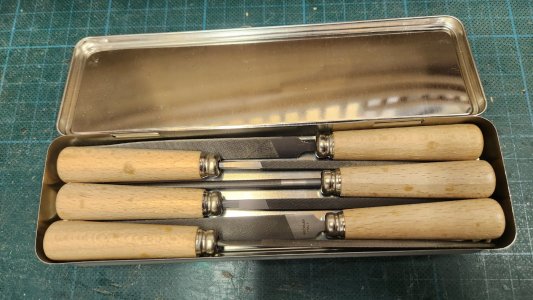
These work much better as my old standard files.
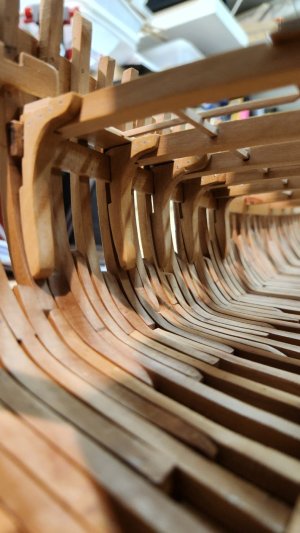
Knees installed, this side of the hull remains open.
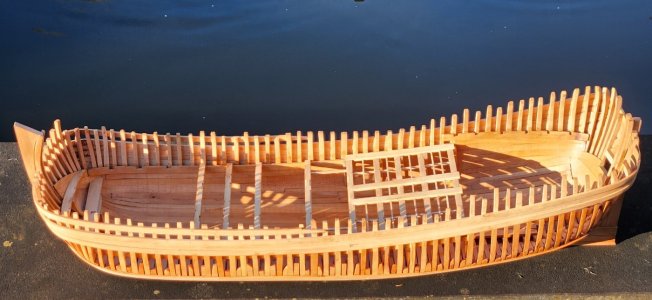
The first deck section finished.
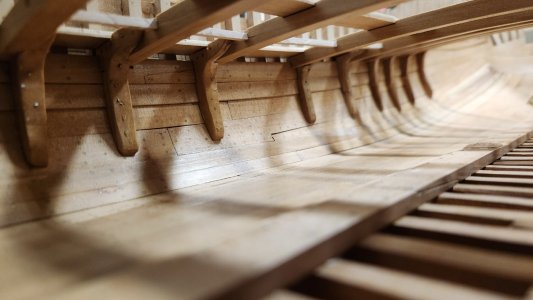
Work on the second deck section beams and knees in place. The knees are partly bolted and treenailed through the hull as noticed in the Samuel wreck.
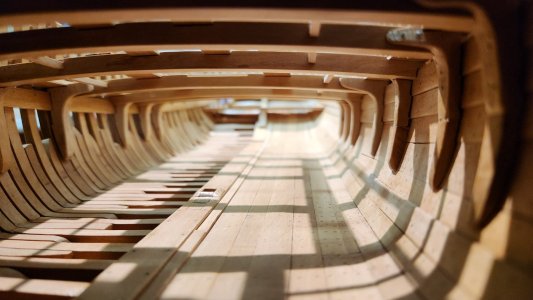
Looking foward through the hold.
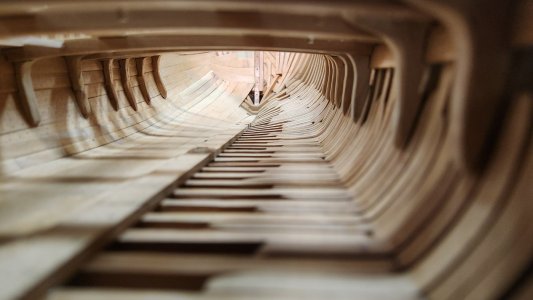
And looking backwards.
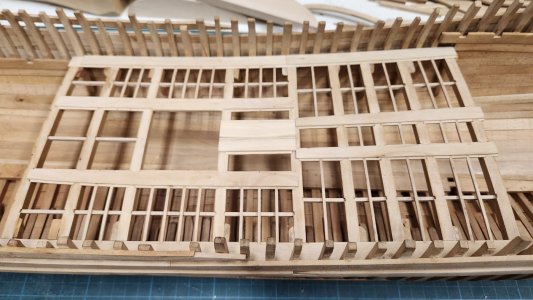
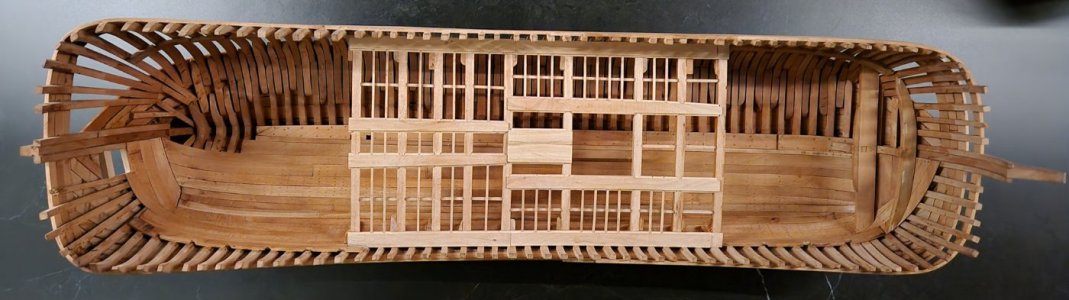
The second deck section nearly finished.
Knee production for which I also invested in some nice new files.
These work much better as my old standard files.
Knees installed, this side of the hull remains open.
The first deck section finished.
Work on the second deck section beams and knees in place. The knees are partly bolted and treenailed through the hull as noticed in the Samuel wreck.
Looking foward through the hold.
And looking backwards.
The second deck section nearly finished.
Last edited:

Wonderful work.
In the past, and in a different place and earlier time (1600), it was often said that the shear blocks? (Scheerstöcke in german, schaarstocken?) were so important for longitudinal strength that they always ran the entire length of the deck.
It's nice to see something different here.
In the past, and in a different place and earlier time (1600), it was often said that the shear blocks? (Scheerstöcke in german, schaarstocken?) were so important for longitudinal strength that they always ran the entire length of the deck.
It's nice to see something different here.


A nice amount of installed knees, Maarten. And impressive inside pictures.Slow progress on the deck but getting there.
Knee production for which I also invested in some nice new files.
View attachment 586164View attachment 586165View attachment 586166
These work much better as my old standard files.
View attachment 586167
View attachment 586168
View attachment 586169
Knees installed, this side of the hull remains open.
View attachment 586170
The first deck section finished.
View attachment 586171
Work on the second deck section beams and knees in place. The knees are partly bolted and treenailed through the hull as noticed in the Samuel wreck.
View attachment 586176
Looking foward through the hold.
View attachment 586174
And looking backwards.
View attachment 586175
The second deck section nearly finished.
View attachment 586177
View attachment 586178
Regards, Peter
Thx Peter, now my mobile phone is still fitting inside to take the picturesA nice amount of installed knees, Maarten. And impressive inside pictures.
Regards, Peter

Thanks Bela,Wonderful work.
In the past, and in a different place and earlier time (1600), it was often said that the shear blocks? (Scheerstöcke in german, schaarstocken?) were so important for longitudinal strength that they always ran the entire length of the deck.
It's nice to see something different here.
The schaarstokken are at the width of the coamings of which they are part of the sides.
In principle they are still part of one longitudal construction as they are partly let into the deck beams creating one rigid construction.
Even if I check Vasa the schaarstokken of the orlop (overloop) these are only present in the fwd and aft part of the deck. You can clearly see that in the 3d photo grammetry of the hold and look up to the construction of the orlop deck showing the schaarstokken, grieten and kalmayen.
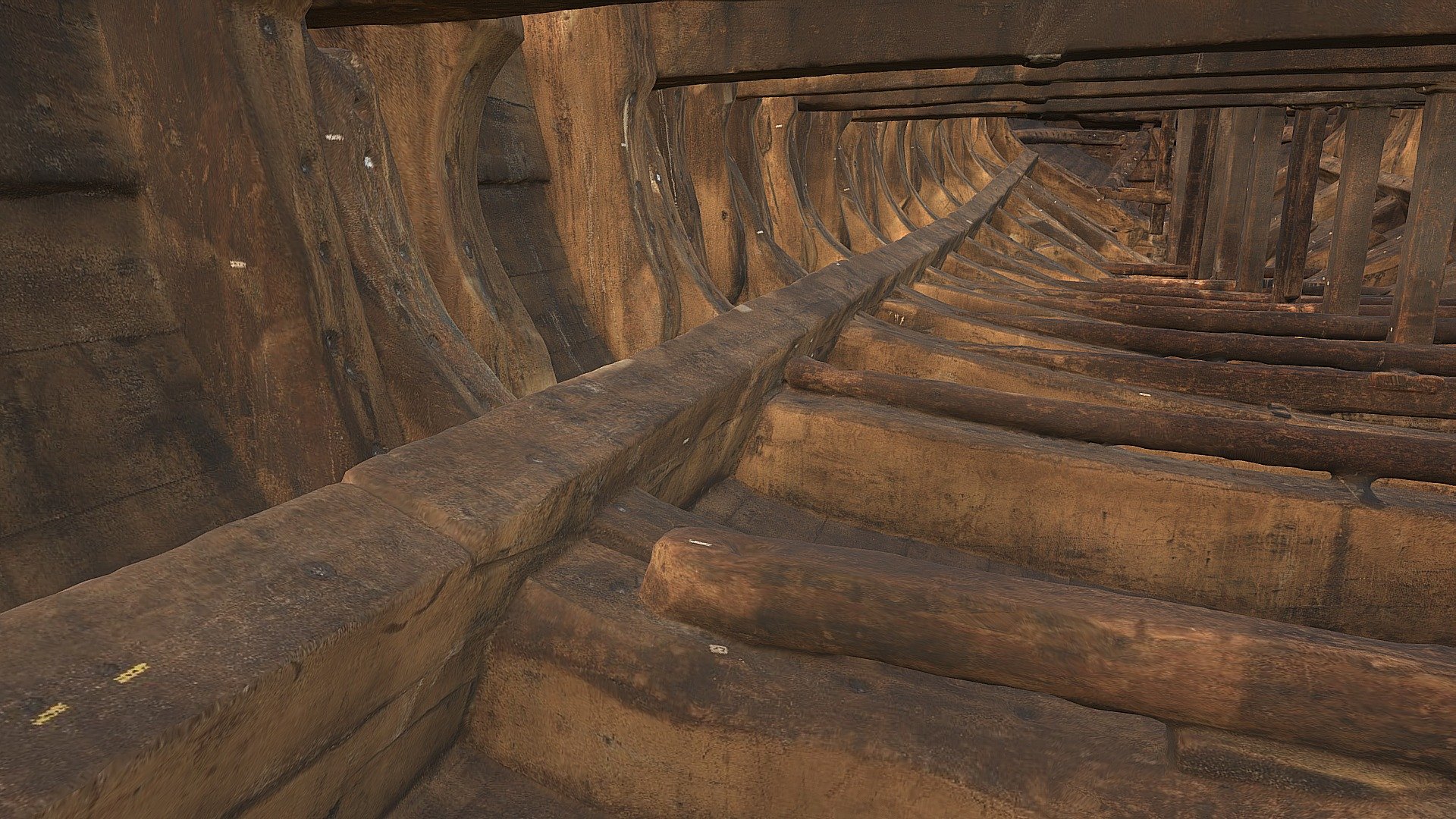
Vasa, the hold - Download Free 3D model by SWEDISH NATIONAL MUSEUMS, MTF (@maritima)
Vasa is a Swedish warship built between 1626 and 1628. The ship foundered after sailing about 1,300 m (1,400 yd) into its maiden voyage on 10 August 1628. After 333 years on the seabed the mighty warship was salvaged. Today Vasa is the world’s only preserved 17th century ship and the Vasa museum...
 sketchfab.com

- Joined
- Oct 23, 2018
- Messages
- 902
- Points
- 403

Really wonderful work, Marten.
- Joined
- May 17, 2025
- Messages
- 11
- Points
- 48

Beautyfull! Looks like beeing in a real vessel.Slow progress on the deck but getting there.
Knee production for which I also invested in some nice new files.
View attachment 586164View attachment 586165View attachment 586166
These work much better as my old standard files.
View attachment 586167
View attachment 586168
View attachment 586169
Knees installed, this side of the hull remains open.
View attachment 586170
The first deck section finished.
View attachment 586171
Work on the second deck section beams and knees in place. The knees are partly bolted and treenailed through the hull as noticed in the Samuel wreck.
View attachment 586176
Looking foward through the hold.
View attachment 586174
And looking backwards.
View attachment 586175
The second deck section nearly finished.
View attachment 586177
View attachment 586178
Question: how do you drill the holes and place the bolts underneath the beams?
Hi Rob,Beautyfull! Looks like beeing in a real vessel.
Question: how do you drill the holes and place the bolts underneath the beams?
The bolts through the knees and hull are drilled from outside the hull inward.
Then I fit the bolt from outside and clinch it on a small anvil I put inside the hull.
The bolts through knees and beams are drilled from the free end of the deck beams.